Helen & Hard is a Norwegian architecture practice founded in Stavanger in 1996, now working from studios in Stavanger and Oslo. The office is known for projects where timber is not just a finish, but the actual driver of structure, atmosphere, and construction logic.
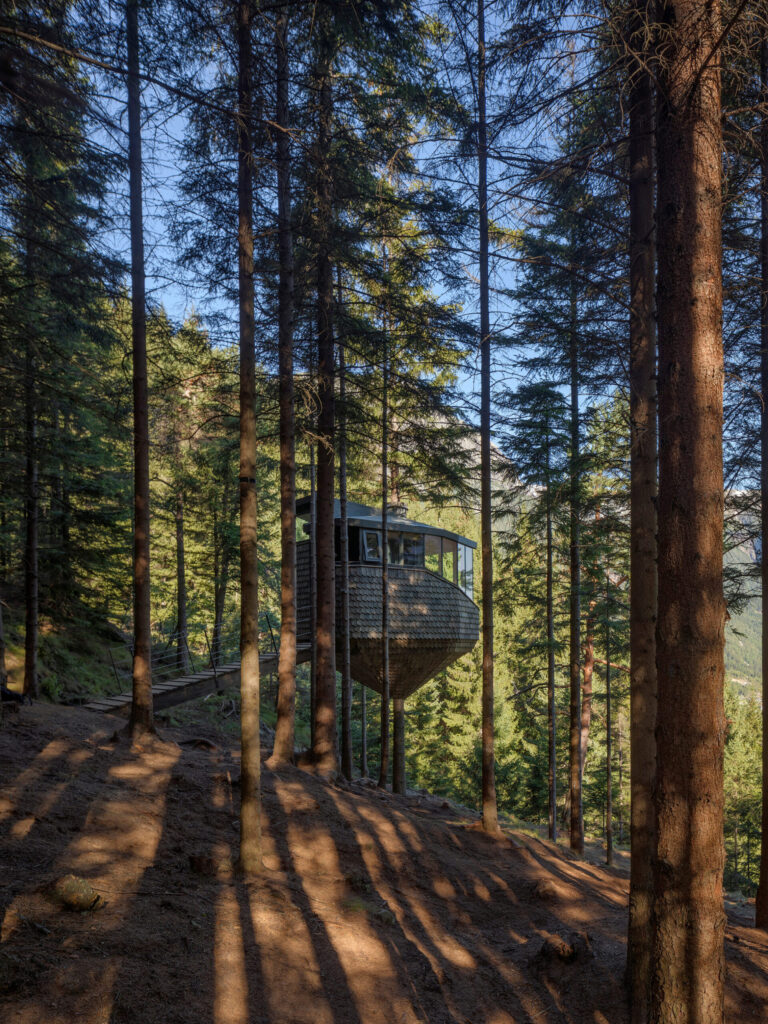
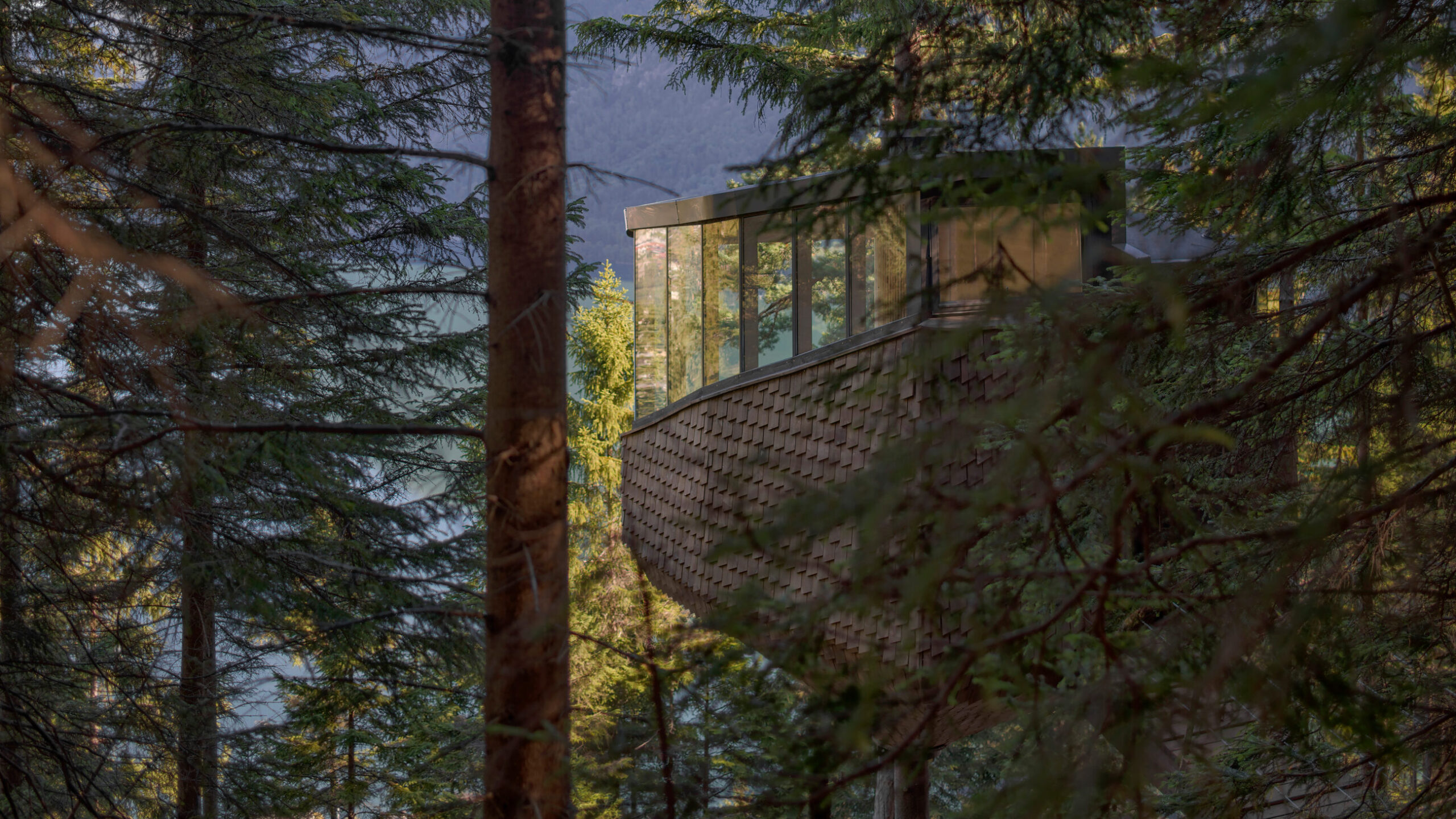
Woodnest Originals is one of their most distilled ideas: two compact treehouse cabins placed on the steep forested hillsides above Odda, looking out over the Hardangerfjord landscape. Commissioned by Sally and Kjartan Aano, the first two cabins were completed in 2020, and they were designed as a direct response to the site’s slope, tree cover, and long views.
A cabin that hangs, but does not float
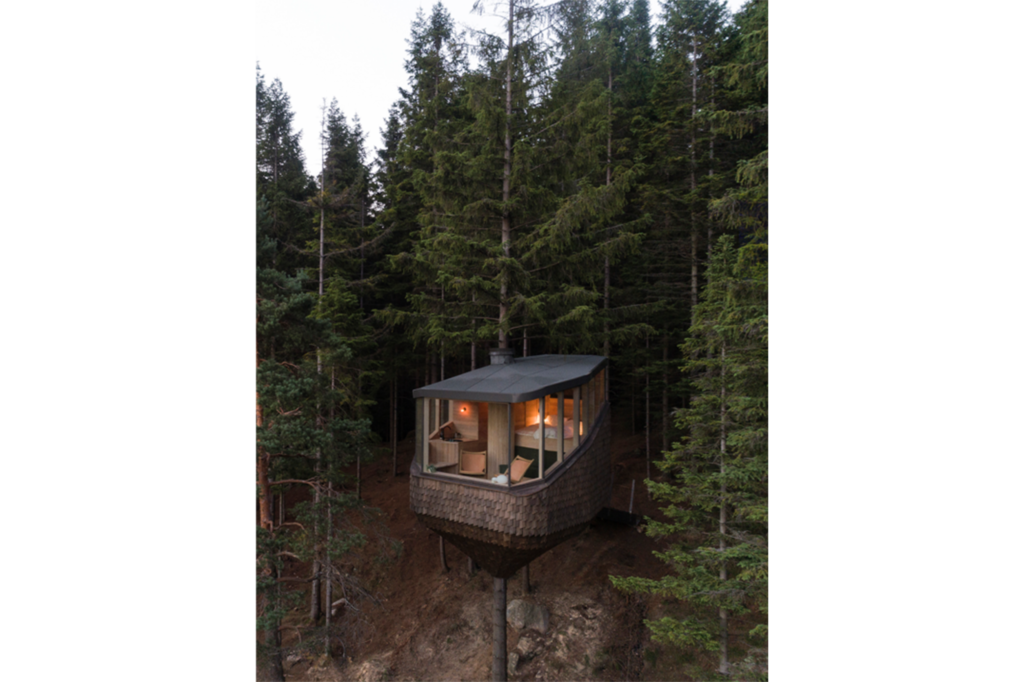
The Originals are suspended about 5-6 meters above the forest floor and fastened to a living pine tree with a steel collar. That single sentence sounds simple, but it is the core challenge: making a guest cabin that feels safely anchored while still respecting that the “column” is alive. Helen & Hard’s solution is a hybrid of timber craft and precise steel engineering, with the tree trunk treated as an essential part of the load path.
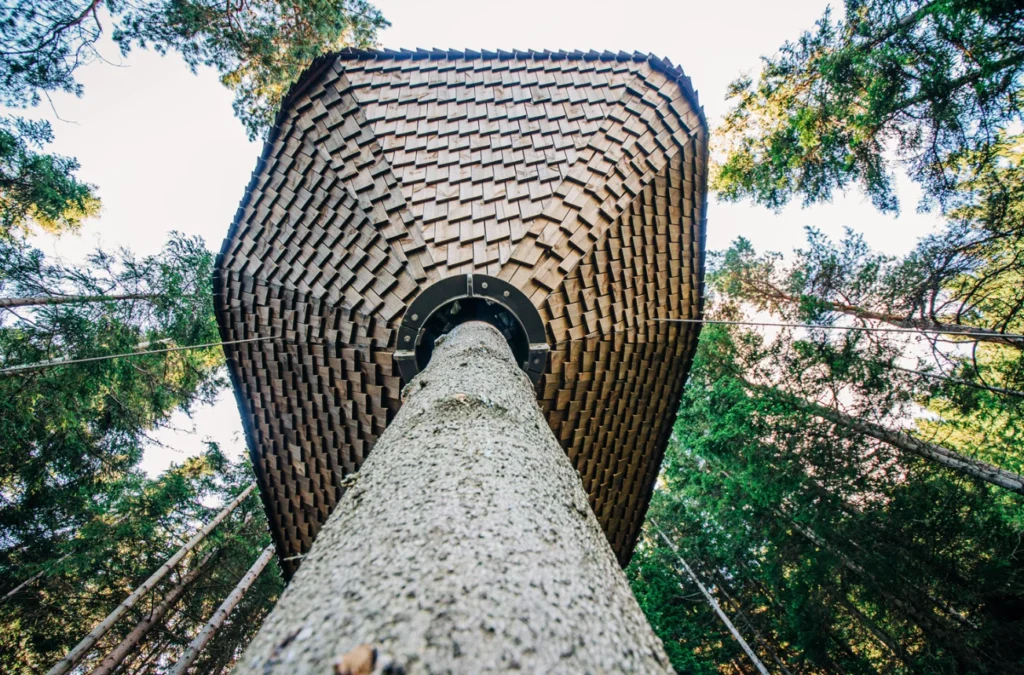
A steel pipe element is cut and reassembled around the trunk to form a rigid backbone, with measures intended to keep loads vertical down the tree rather than pushing it sideways. Around that backbone, the shell is shaped by ribs arranged radially, forming the cabin’s distinctive pod-like geometry. It is a rare case where the structural diagram is also the interior design.
The approach to the “nest”
The cabins are reached via a steep walk up from Odda, then a small timber bridge that lifts the path off the ground for the final approach. The operator describes access as a hike that commonly takes roughly 20-45 minutes depending on conditions, reinforcing that arrival is part of the overall experience rather than an afterthought.
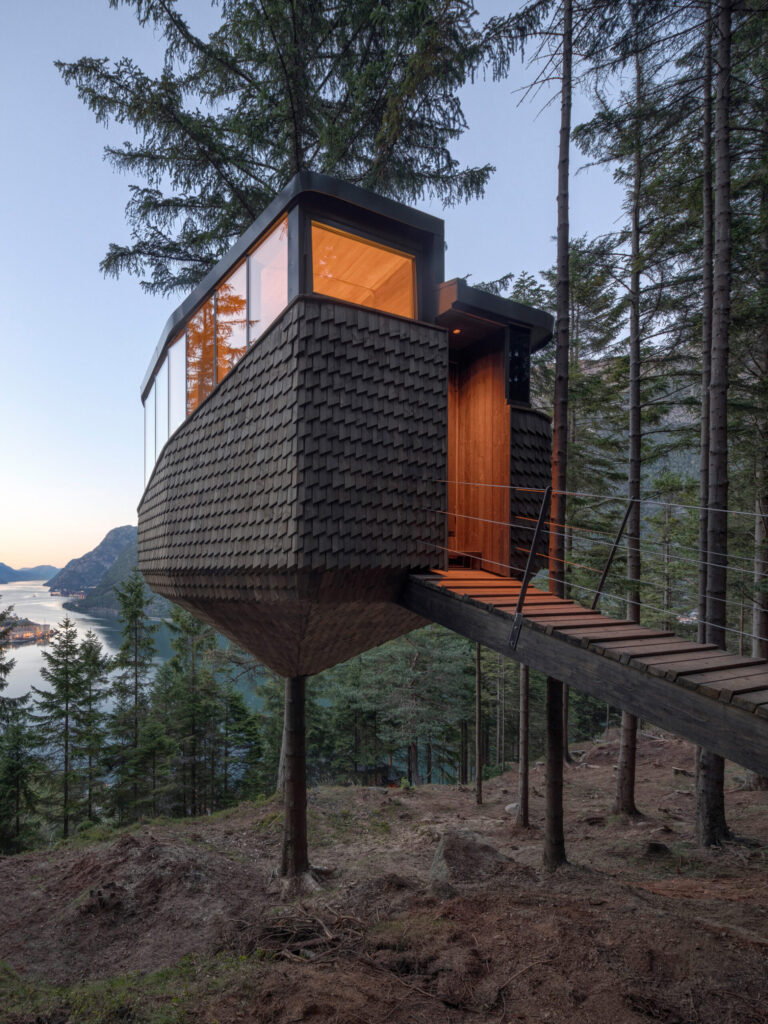
This is also where the project’s name lands best. These are not conventional “cabins in the woods.” They are nests: perched, compact, and slightly uncanny in the most satisfying way. It is basically what a pine tree would build if it had a building permit and a good engineer.
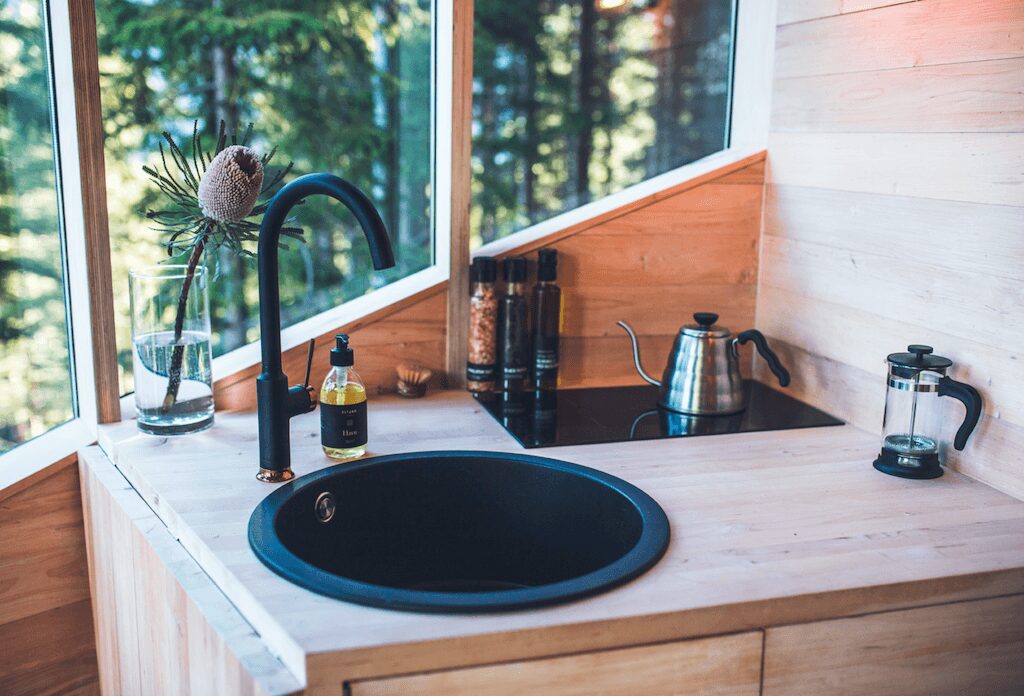
15 square meters, carefully packed
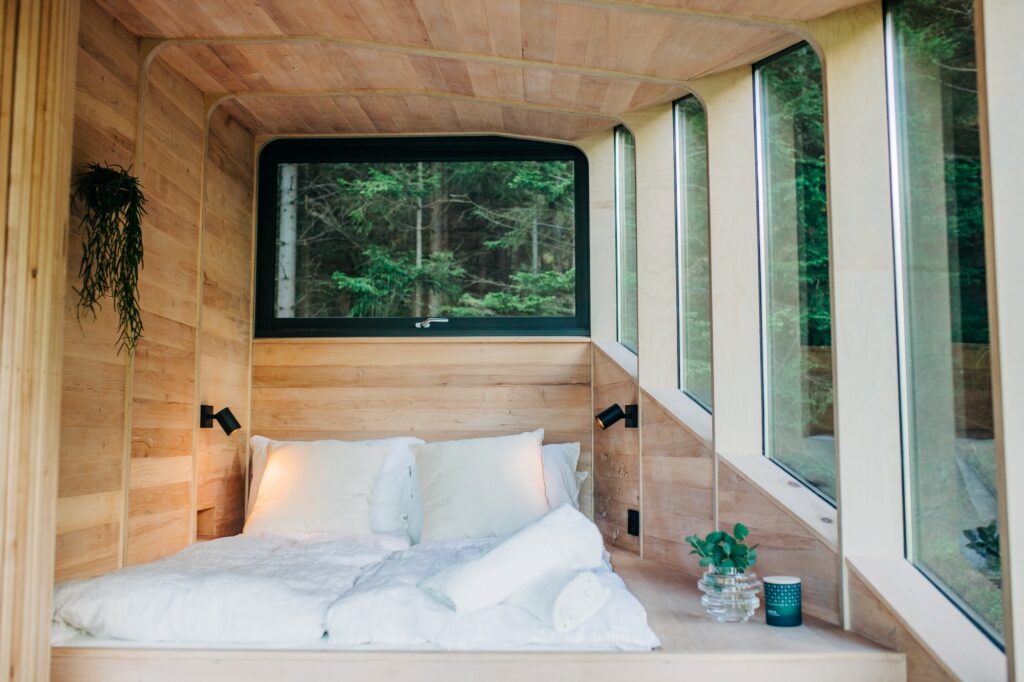
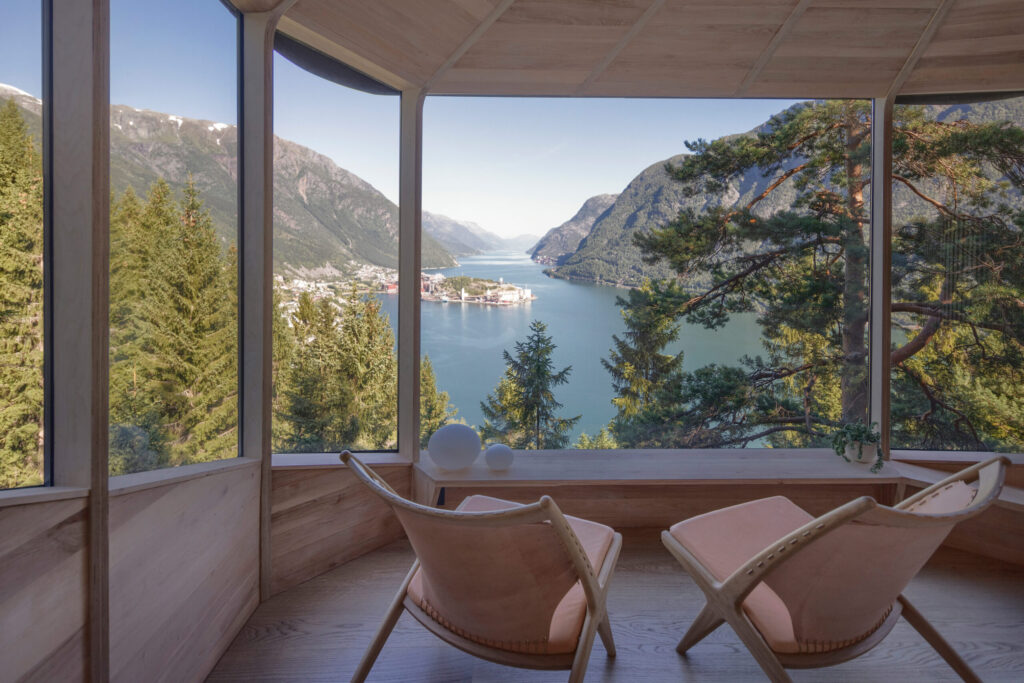
Each Original is only about 15 m2, organized around the central trunk. Within that footprint, the plan includes four sleeping places, a bathroom, a small kitchen area, and a living space that faces the view through the trees toward the fjord and mountains beyond. The result is a tiny interior that avoids feeling cramped, mainly because the perimeter is treated as built-in furniture and the window wall does heavy lifting psychologically.
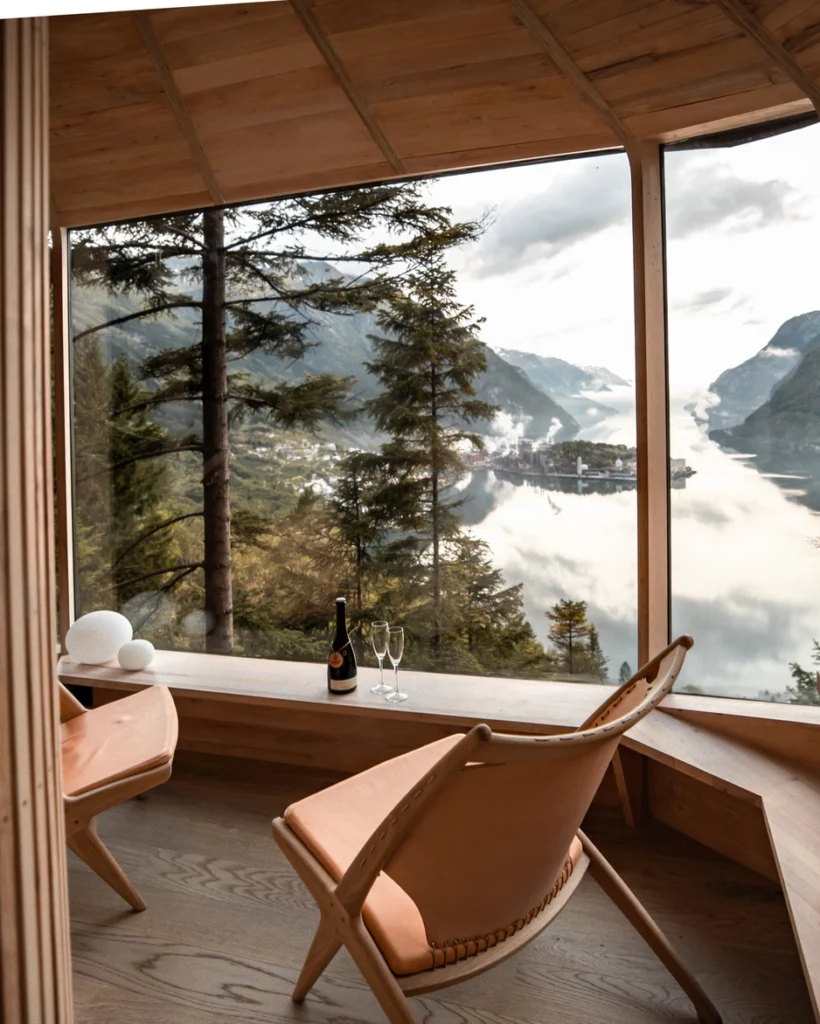
The cabins are equipped for overnight stays with an indoor toilet and shower, plus a compact kitchenette setup. In other words, the “treehouse” label is accurate, but the living standard is not rustic cosplay.
Materials that are meant to age
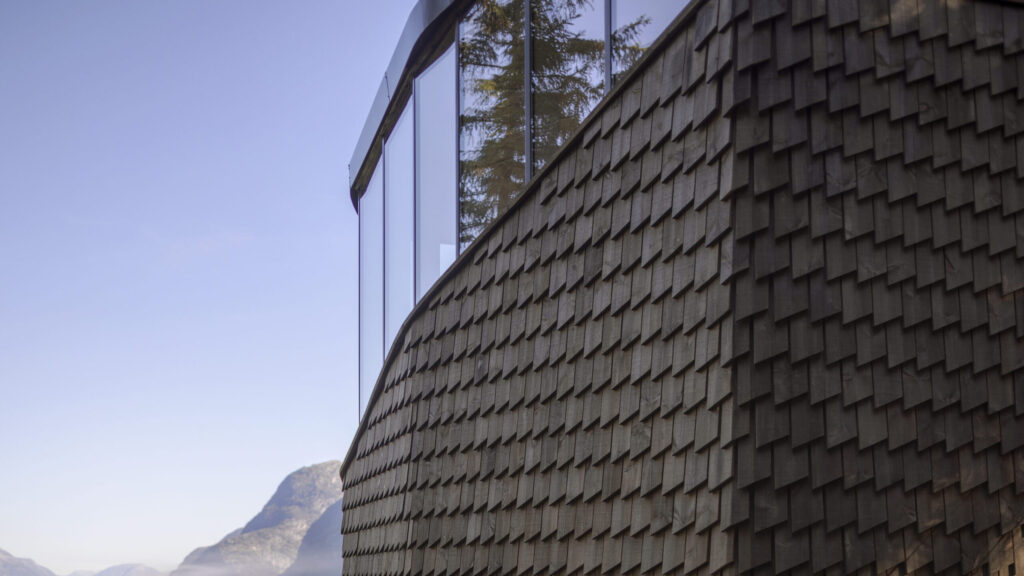
Material choices are unusually disciplined. Outside, the shell is clad in heartwood pine shingles intended to weather and blend into the forest patina over time. Inside, black alder panels warm the room and soften the contrast between the engineered ribs and the organic trunk. It is a tight palette, but it suits the concept: one tree on the inside, many trees on the outside, and timber doing the talking everywhere in between.
Originals as part of a small cabin family
While the Originals were the starting point, Woodnest has grown into a set of four treehouses in total: two Originals and two Mountaintops. Each cabin is typically positioned as ideal for two, while the Originals can accommodate up to four guests. That split matches the architecture: the Originals are the “family-friendly” layout, while newer variants lean into a more couple-focused setup.
Helen & Hard’s later Woodnest II work describes upgrades that push comfort further, including a bathtub, a panoramic front, and a master bed designed to lift and retract into the ceiling during the day. It reads like the same concept, refined with a sharper hospitality brief.
Reply