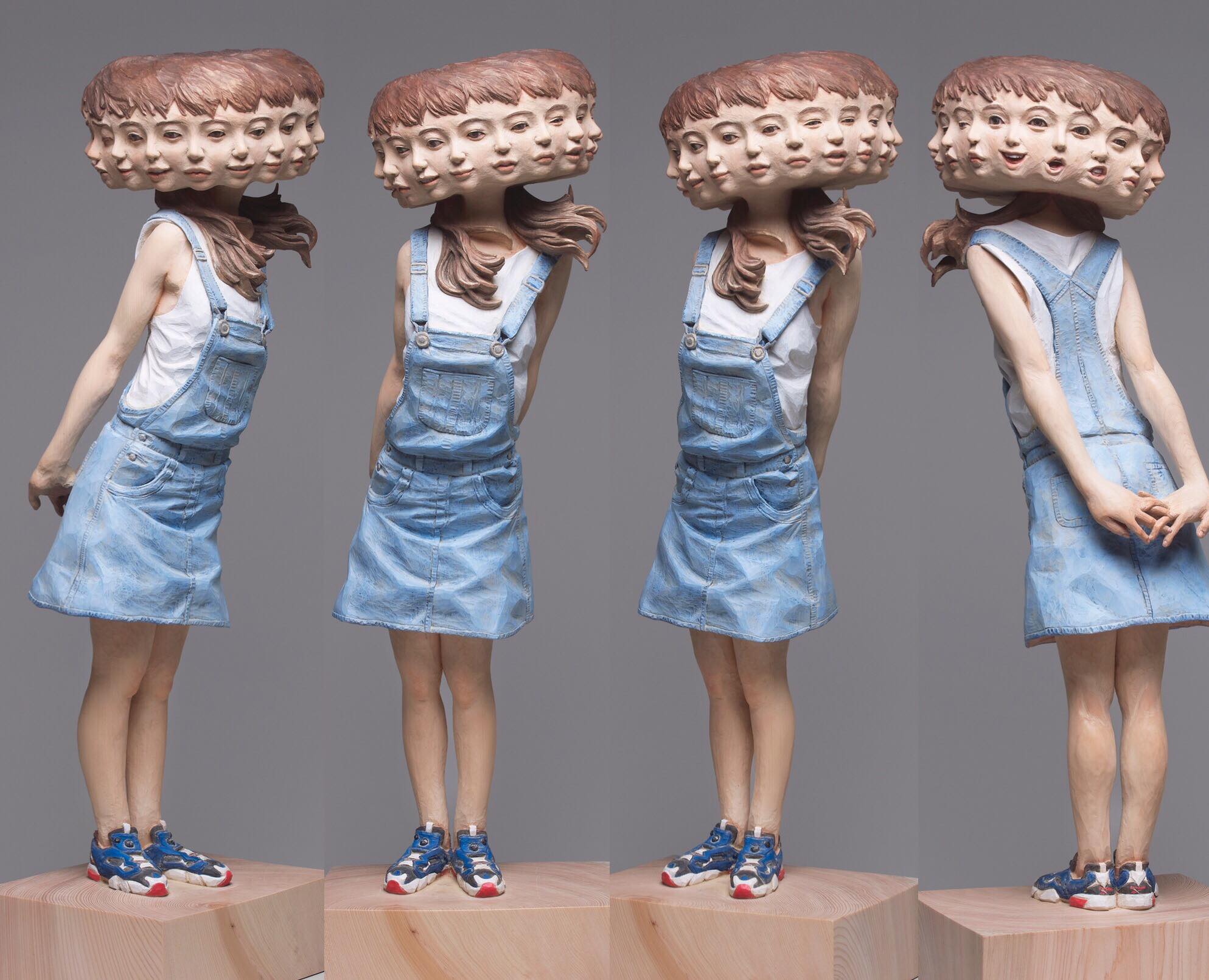
Yoshitoshi Kanemaki is a Japanese sculptor known for figurative wood carvings that feel both precise and disorienting. Born in Chiba in 1972, he graduated from Tama Art University’s Department of Sculpture in 1999. Over the last decade, his work has built a recognizable visual language – life-size bodies, everyday clothing, and faces that fracture into multiple expressions at once.
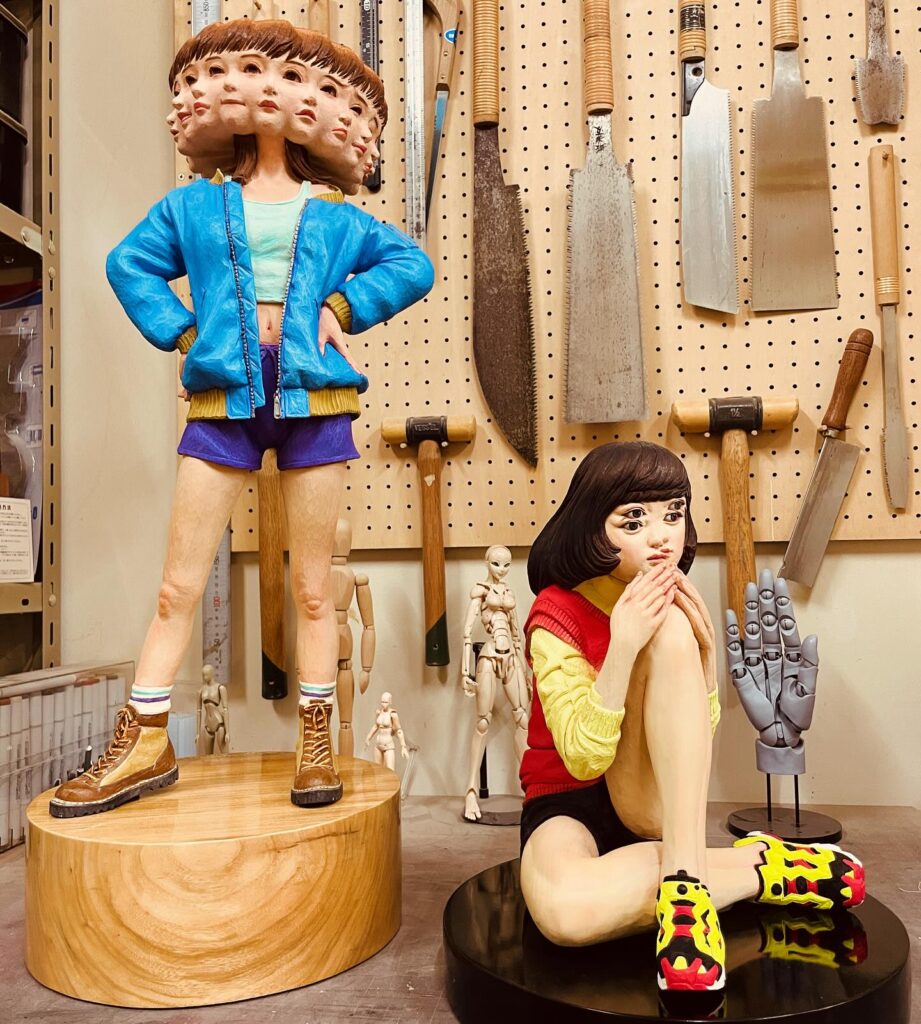
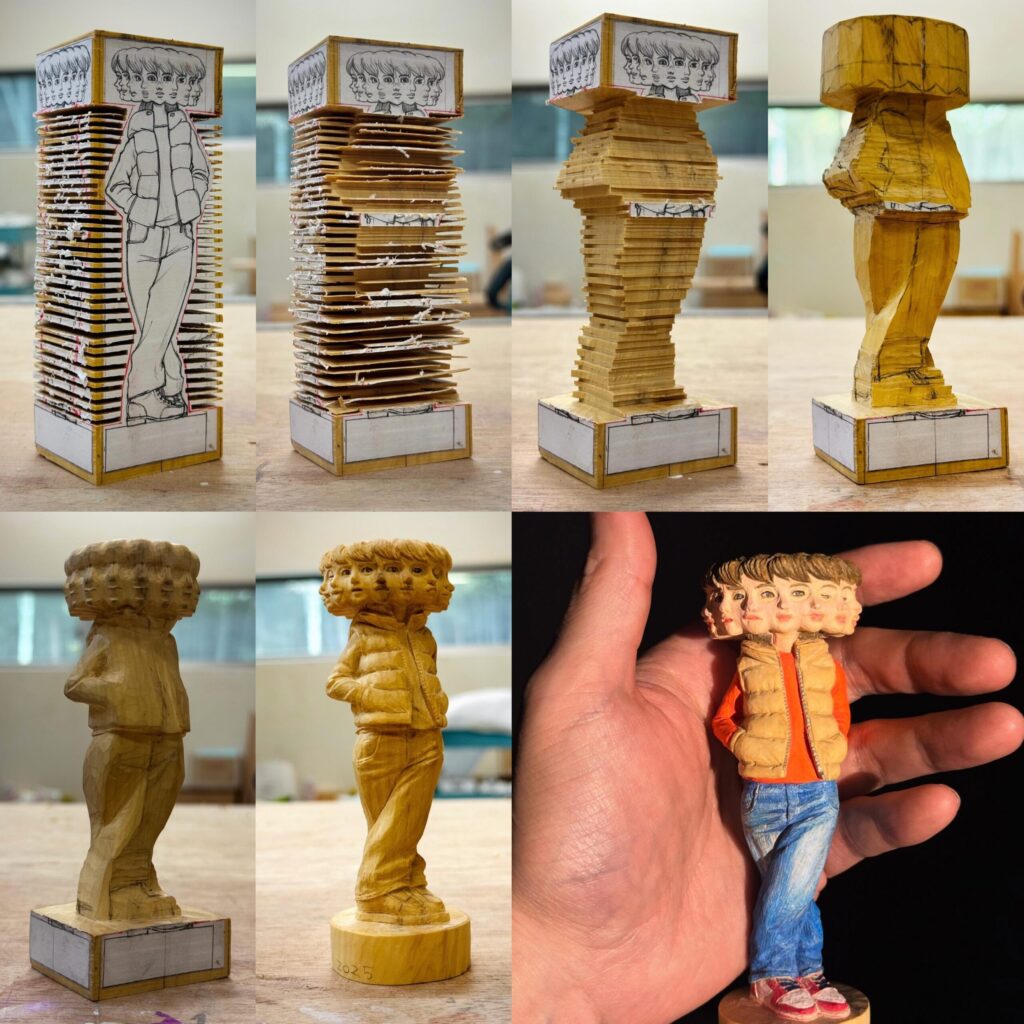
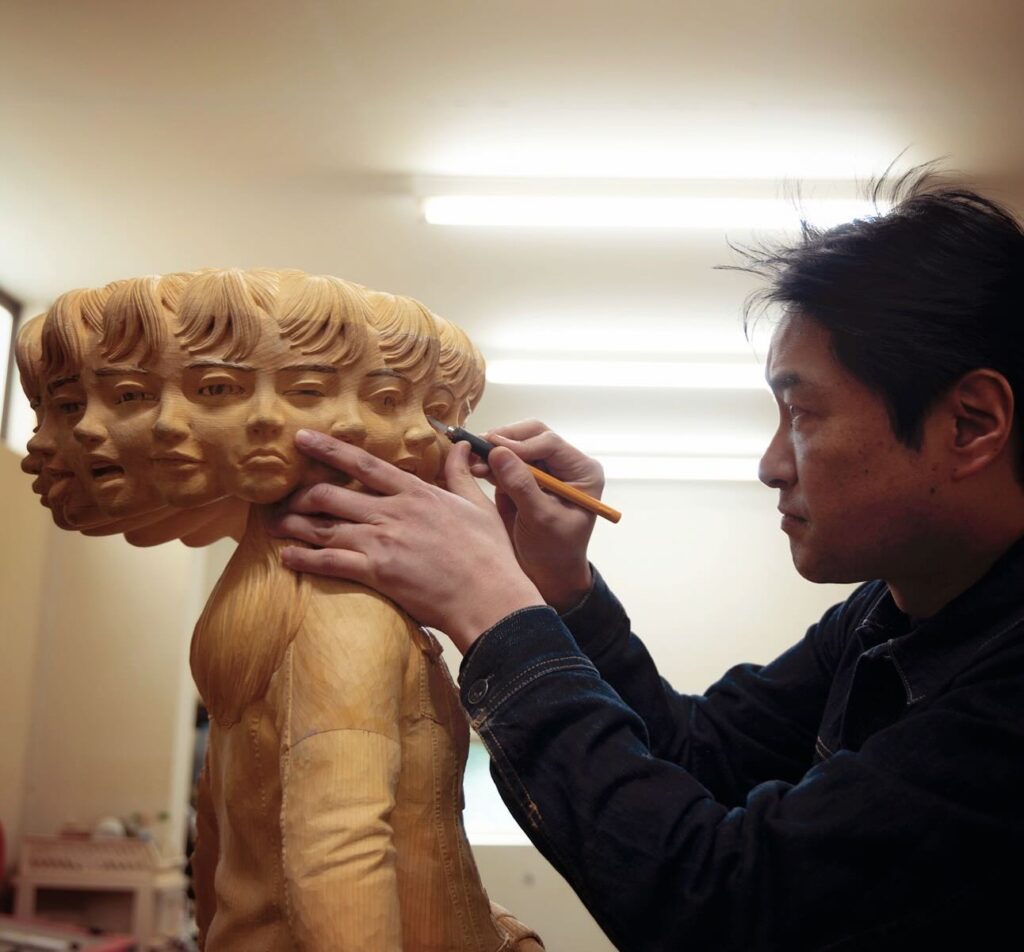
Kanemaki’s sculptures often begin with a single, substantial log. He is associated with ichiboku-zukuri, a traditional one-piece carving approach, where the figure is formed from one block rather than assembled from parts. The material choice matters. Camphor wood appears repeatedly in discussion of his practice, its scale and density supporting the weight and presence of his human figures.
What makes these works linger is the tension between realism and “glitch.” Bodies are carved with convincing posture and proportion – hands sit naturally, shoulders slump, knees lock. Then the head splits into a ring of faces, or a profile repeats in quick succession like frames of a moving image. Instead of choosing one emotion, the sculpture holds several at once, like a physical version of internal noise.
This multiplication is not just a visual trick. Kanemaki’s figures frequently suggest that identity is unstable, or at least layered. In the more intimate works, the face becomes a rotating index of moods. In others, the entire body participates – arms echo, torsos shift, and features repeat as if the person is being viewed from several angles simultaneously. The effect can read as playful, but it also carries a quiet pressure, as though the subject is trapped inside their own changing self-image.
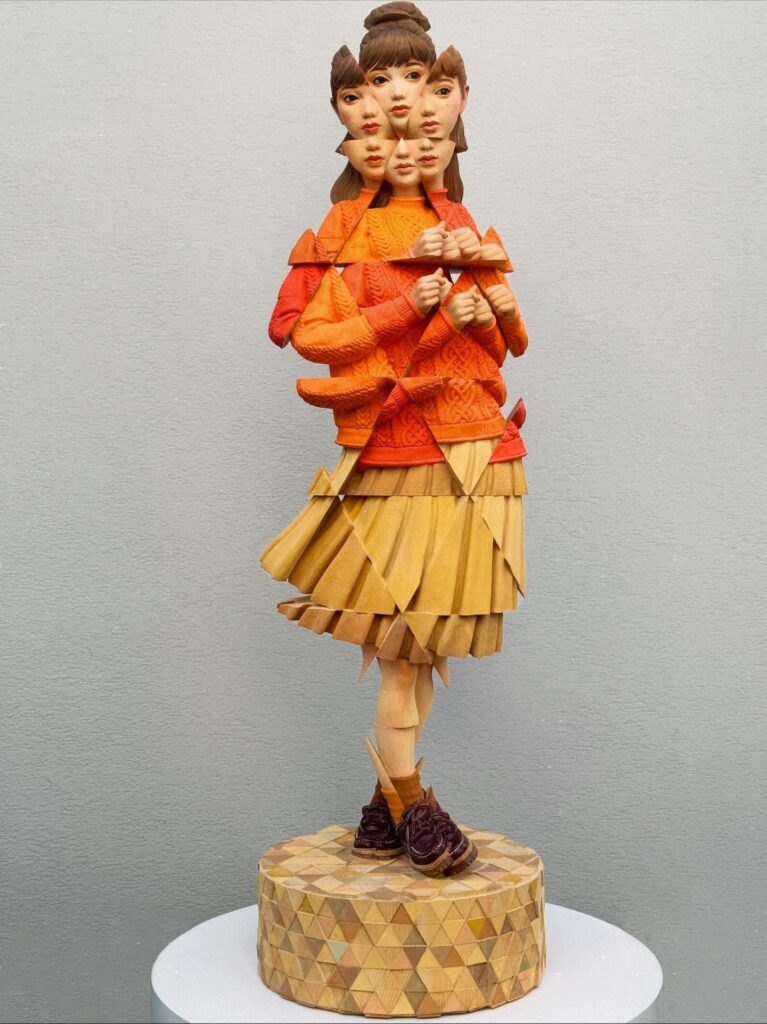
A recent body of work framed around the idea of a “prism” pushes that concept further, leaning into distortion, reflection, and self-consciousness as core themes. The fractured faces start to feel less like a special effect and more like a statement: people are not one clean story. They are overlapping versions of themselves, shaped by memory, stress, desire, and the gaze of others.
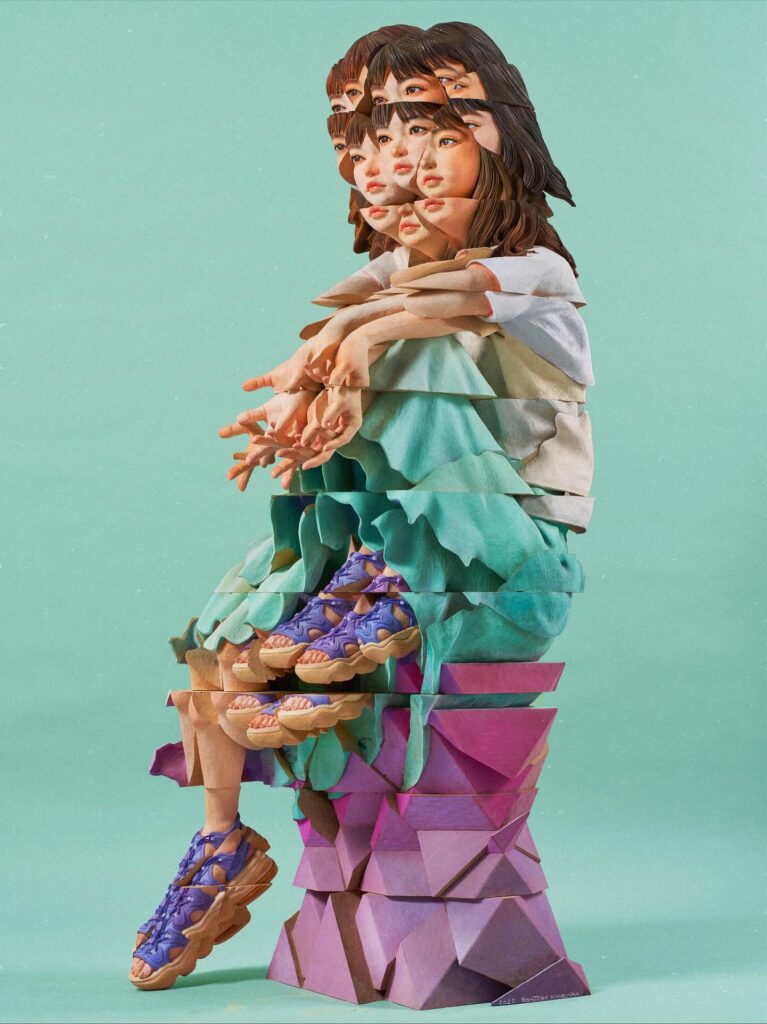
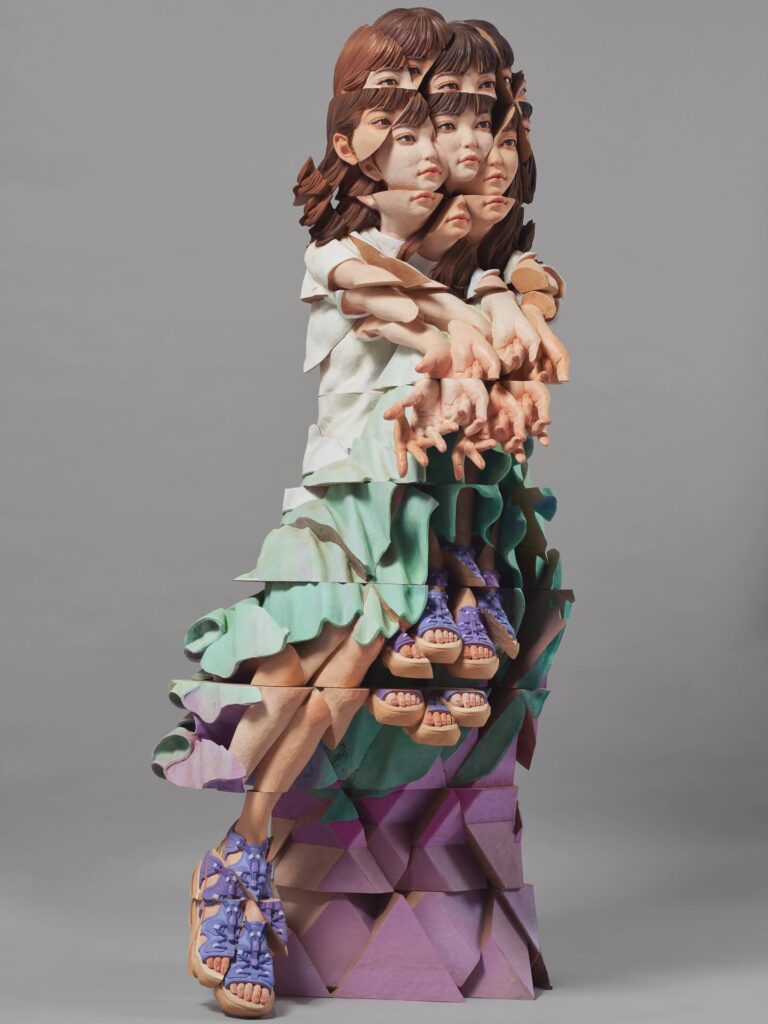
There are also echoes of older visual traditions in the way Kanemaki stacks or multiplies features. The work can bring to mind multi-faced Buddhist statuary, while also nodding to Western ideas of motion and viewpoint, such as Cubism and Futurism. That mix helps explain why the sculptures can feel simultaneously ancient and contemporary. The craft signals devotion to material and technique, while the fractured forms speak the language of modern perception – the sense of being observed, edited, and re-seen from every angle.
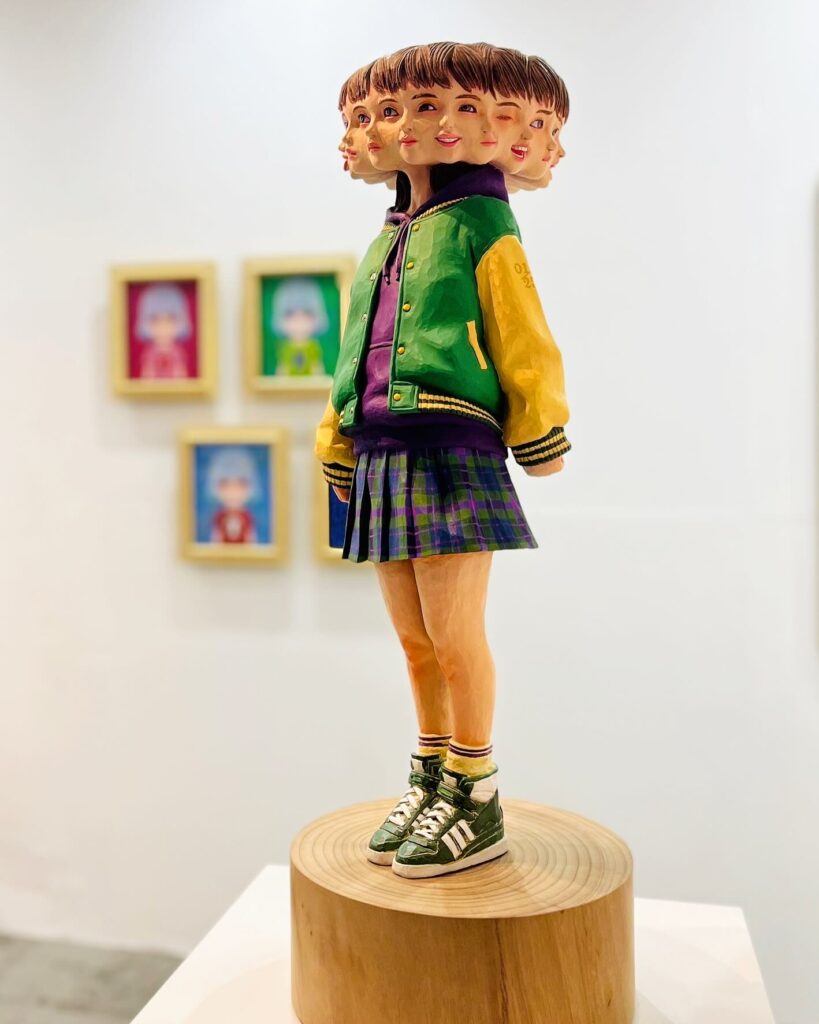
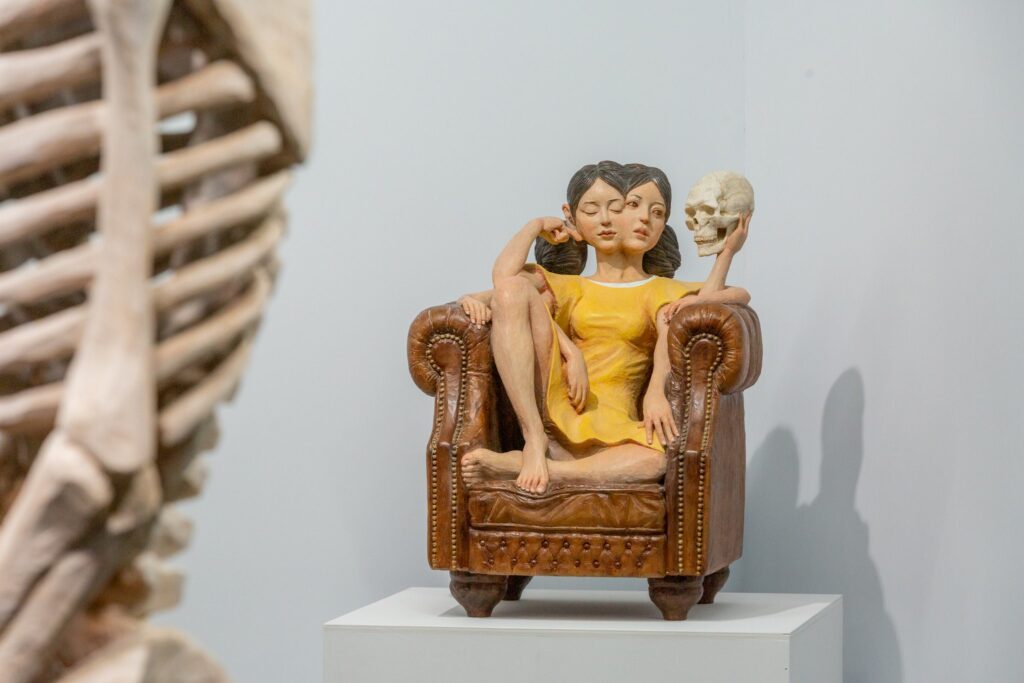
Mortality runs through Kanemaki’s practice as well. Even when the sculptures wear ordinary clothes, the themes drift toward transience – youth as a fleeting state, and the body as a temporary structure. Some works lean into anatomical references, or hint at the skeleton inside the calm surface. Others focus on time in a quieter way, using repeated expressions to suggest uncertainty about what is coming next and what has already slipped away.
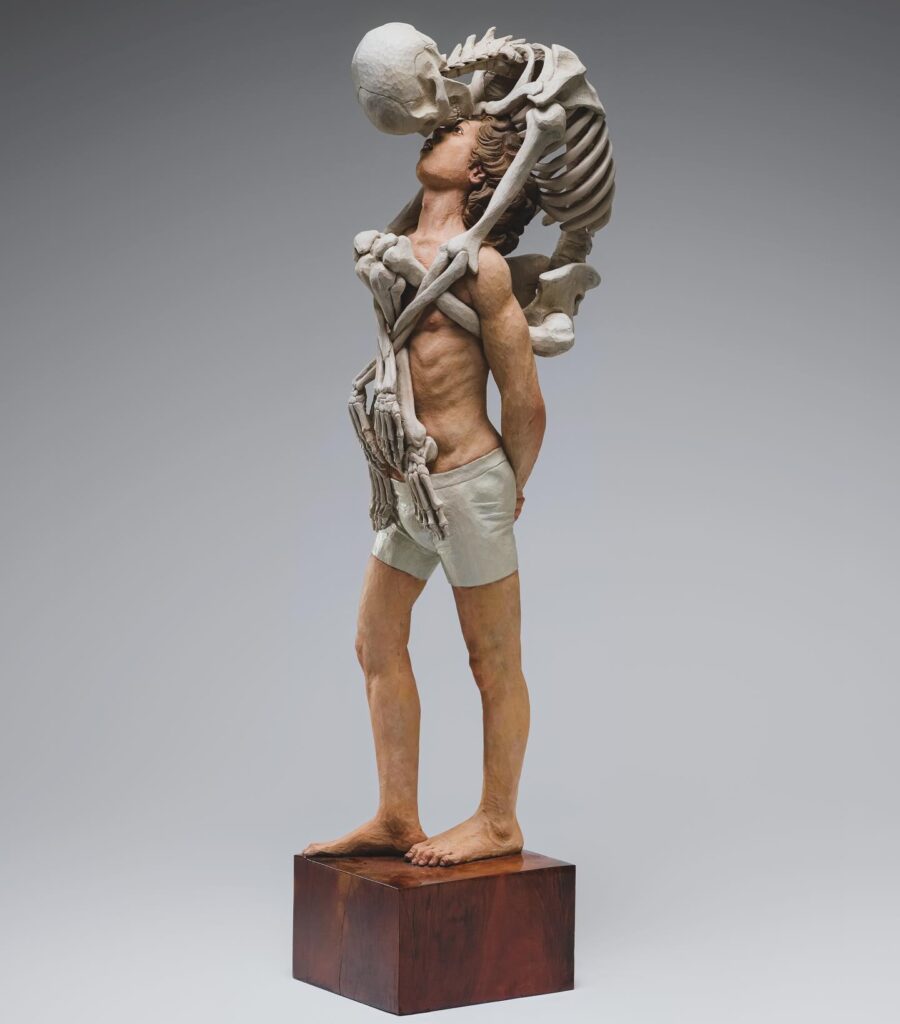
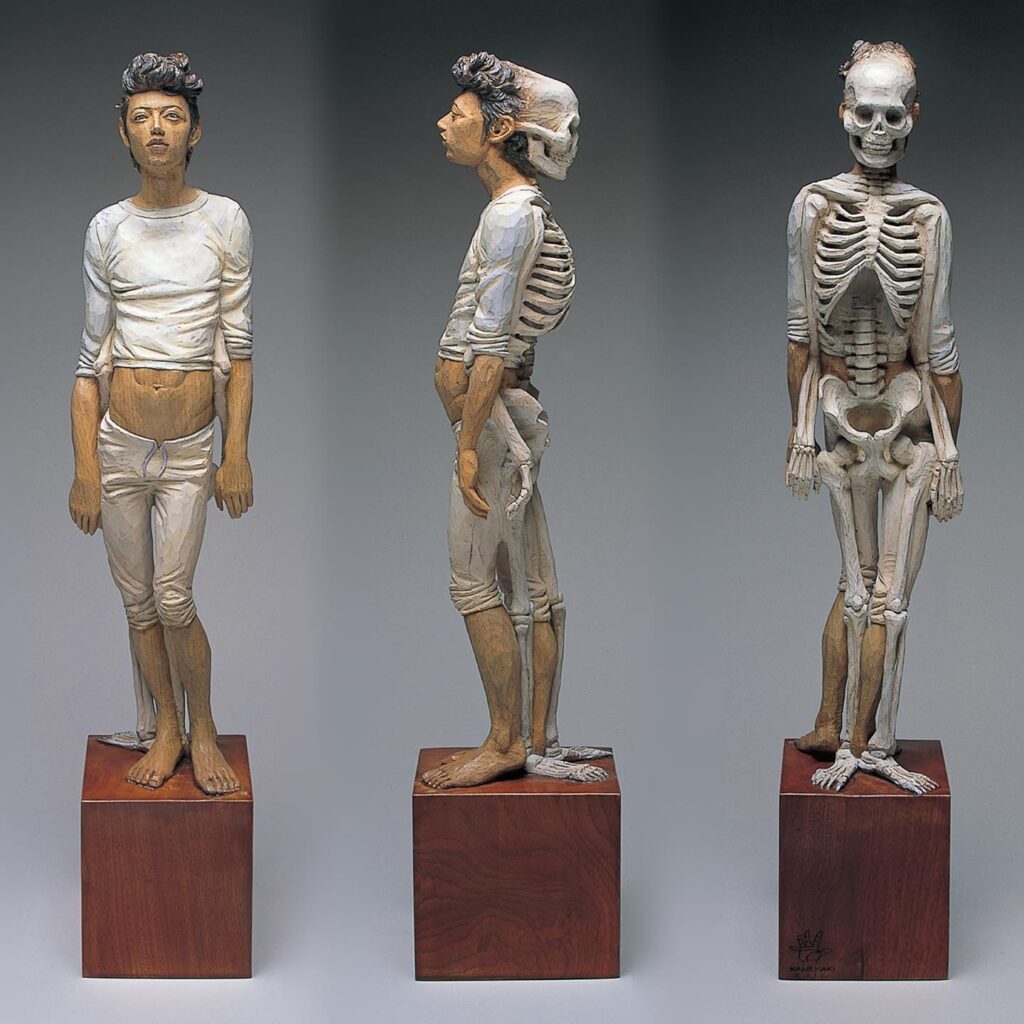
His exhibition history includes solo presentations in Tokyo and beyond, and his work has also crossed into collaborations that put his imagery into a broader design context. Still, the sculptures are built for physical viewing. Photographs capture the shock of the split faces, but the real experience happens when you move around the figure and the “extra” profiles shift. What looks like one person becomes several, and then returns to one again, depending on where you stand.
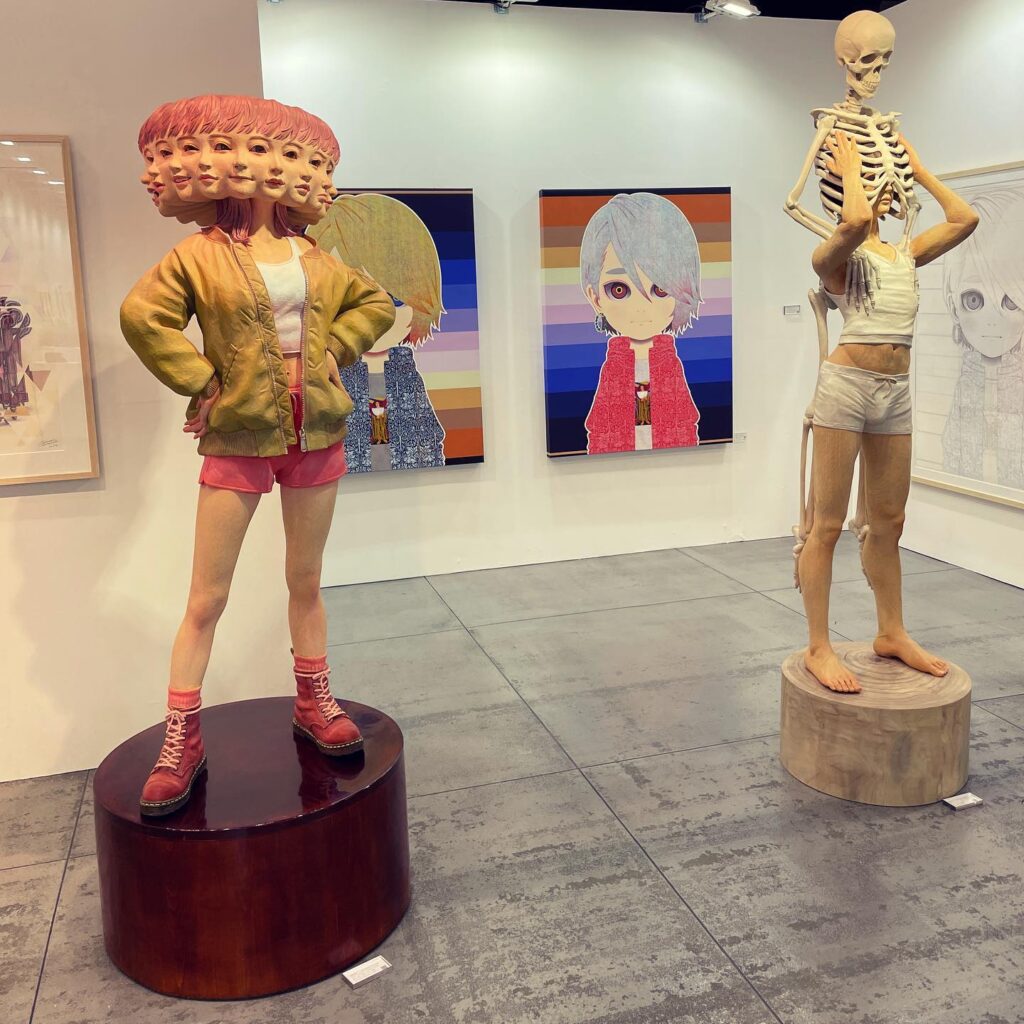
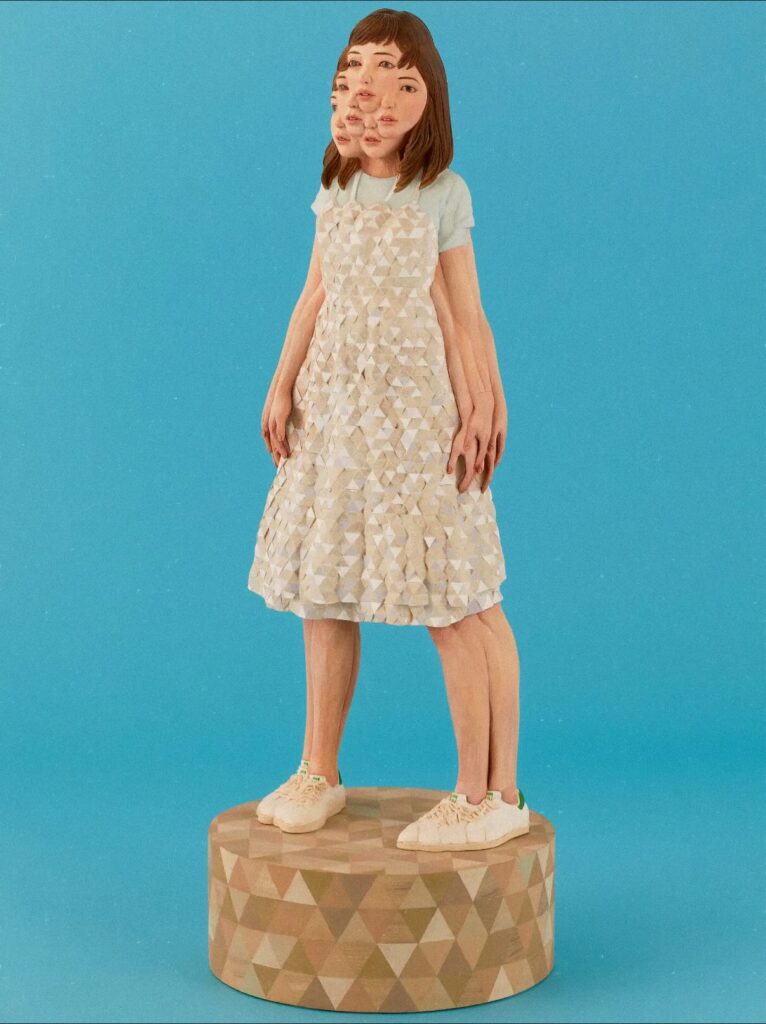
At the center of it all is patience and control: a dense block becomes cloth folds, skin, hair, and then something less literal – a carved portrait of inner contradiction. Kanemaki’s sculptures look like people caught mid-thought, except the thought is visible on the surface, multiplied and turned outward. They stay with you because they turn a familiar subject – the human figure – into a map of unstable emotions, where the clean outline of a person is never the whole story.
Reply