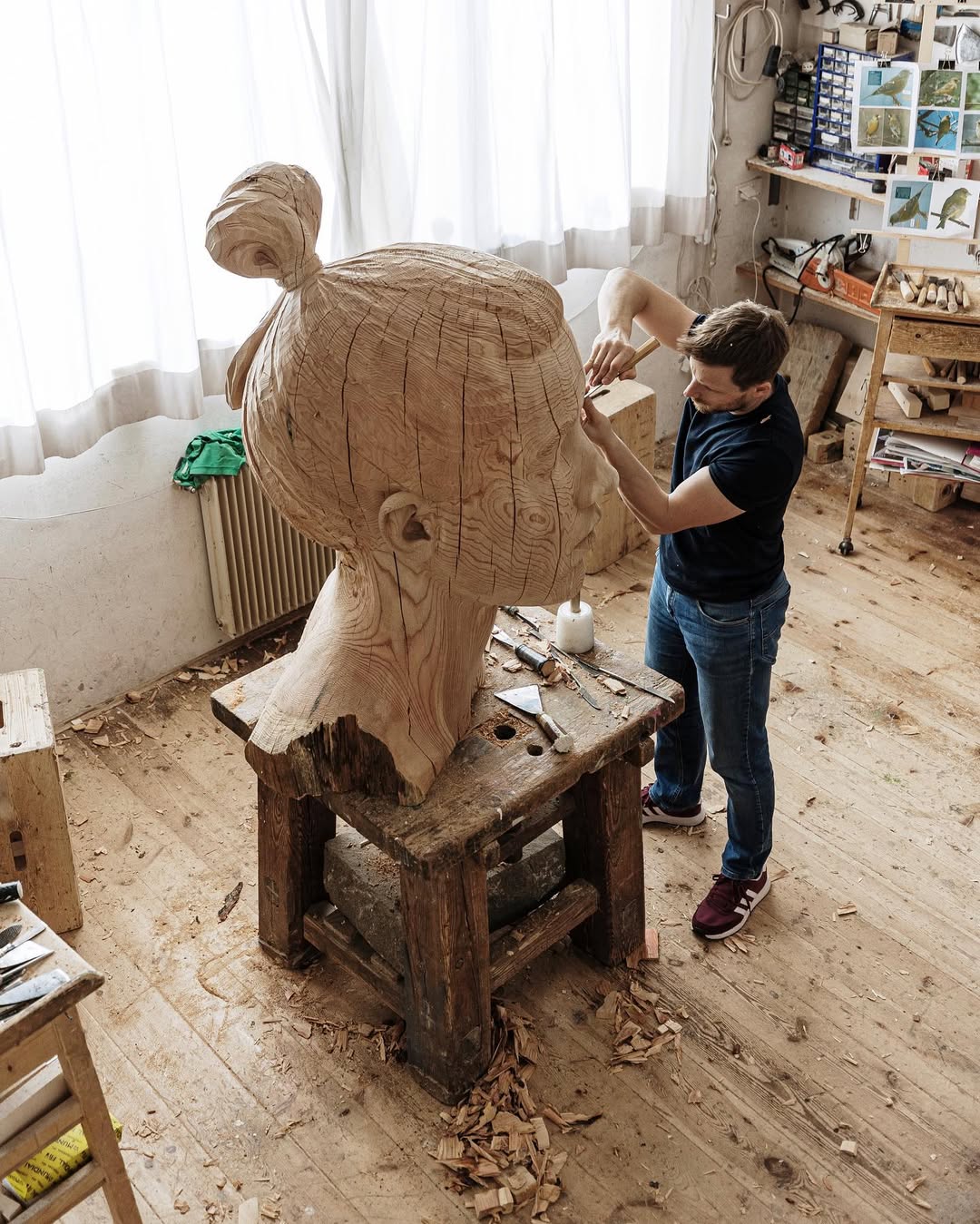
Matthias Verginer stands out in the contemporary carving scene because he approaches wood with a mix of precision and quiet mischief. Born in 1982 in South Tyrol, he grew up surrounded by a long local tradition of carving, a setting where technique mattered and craftsmanship was non-negotiable. His family is deeply rooted in the artistic community, and carving was simply part of daily life. Instead of rebelling against that heritage, he transformed it into something fresh. Over time he developed a voice that feels sharp, humorous and slightly skeptical of the world around him.
He trained under his father and later refined his approach by studying how modern sculpture interacts with symbolism. This combination gave him a strong technical base and a sharp conceptual eye. Although he works in a region known for classical religious carving, he was never tempted by strict traditionalism. He went for a more contemporary path, often mixing realism with unexpected ideas. Today he is recognized internationally for his polished surfaces and ironic storytelling, and he continues to work from his studio in South Tyrol, keeping the old tools close but using them to carve his own direction.
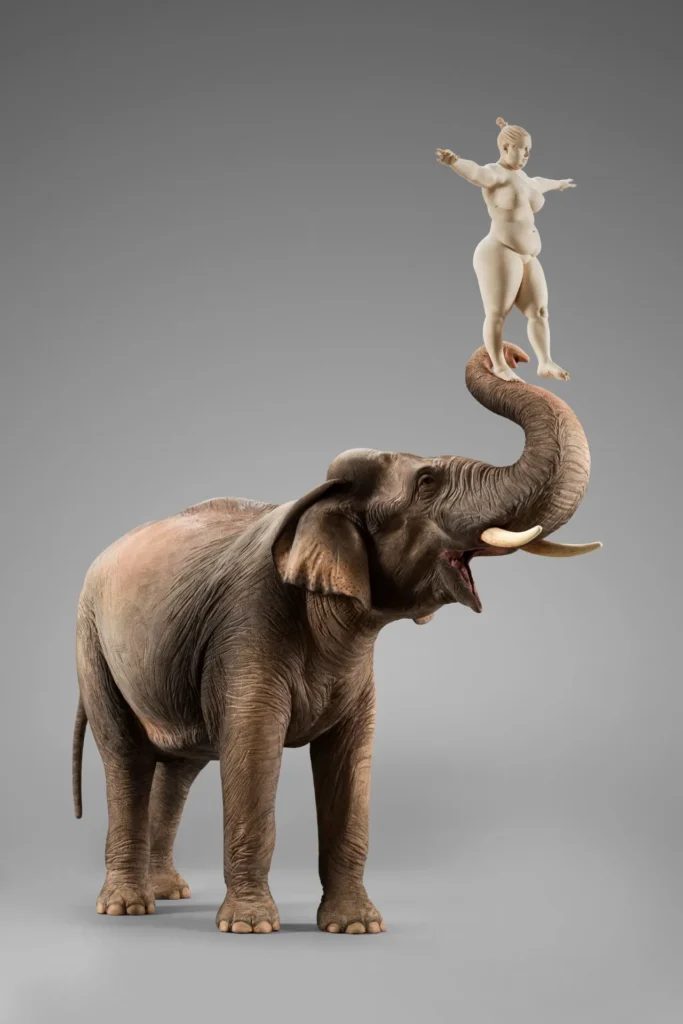
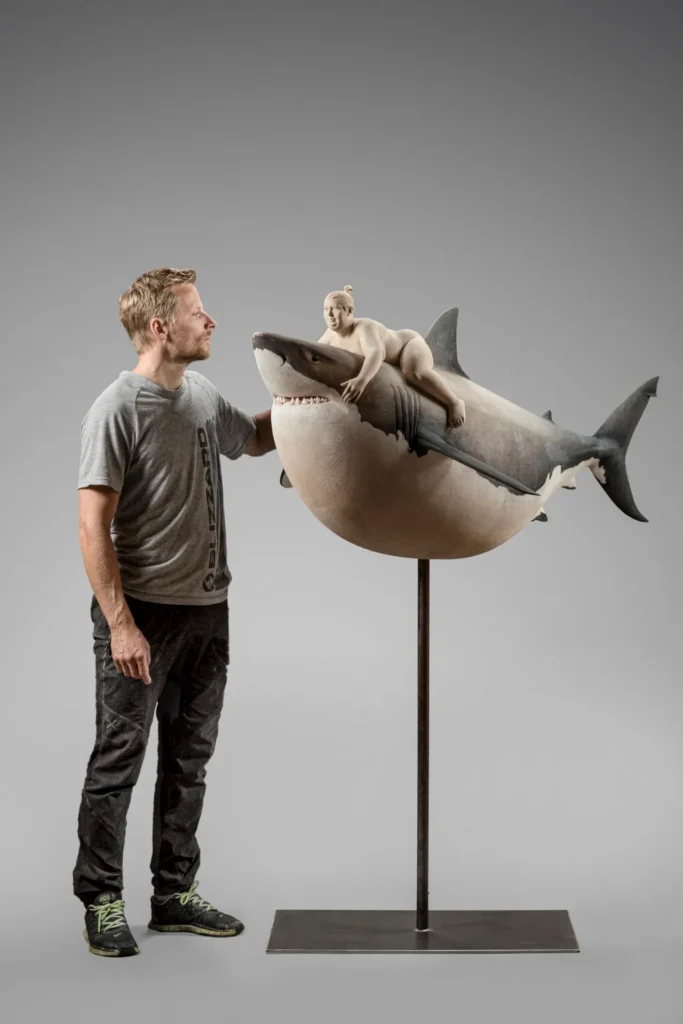
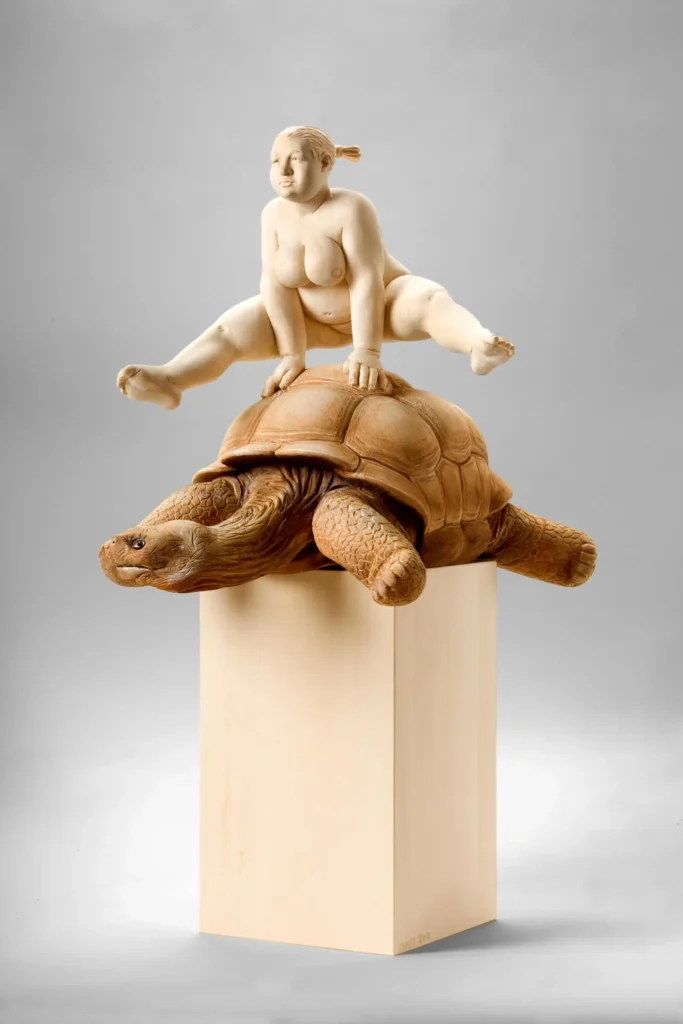
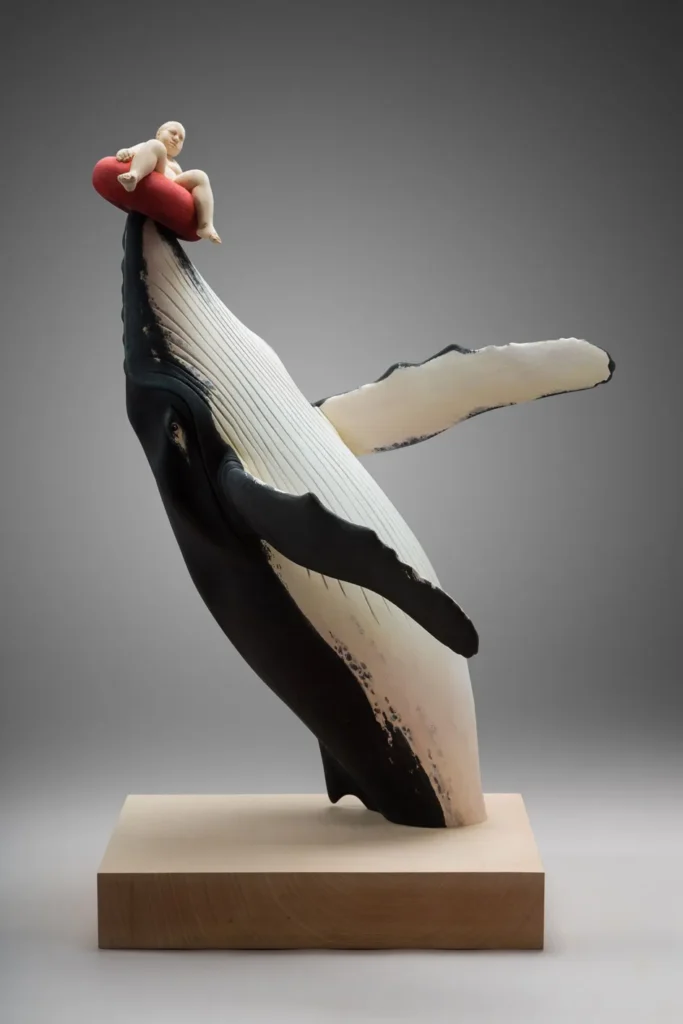
His sculptures immediately catch attention because they look almost hyper-realistic at first glance. Smooth skin, precise anatomy and carefully carved details draw the viewer in. But once the initial craftsmanship settles, the twist appears. Verginer builds scenes that distort expectations. A woman balancing on oversized fruit, a man entwined with strange animal forms, a child carrying symbols of excess or illusion. These combinations turn familiar images into something that questions modern habits. His irony is never brutal. It is subtle, sometimes playful, sometimes quietly uncomfortable.
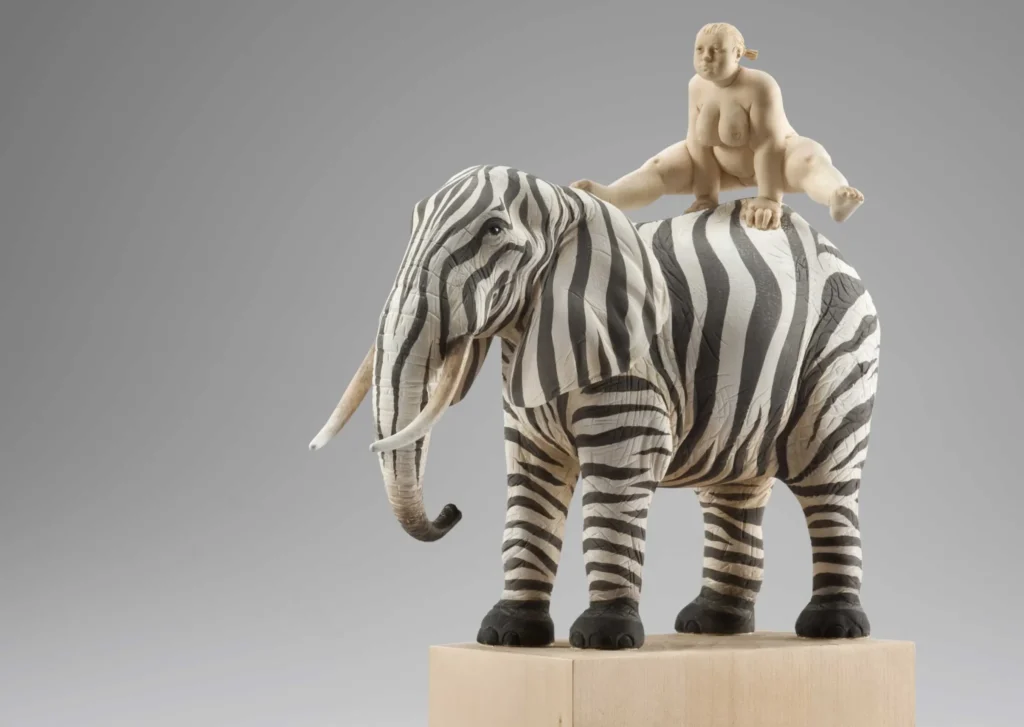
The humour in his work often revolves around the strange ways people relate to nature, consumption and status. He exaggerates simple things to highlight how absurd everyday life can be. A human figure might lean on a giant pear or calmly coexist with an animal in a completely unnatural pose. He uses these surreal setups to point at the contradictions inside modern society. People chase meaning but get distracted by surface. They want purity but surround themselves with excess. Verginer packages these ideas into sculptures that feel calm on the outside but sharp underneath.
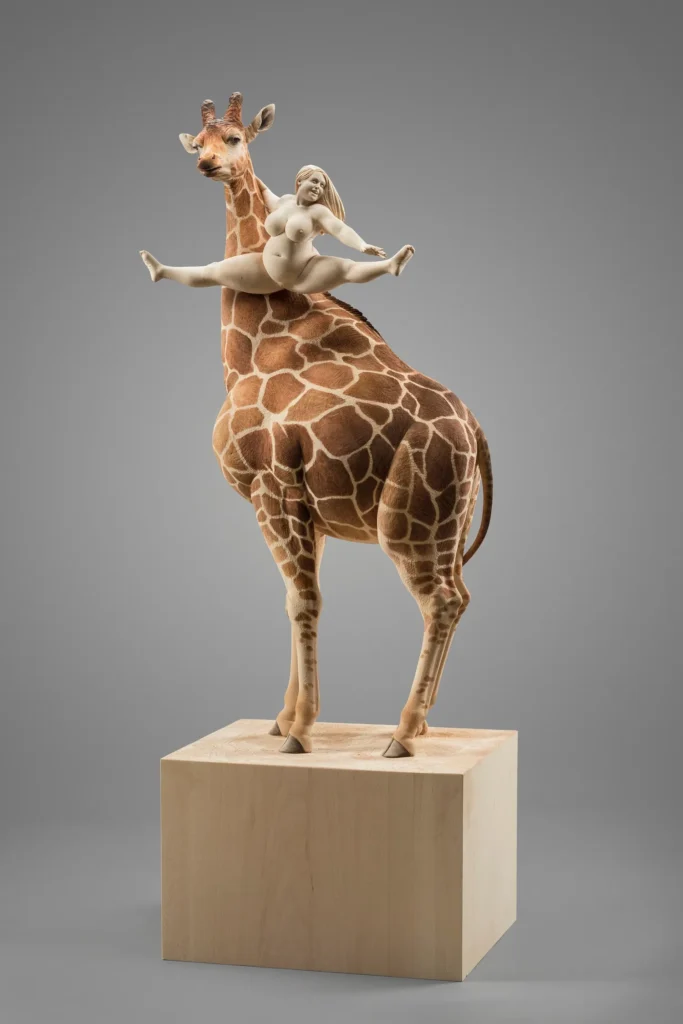
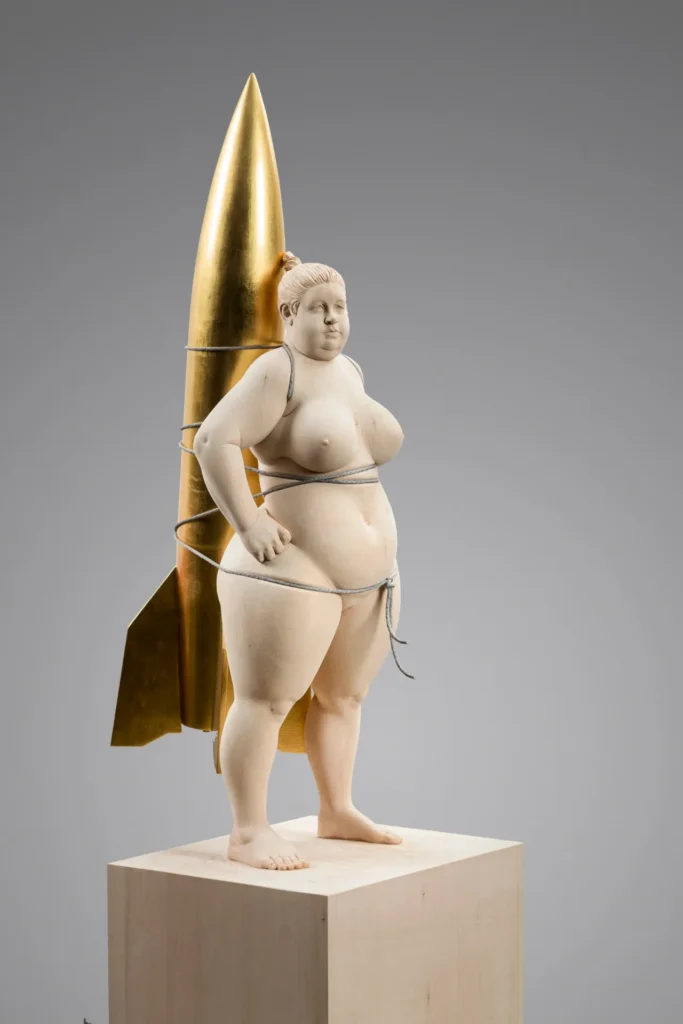
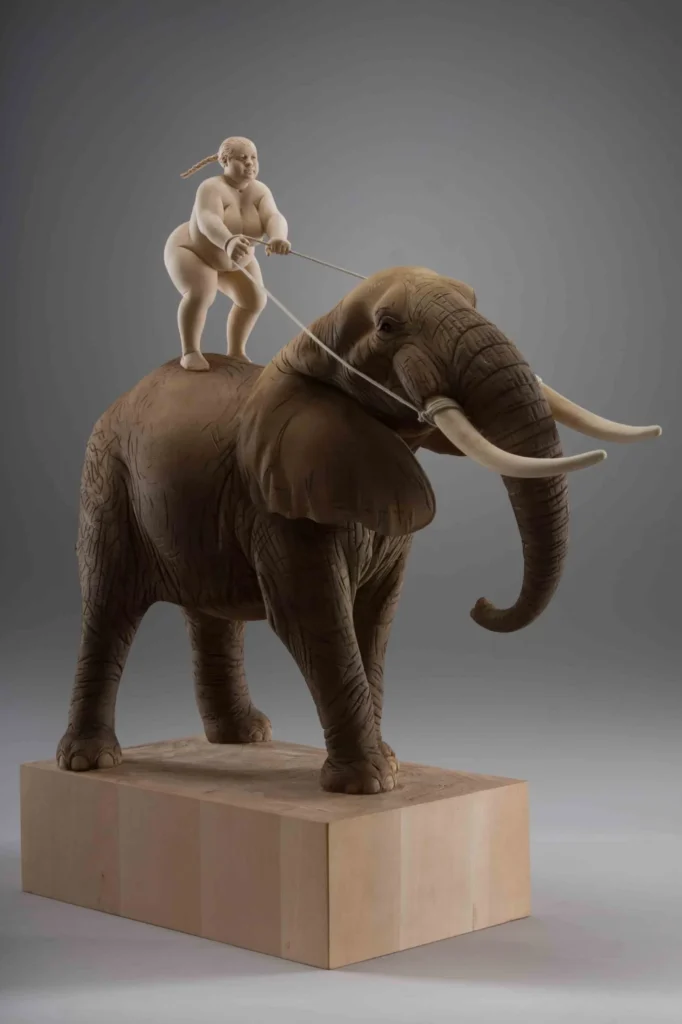
Colour plays a big role in his ironic tone. Although his base material is wood, he often adds soft pastel shades, muted tones or very selective accents. This colour work pushes the sculpture further away from tradition, turning the figures into something between reality and a staged world. The palette also softens the message. Instead of shouting, the sculpture whispers, inviting slow observation. His surfaces are polished, almost velvety, which adds to the contrast between the simple forms and the deeper message.
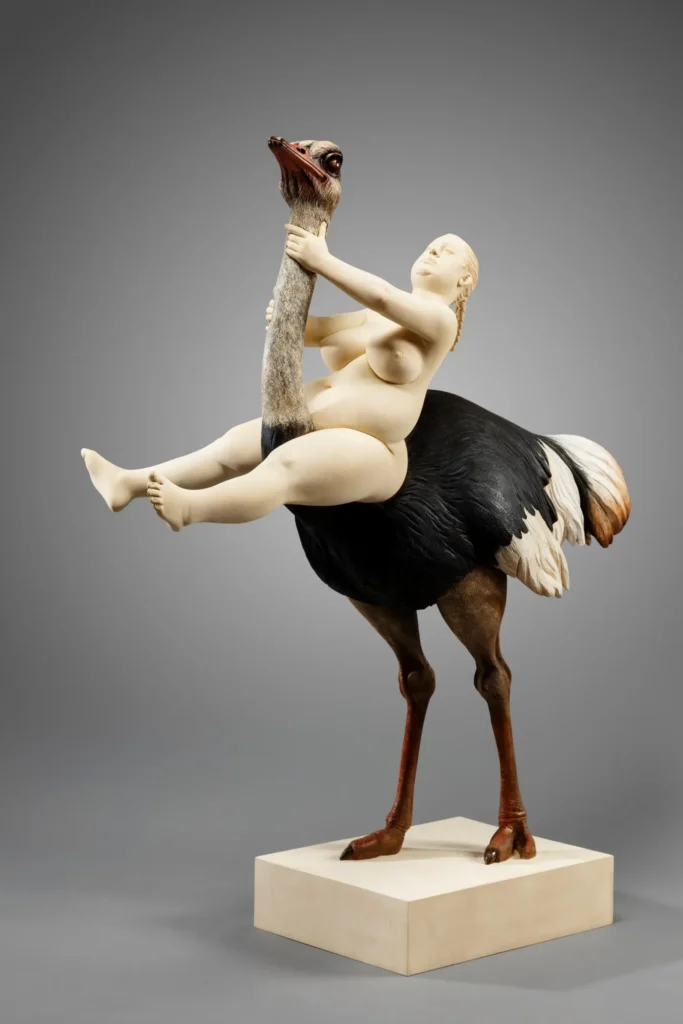
Many of his sculptures feature people in isolated moments. They stand still, almost frozen, often accompanied by oversized fruits, animals or symbolic objects. These figures look self-contained, as if stuck inside their own thoughts. This stillness strengthens the ironic tone. The viewer knows the scene is impossible, yet it feels entirely believable within his world. That tension makes the work memorable. It encourages viewers to reflect on why these characters exist the way they do and what they say about modern experience.
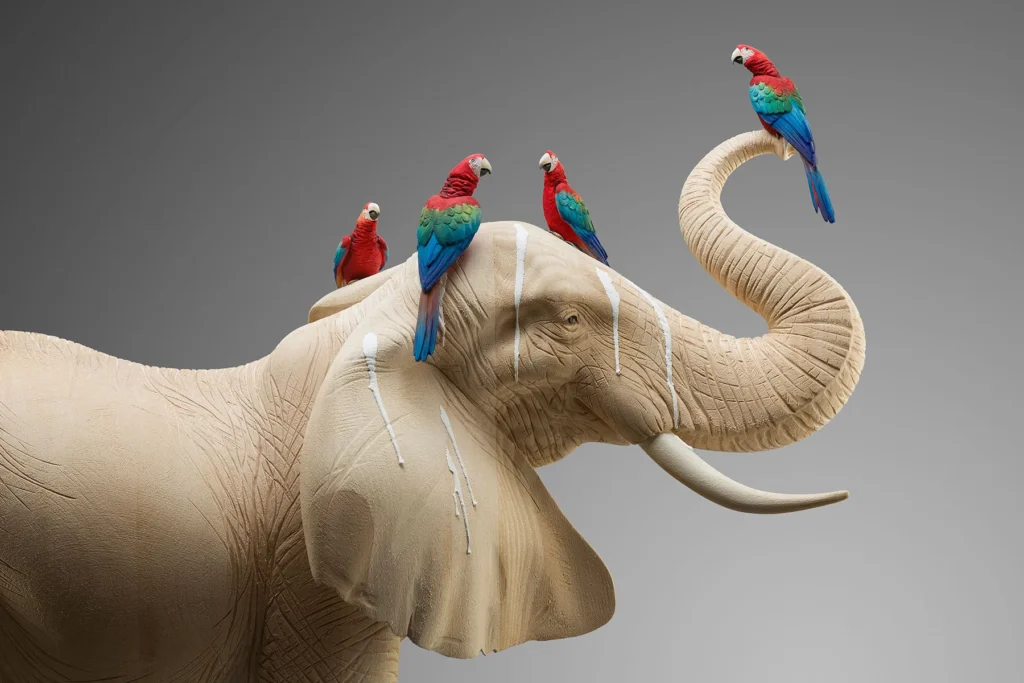
Verginer also pays close attention to proportion. He plays with scale to amplify symbolic meaning. A fruit becomes a stage. An animal becomes a philosophical companion. A tiny object becomes a burden. By stretching or shrinking elements, he highlights how people assign importance to the wrong things. His irony is rooted in this imbalance. When something irrelevant becomes massive, it exposes how distorted priorities can be.
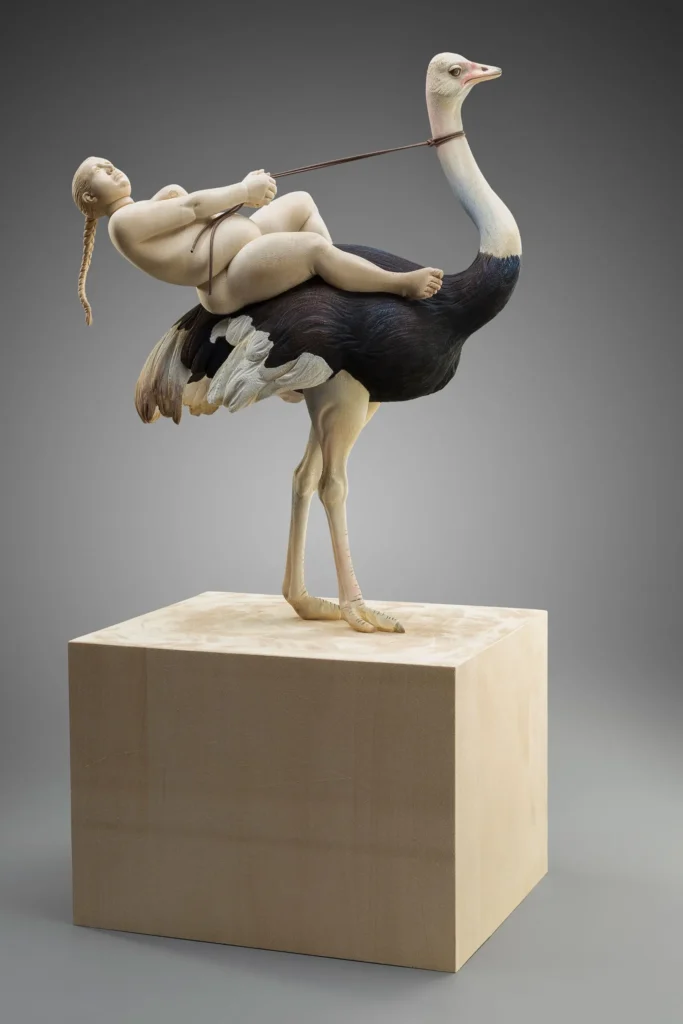
Although the sculptures carry serious themes, they never feel heavy. The light humour keeps them accessible. Verginer avoids preaching. His work invites interpretation without forcing it. The viewer can enjoy the smooth carving and playful scenes or look deeper into the metaphors hidden inside them. That flexibility is one reason his pieces resonate in galleries around Europe and beyond.
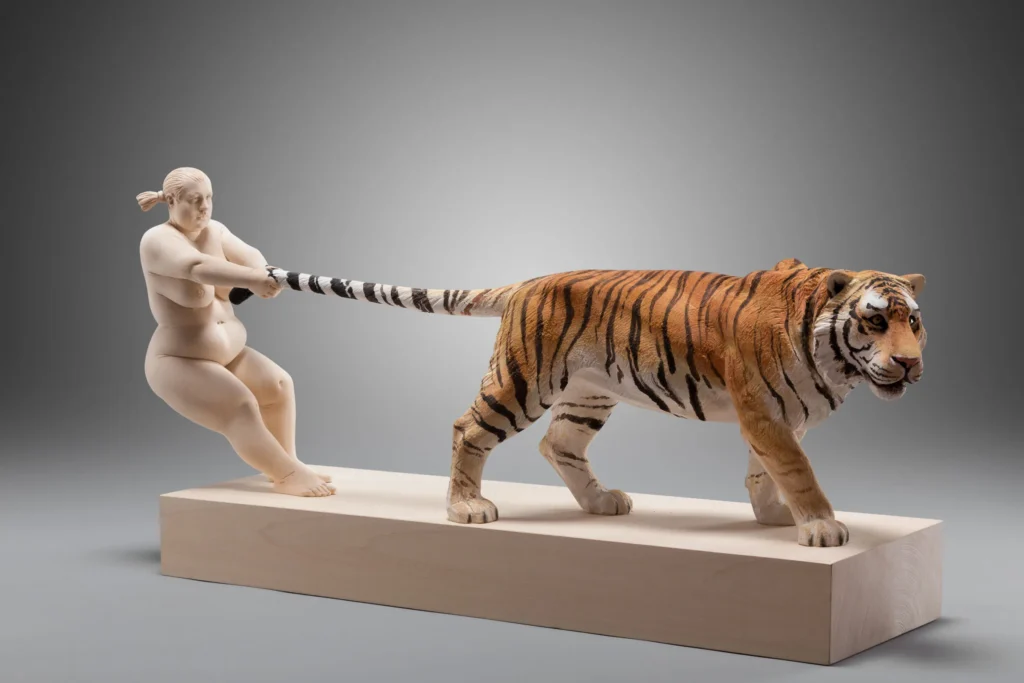
Matthias Verginer carved out a distinct space in the contemporary art world by trusting his own instincts. He took a craft with centuries of tradition and pushed it into new territory, using irony to challenge comfortable assumptions. His sculptures show how wood can hold both beauty and critique at the same time. They feel modern, clever and surprisingly honest. And while his creations often highlight the strange side of human behaviour, they do it with warmth and a small smile tucked inside the grain.
Reply