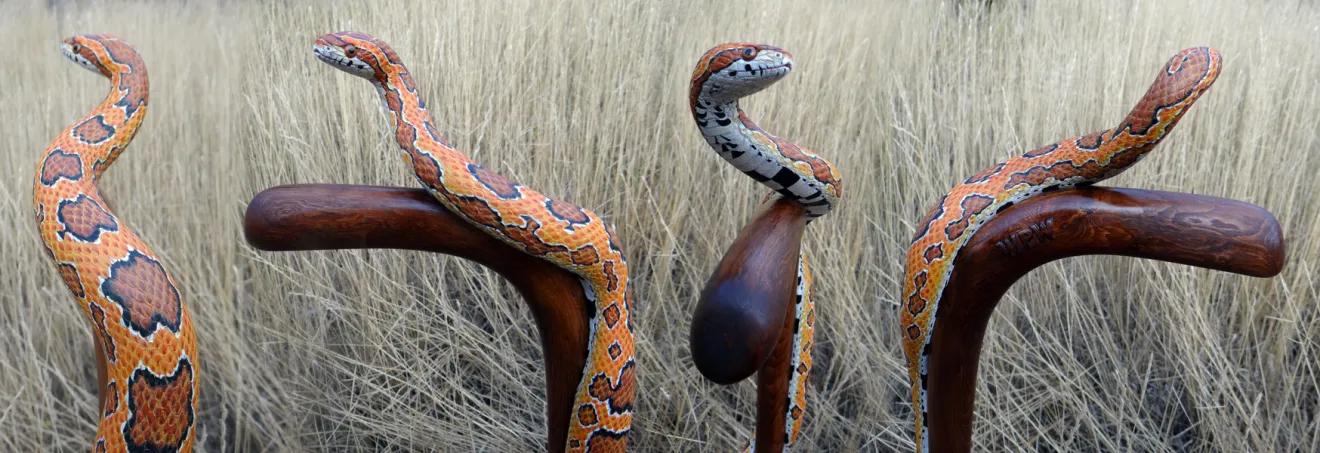
Mike Stinnett is a wildlife artist and wood carver best known for hand-carved walking sticks and canes where animals appear to climb, coil, or emerge from the staff itself. Based in Eastern Oregon, his work is rooted in the landscapes and wildlife he grew up around, and that outdoors-first viewpoint shows up in both subject matter and material choices.
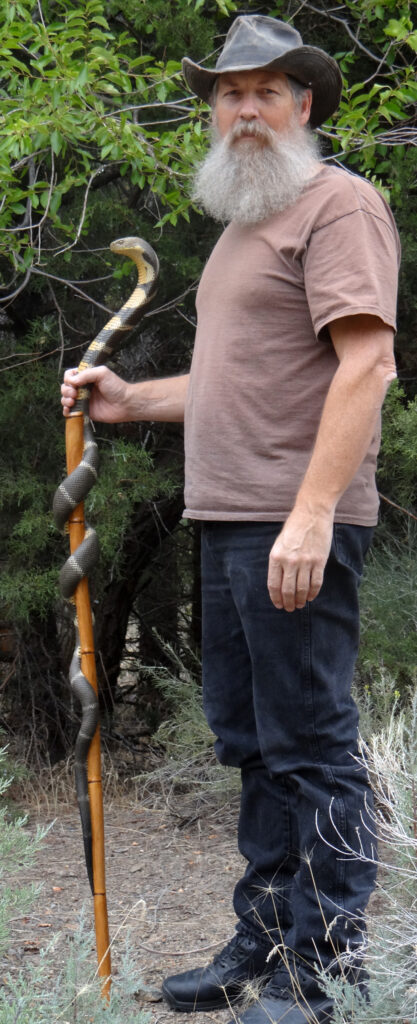
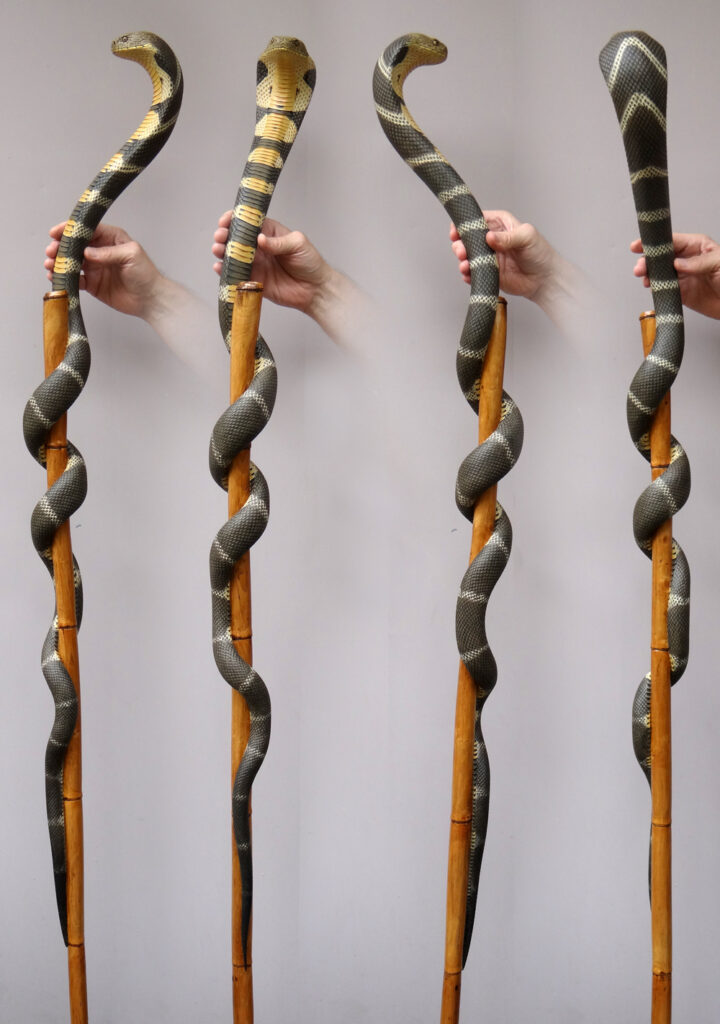
Before the sticks became his signature, Stinnett’s art life leaned heavily toward painting. He started out with wildlife and landscape paintings while working in carpentry, then gradually shifted toward carving as his main focus. The move makes sense when looking at the finished pieces: they read like paintings translated into relief, with color, pattern, and scene-setting details pushed into three dimensions.
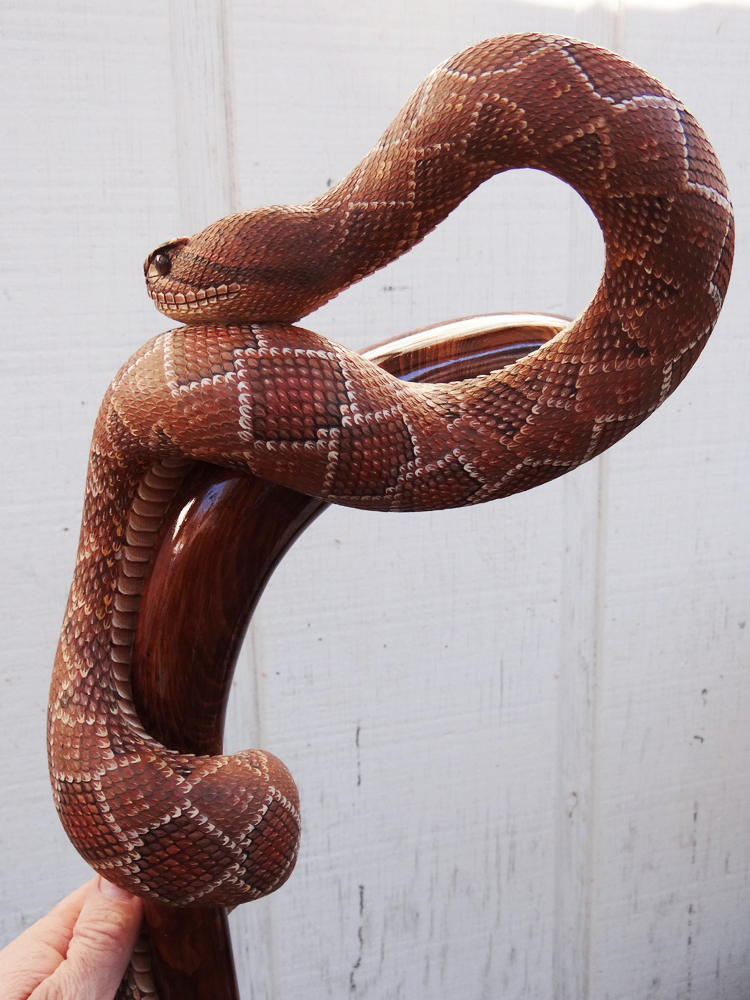
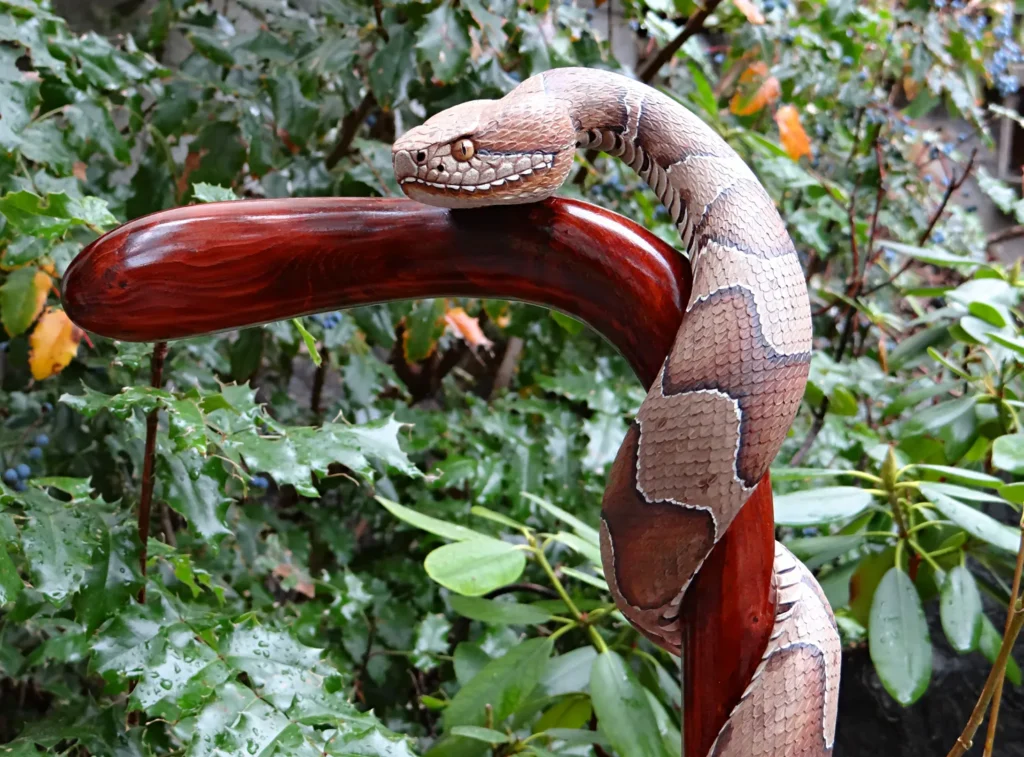
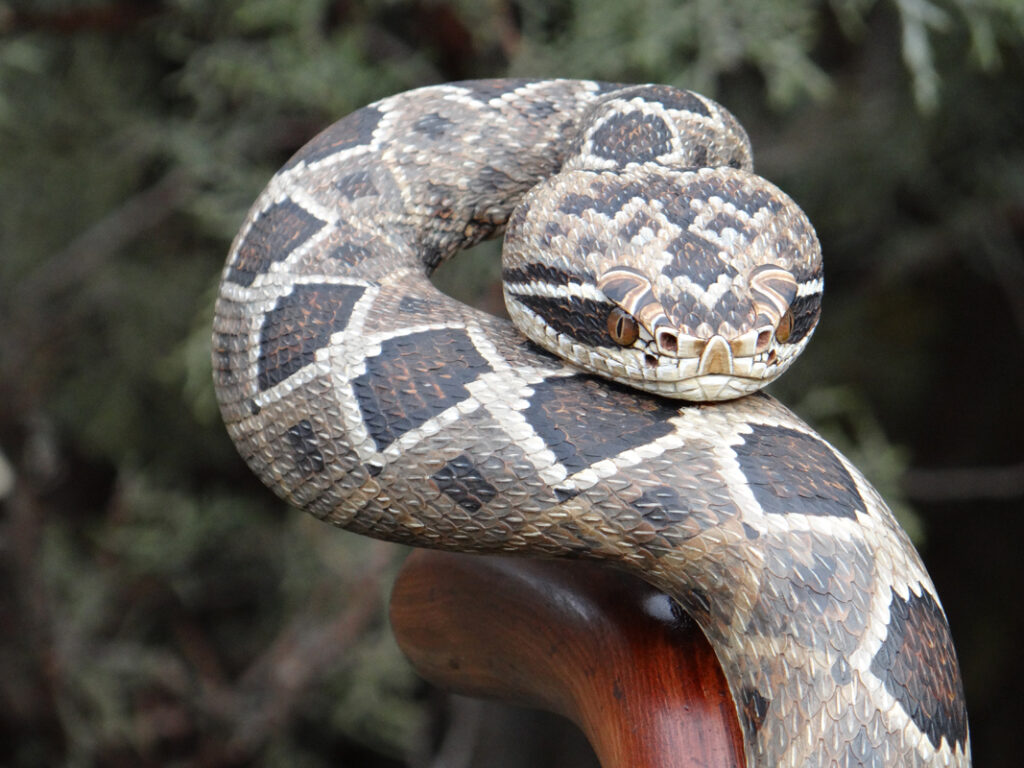
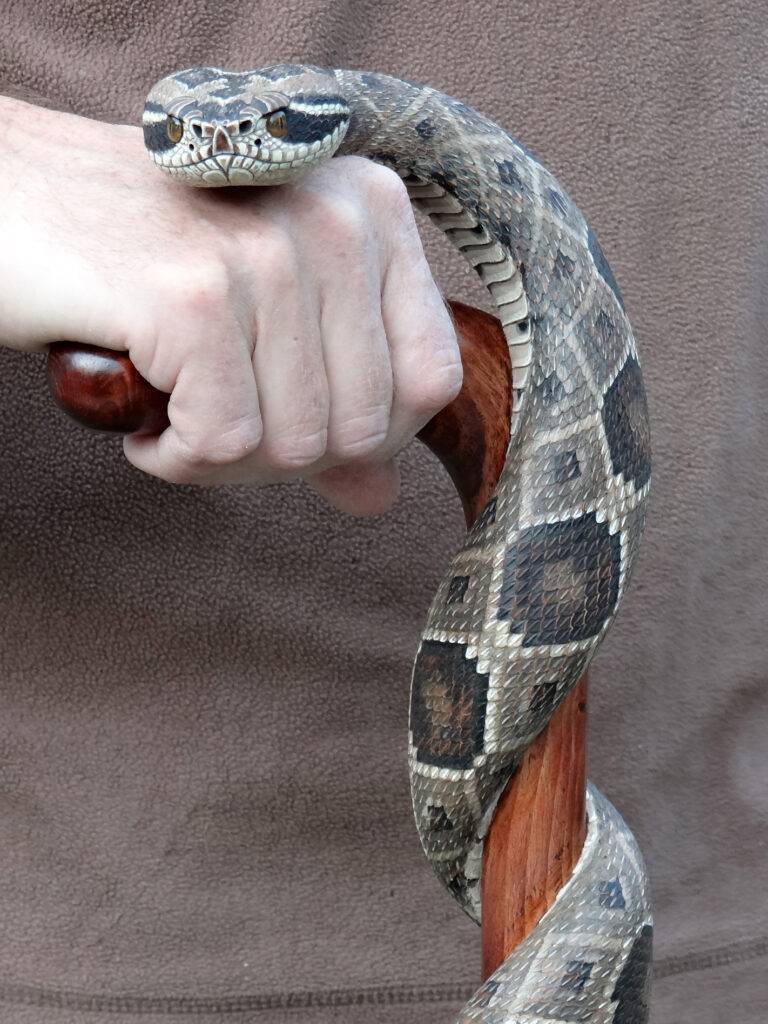
The designs that made his name are his snake sticks, especially rattlesnake and copperhead themes. In many of these, a realistically scaled snake wraps around the shaft in a long spiral, sometimes climbing toward the handle, sometimes posed in a more dramatic “ready to strike” attitude. A key part of the fascination is the illusion that the animal and the stick are one continuous form, not a separate carving attached to a pole.
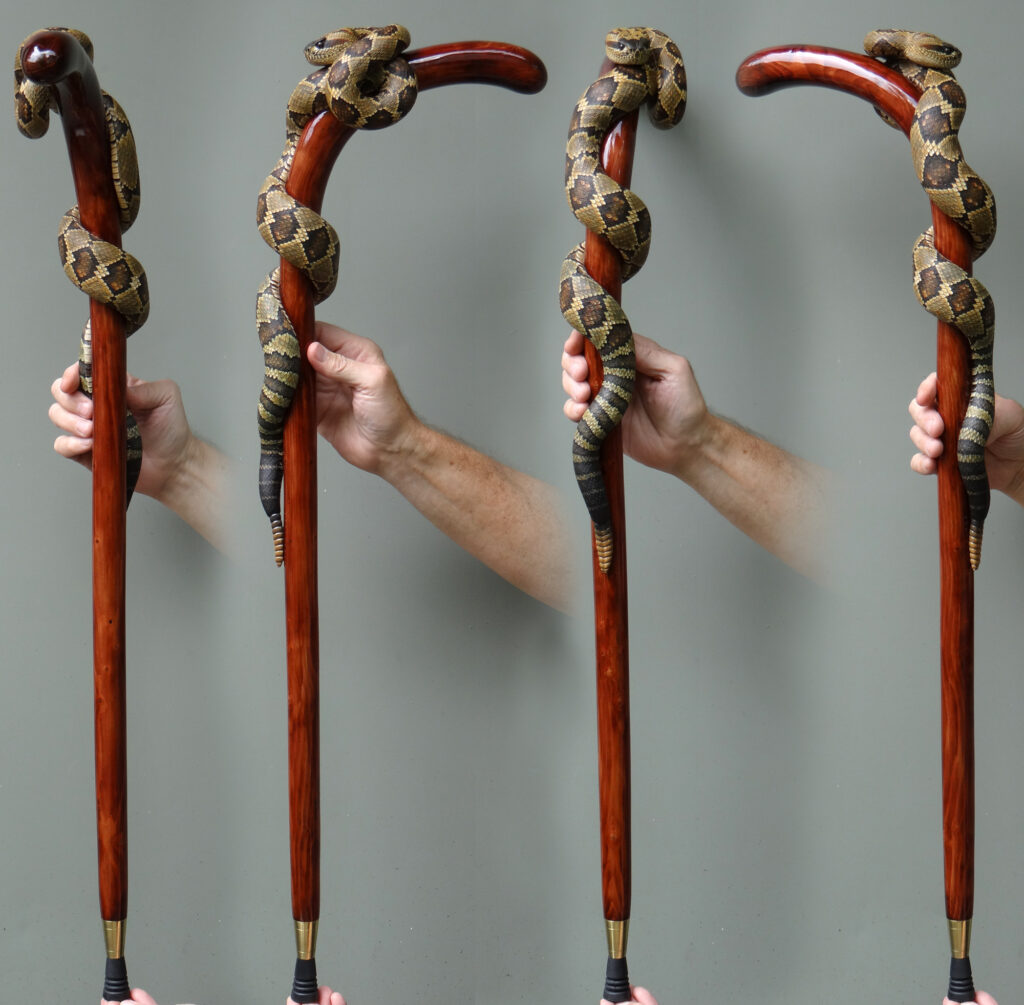
That single-piece feel also shapes how the sticks sit in the hand. Instead of perfect symmetry, the staff often follows natural bends and crooks in the wood, letting the original form guide the final composition. The curve becomes part of the story, helping define how the snake moves along the length and where the head, coils, and transitions make the most visual sense.
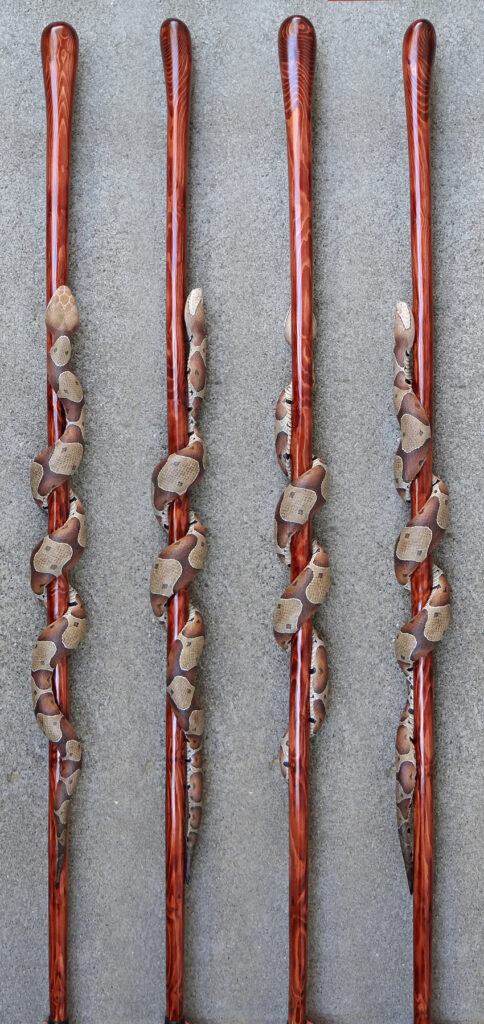
What separates Stinnett’s canes from many novelty “snake canes” is the density of finish work. Scales and texture are not treated as a repeating pattern to get through quickly. They are surfaced with enough variation to suggest real anatomy, then reinforced with careful color work that echoes specific species markings. The result is the kind of realism that holds up even when you look closely, which is where many carved sticks start to fall apart.
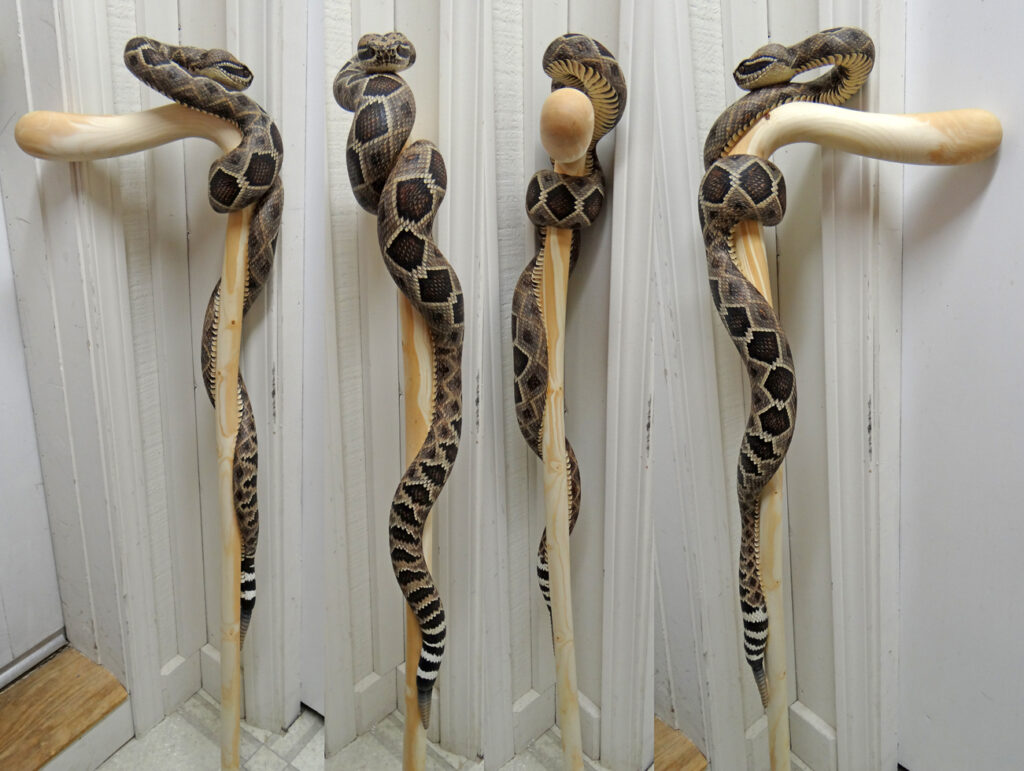
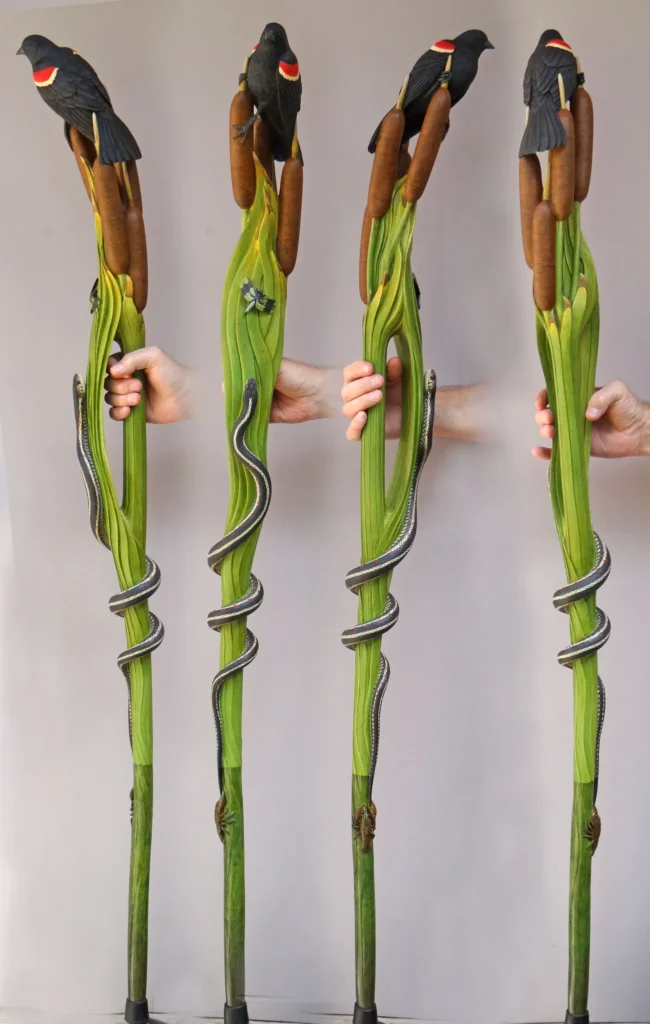
Although snakes are the headline act, the broader catalog sits firmly in wildlife art. His sticks can include additional animals and habitat elements – the kind of details that turn a functional object into a carved scene. Behind the realism is also a very practical process. There is a lot of wood removal before the “fine detail” stage starts, and power carving plays a role in shaping the basic forms before the slow work of texture, burning, and finishing begins.
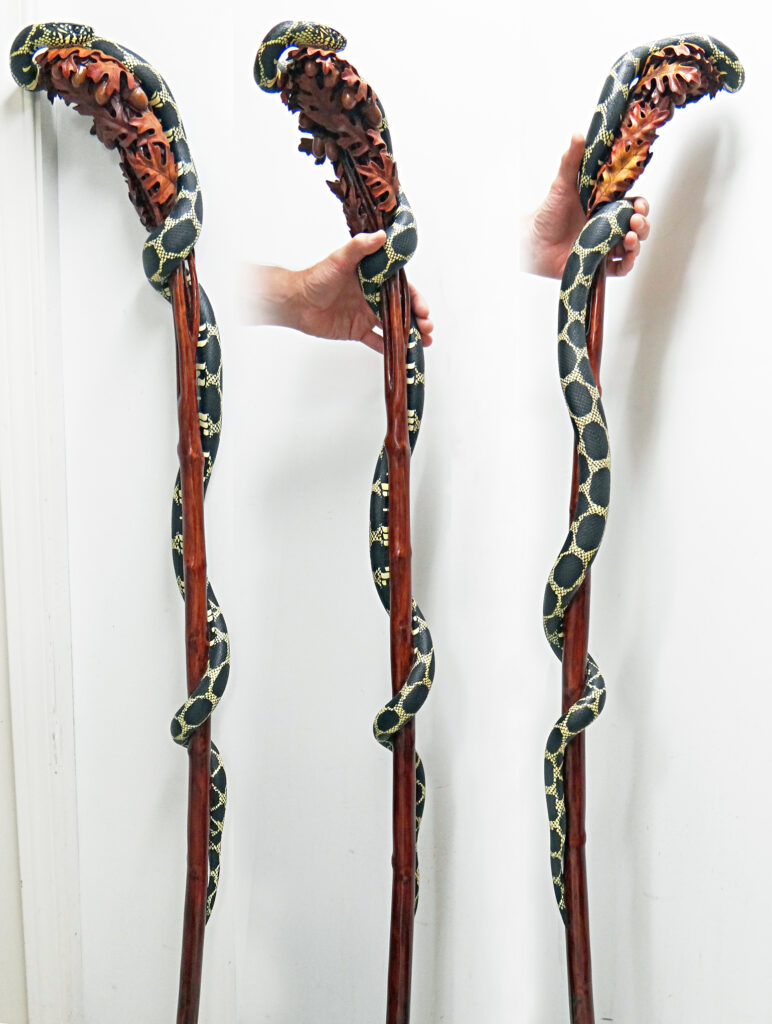
Time is a recurring theme in how he talks about the work. An individual stick can take weeks or even months to complete, which tracks with the complexity and the finish level. Many pieces are numbered and documented over time, which reinforces that each one is treated as a standalone artwork rather than a repeat product.

Stinnett’s business presence mirrors that one-at-a-time pace. New work appears as it becomes available, and updates are shared through his channels. He also shares process videos and offers deeper learning through tutorial-style content, which fits an artist whose work depends on the small decisions – the geometry of a coil, the crispness of scales, the way paint settles into texture, and how a finish holds everything together.
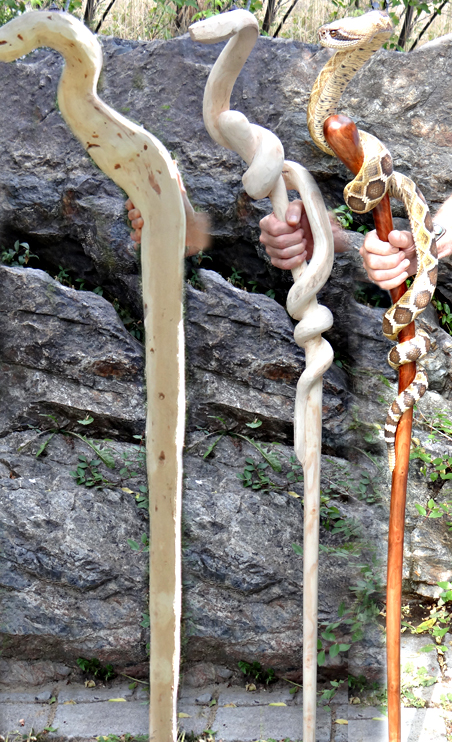
Taken as a whole, Mike Stinnett’s walking sticks sit in an interesting middle ground: functional enough to be carried, but detailed enough to belong on a wall. The hook is obvious – a rattlesnake wrapped around a staff is hard to ignore. The real staying power is craftsmanship: disciplined carving, patient texturing, and a painter’s eye for color and wildlife specificity, all concentrated into an object that is meant to move through the world, not just sit in a display case.
Reply