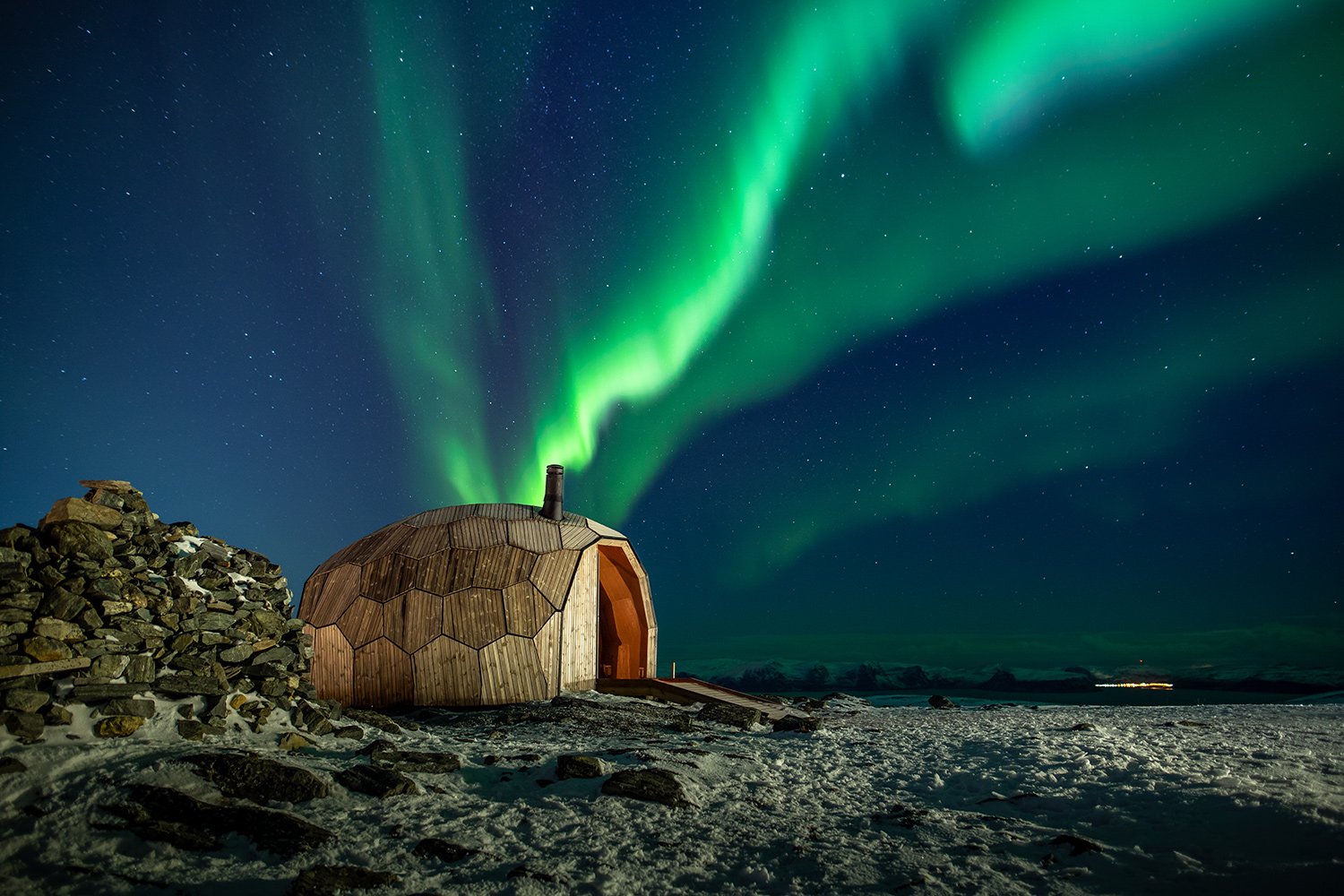
On a windswept mountain above Hammerfest, a small wooden cabin sits like a weathered rock. This is the Hiking Cabin by SPINN Arkitekter, part shelter, part landscape sculpture, and part engineering experiment. It looks simple at first glance. The story behind it is anything but simple.
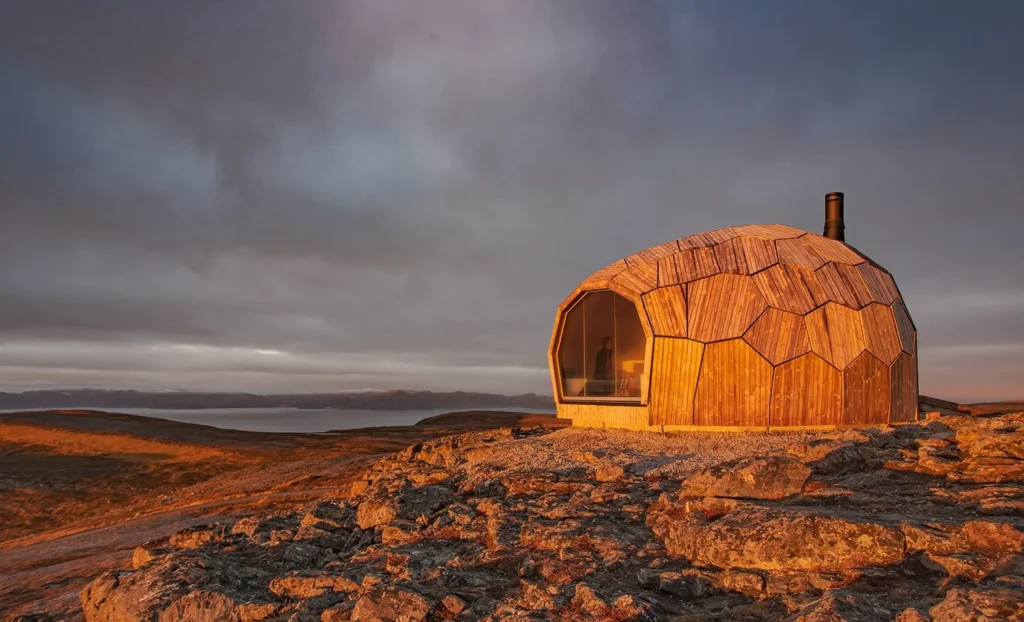
The cabin belongs to a pair of day-use huts commissioned to encourage more people to hike in the harsh Arctic terrain around the city. The client is the local trekking association in Hammerfest, working together with the Norwegian Trekking Association. The goal was clear. Create a warm and inviting place to rest near the top of the mountain. It had to handle brutal winds, heavy snow and icy rain. And it had to feel like a natural part of the rocky plateau.
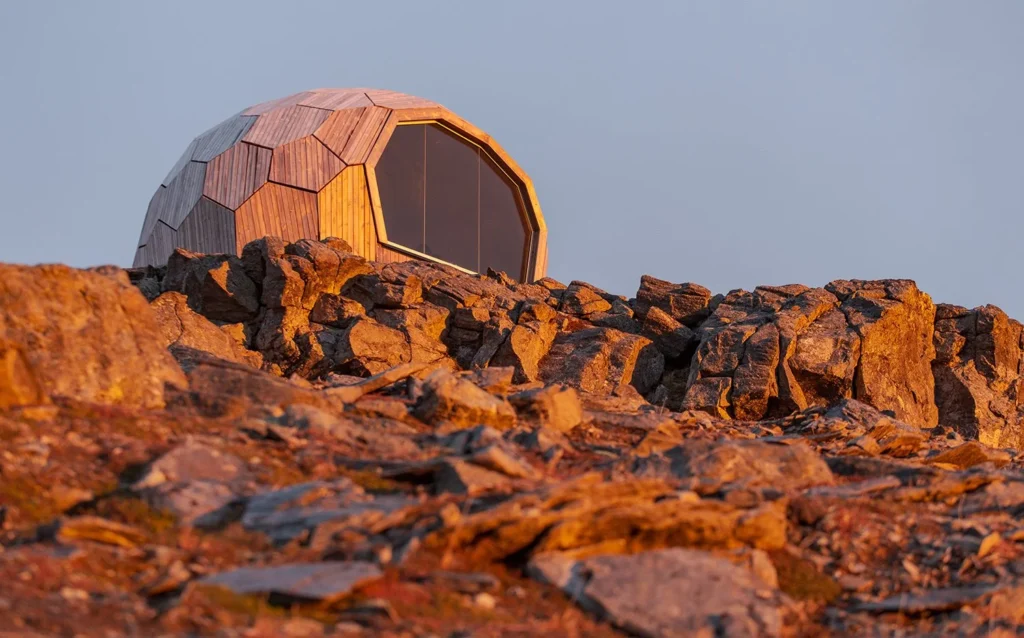
SPINN Arkitekter teamed up with FORMAT Engineers and started with the site itself. The mountain was scanned by drone and processed with photogrammetry software. That produced a very detailed 3D model of the terrain. On top of this digital landscape, the architects shaped the cabin as an irregular, rounded volume that mimics a boulder. The form was tested and tweaked to sit snugly into the rock and to reduce wind pressure around the structure.
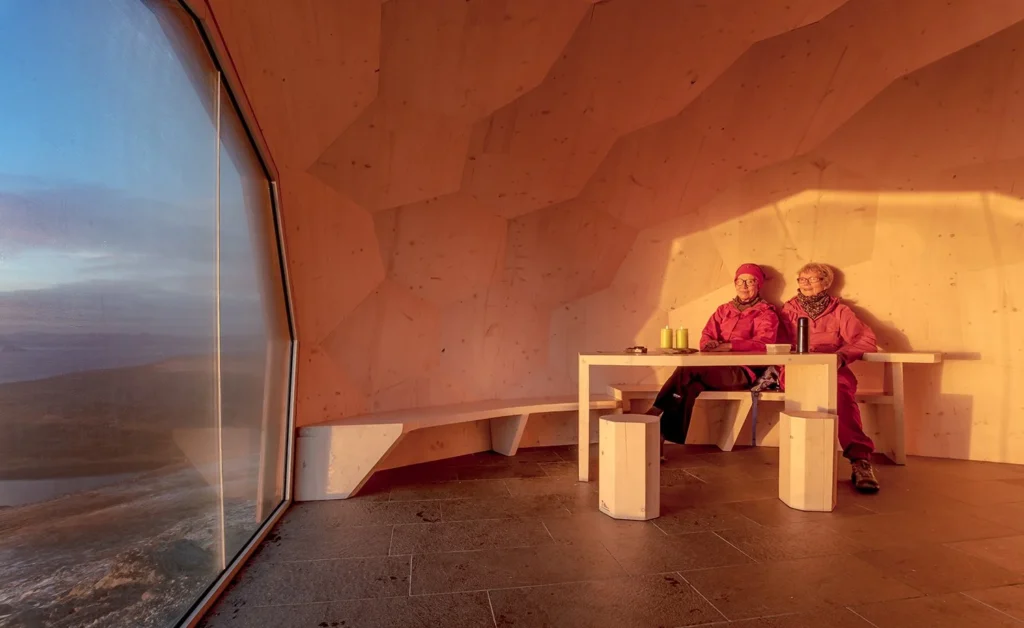
Inside, the building is surprisingly small. The floor area is about 15 square meters, or roughly 150 square feet. It is enough for a simple bench, a table, a wood burning stove and a generous window facing the view. The interior is lined with timber, which softens the faceted geometry and makes the room feel warmer than the landscape outside. When the stove is lit and snow swirls around the window, the contrast between outside and inside becomes very strong.
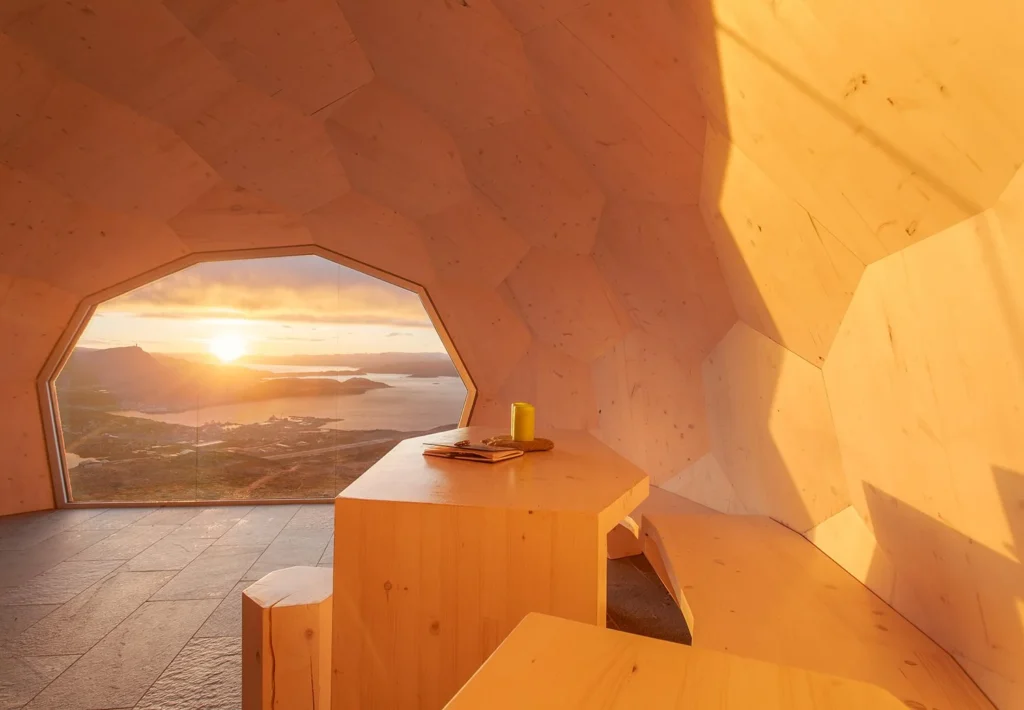
The structure is a cross laminated timber shell made from 77 unique CLT panels. Each panel has its own shape and angle. Together they form a double-curved wooden capsule, like a three-dimensional jigsaw puzzle. The panels were designed in digital models using tools such as Rhino, Grasshopper and custom scripts. This allowed the team to control structural forces, panel joints and screw positions in great detail before any wood was cut.
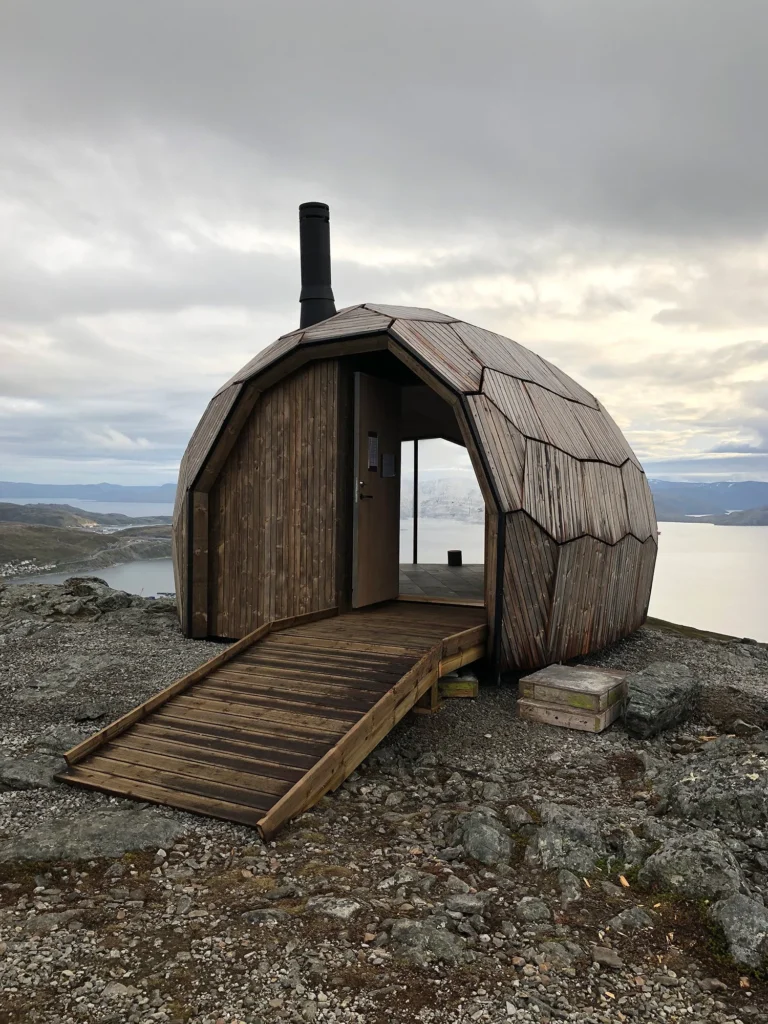
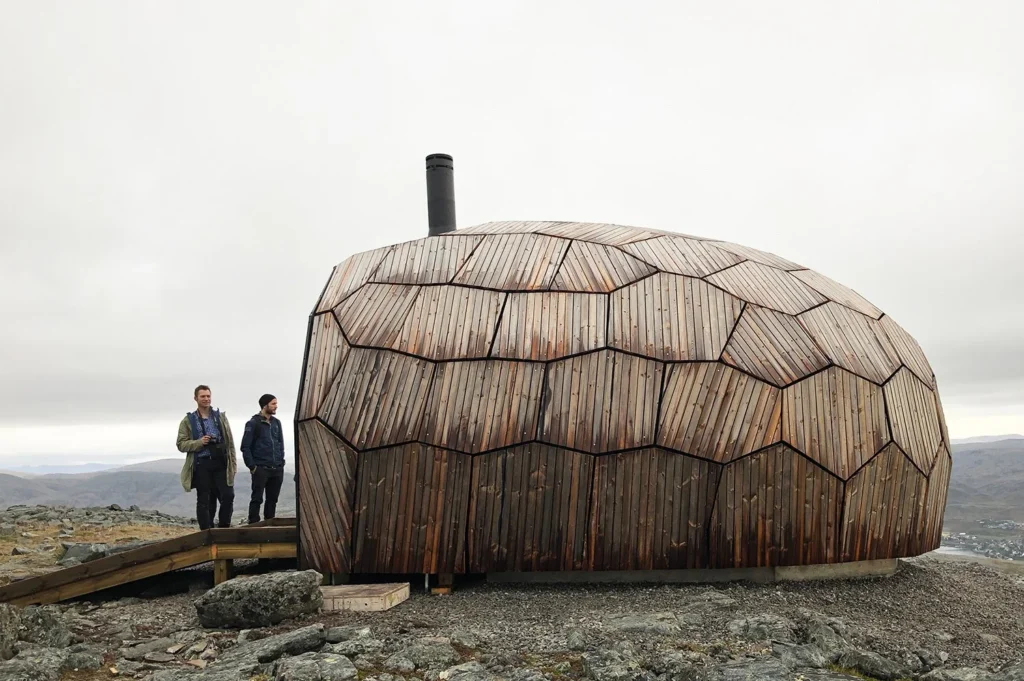
On the outside, the timber is wrapped in Kebony wood cladding. The pieces follow the complex surface and create an irregular, rock-like texture. Over time, the modified wood weathers to a silver grey tone that blends even more with the mountain. The cladding system was also tested with 3D printed models to understand how each tile sits and overlaps. The result is a shell that looks rough from a distance, but reveals careful craftsmanship up close.
Construction was a community effort. The cabin was prefabricated in a warehouse, where local volunteers helped assemble the CLT shell and cut parts for the exterior skin. After trial assembly, the building was split in two pieces and transported on a flatbed truck up the mountain. A crane lifted the halves into place on a small concrete slab, and they were winched together. Volunteers and professionals then finished the cladding, installed the big window, ramp, fireplace and interior fittings. One cabin on Storfjellet was completed first. A second one on Tyven mountain followed later.
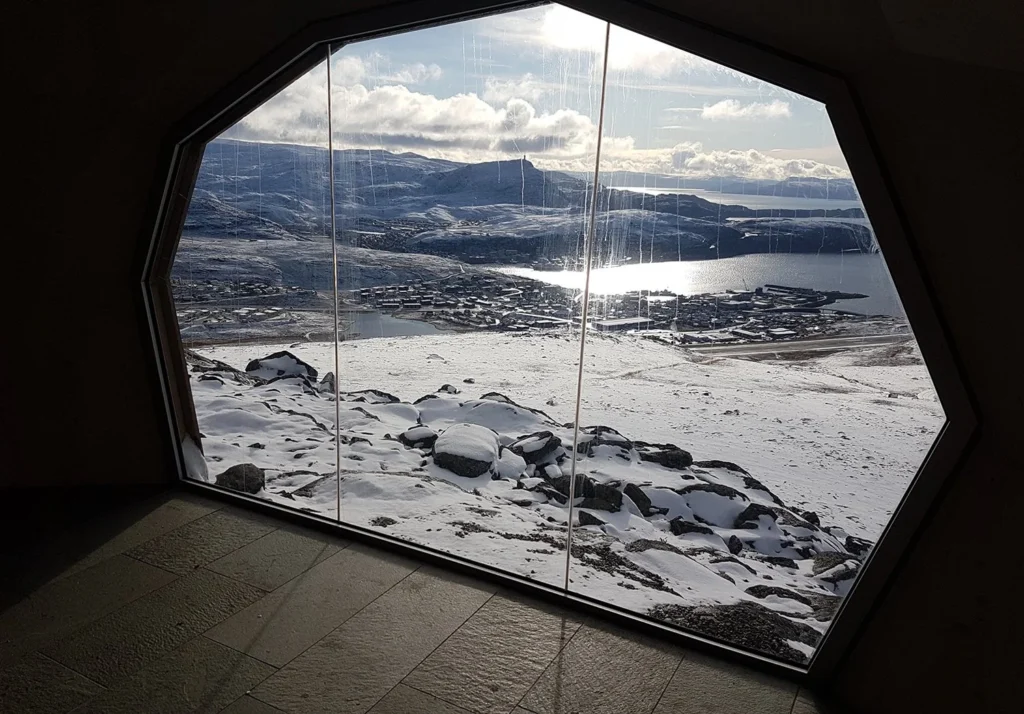
Seen from afar, the Hiking Cabin almost disappears among the rocks. Only the dark window and doorway reveal its true nature. Yet inside, it shows how digital tools, engineered timber and local volunteer work can combine into a very physical, very tactile result. It is a small project in terms of size. But it demonstrates how thoughtful design can make remote landscapes more accessible, while still respecting the character of the place.
Reply