
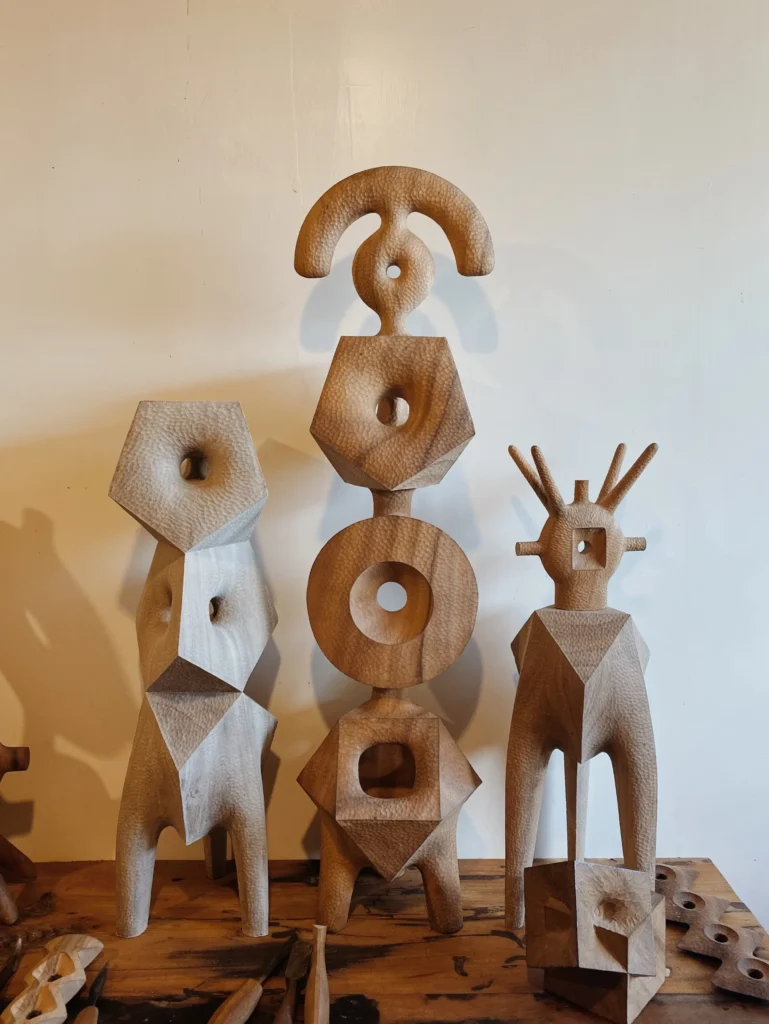
Aleph Geddis carves in a way that makes geometry feel almost alive. His tall totems, compact creatures and portal-like forms look part ancient relic, part science fiction object, all cut from solid blocks of wood with hand tools and a stubborn respect for craft.
Born in 1973 and raised on Orcas Island in Washington State, Geddis grew up surrounded by forests and salt water, with a carving shed as a kind of second home. His stepfather, wood sculptor and boat builder Walter Henderson, introduced him to the basics of carving and boatbuilding, and that workshop environment quietly became the center of his education.
From an early age he was drawn to form. Waldorf school lessons in beeswax sculpture showed that he could imagine and shape three dimensional objects with ease. Later, a serious apprenticeship with his stepfather and studies with noted Northwest Coast carver Duane Pasco deepened his understanding of structure, proportion and tool work. The visual language of Indigenous Northwest Coast carving left a strong imprint as well: stylized natural forms, bold profiles and a sense that wood could carry stories and spirit, not just decoration.
A family trip to Japan in his teens added another layer. The restraint and clarity of Japanese woodworking and architecture reinforced his attraction to clean lines, careful joinery and quiet surfaces that do not shout for attention. That combination of influences still sits underneath his work today, even as his sculptures have become more abstract and esoteric.
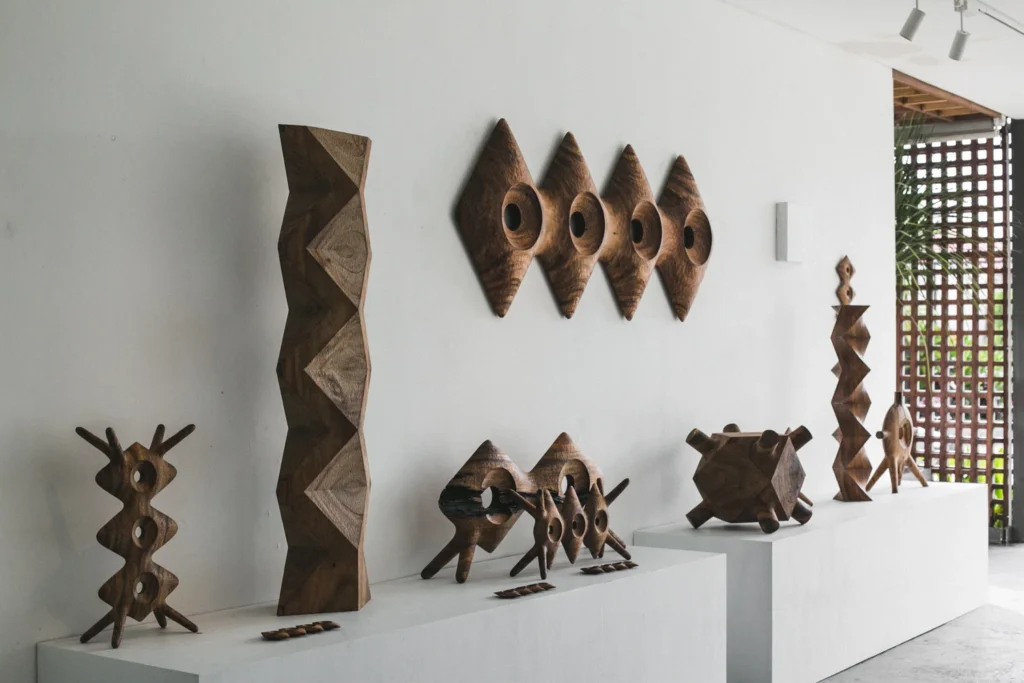
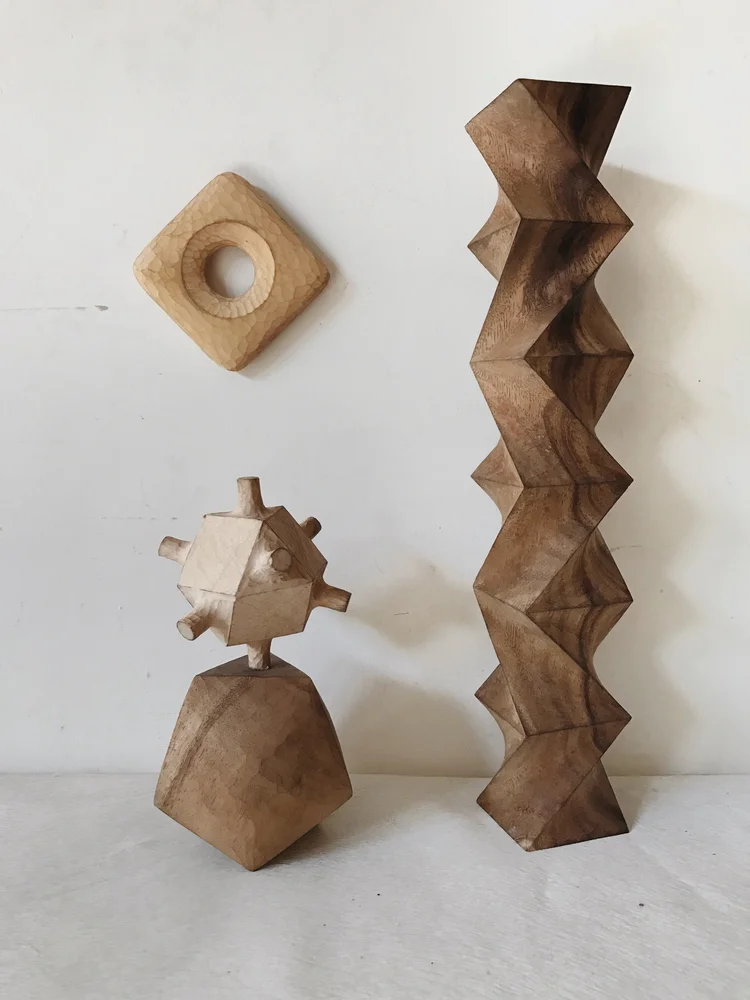
At the heart of Geddis’s practice is an obsession with geometry. Many series focus on Platonic solids and other elemental forms that mathematicians have studied for centuries. He stacks, truncates and pierces these shapes until they turn into totems, towers and hybrid objects that feel both rational and mystical. Some pieces read almost like machines or instruments. Others resemble masks, animals or standing figures, although they never quite settle into a single identity.
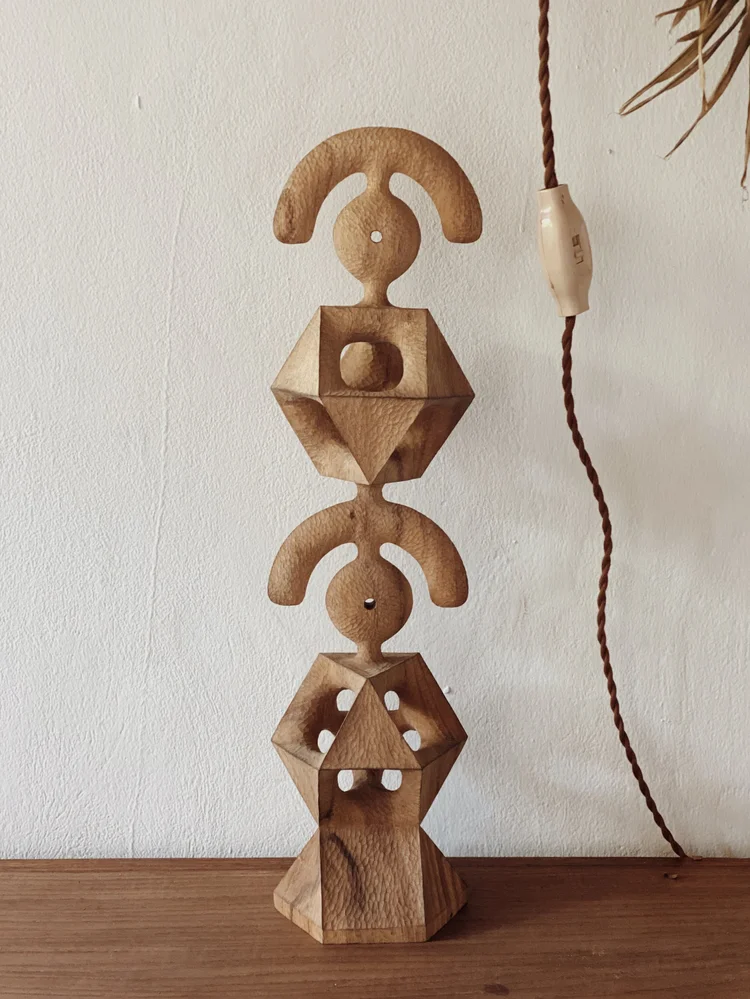
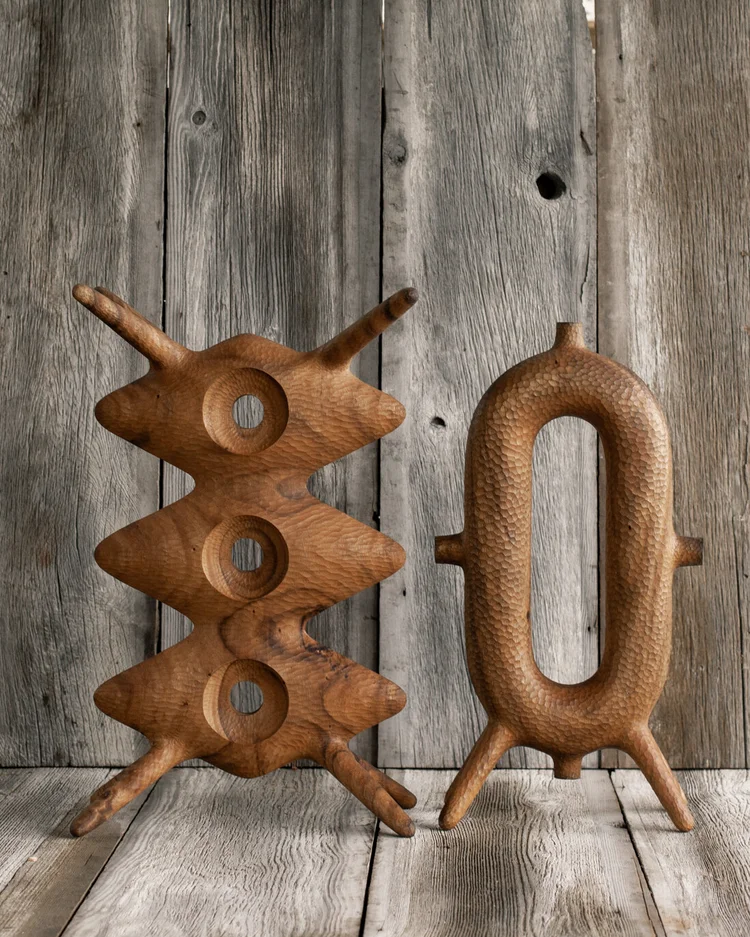
The surfaces tell their own story. Many sculptures are carved from suar or rose wood, the planes broken up by thousands of shallow facets that record each cut of the knife or gouge. Those tiny marks catch light and shadow, softening what could otherwise be cold geometry. The dimples function like fingerprints of his process, and that is exactly how they read in person. Cracks and knots are rarely hidden. They sit in tension with the strict order of the shapes, a reminder that every perfect icosahedron started life as a flawed tree.
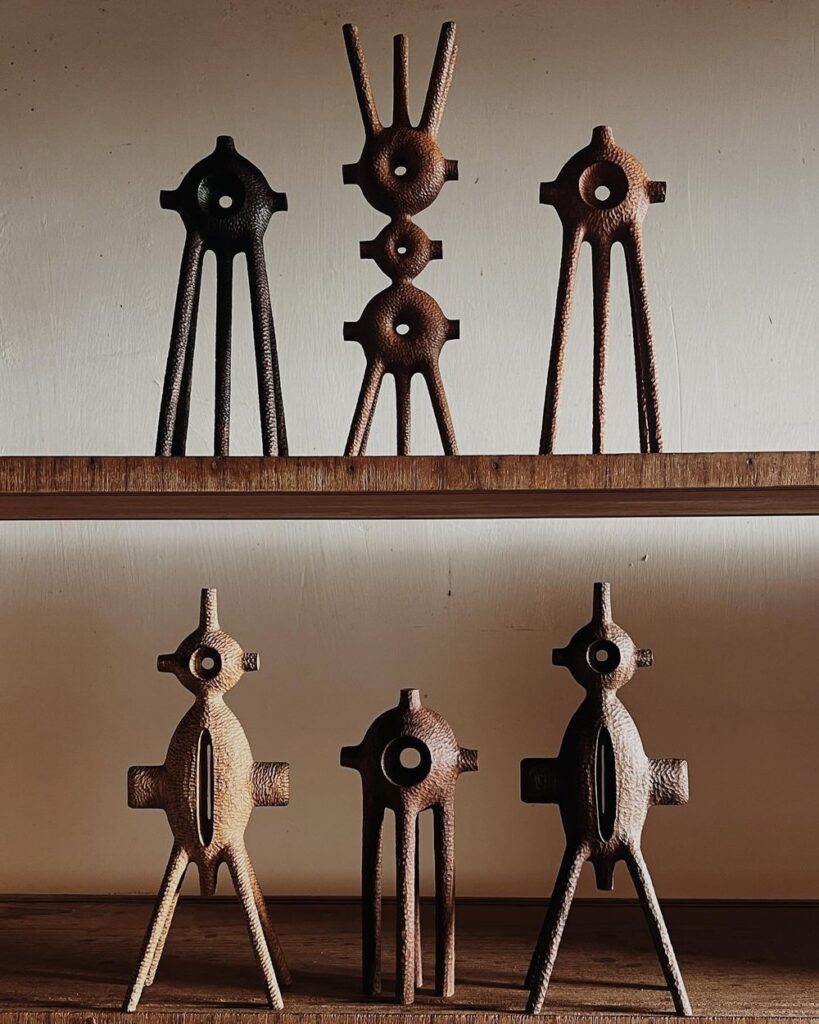
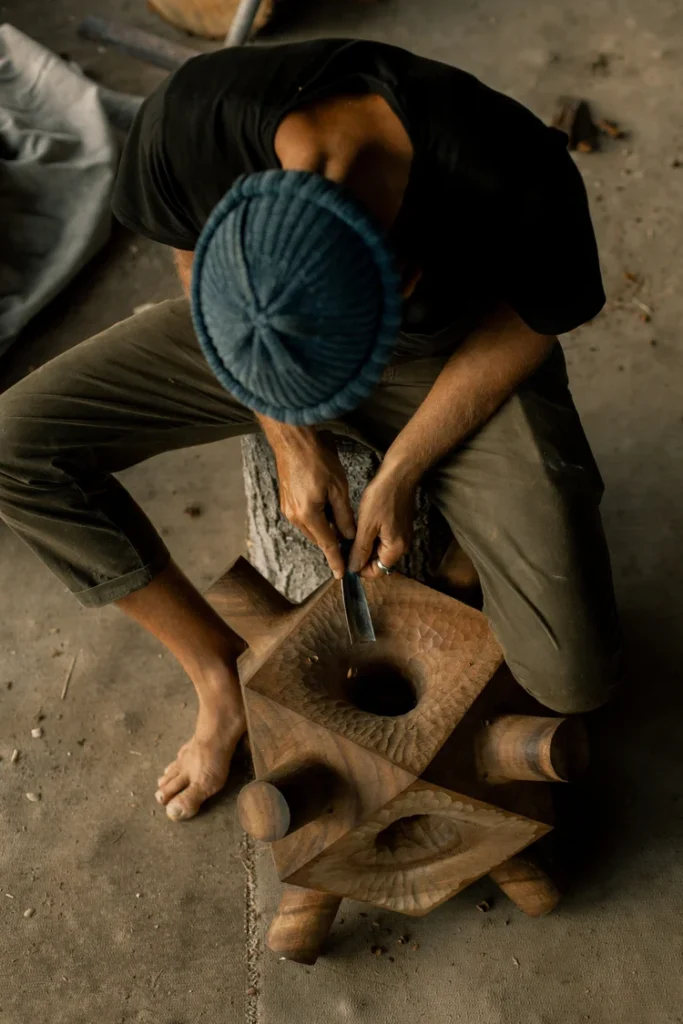
Geddis keeps his methods deliberately low tech. He is known for using only hand tools, sometimes ones he designed and forged himself when standard knives could not do what he wanted. Work on a single piece can run to hundreds of hours of carving, refining, stepping back, then carving again. That pace is not efficient in any industrial sense. It does, however, leave an unmistakable human rhythm in the finished object.
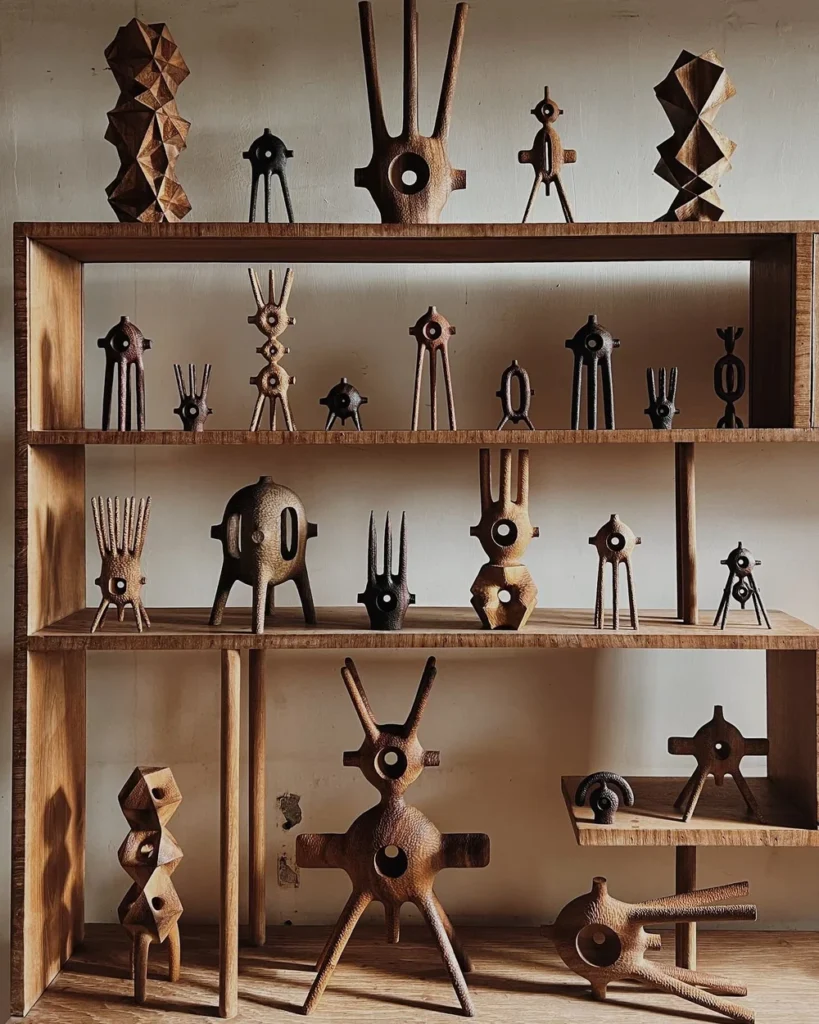
Scale shifts a lot in his practice. On one end there are handheld creatures and small “portal buddy” figures, intimate objects that sit easily on a shelf. On the other end stands a monumental sculpture created for Filson’s flagship store in Seattle, an 18.5 foot column that merges his geometric language with carved animal characters. Across that range, the same concerns repeat: the meeting of hard and soft, tension and flow, clarity and warmth.
Geography is split as clearly as the forms he carves. Geddis divides his time between the family carving shed on Orcas Island and a studio in Bali, with a newer base in Hokkaido, Japan planned to include its own workshop. Orcas offers quiet, forested isolation. Bali brings dense community and a daily mix of craftspeople, artists and gallery visitors. That movement between places keeps the work from freezing into one aesthetic. The sculptures might express order, but the life around them is intentionally restless.
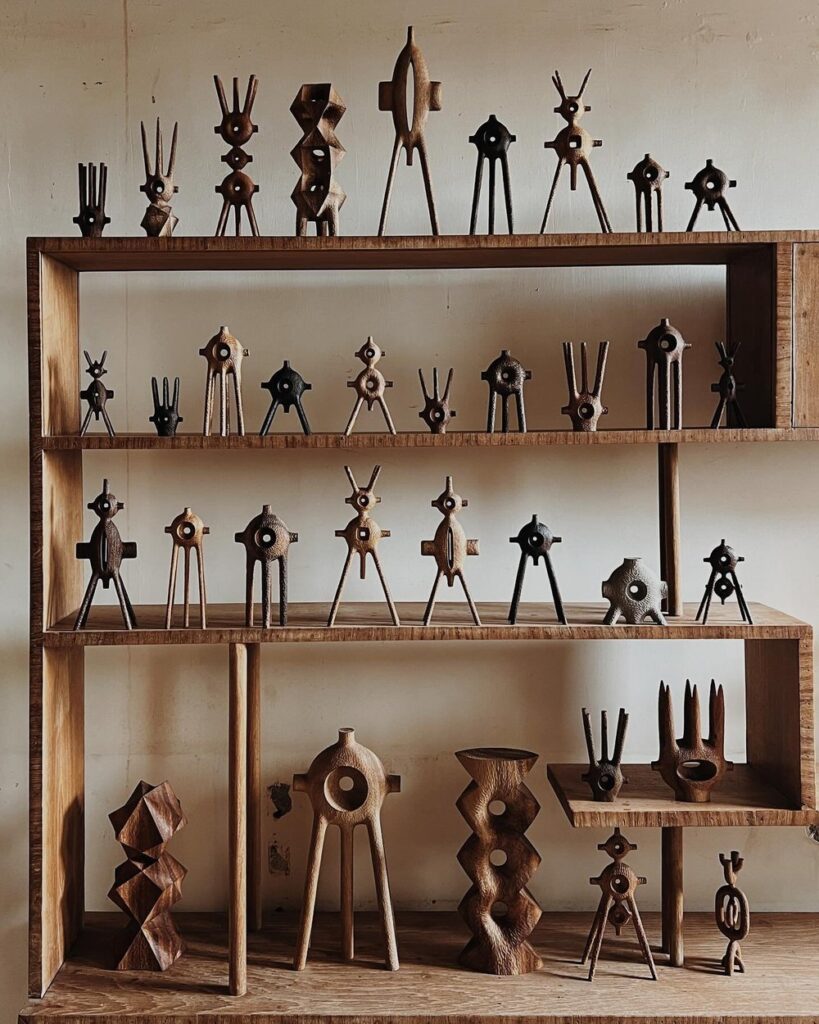
Galleries have picked up on this distinct blend of traditional carving and contemporary sculpture. Sun Contemporary in Bali presents his recent series of suar wood totems and portal forms, often under titles that underline their geometric roots. Glasswing in Seattle and The Window in Los Angeles have shown his earlier totems and “hard or soft” pieces, while online platforms connect his work to a wider audience of collectors.
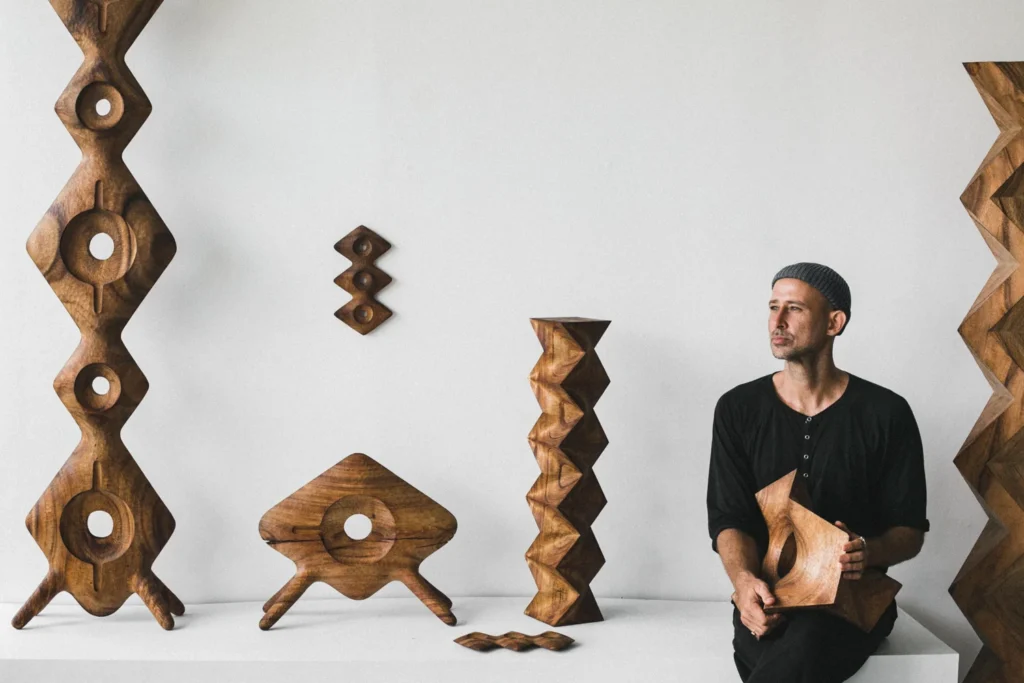
Taken together, Aleph Geddis’s sculptures sit at an unusual crossroads. They are plainly carved wood, with visible tool marks and familiar grain, yet they point outward to mathematics, cosmology and the old habit humans have of building symbols into columns and idols. The work does not pretend to solve those mysteries. It just stands there on three legs, or four, or as a tall zigzag tower, quietly insisting that geometry, handled with patience and a sharp knife, can still feel a little bit magical.
Reply