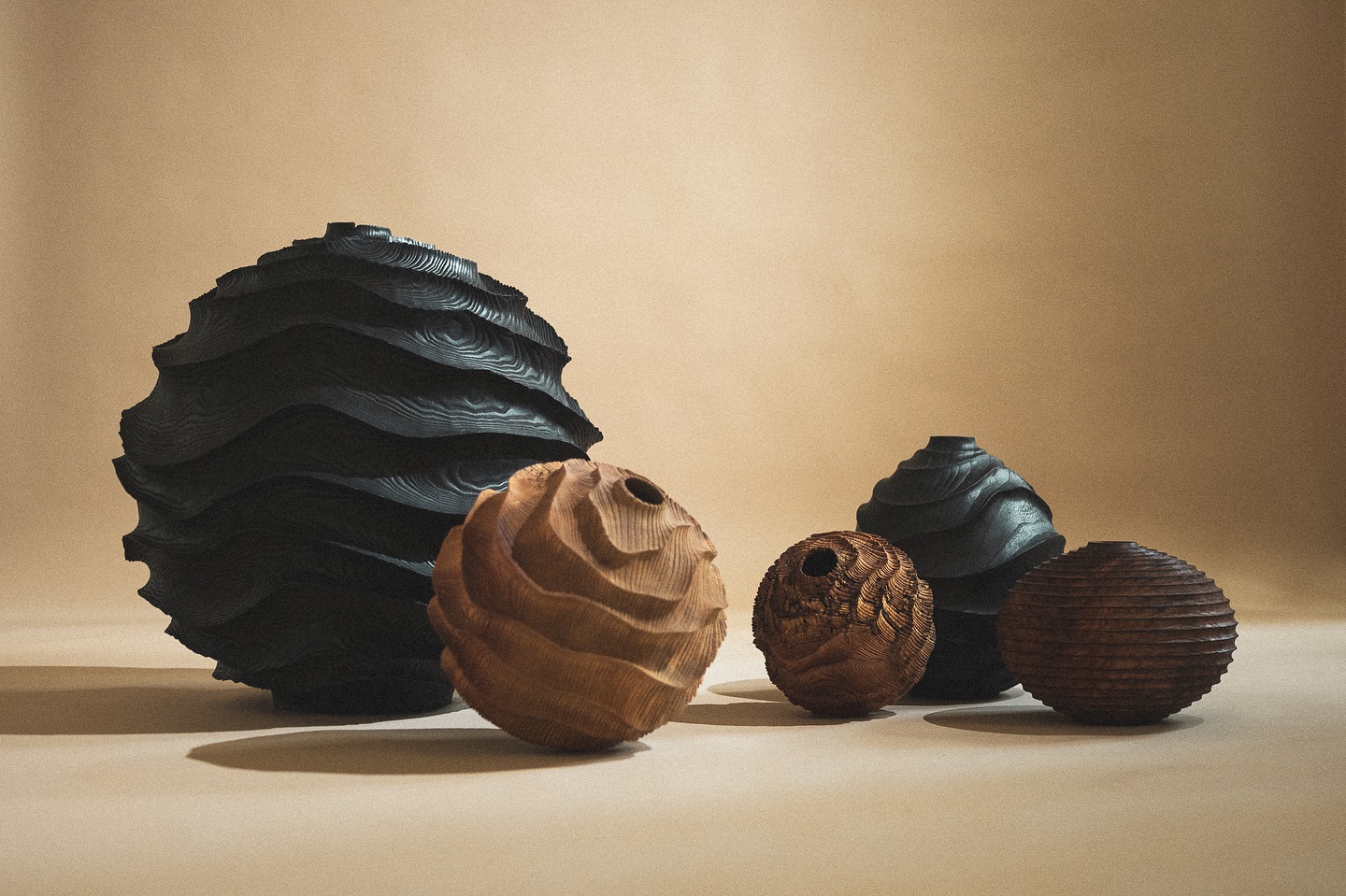
Oliver Chalk is a British maker working under the name Found.Wood, based in Kent. His practice sits in that satisfying middle ground between craft and sculpture, where an object can function as a vessel yet still feel like a concentrated study of surface, weight, and void.
From textiles to timber
Chalk did not arrive at wood through a straight, traditional route. He has described leaving school at sixteen to study art and design, then spending around a decade building large-scale fabric installations driven by symmetry and process. That background matters, because the same obsessions show up in his wood pieces: repetition, rhythm, and the way a surface can steer the whole mood of an object.
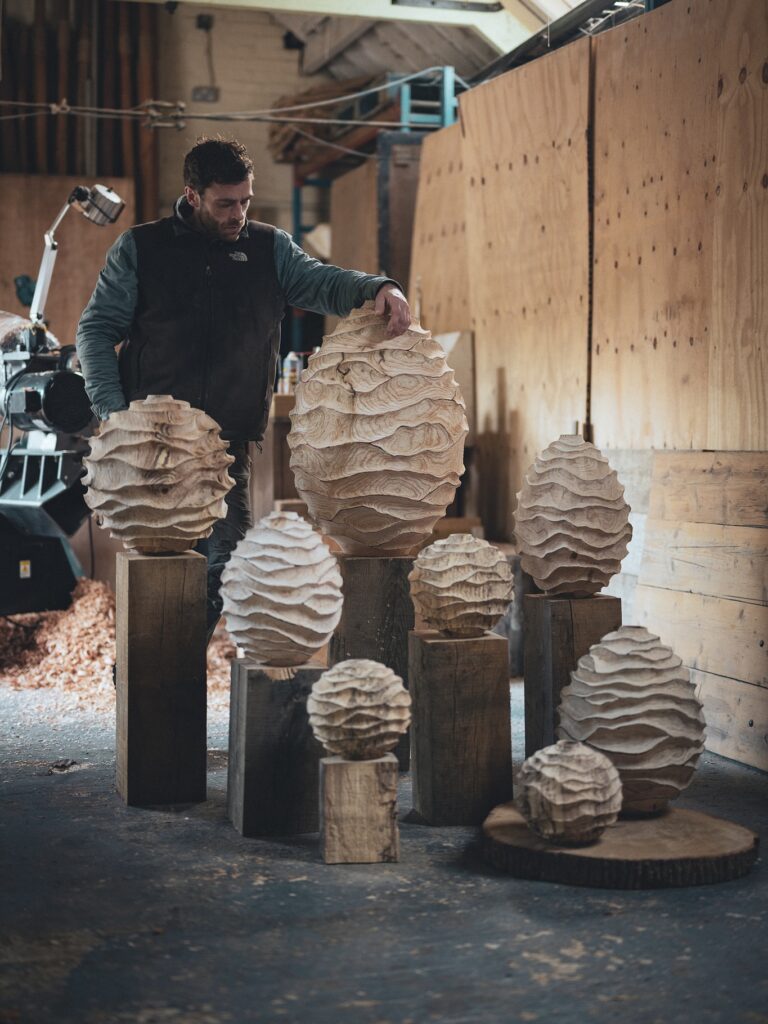
Around the start of 2020, he shifted his focus toward more natural and sustainable materials from his immediate landscape, framing it as a new dialogue between maker and material. Found.Wood becomes less a brand name and more a statement of method: the material is sourced, not bought to spec.
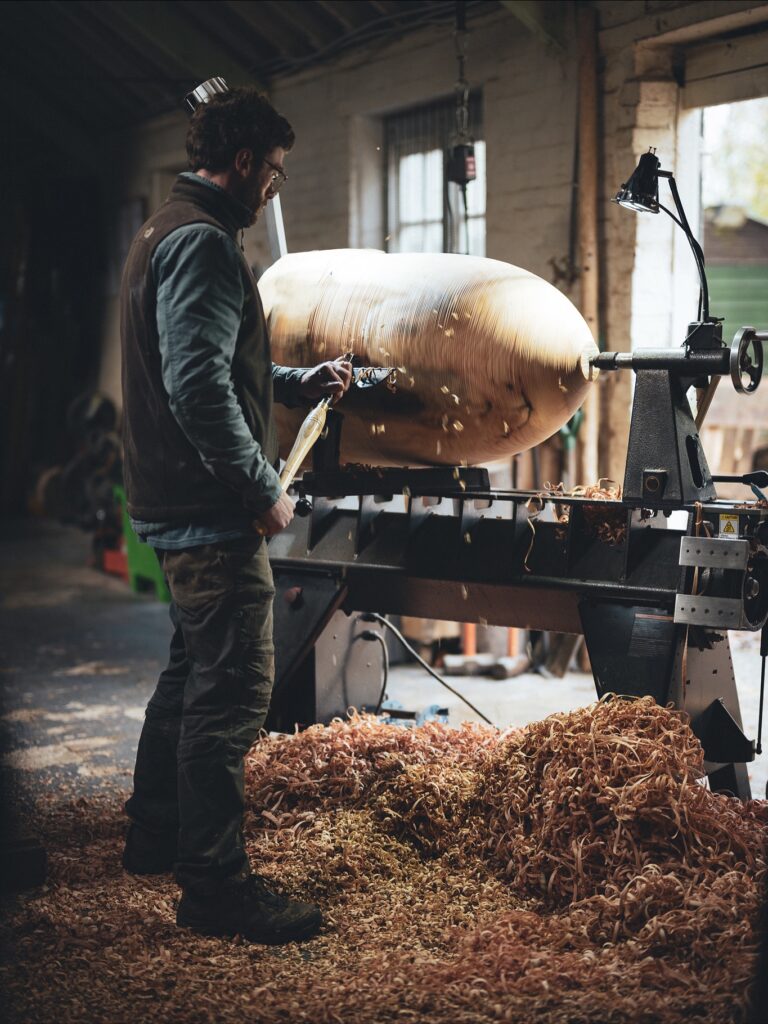
Vessels built around texture
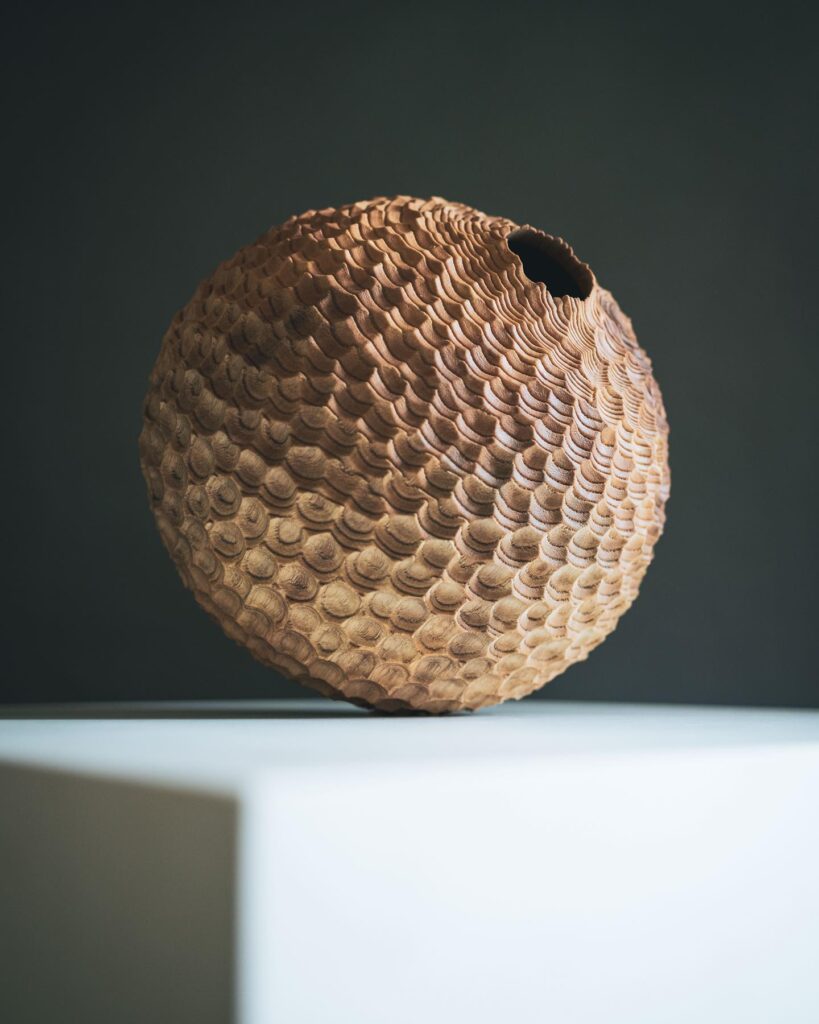
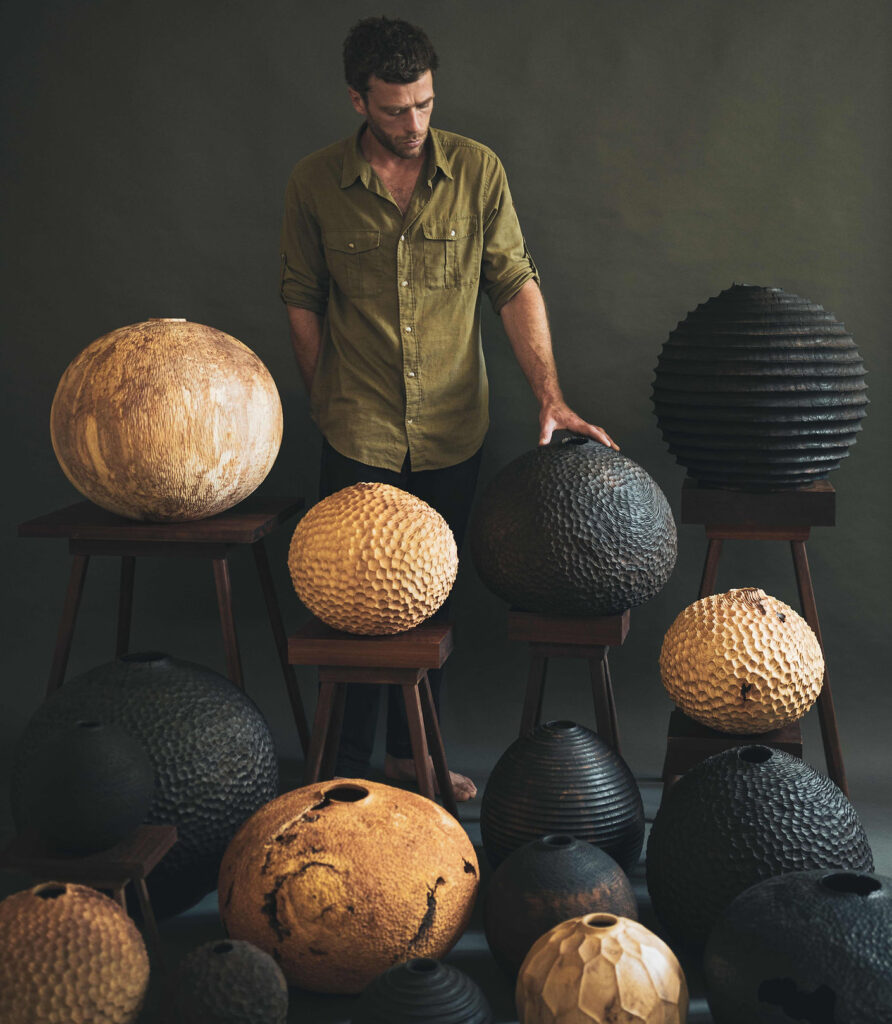
Chalk’s best-known works are voluminous wooden vessels, often spherical or near-spherical, with a small opening that makes negative space feel deliberate rather than incidental. He looks for timber locally, including pieces that have partly decayed, been cut by arborists, or fallen in storms. Instead of hiding imperfections, he lets knots, holes, and scars become focal points.
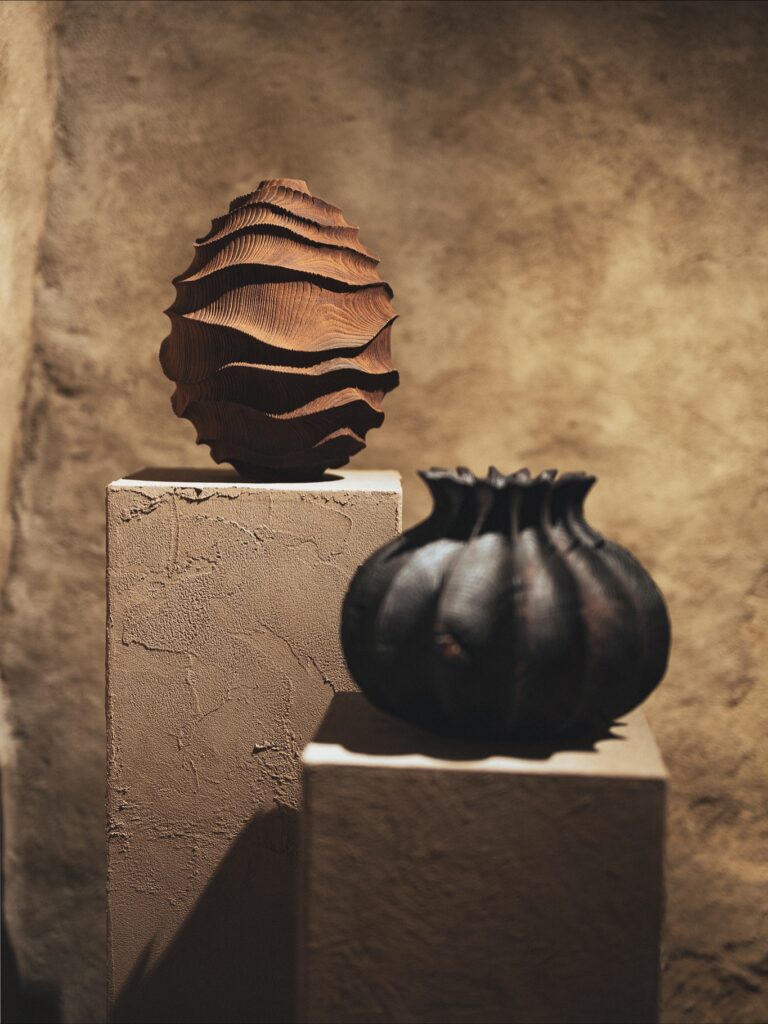
The surfaces carry a lot of the drama. In his “Pathways” series, he hand-carves bold ribs and lines that read like topographic contours. Elsewhere, the skin becomes faceted or pitted, so light breaks across the form in a way that feels both geological and carefully designed.
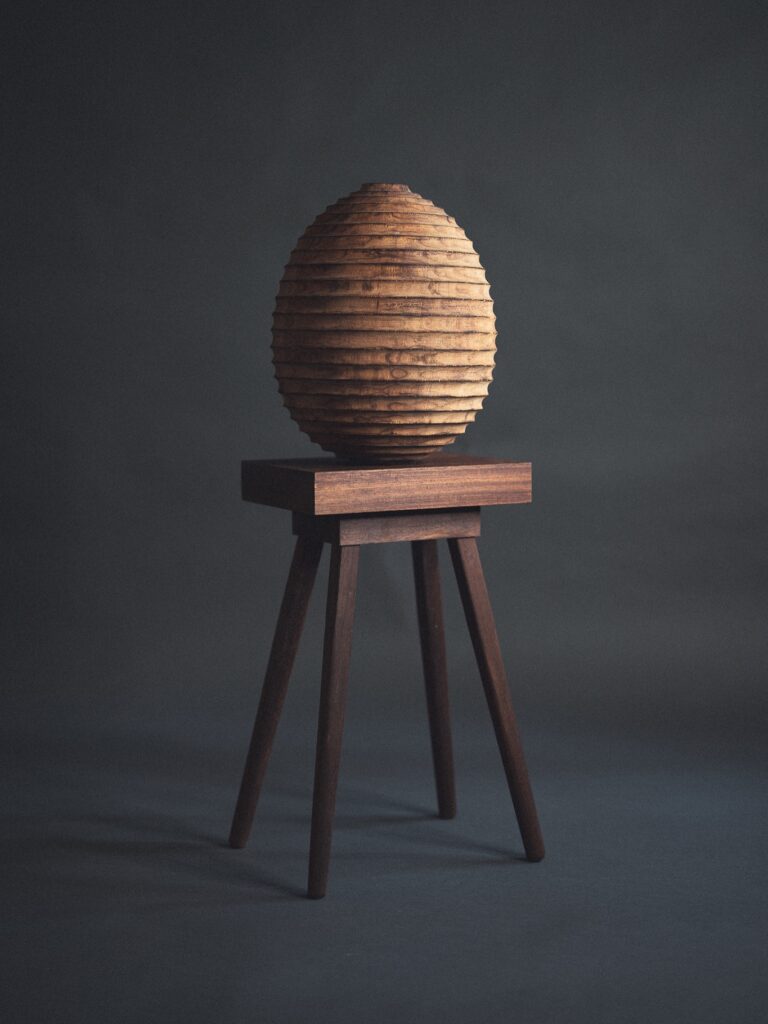
Material choice plays a visible role. He has worked with woods like ash, cypress, maple, and cherry, and the character of each species stays present rather than being flattened by heavy finishing. Maple burl, for example, brings dense swirling grain and natural irregularities that push the final form toward something more organic and unpredictable.
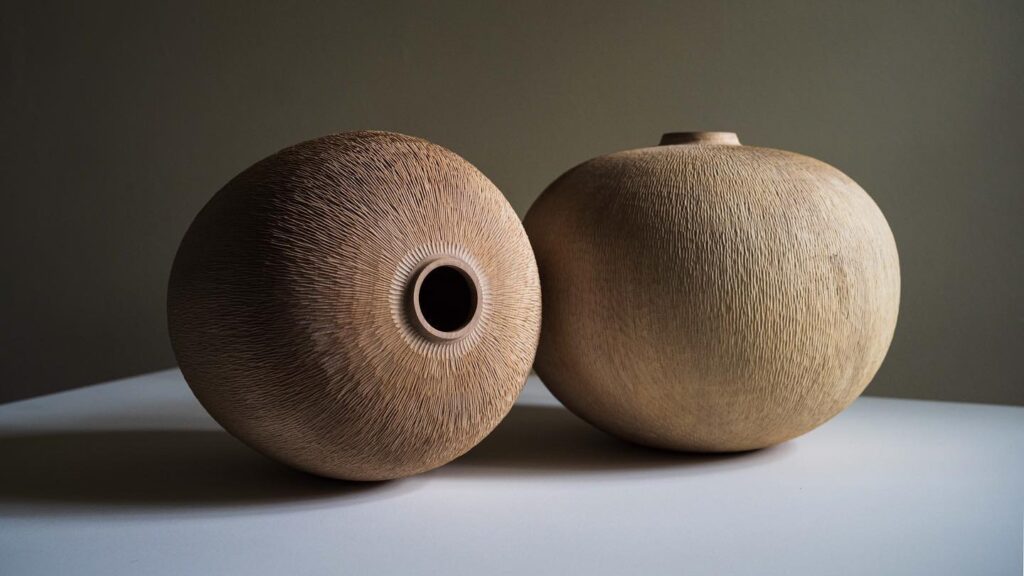
A gallery text describing his practice notes how his series developed from an earlier group of vessels titled “Surface” into “Linear expression,” a continuation of his interest in standing still, looking deeper, and letting process carry meaning. The titles are blunt, but they fit the objects. These pieces are not noisy. They ask for slower viewing.
Bronze, earth, and time
In 2023, Chalk received a QEST scholarship as a QEST Axminster Tools Scholar in woodwork. The award supported training in bronze casting and patina artistry, including work with master founder Stephen Melton at SPACER, an interdisciplinary studio.

That metal direction did not replace wood. It extended the same surface thinking into a tougher medium. He cast bronze pieces based on his wooden forms, then experimented with patination in an unusually literal way, burying cast works for long periods so natural compounds could mark the surface. It is a simple idea, almost stubbornly direct, and it matches his broader habit of letting material lead.
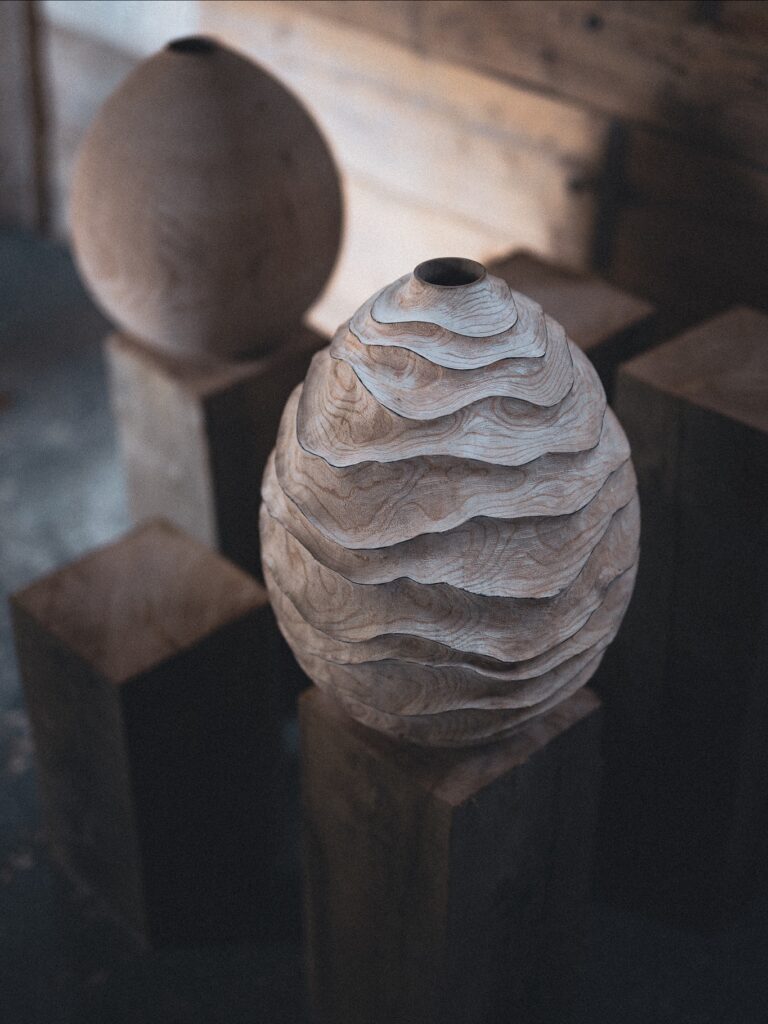
Chalk’s work has been shown in settings that suit its physical presence, including exhibitions connected with Gallery 57 and appearances in sculpture garden presentations. The pieces read well in clean gallery light, but they still carry the feeling of where they started: fallen timber, handled closely, and worked until the surface becomes the subject.
Reply