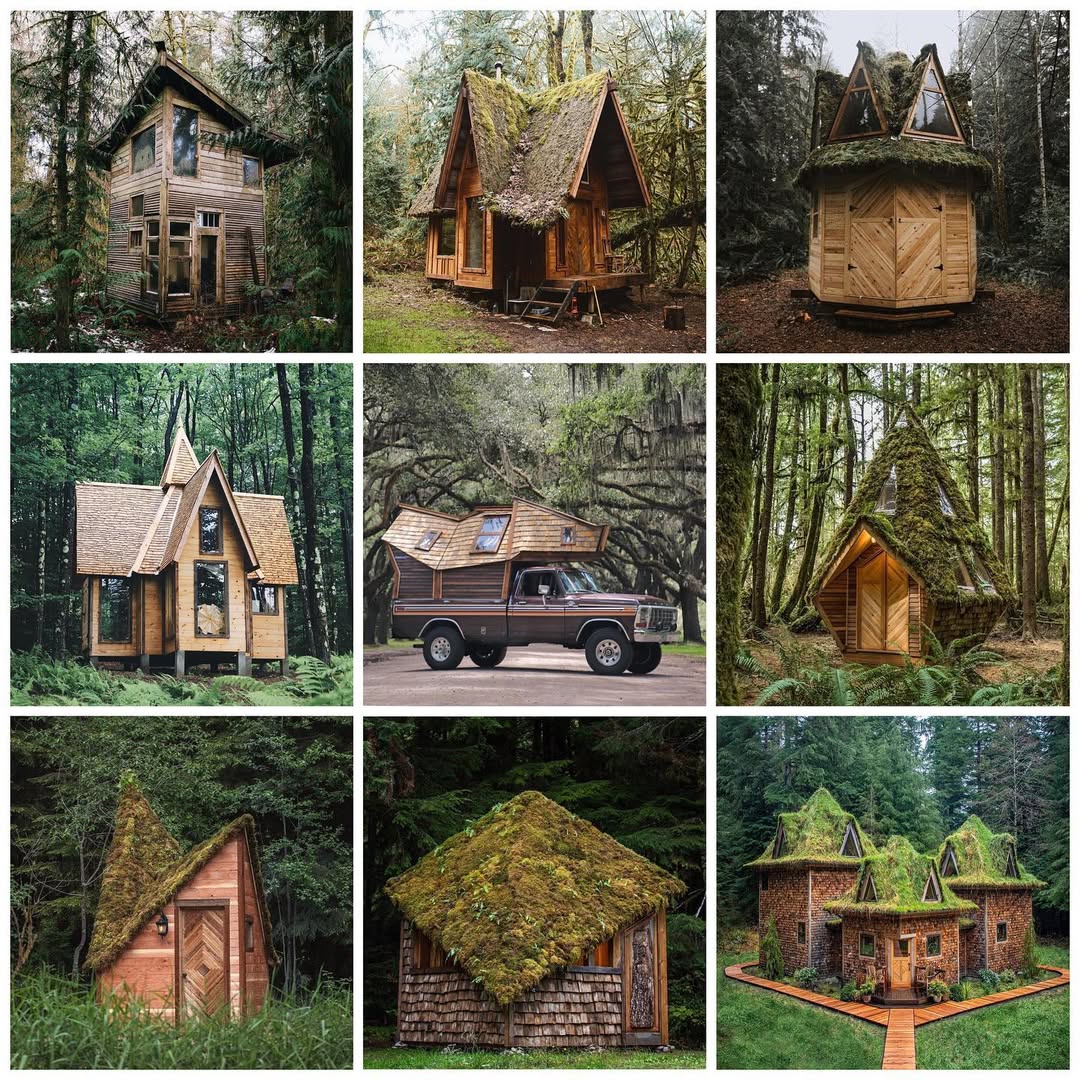
Jacob Witzling sits in a space that most builders never touch. His cabins are small, off-grid, and clearly handcrafted, but they are not trying to look like standard tiny houses. They read more like livable sculptures built deep in the woods, where geometry and fairy-tale instincts are allowed to win.

That tone did not come from a design studio pipeline. He is often described as self-taught, with a background in teaching, and an early obsession with cabins and forts. At 16, he was already living part-time in a secluded 1920s cabin near his parents’ house in New Hampshire, keeping a wood stove going through winter nights. It is a very specific origin story, and it shows in the work: these buildings feel like personal experiments that grew into a recognizable language.
Built from salvage, shaped by obsession
The first thing that comes up again and again is materials. Witzling is strongly tied to reclaimed and scavenged lumber, using scraps from construction sites, local mills, salvage shops, and whatever else can be repurposed. That choice is not just about thrift or sustainability, it also creates the visual texture: mismatched boards, visible joins, and details that look collected rather than ordered from a catalog.

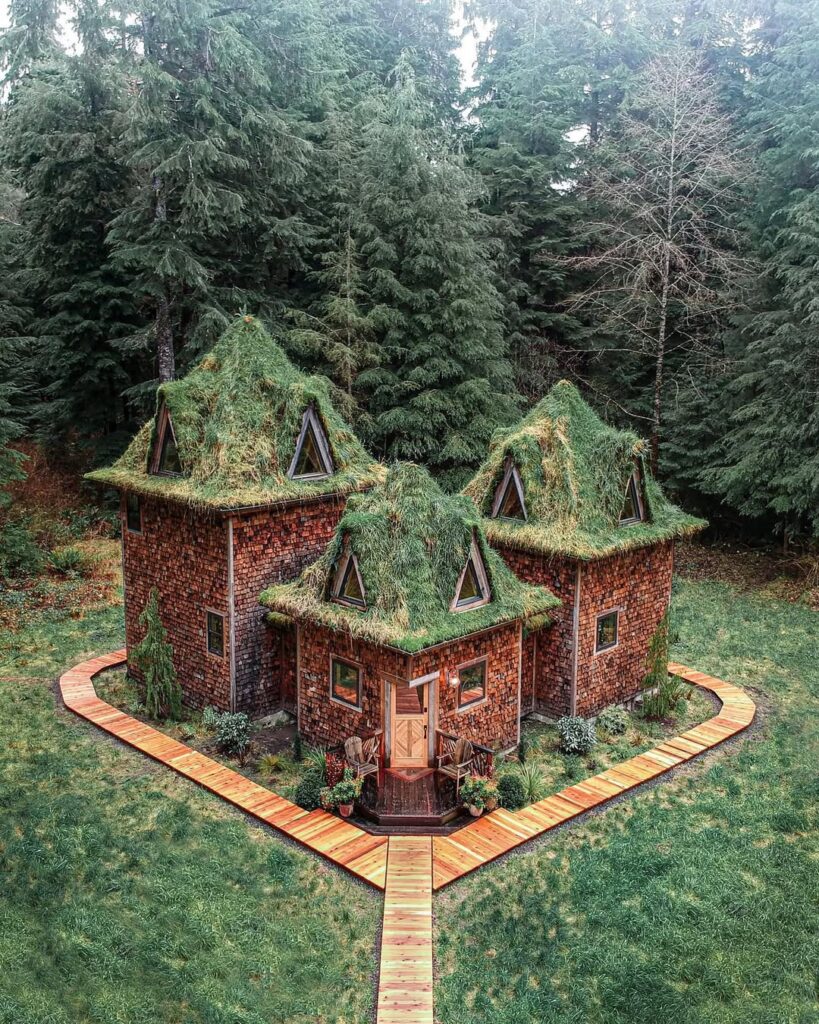
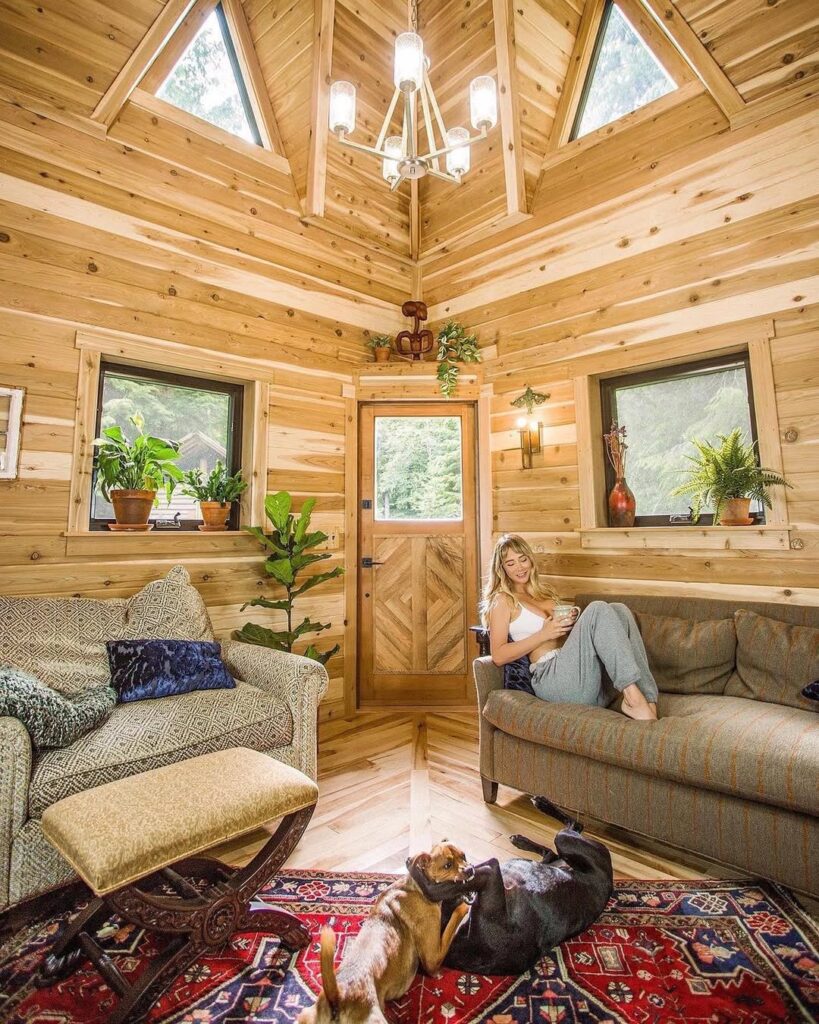
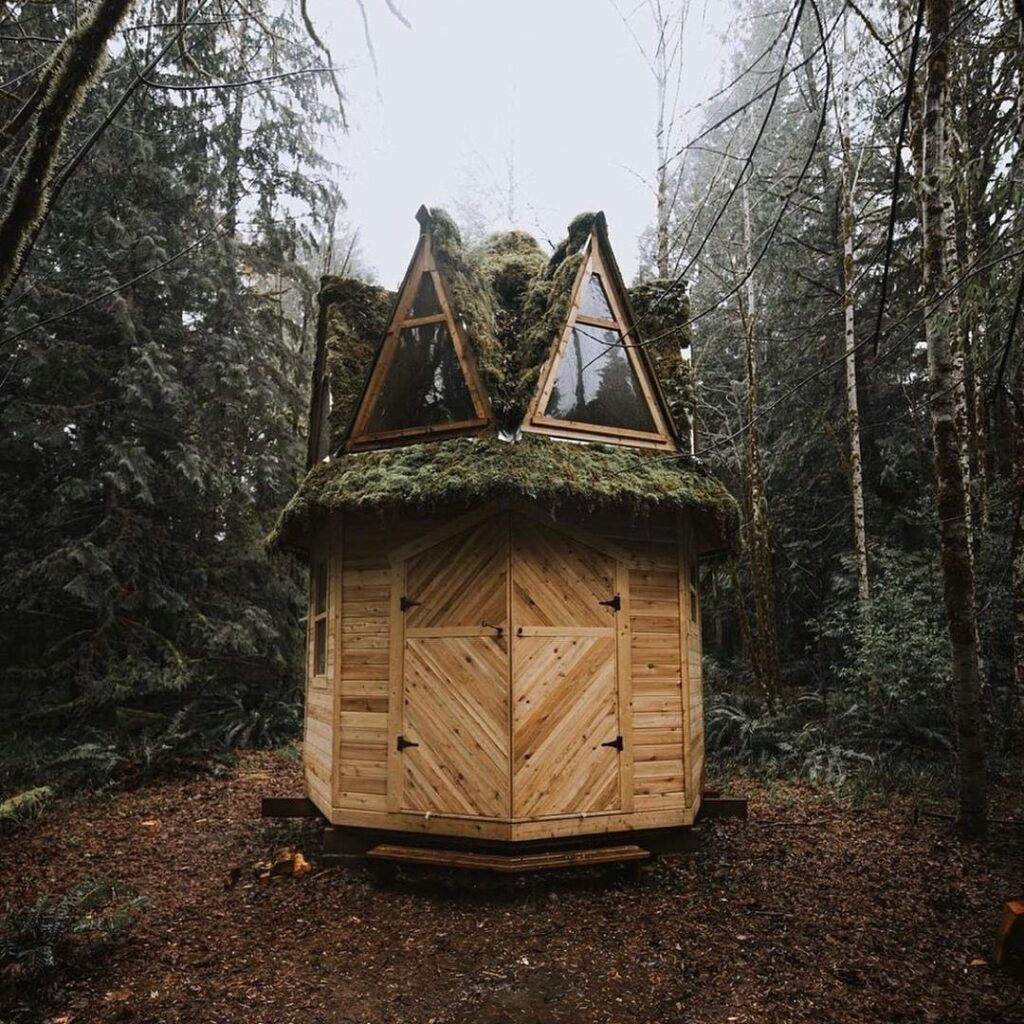
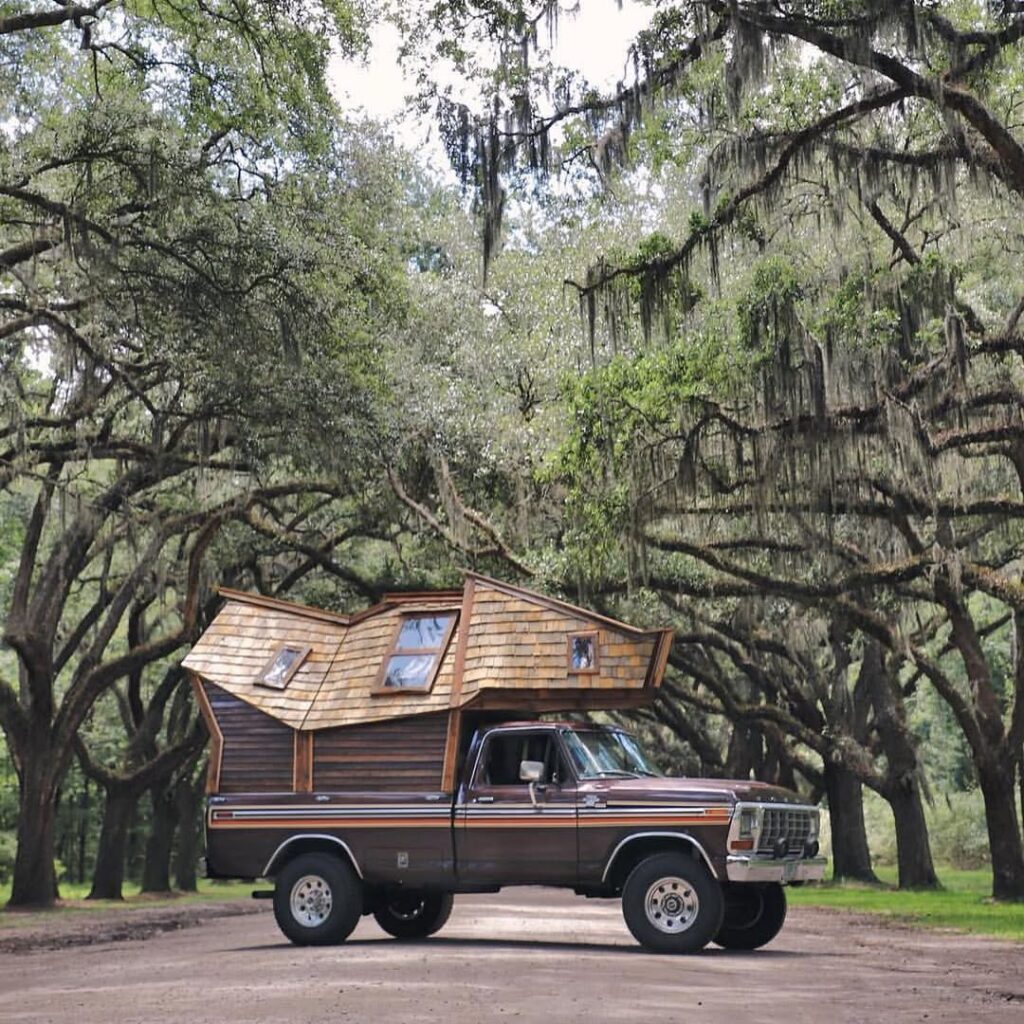
Then comes the silhouette. His cabins often lean into odd footprints and layered rooflines: octagons, clustered volumes, steep pitches, triangular window sets, and door openings that feel oversized for the scale. One well-known example is an octagonal micro-cabin built from salvaged lumber and furniture elements, with big doors that open the interior to the forest and a loft ringed by triangular glazing.
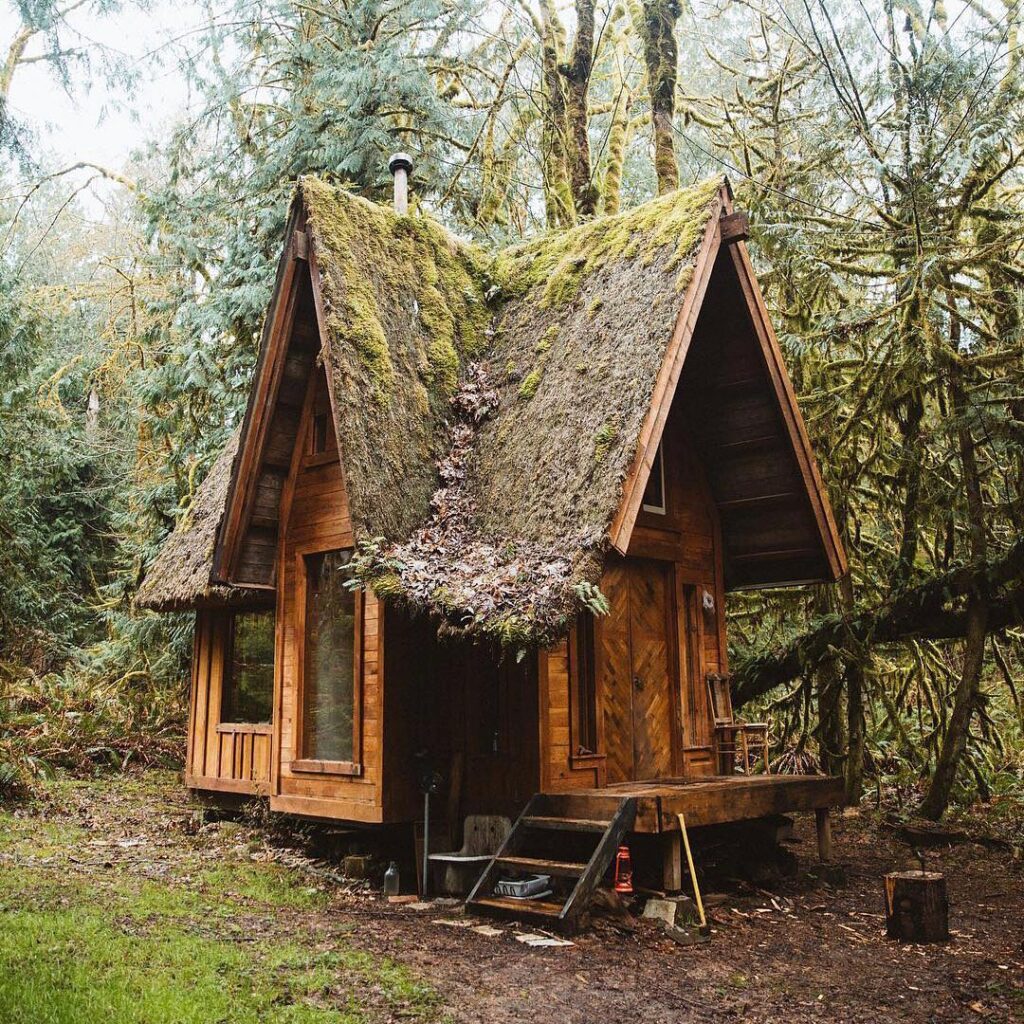
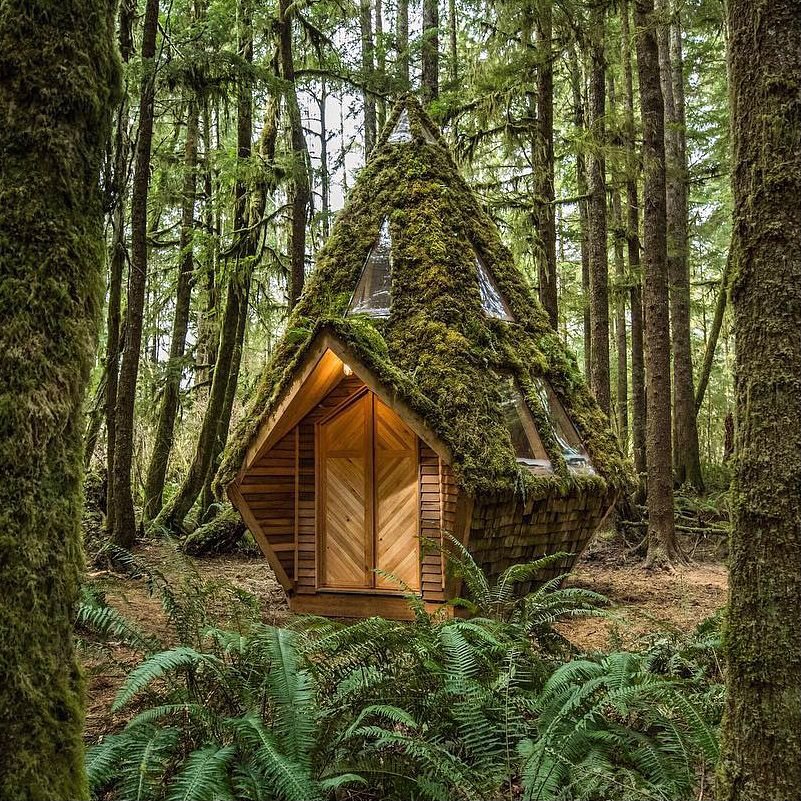
Even when the forms get playful, they are not random. Roofs are a major part of the identity, and Witzling repeatedly uses living vegetation as a finish. Moss and greenery turn the cabins into something that looks half built, half grown, which is exactly the point.
Off-grid, on purpose
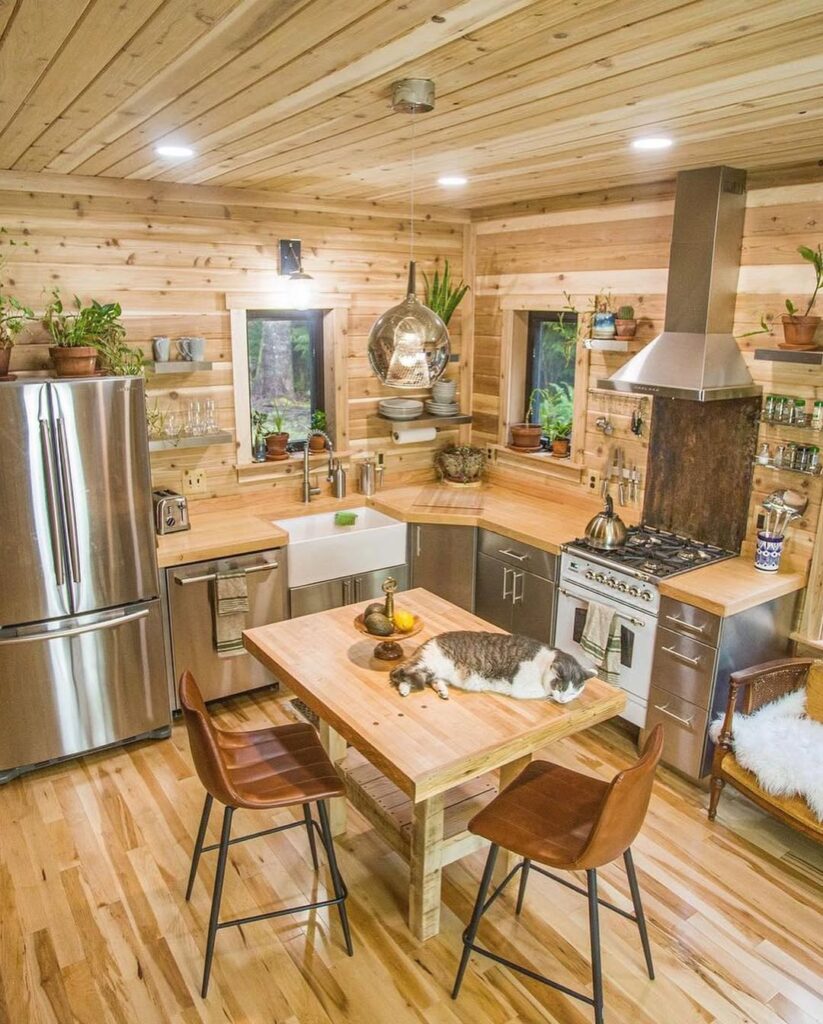
These projects are not glamping pods with hidden hookups. In his own descriptions, the cabins are built off the electric grid with no running water, relying on a simple 12-volt system powered by deep-cycle batteries. Water is collected from a well for drinking, cooking, and washing, and the toilet setup is handled via a composting toilet placed in a separate outhouse structure.

That stripped-down infrastructure is part of why the interiors work. Without the usual clutter of built-ins and appliances, the spaces can stay open and tall, with the eye pulled upward into framing, rafters, and loft edges. Add a stove and a tight seating area and the cabin becomes functional without pretending it is a full-size house.
Barter builds and the Cabinland chapter
Another detail that separates Witzling from typical cabin builders is how some sites have been secured. He has described a barter-style arrangement where he provides labor in exchange for years of access to the land after the cabin is finished. It is an old-school trade, and it fits the handmade ethos better than glossy real-estate logic.
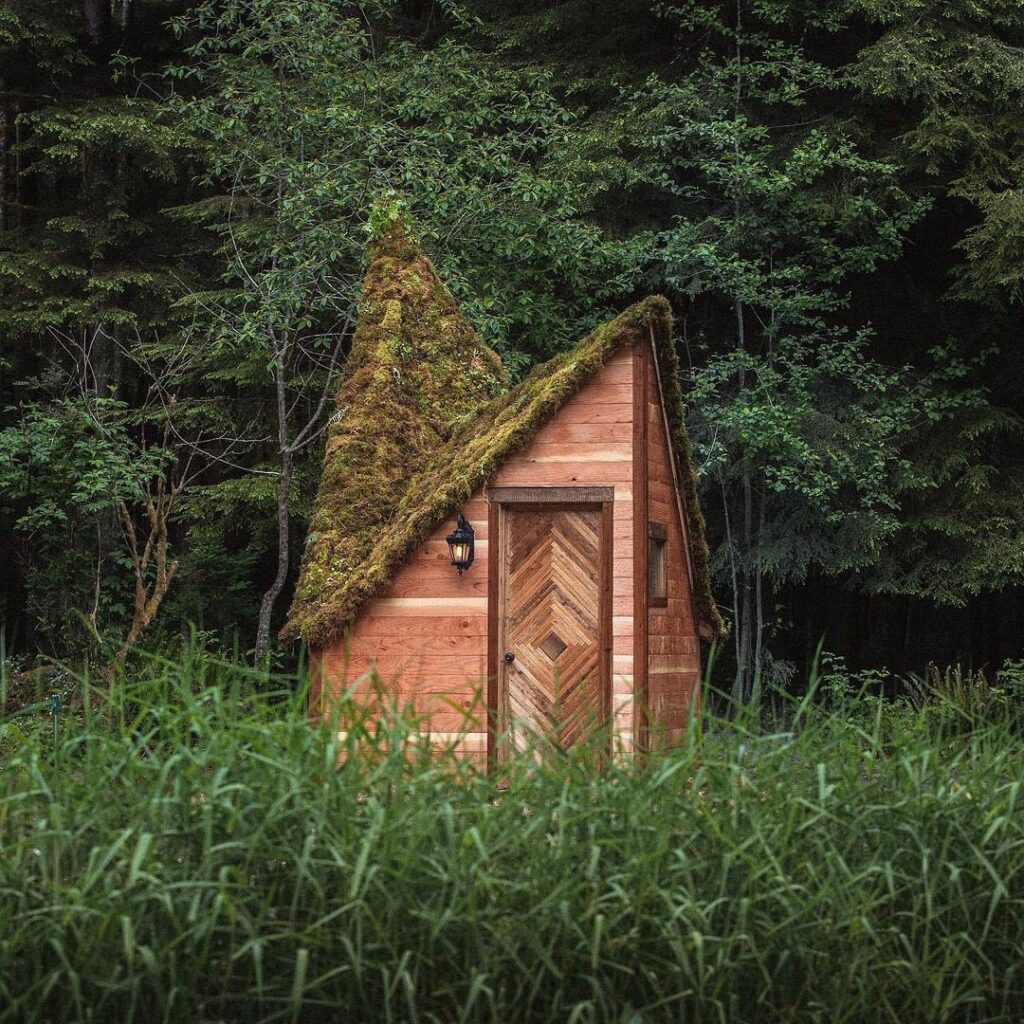
Over time, the story expands beyond one-off cabins. Witzling and his partner, Sara Underwood, have publicly framed Cabinland as a bigger buildout: a cluster of unique cabins linked by trails on forest land in the Pacific Northwest, documented as an ongoing series. Reporting around the project describes an owned acreage and ambitions for multiple structures, with the build process shared through short-form clips and longer videos.

Taken together, the cabins explain their own appeal. They are not perfect. They are idiosyncratic, deeply personal, and sometimes a little absurd in the best way. In a landscape of identical tiny houses, Witzling’s work stands out because it does not chase normal. It chases atmosphere, and then makes that atmosphere real, board by board, in the woods.


Reply