Michael Beitz is an American sculptor whose work often starts with furniture and ends up somewhere between design, architecture, and social commentary. He builds objects that look usable at first glance, then slowly reveal a twist in scale, balance, or logic. The materials and craftsmanship are serious, but the ideas are playful, sometimes slightly unsettling. In Beitz’s hands, a table is never only a table. It is a stage for how people gather, ignore each other, compete for space, or try to belong.
That approach makes sense given his background. Beitz trained in sculpture and also spent time in professional furniture shops. He has been connected to the studio culture around high-end woodworking and design, including experience with established makers and production standards. The result is work that carries the physical authority of well-built furniture, while behaving like public sculpture.

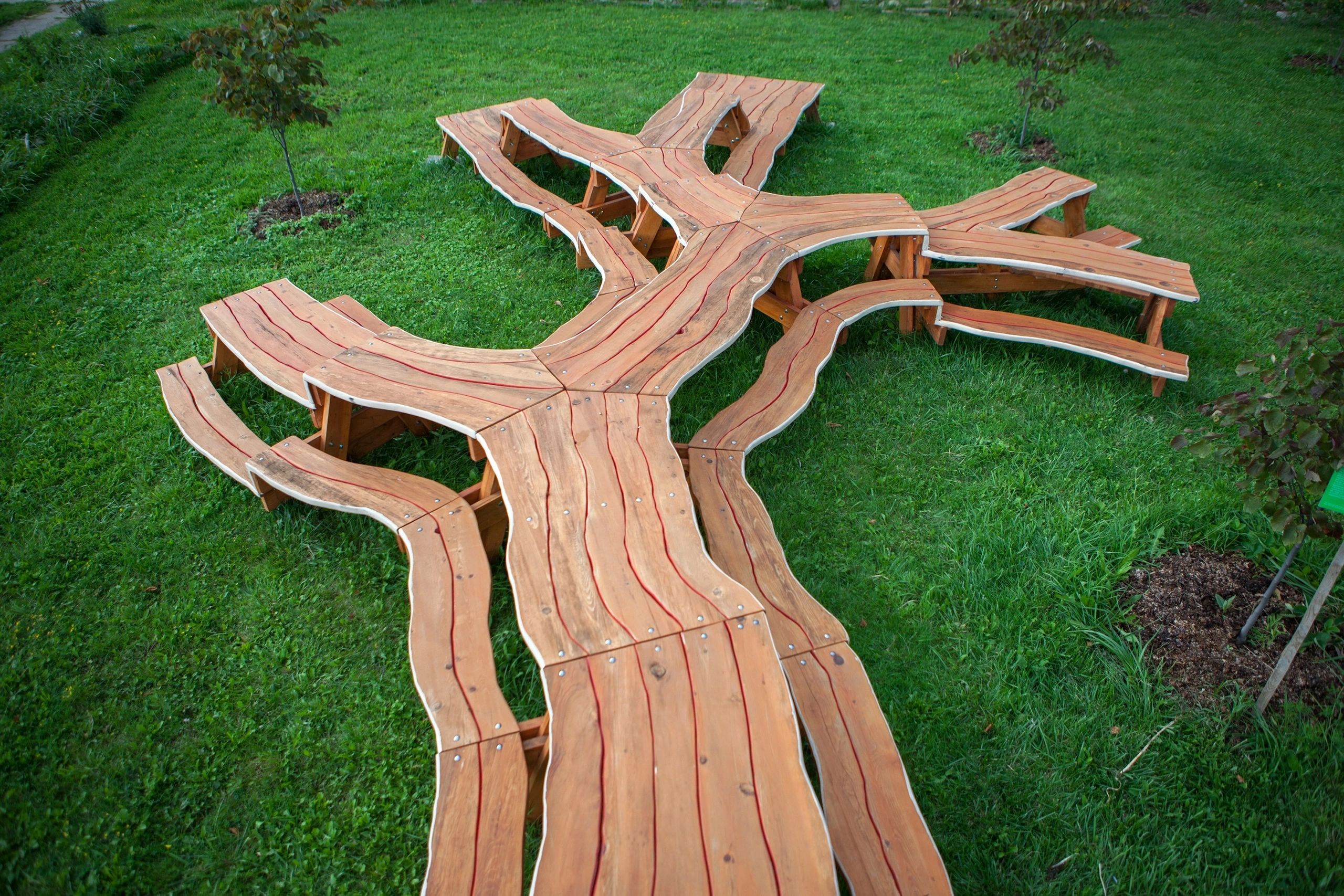
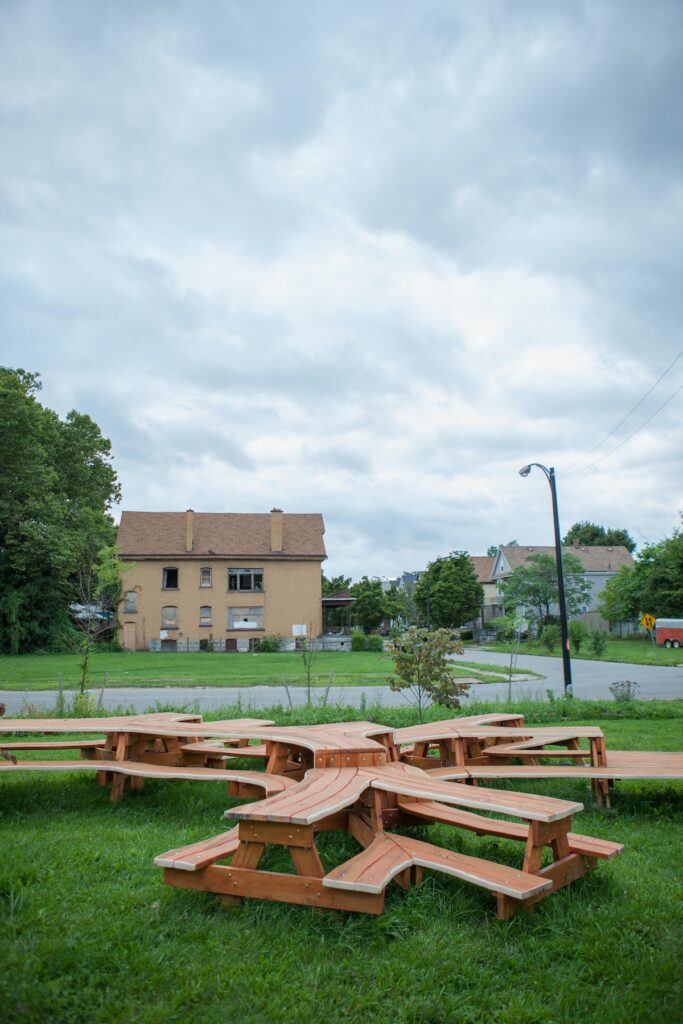
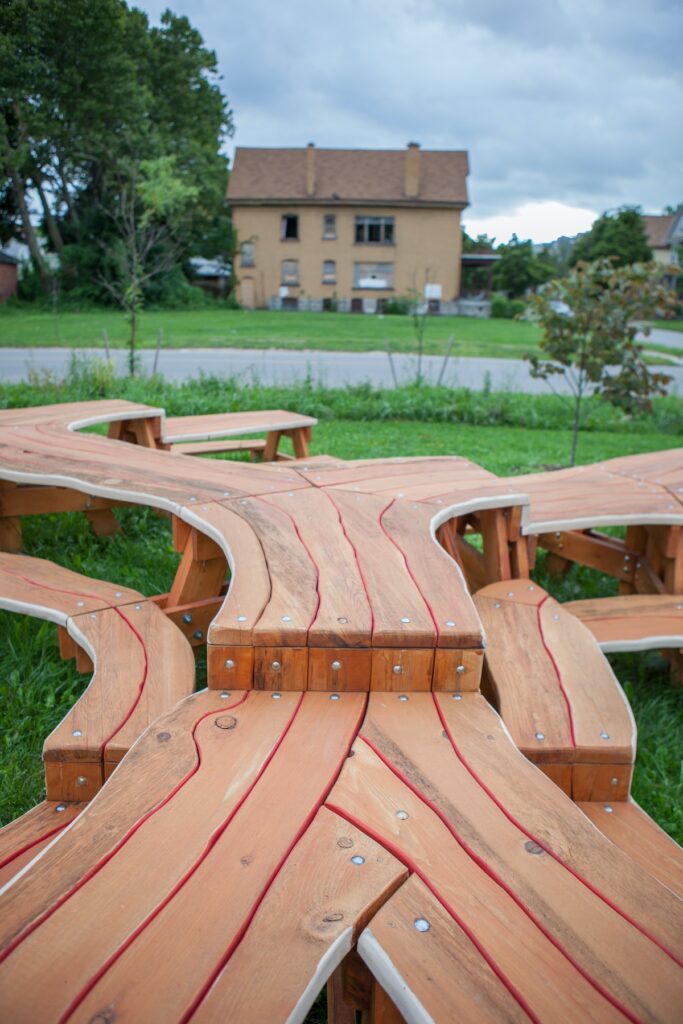
Tree Picnic, made in 2014, is one of his best-known projects because it turns a familiar object into a communal landmark. From a distance it reads as a giant picnic table. Up close it becomes a stylized tree: a central trunk rises from the ground, and the tabletop and benches branch outward like limbs. Instead of one straight run of seating, the form splits and spreads, creating multiple zones where different groups can sit at the same time.
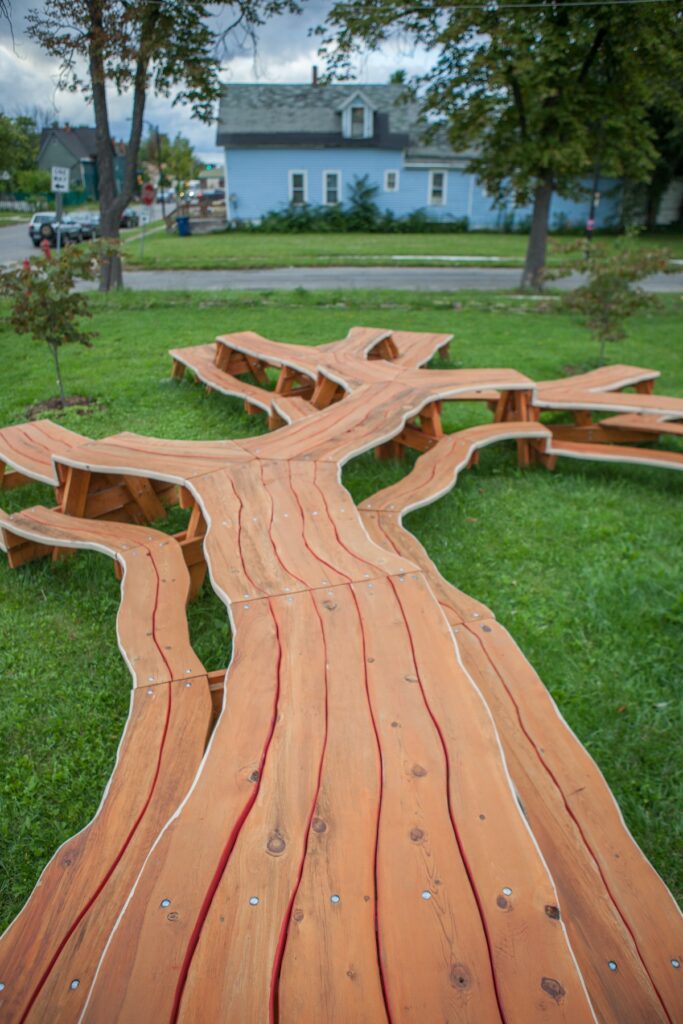
Scale is a big part of the punchline. The piece is massive, roughly 20 feet by 50 feet, so it feels closer to a pavilion than backyard furniture. Yet it stays grounded in something ordinary. The classic picnic table is a symbol of parks, cookouts, and informal public life. Beitz keeps that association, then stretches it until it becomes an environment.
The table was originally commissioned for a community-focused project in Buffalo, where it was meant to support gathering around an orchard and urban farming efforts. That context matters. Tree Picnic is not designed to be admired from behind a rope. It is designed to be occupied, argued over, leaned on, and worn in. It functions as a shared resource, and it makes the act of sharing visible.

One of the most thoughtful details is that the seating height changes. Part of the structure drops lower, creating a section sized for children. That shift is small in concept but huge in effect. It turns the sculpture into a place where different ages can claim space comfortably, without being pushed to the edge.
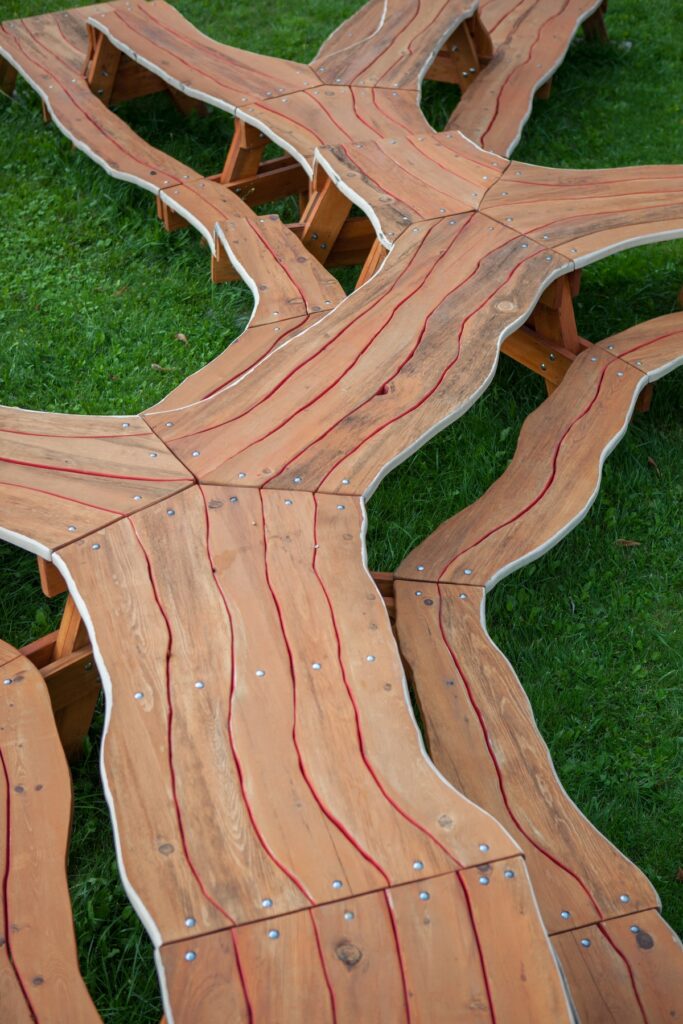
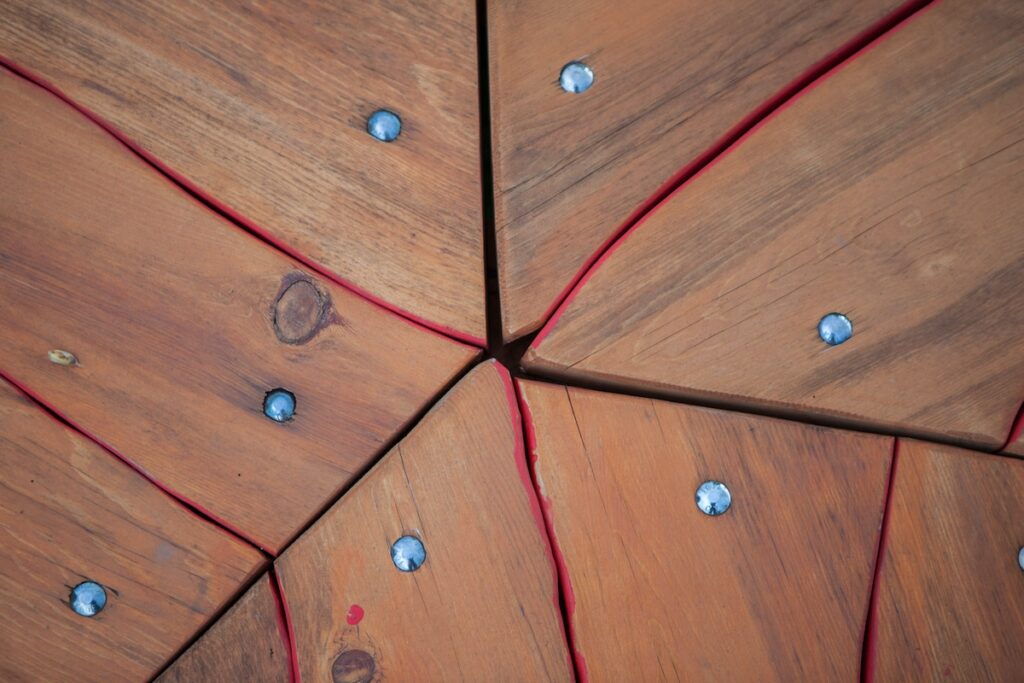
Tree Picnic was built from beetle-kill pine, wood marked by the ecological damage that killed the trees but also by striking color variations caused by staining fungi. Those blues, purples, and warm tones give the surface a natural unpredictability, like weather patterns locked into the grain. The final piece lands as both practical and surreal: a family tree turned into a table, and a table turned into a civic center.
Reply