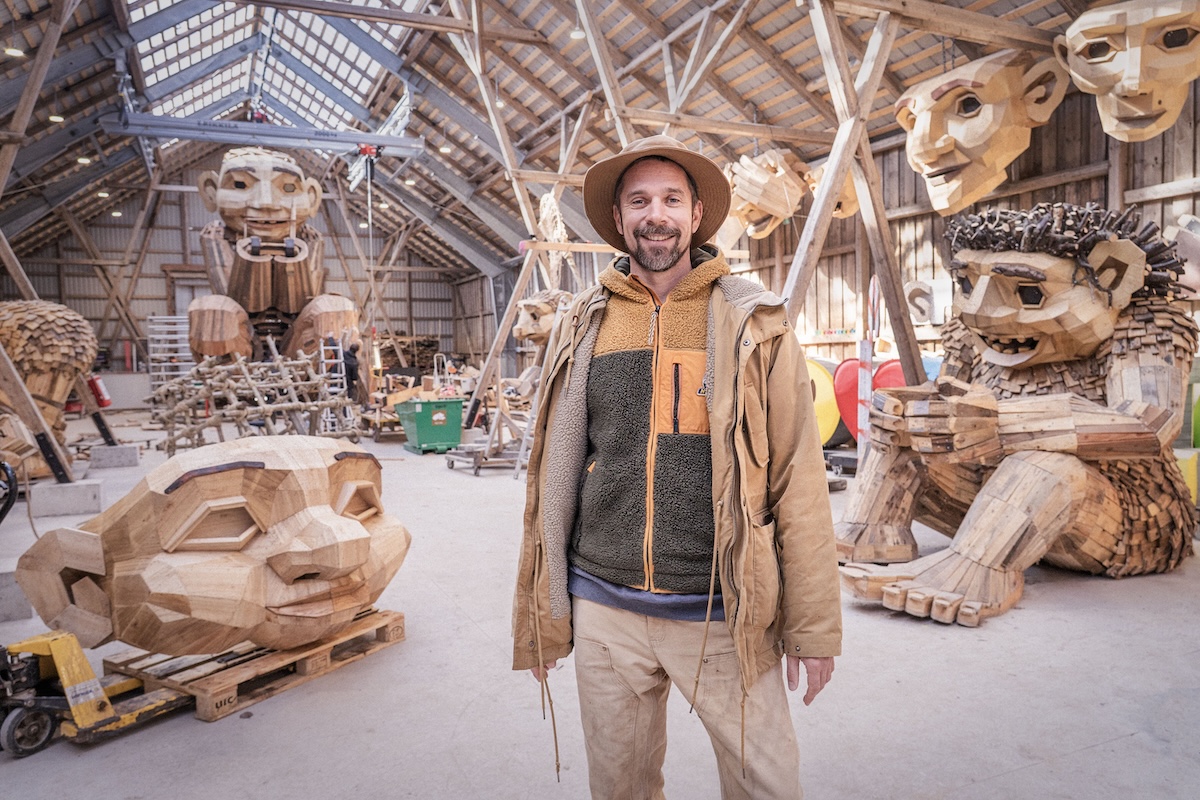
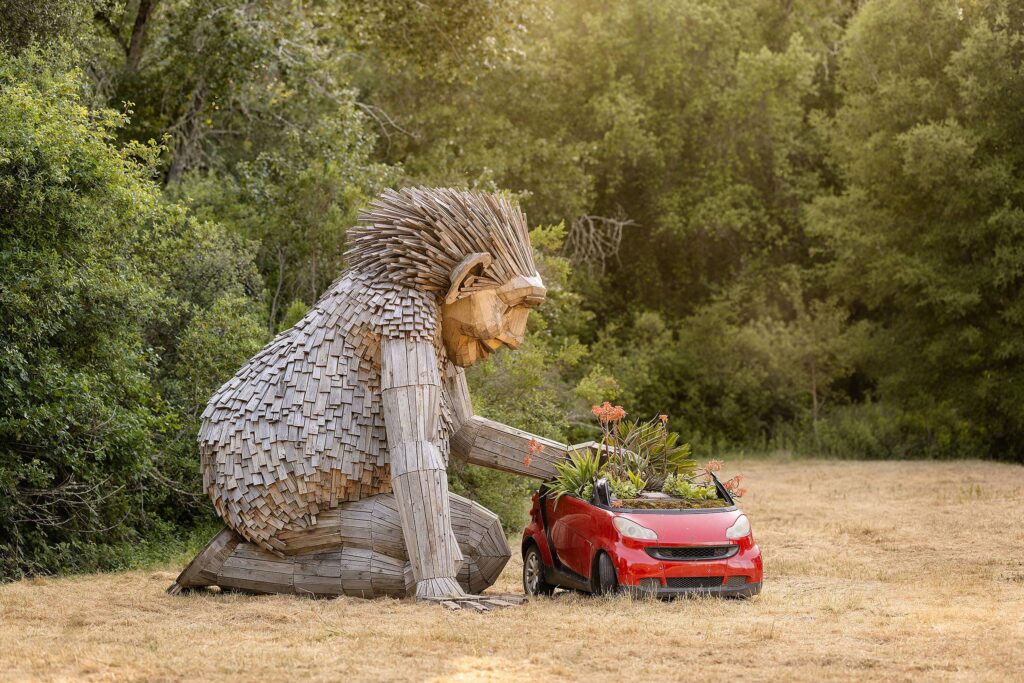
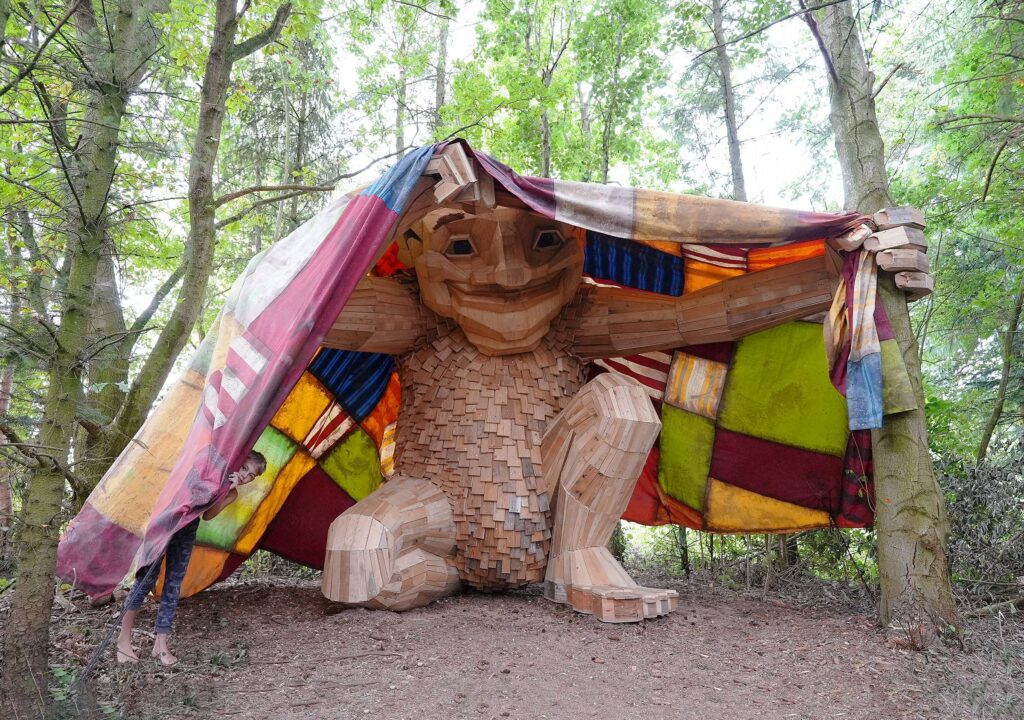
Walk through the right patch of forest and a face appears between the trees. Not a cute cartoon one, but a giant carved grin made from weathered boards, roof shingles, and old pallets. This is the world of Thomas Dambo – Danish artist, builder, and self-described recycle art activist whose oversized wooden trolls have turned public nature spaces into modern folklore.
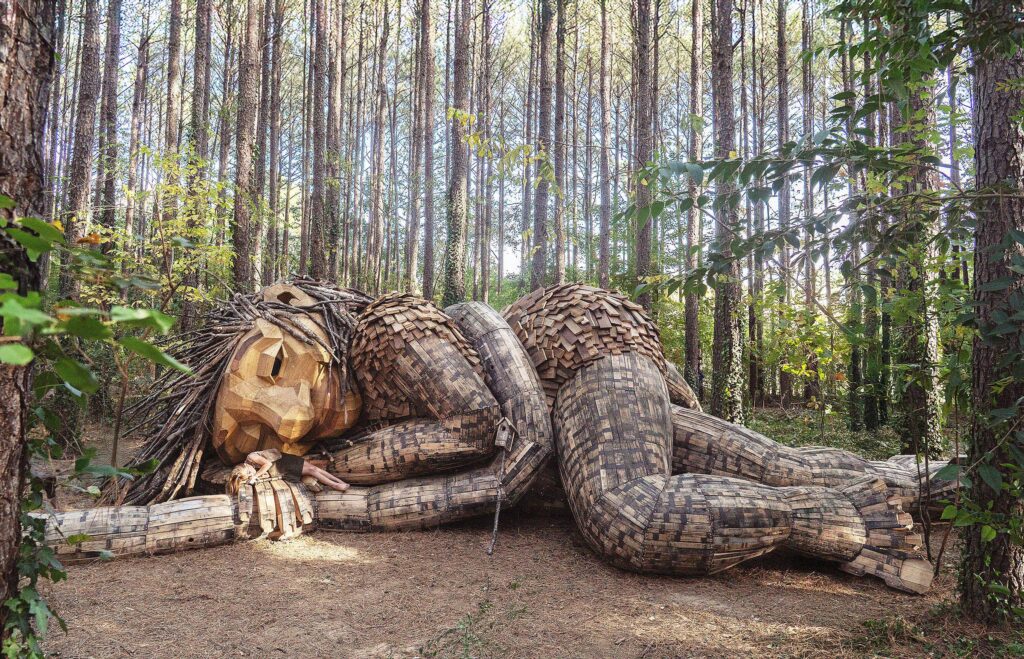
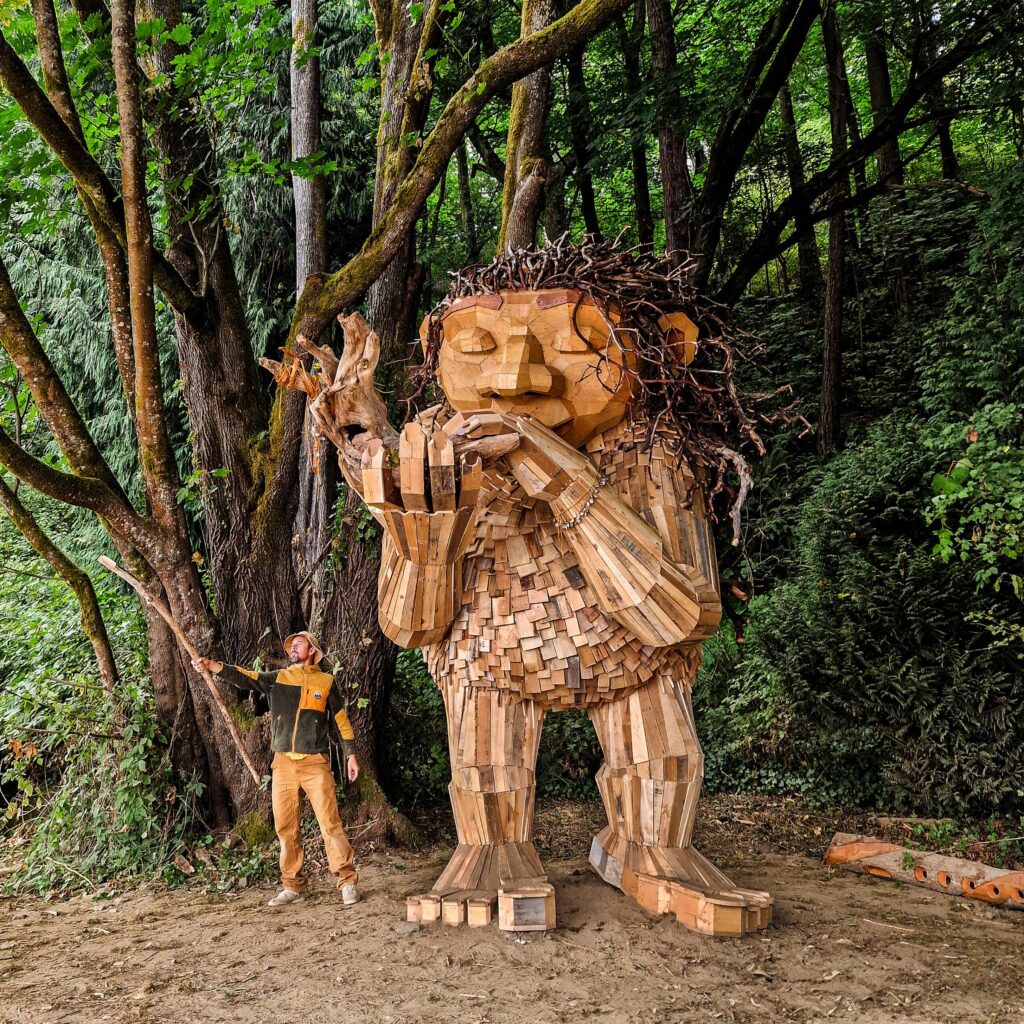
Dambo’s work is instantly recognizable. The trolls are big, often towering, and built with a deliberate roughness that lets the material’s past life show through. A plank with bolt holes stays a plank with bolt holes. Scratches and stains are not “fixed”. They become texture, history, and part of the story.
From Odense to big-scale recycle art
Thomas Dambo was born in Odense, Denmark, and is based in Copenhagen. His biography often points back to a childhood shaped by resourcefulness and making things with what was available, long before the trolls became a global phenomenon. He later studied Interaction Design at the Kolding School of Design, where he began pushing reclaimed materials into larger and more ambitious builds.

That design background matters. His projects are not just sculptures placed in landscapes. They are experiences. The trolls are positioned to be “discovered”, framed by trails, trees, and terrain in a way that feels staged without being artificial.
Building giants from other people’s leftovers
The headline material in Dambo’s practice is reclaimed wood. Discarded boards, old fencing, pallets, and timber headed for landfill get pulled into a new form. The construction style is part carpentry, part set-building: layered scales for hair and clothing, chunky geometric hands, and faces with strong planes so they read clearly from a distance.
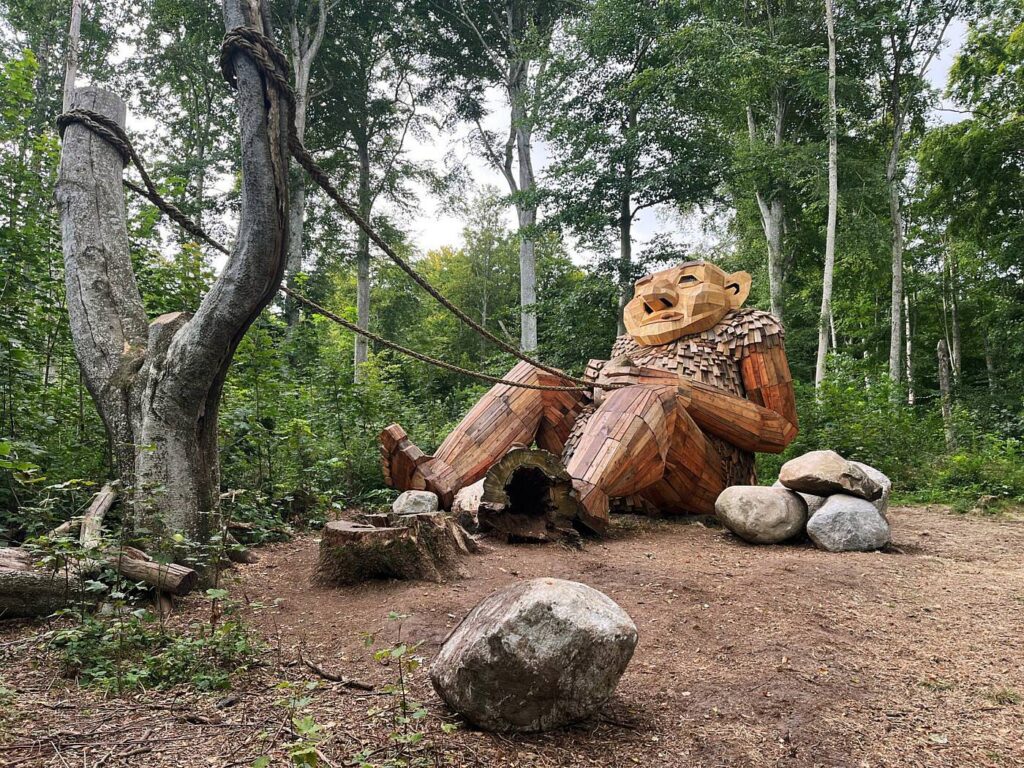
The process is also collaborative by design. Dambo regularly works with local partners and volunteer crews, using local scrap streams and community labor to assemble pieces on site. The result is public art that carries fingerprints from the place it lives in, not just the artist’s workshop.
Trail of a Thousand Trolls
Dambo’s trolls are not isolated commissions. They are chapters of an expanding storyline he calls the “Trail of a Thousand Trolls”. The map and project framing sit at the center of how the work is presented: an ever-growing recycle sculpture fairytale spread across countries, with each troll treated as a character in a larger universe.

This structure is a big reason the work travels so well. A troll in a Danish forest and a troll in an American park still feel like they belong to the same world. Names, personalities, and small narrative cues give continuity, while the materials and setting make each one local.
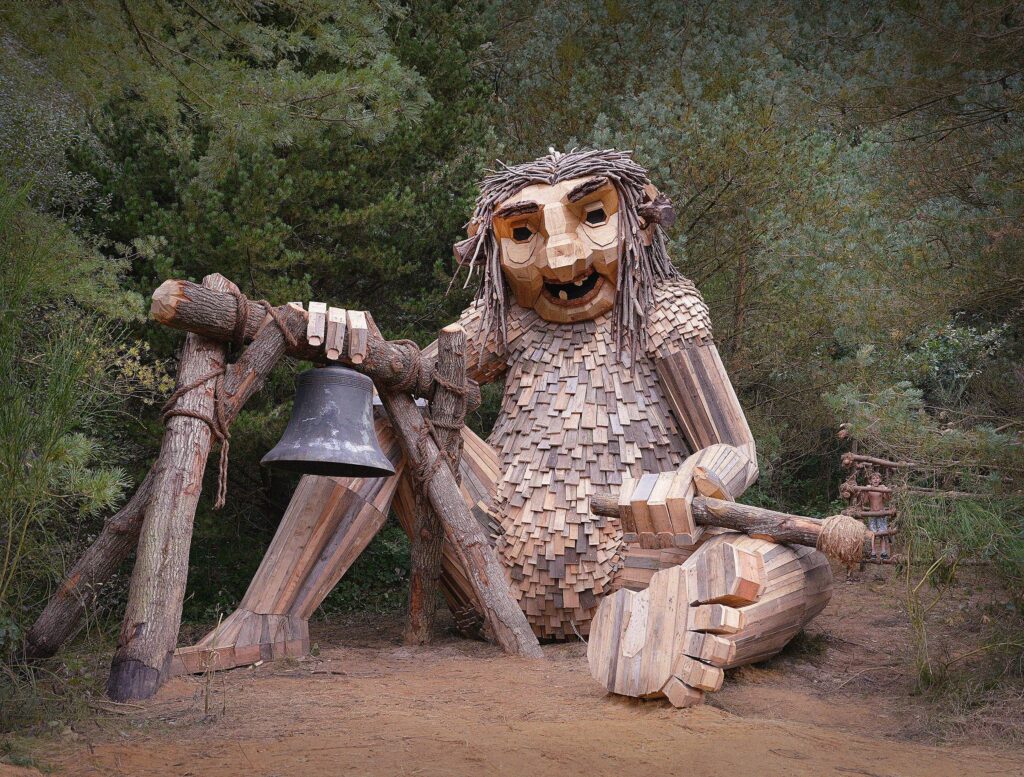
Over time, the trail has expanded widely, with hundreds of large troll sculptures forming a loose global network of outdoor installations. It functions like a scattered open-air museum, except the “galleries” are parks, forests, and nature preserves.
A few standout projects that show the range
Some locations host one troll as a surprise encounter. Others go bigger and turn it into a full landscape experience.
One example is “Trolls Save the Humans” at Filoli in California, presented as a concentrated exhibition with multiple trolls and a clear environmental storyline. The framing is direct: the trolls are not there just to look mystical. They are there as messengers about human behavior, waste, and the choices that shape landscapes.
In Minnesota, Detroit Lakes has been promoted as a major undertaking involving hundreds of volunteers and multiple works, pitched as one of Dambo’s most ambitious presentations. The emphasis is again on scale, community build energy, and turning natural areas into a destination without turning them into a theme park.
North Carolina is another strong example of how Dambo’s trolls can operate as a regional story rather than a single object. A recent installation placed seven trolls across several cities, using reclaimed local wood and a volunteer workforce. It was presented as a major collection of his giant trolls in the United States, with details like an unusually long “tail” element becoming part of the project’s legend-building.
Beyond trolls: a broader practice built on the same rules
The trolls get the headlines, but they are not the whole output. Dambo’s wider portfolio includes other installations and playful builds that still orbit the same idea: discarded material can be treated as a serious resource, not a compromise.
Even his infrastructure choices get folded into the artwork. In profiles and interviews, he has described building and renovating spaces with salvaged components, pushing the same logic into architecture-scale experiments. It reads like the troll philosophy applied to everything: waste is not an embarrassment to hide. It is a palette.
Why the trolls stick in the memory
A Thomas Dambo troll is doing several jobs at once. It is public art that photographs well, but it also functions as a scavenger-hunt magnet, a storytelling device, and a blunt argument about material value. Old wood does not pretend to be pristine. Instead, it becomes monumental.

That combination – craftsmanship, scale, humor, and a message that lands without needing a lecture – is why his trolls keep spreading. They are friendly giants made out of yesterday’s trash, quietly turning ordinary walks into a small encounter with modern folklore.

Reply