Rooted in Maine’s Landscape
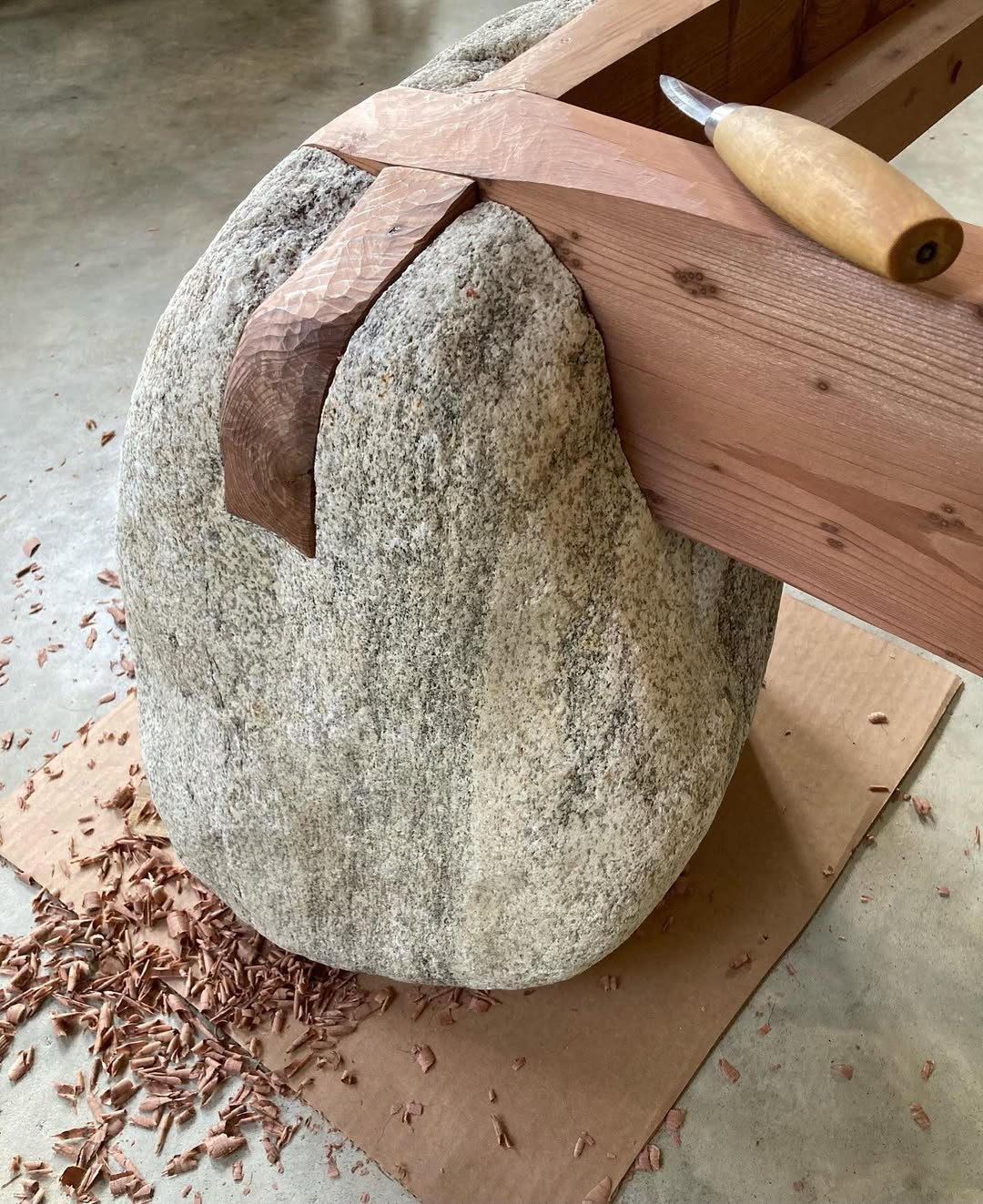
Ethan Stebbins builds furniture that feels like it belongs to the earth. He works from the rocky coast of Maine, where granite meets forest and sea. His furniture reflects that landscape. It is both rugged and refined, shaped by hand and guided by the materials themselves. There is no decoration for its own sake. Each line and surface exists because it makes sense.
A Maker of Many Roles
Stebbins calls himself a designer, woodworker, stoneworker, and poet. Those roles overlap in his daily work. He doesn’t start with sketches or rigid plans. Instead, he begins with what he finds around him. A piece of granite might suggest weight or balance, while a plank of ash or cedar brings warmth and motion. He studies how they might fit together, not through force but through understanding. When that connection appears, the project begins to take shape naturally.
Where Craft Meets Restraint
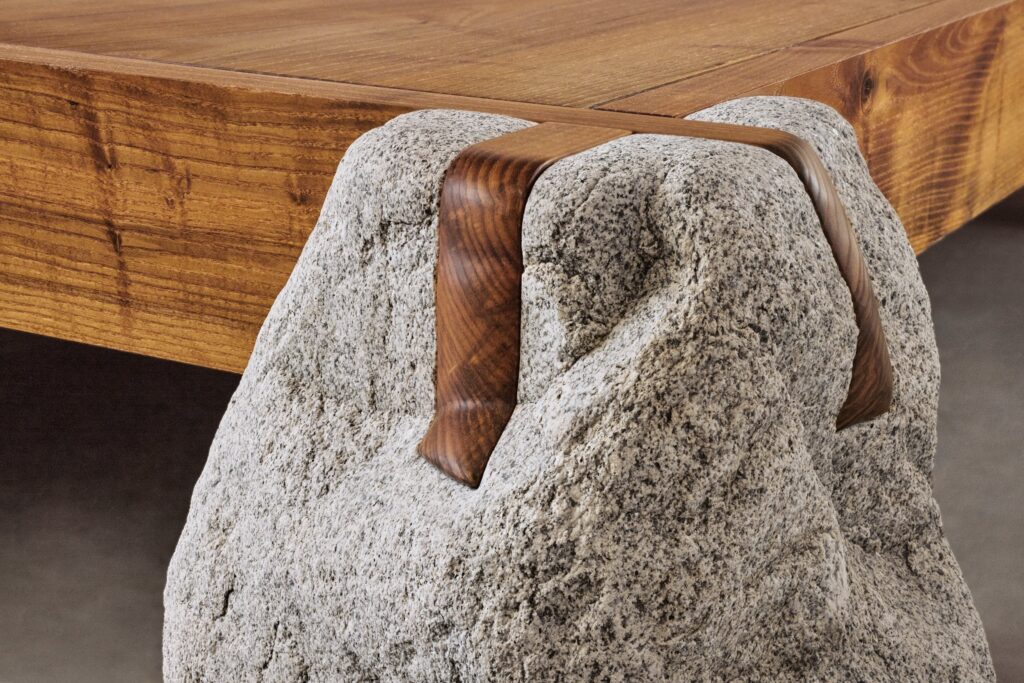
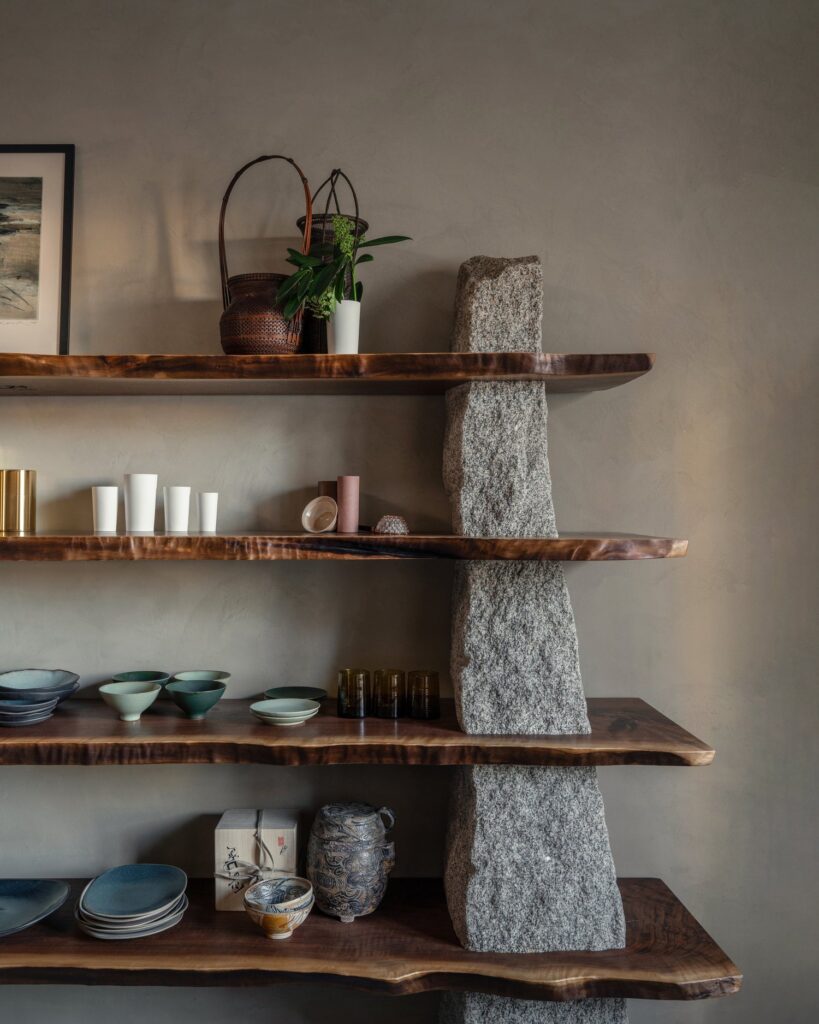
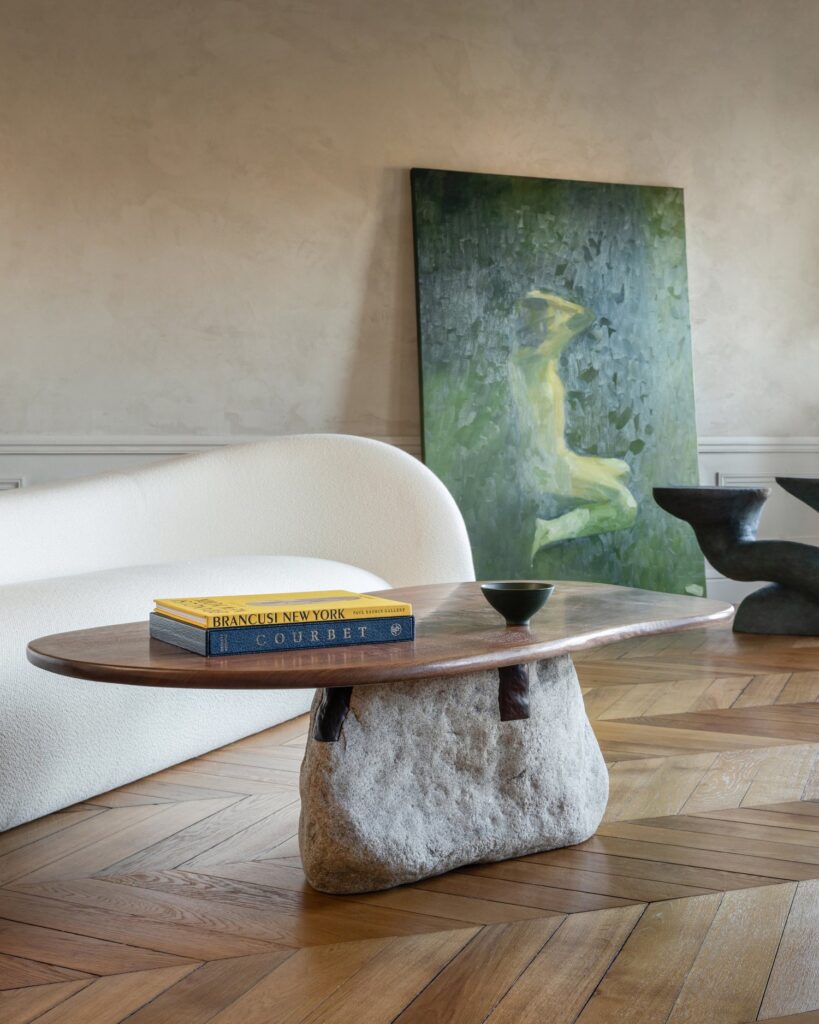
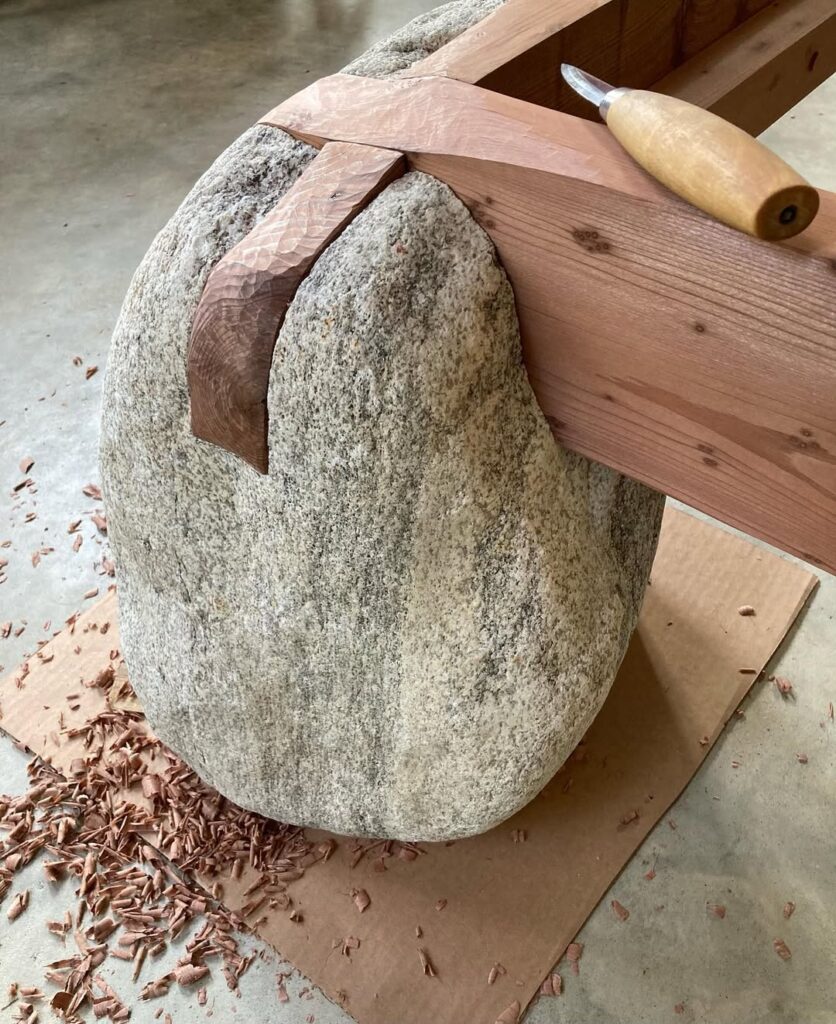
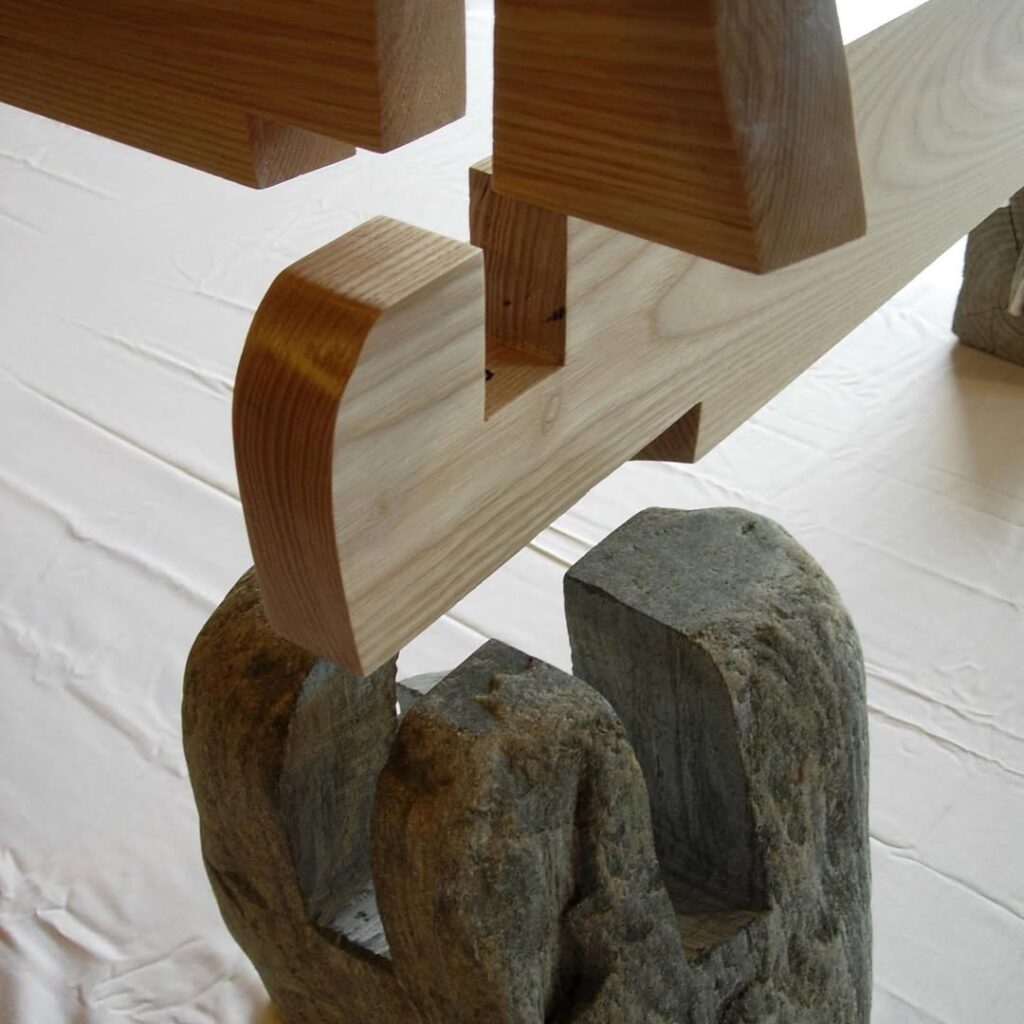
His furniture often draws on Japanese joinery, yet it never feels like imitation. Stebbins uses clean joints and visible structure, letting the materials show how they meet. The stone is not a base or a decorative accent. It carries weight and purpose. The wood, in turn, holds tension and movement. Together they form an equal relationship. The result is both strong and quiet, simple but far from plain.
Signature Works
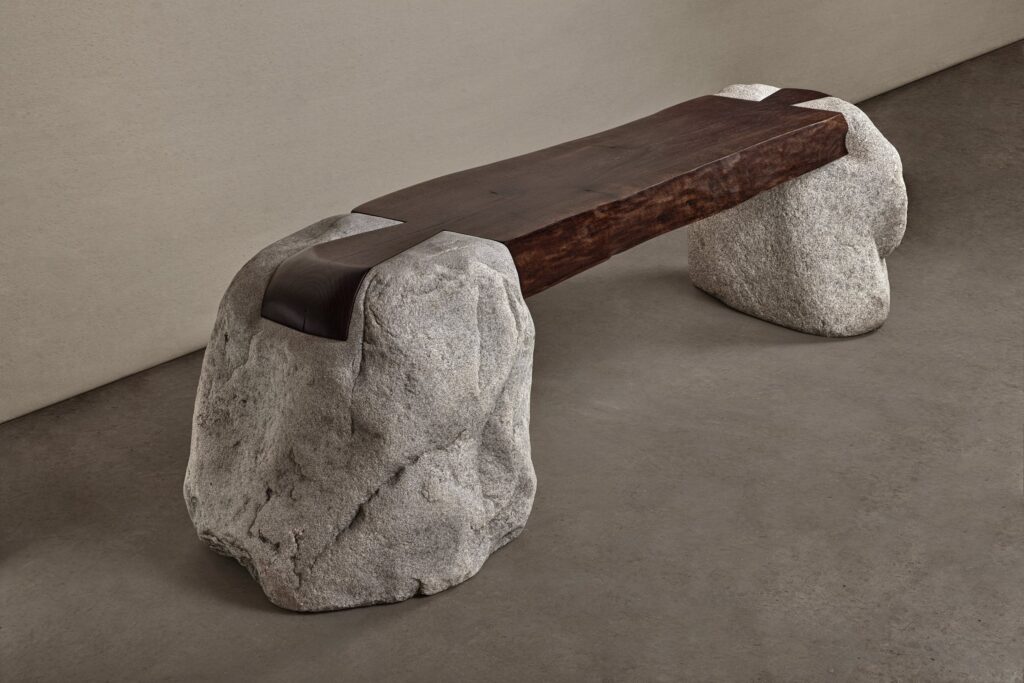
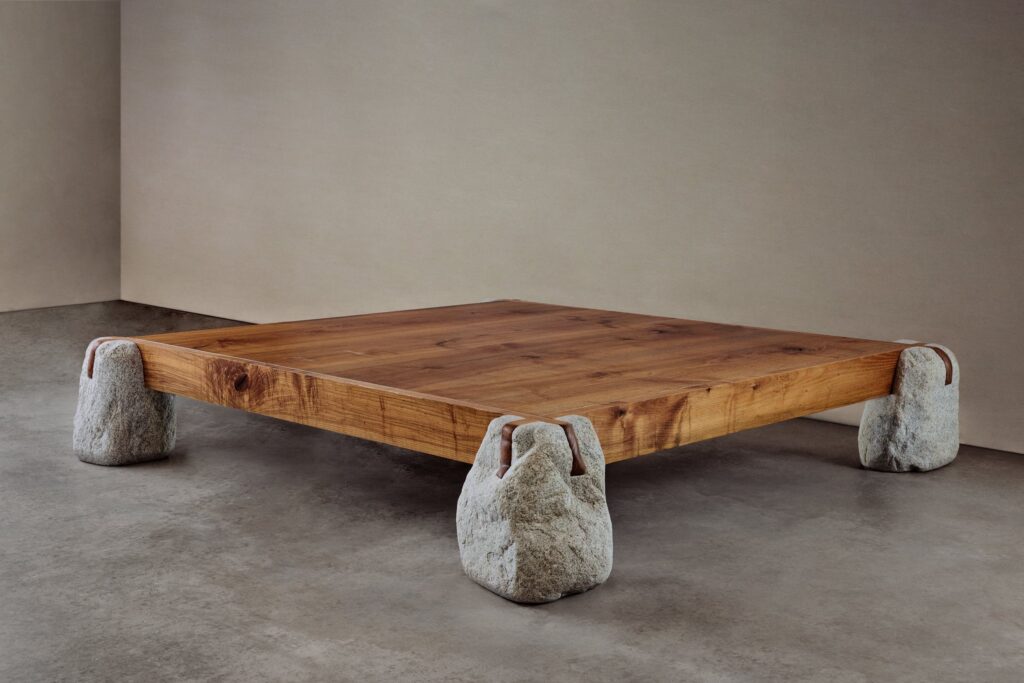
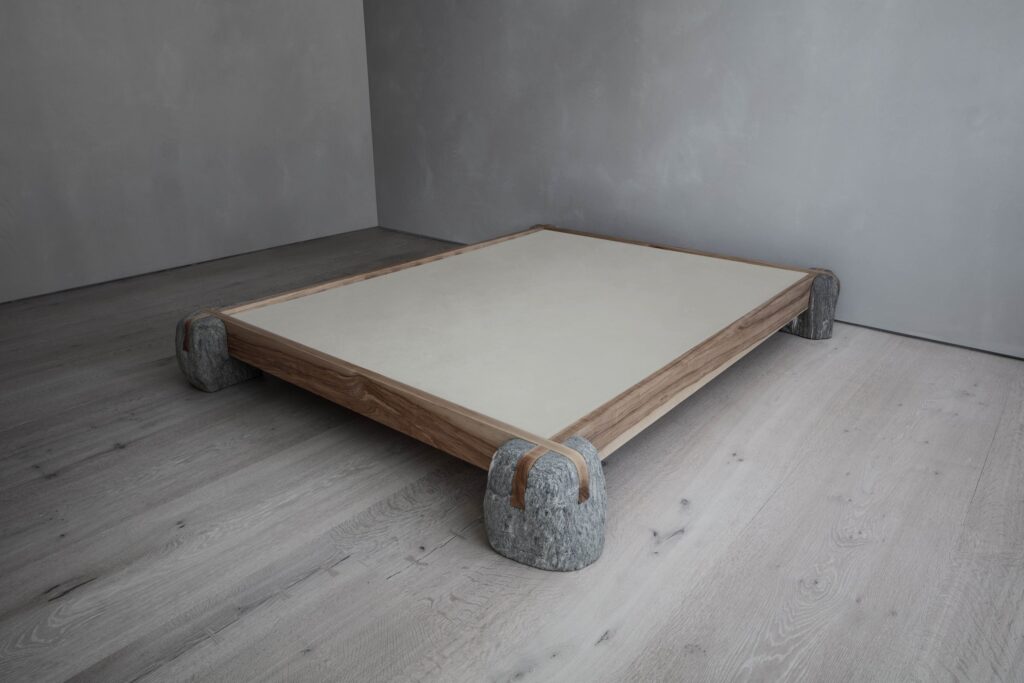
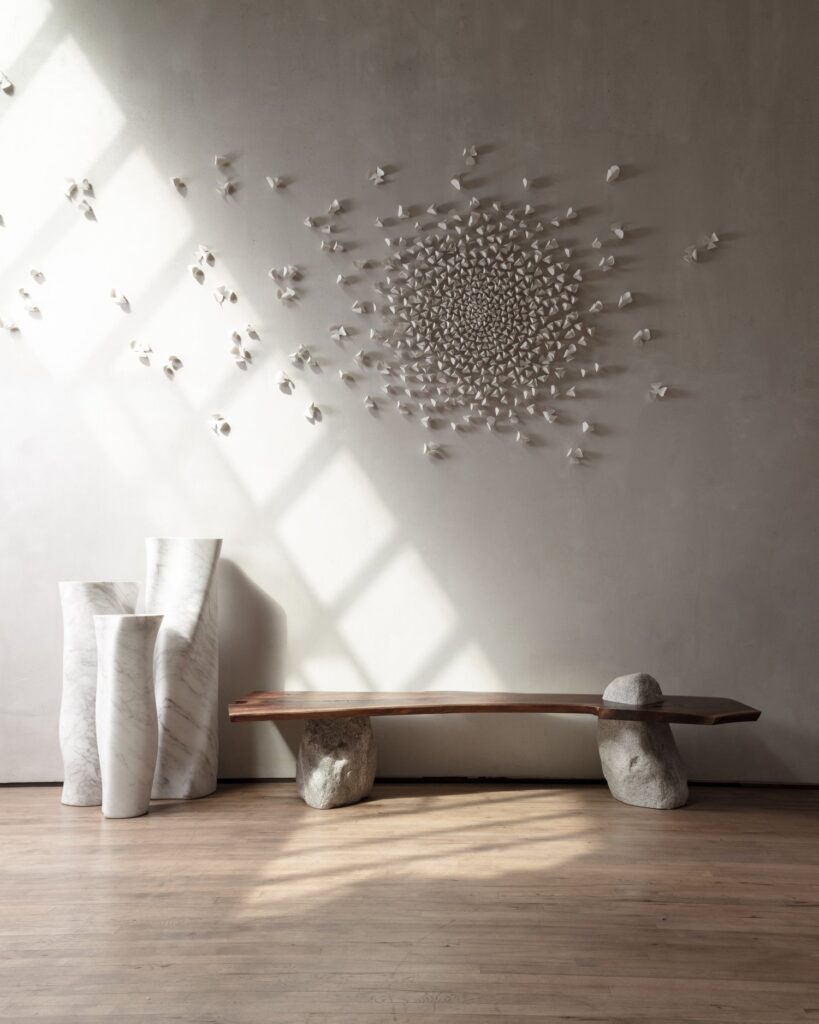
The Wabi-Sabi Bed shows this idea clearly. Made from white ash and granite gathered from the Maine coast, it stands both light and grounded at once. The Dovetail Bench continues the same conversation. Its wooden seat grows naturally from a rough granite block, joined without visible metal or glue. Both works balance softness and strength while keeping their natural character intact.
Learning Through Material
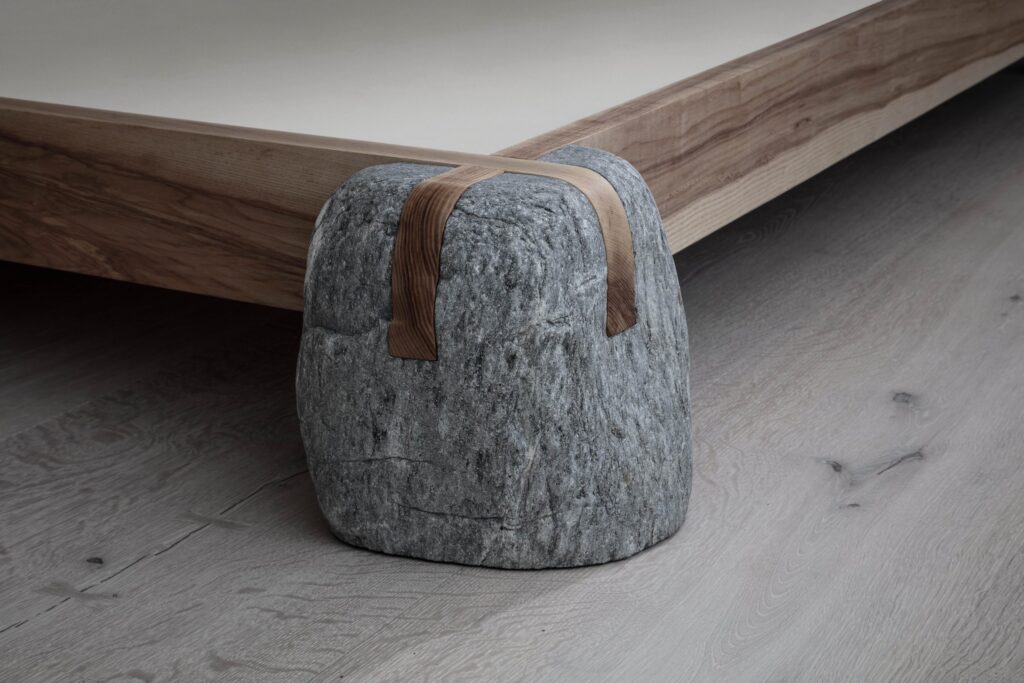
Stebbins’ background helps explain this balance. He began as a stonemason in the late 1990s, which taught him patience and respect for the limits of hard material. Later he worked under Japanese masters Masahiko Seko and Chris Tanguay, who deepened his sense of proportion and surface. Through these experiences, he learned how to let materials lead the design. His furniture is never wood with stone details or stone with wooden frames. It is a single thought, expressed through two different elements.
The Process of Balance
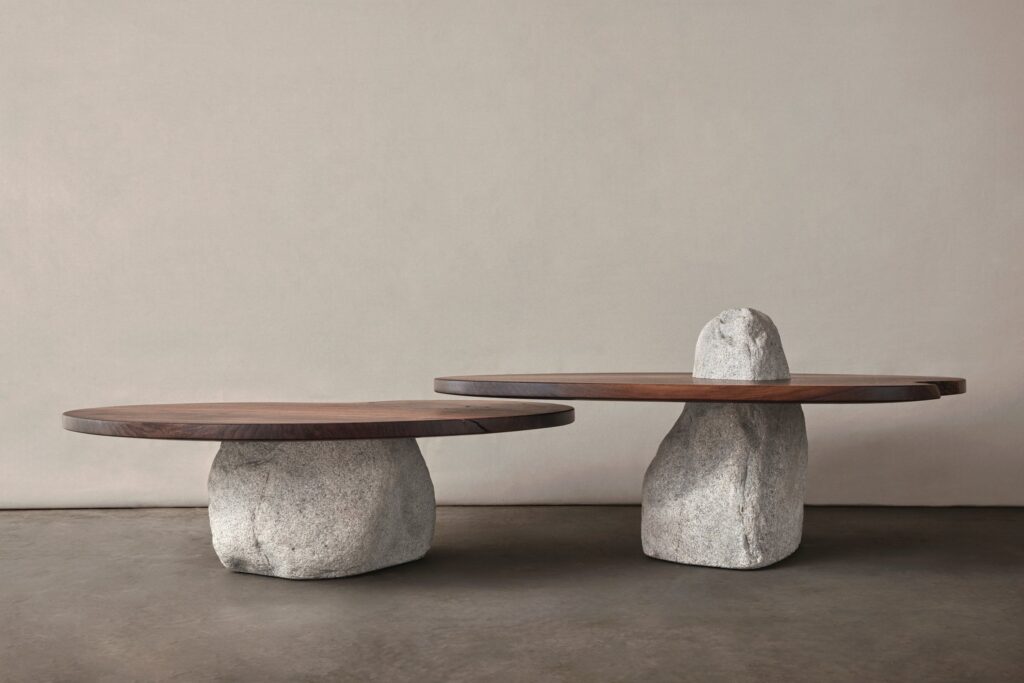
His process is slow and intentional. He doesn’t rush or follow trends. Instead, he allows small details to guide him. A grain line might change a leg’s angle. A quartz vein might define a table’s edge. He keeps adjusting until wood and stone work together without tension. That balance is what makes his furniture feel natural, as if it couldn’t exist any other way.
Tactile Simplicity
Stebbins’ pieces invite touch. The wood feels warm and smooth, while the stone cools the hand. Every part contrasts with another, yet everything fits together. Heavy and light, rough and polished, solid and delicate. These combinations turn simple forms into sensory experiences. The harmony is not just visual but physical.
Born from Place
Maine’s coast is more than a background for his studio. It is the source of his materials and ideas. The granite he uses often comes from nearby quarries or shoreline finds. The wood comes from local sawmills. Each piece carries the feel of the region—its forests, its cliffs, its changing light. Because of this, his furniture could come from nowhere else.
The Essence of His Craft
Stebbins rarely explains his work in words. He prefers to let the materials speak for him. For him, craft itself is enough. Precision becomes poetry when it feels effortless. His simplicity is not about removing detail but about finding clarity. Every joint and curve belongs where it is. Nothing distracts from the material’s natural story.
A Quiet Presence
Ethan Stebbins’ furniture works equally well in a gallery or a home. It doesn’t demand attention, yet it holds space with confidence. It reminds us that true craftsmanship is about seeing what already exists and giving it form. Through wood and stone, he builds a calm conversation between nature and design.
Reply