Ed Elliott is an English sculptor known for large-scale, site-aware figurative work, with a practice that moves between wood and bronze. Born in Worcester in 1985, he studied Fine Art Sculpture at Cardiff School of Art & Design (BA Hons, 2008) after earlier foundation-level training.
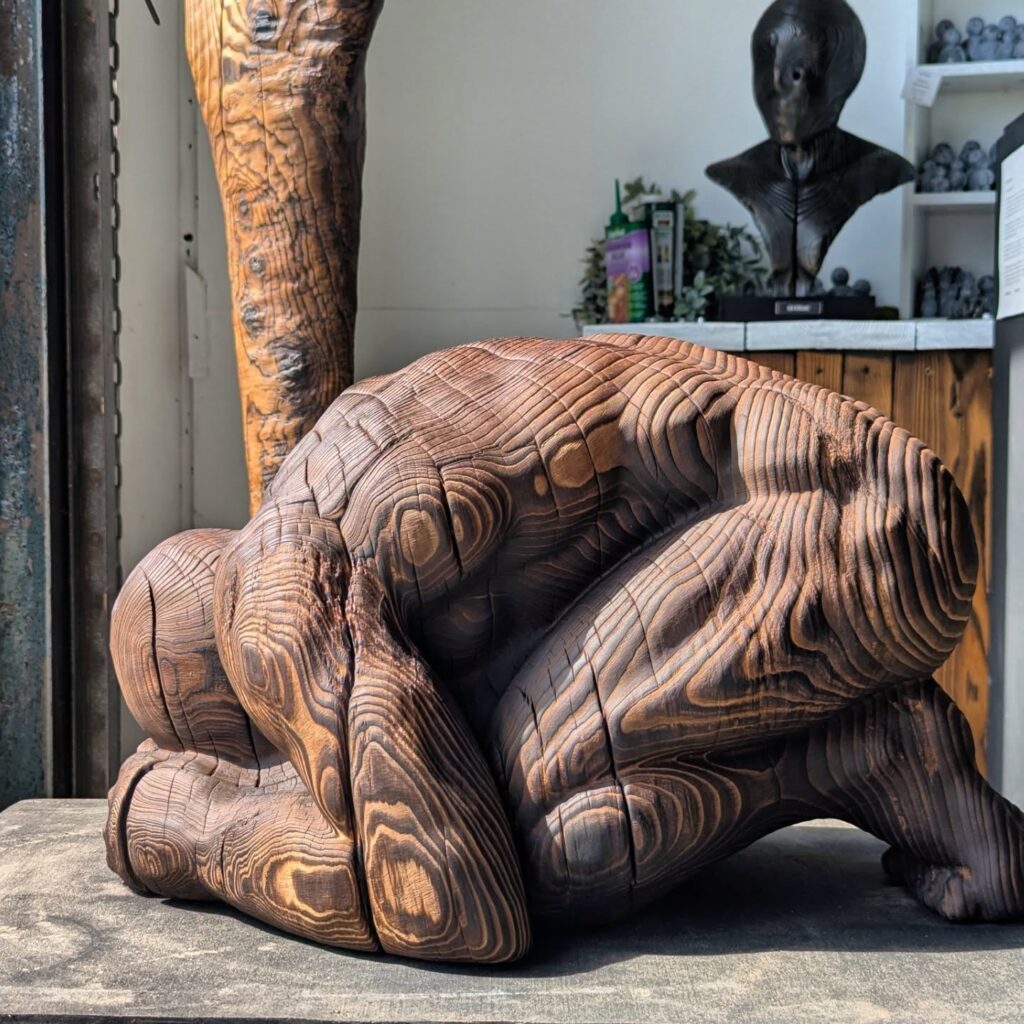
Although Elliott works across materials, wood has become a defining medium. He is based in the West Midlands area and works from a rural Herefordshire studio, exhibiting widely in the UK and showing internationally.
A career shaped by public-scale ambition
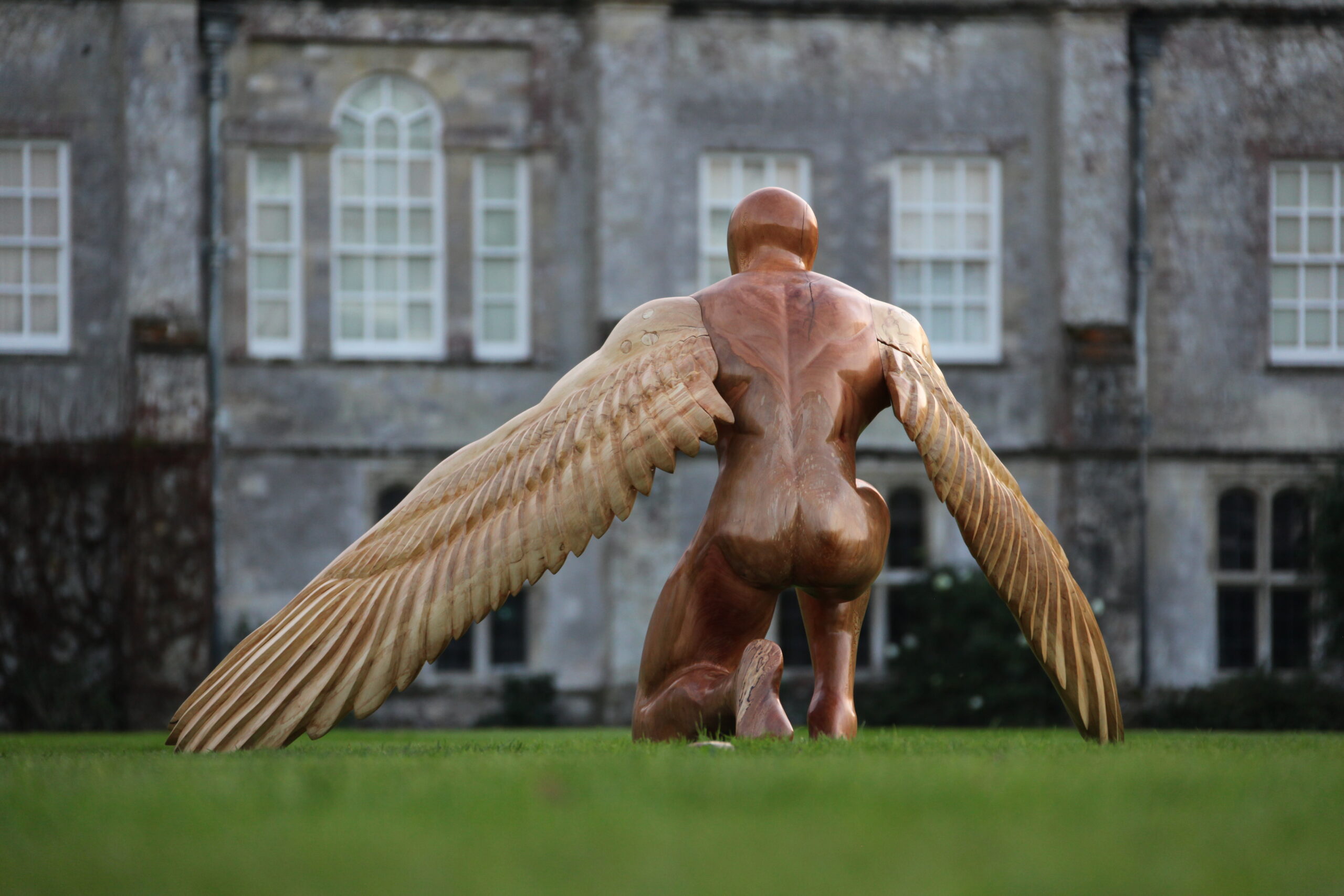
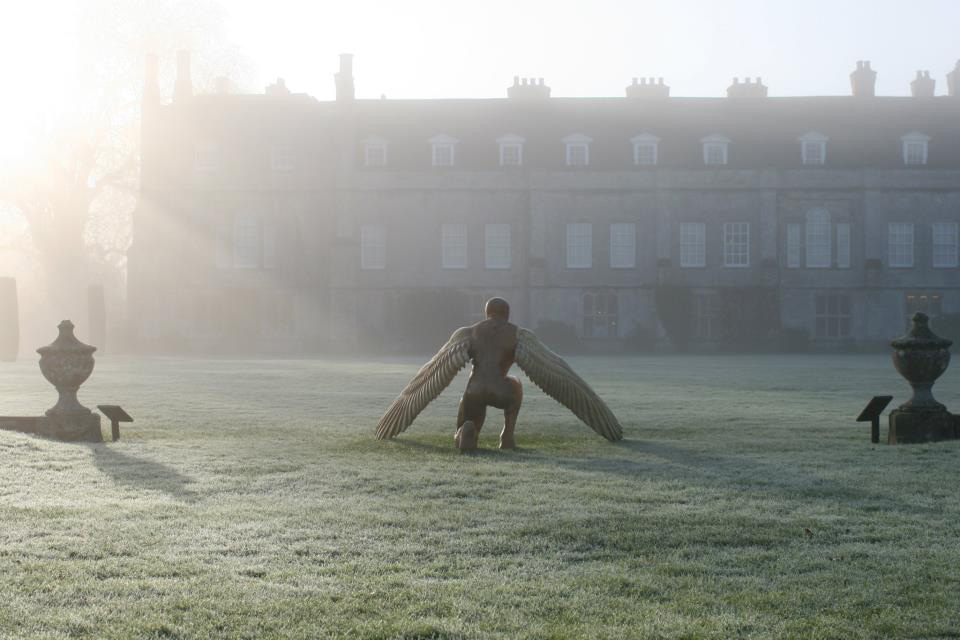
Early visibility came through public commissions. In 2011, Elliott won a commission to create a large wooden angel for the National Trust. That work, titled Greer, was carved from London Plane wood sourced from the Mottisfont Estate and installed at Mottisfont in Hampshire.
Awards and regional recognition followed. He is noted as a recipient of the h.Art 2012 Young Artist’s Bursary, and his public pieces are cited as being spread across multiple English counties.
Figurative sculpture as a direct language
Elliott often returns to the human body because it communicates quickly, even before any backstory is known. In his own statements, sculpture is “a language”, and the human form sits at the forefront because it stays relatable across different backgrounds.

That accessibility matters in his wider approach. Elliott describes his work as conceptually driven but not dependent on explanation, aiming for pieces with hidden depths rather than insider-only references.
Burning, charring, and controlled risk
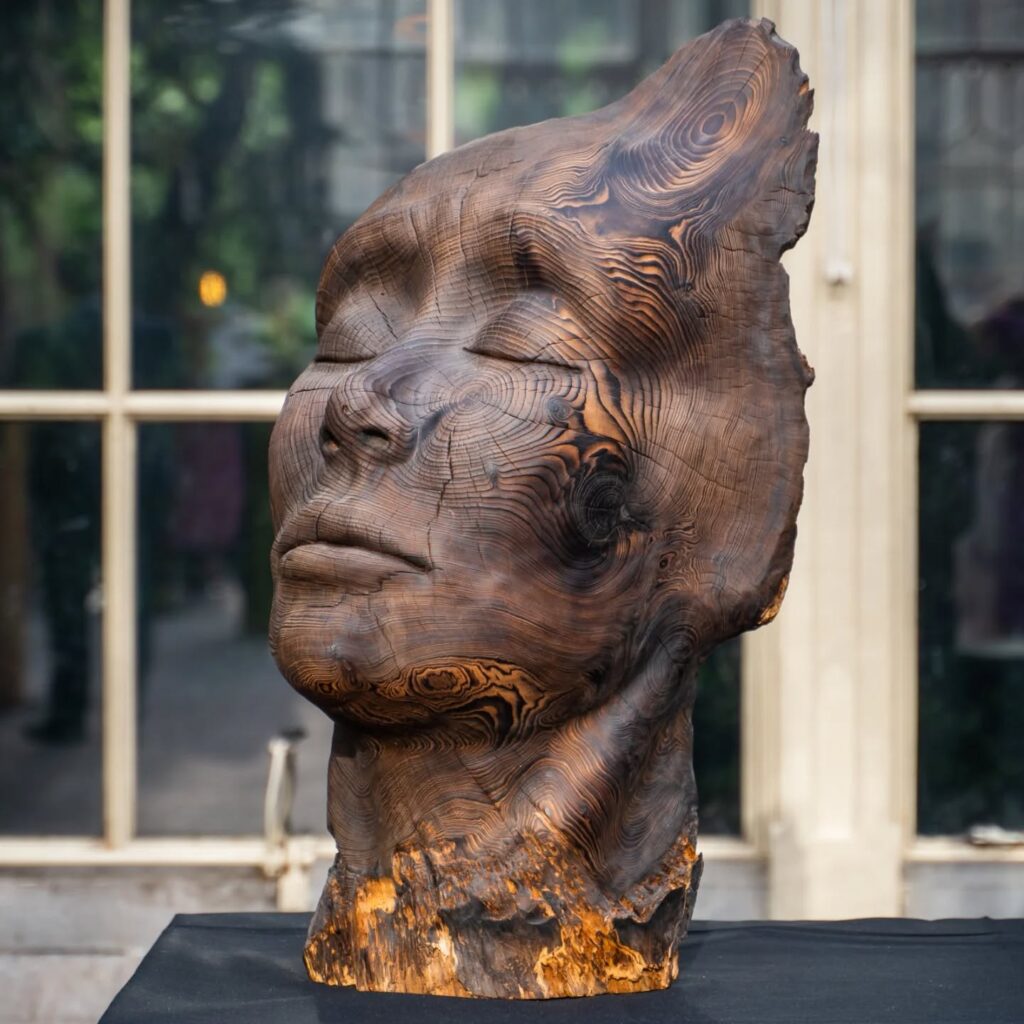
One of the most distinctive elements in Elliott’s recent work is surface burning. He has spoken about taking carved wood and intentionally burning it as part of a series he calls “Charred”, describing it as a difficult but controlled step in the process.
The technique draws on Shou Sugi Ban (Yakisugi), an old Japanese method associated with preserving wood by charring. In Elliott’s hands, the matte-black finish is not just visual drama – it reframes the material, pushing wood toward something more elemental: heat, smoke, and a kind of sealed skin over grain.
From wood to bronze, without losing vulnerability
Alongside one-off wooden works, Elliott has expanded into bronze editions. The move lets him translate the fragility and impermanence of wood into bronze’s permanence, effectively freezing a wood logic in metal.
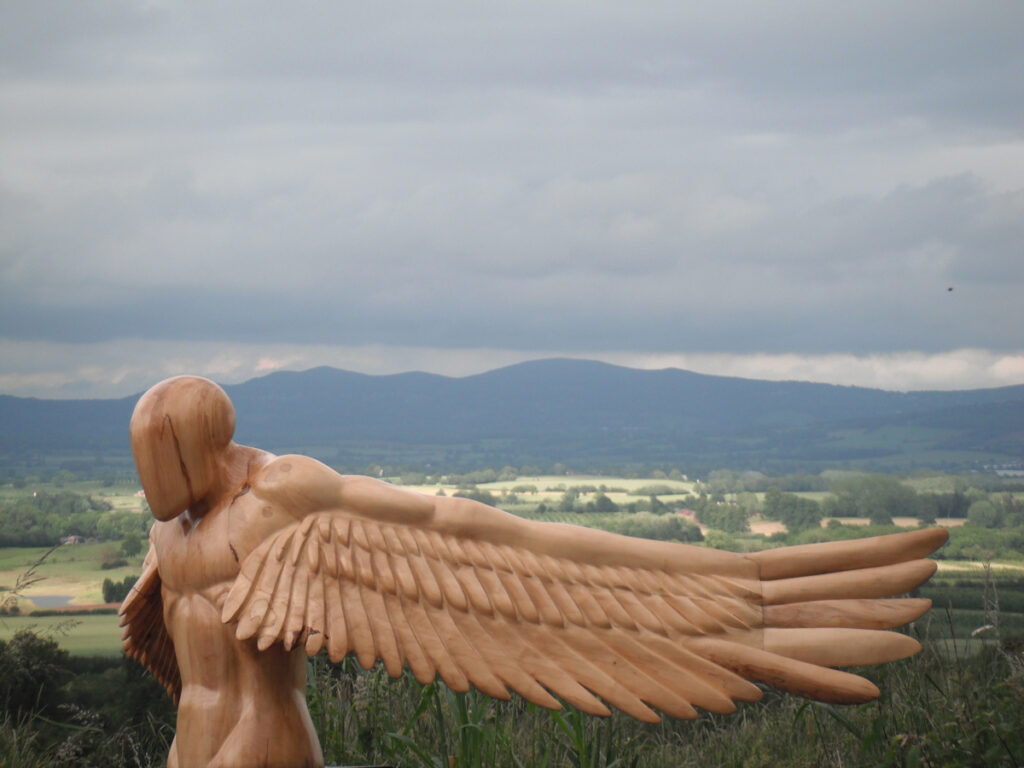
That shift also broadens how the work circulates: monumental carvings can remain singular and site-specific, while smaller bronzes can travel through galleries and collections without losing the core figure language.
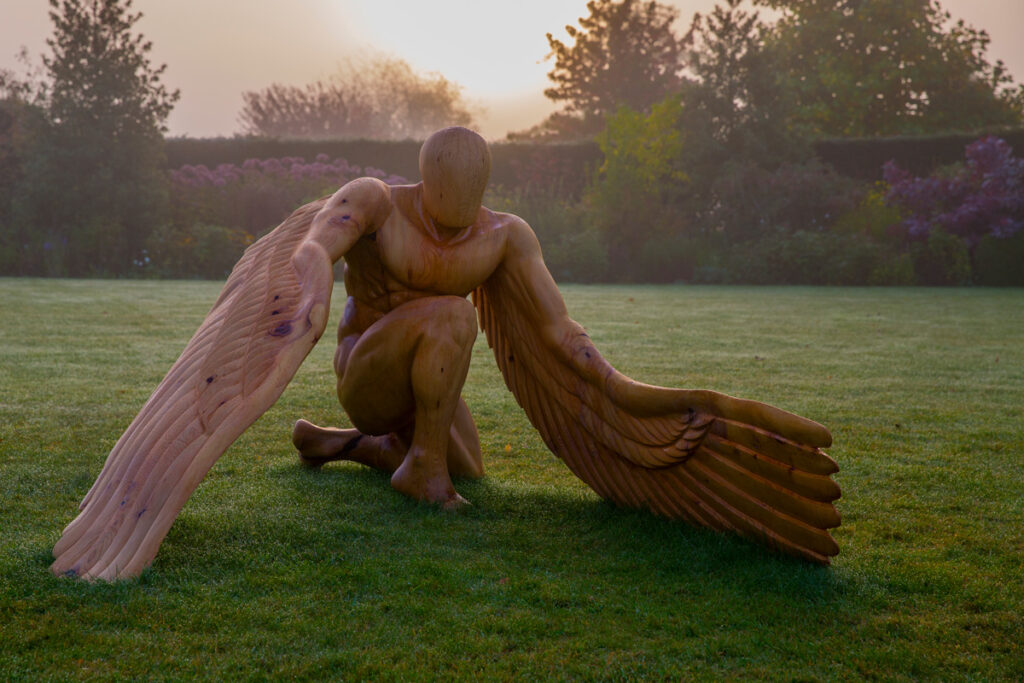
Studio life and where the work meets people
Elliott’s work is shown through galleries and sculpture parks, and he also opens his studio to visitors during Herefordshire Art Week (h.Art), offering a closer look at process and scale in the place the work is made.
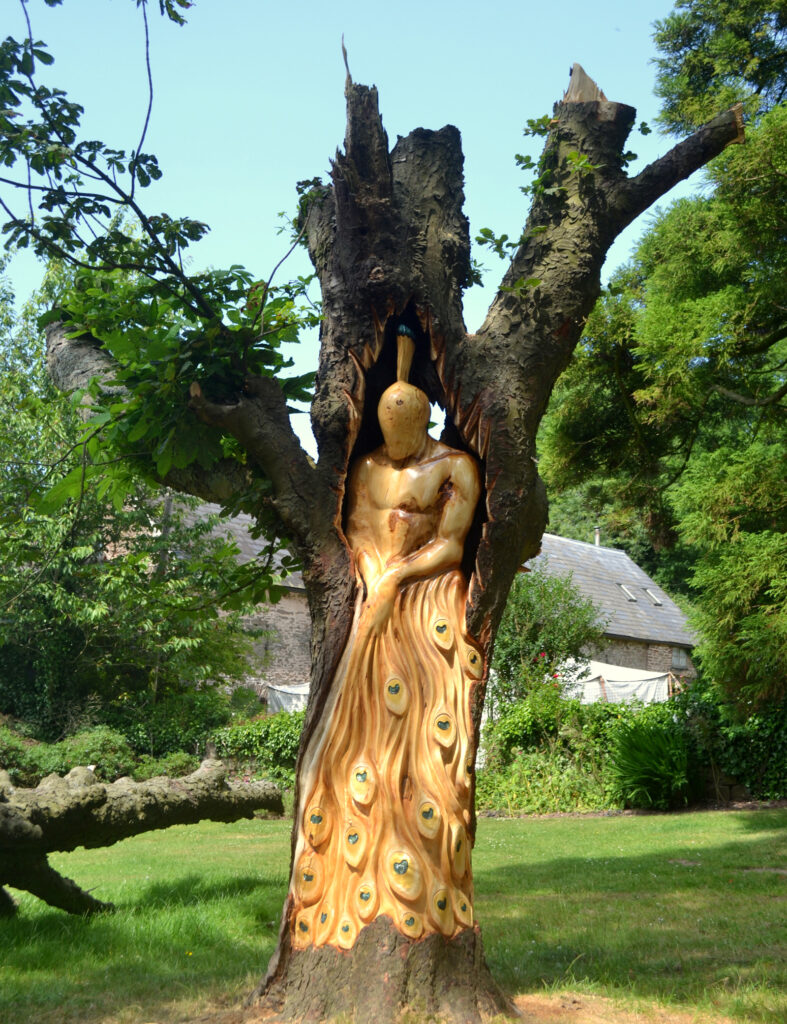
Across wood, char, and bronze, the throughline is consistent: figurative sculpture used to talk about inner states – tension, resilience, stillness – with surfaces that carry evidence of making, and ideas that stay present even when the story is left unsaid.
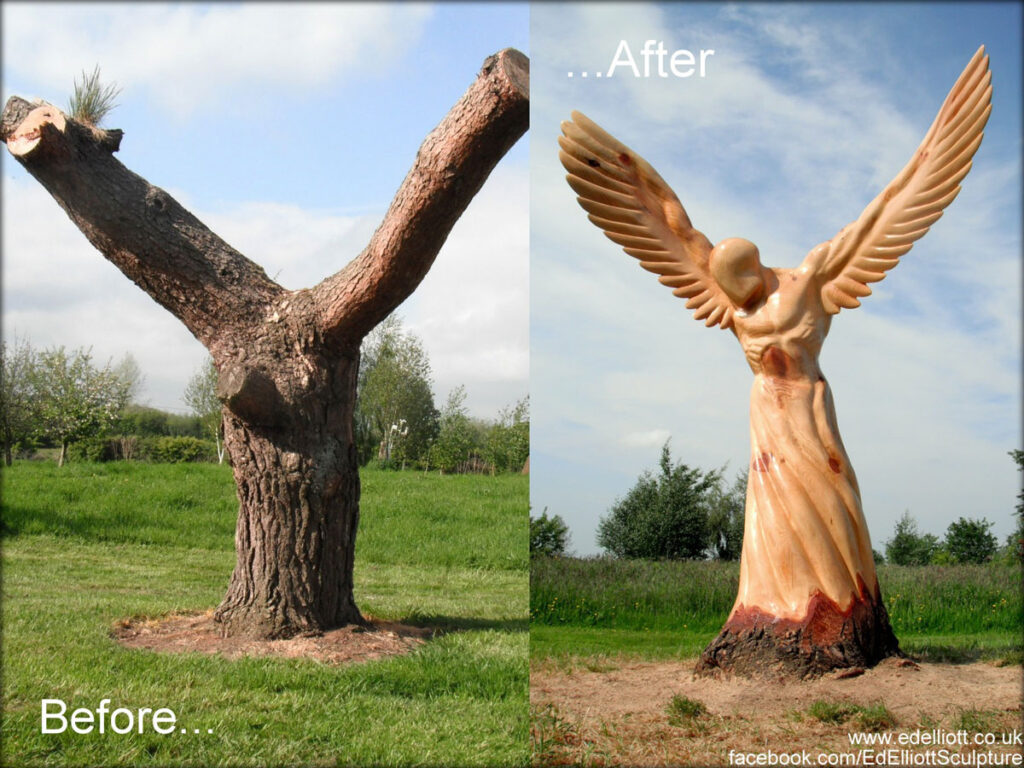
Reply