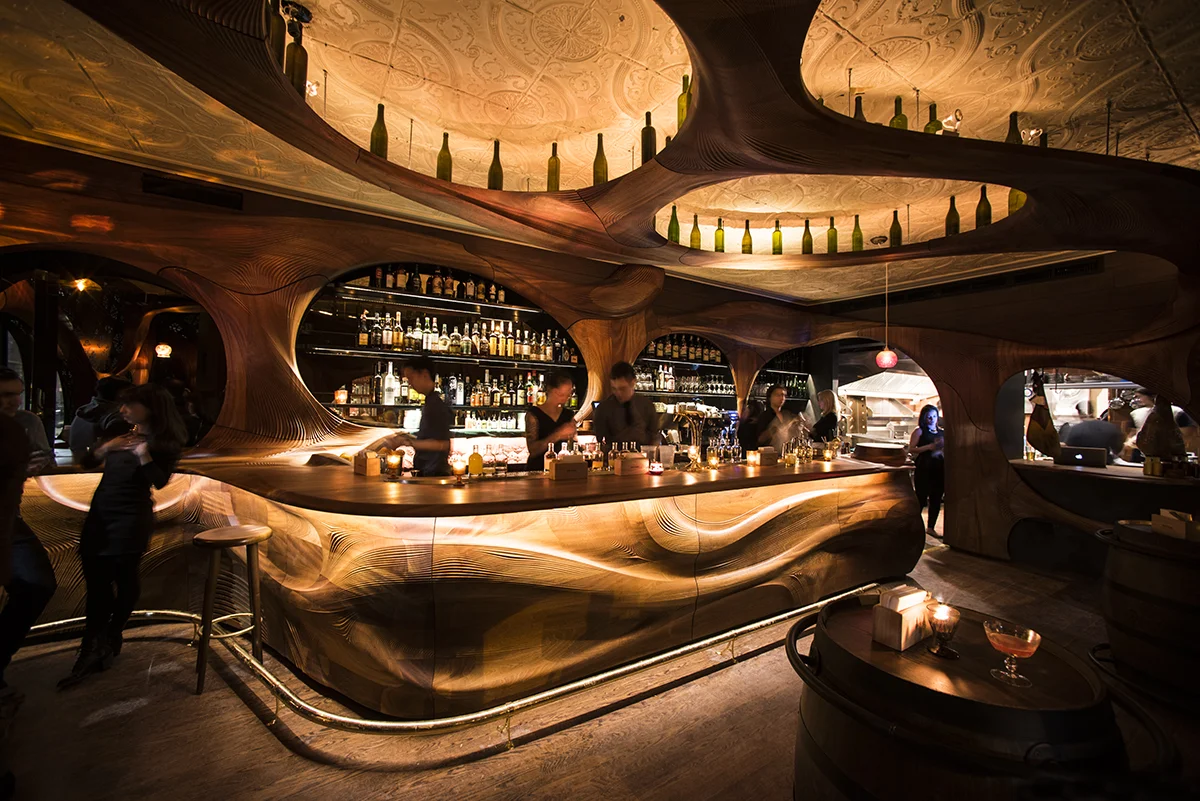
Bar Raval sits on College Street in Toronto’s Little Italy, but its atmosphere points straight to northern Spain. The pintxo and tapas bar was developed by chef-restaurateur Grant van Gameren with partners and mixologists Mike Webster and Robin Goodfellow. From the start, it was meant to feel like more than a restaurant. The idea was a tight, high-energy room where design, food, and drink all hit with the same intensity.
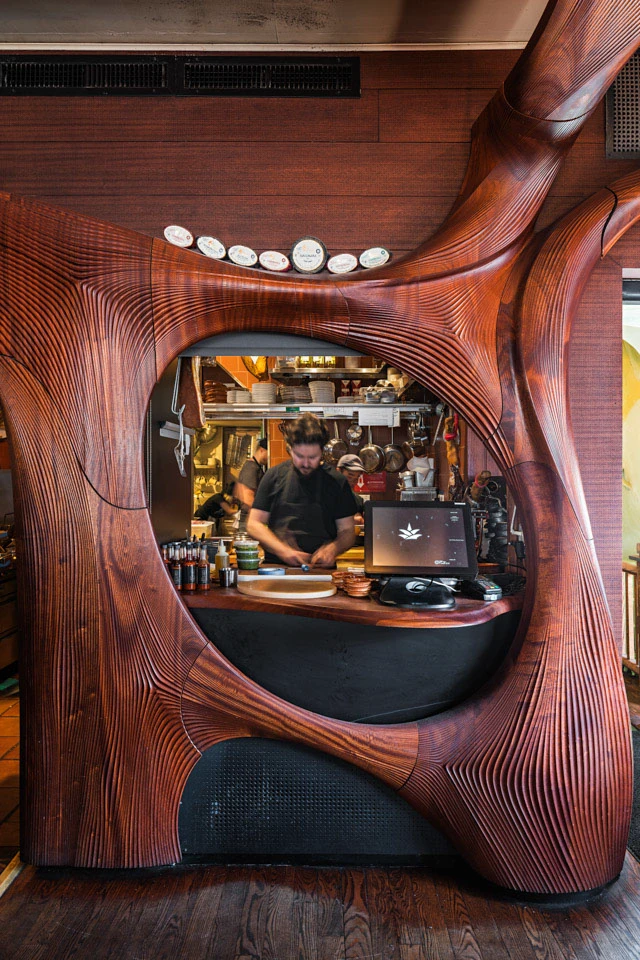
Partisans answered with a single bold move – a continuous carved interior that wraps the space. The bar, walls, and ceiling merge into one flowing surface made from dark mahogany. In a compact footprint, that decision changes everything. The room stops feeling like a typical box with furniture inside it. Instead, it becomes an immersive environment, almost like stepping into a sculpted object.
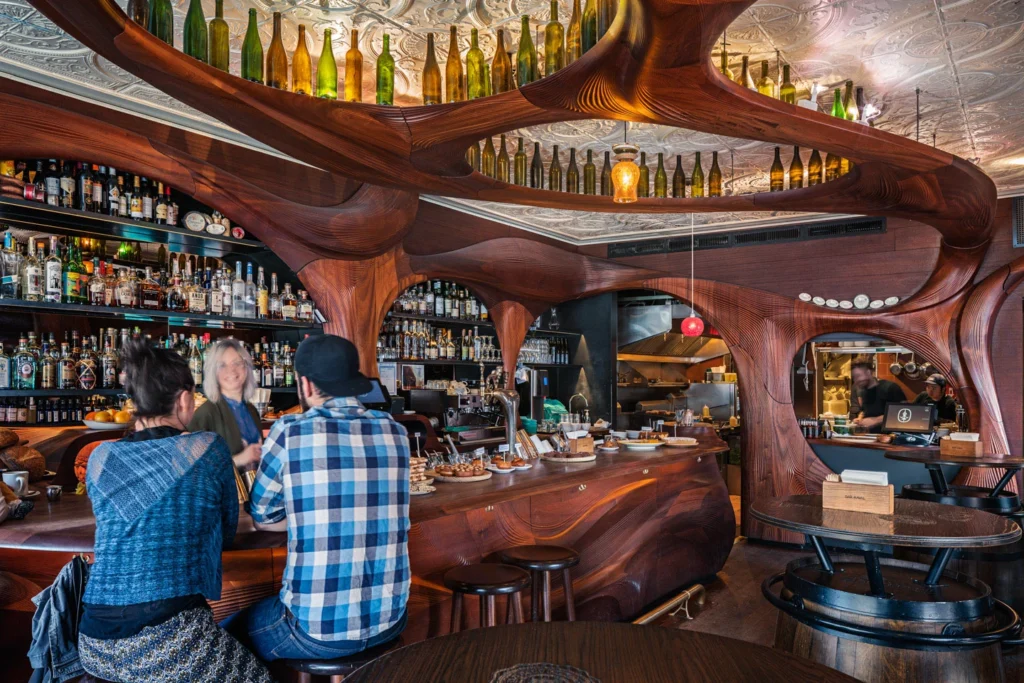
The form has a clear lineage. Many people connect it to Spanish Art Nouveau and to Antoni Gaudi in particular, not because it copies details, but because it treats structure and ornament as the same thing. Curves thicken and narrow. Openings stretch like they were pulled by hand. Surfaces fold into shelves, ledges, and niches without obvious seams between architecture and fittings.

What makes it especially interesting is how the craft is tied to fabrication logic. The mahogany was CNC-milled in sections, then assembled as a continuous envelope. Wood movement was treated seriously, so panel connections were designed to accommodate seasonal expansion and contraction rather than pretending it will not happen. Those joints become part of the rhythm of the interior, like a measured pattern that helps the larger surface feel intentional instead of chaotic.
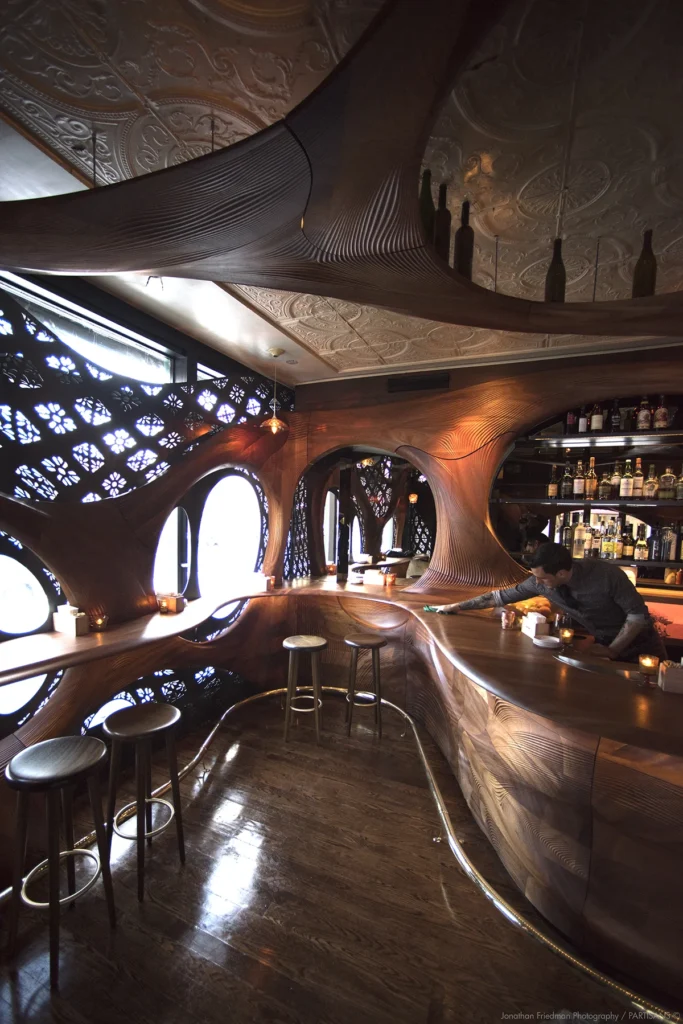
Partisans also leaned into the tool marks. Instead of sanding everything smooth to hide the machine process, the carved grooves are celebrated. They act like a second grain laid over the wood, catching shadows and building depth as you move through the room. Up close, the texture feels tactile and almost muscular. From a distance, it reads as a soft gradient of lines that reinforces the flow of the space.
The layout supports the energy. Seating is limited, circulation is tight, and the bar becomes the social anchor. There are no heavy dividers. The room encourages movement, standing, quick conversations, and that slight buzz you get when a place is full and working hard. Near the windows, curved ledges work as casual perches and spill toward the street feel, while patterned metal screens add another layer of texture and shadow.
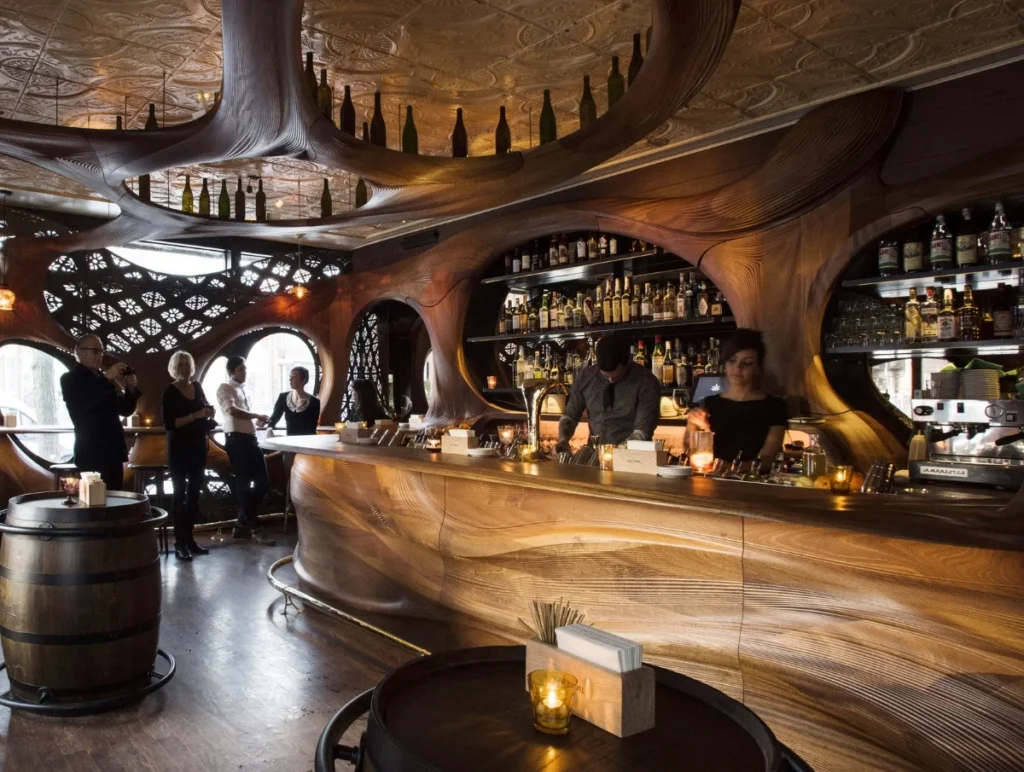
Then there are the small, slightly wild details that make Bar Raval memorable. Partisans worked in unexpected references, including graphic motifs cut into metal elements. Even the bar hardware was treated like a design object, with custom components that turn everyday use into part of the story. It is the kind of project where you can visit ten times and still notice new decisions.
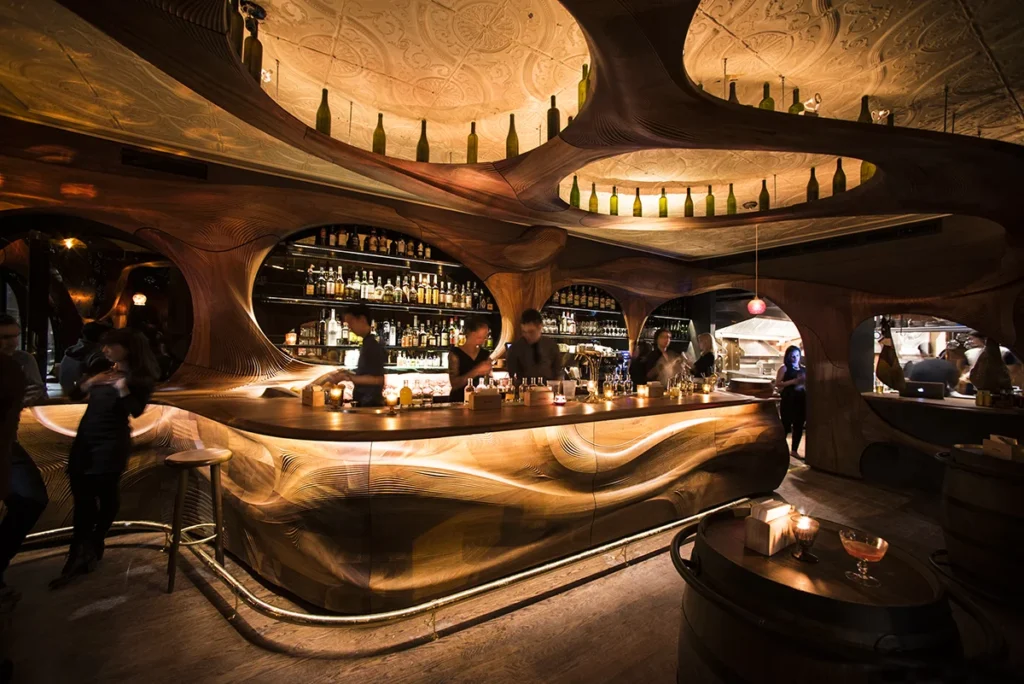
Bar Raval became a reference point for contemporary hospitality design in Toronto because it is not trying to be neutral or background. It is immersive, opinionated, and technically ambitious, but it still functions as a busy bar. That balance is the real trick: a sculptural interior that does not just look good in photos, but holds up under noise, crowds, and the daily rhythm of service.
Reply