
ForestBank is a material design project by Japanese designer Yuma Kano and Studio Yumakano that treats the forest as more than a source of timber. Instead of focusing only on straight, “useful” lumber, ForestBank pulls value from what usually gets ignored in forestry and woodworking – small branches, bark, foliage, seeds, roots, and even forest floor soil – and recomposes it into a workable solid material. The result is a surface that reads like timber-terrazzo, but with the visual logic of a specific place and season embedded inside it.
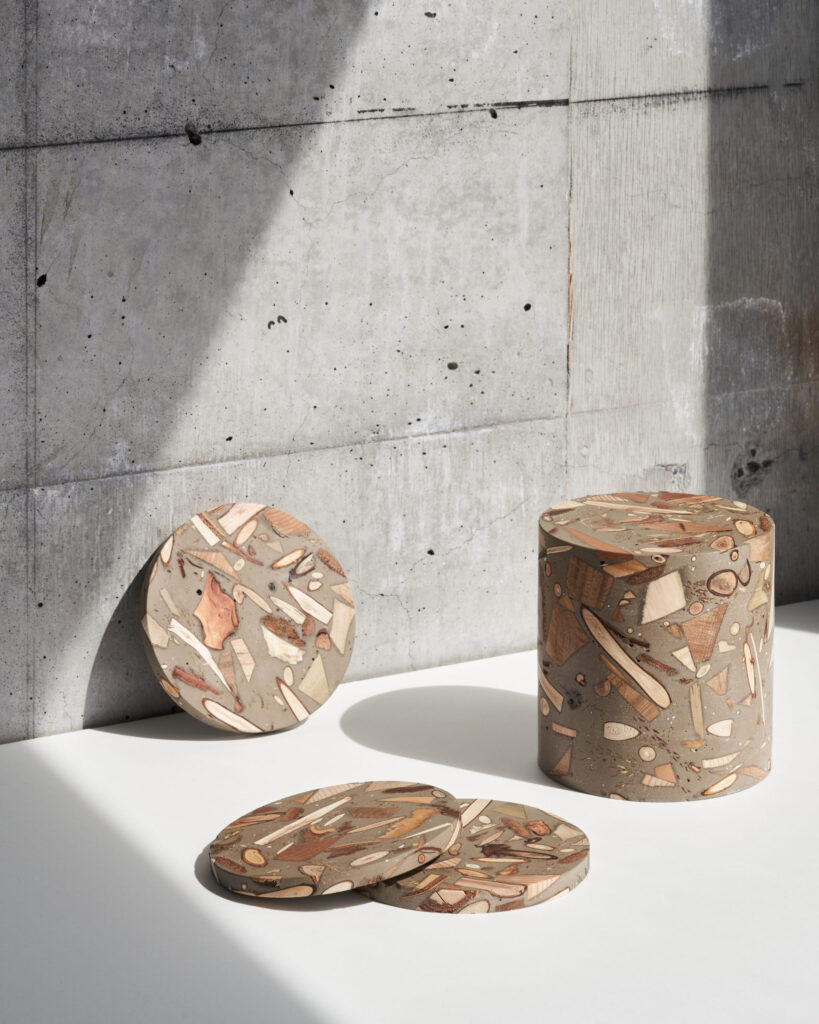
At the core of ForestBank is a simple shift in perspective: forest residue is not “waste,” it is information. The material was developed using inputs connected to forests and woodworking activity in Hida City, Gifu, in collaboration with local industry partners. That grounding matters because ForestBank is not positioned as a generic composite. It is framed as a condensed snapshot of a local forest ecosystem and its byproducts.
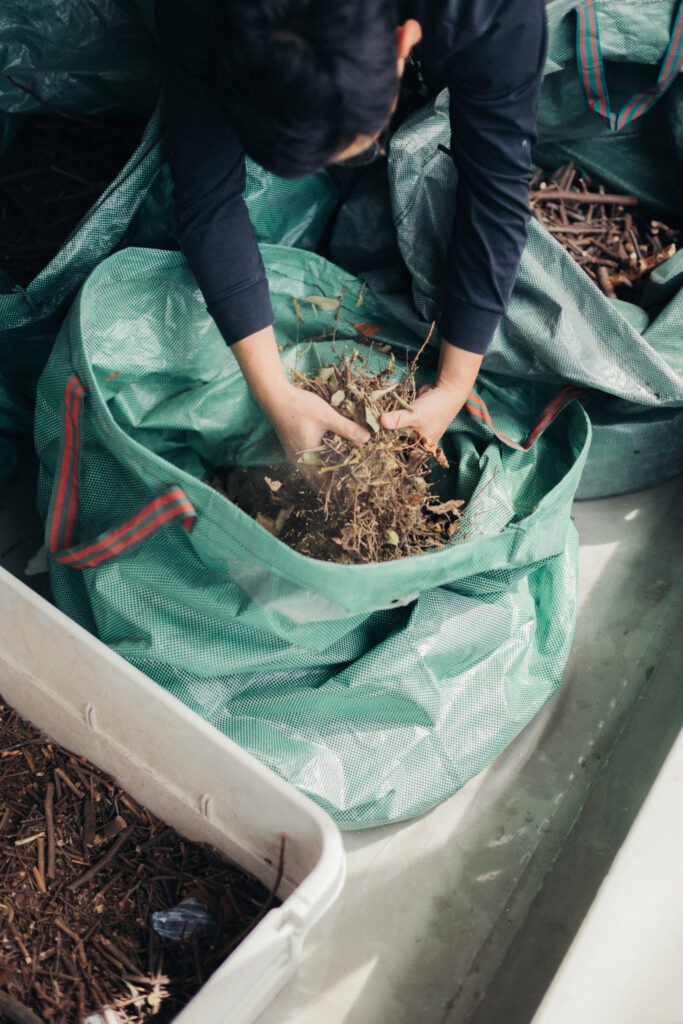
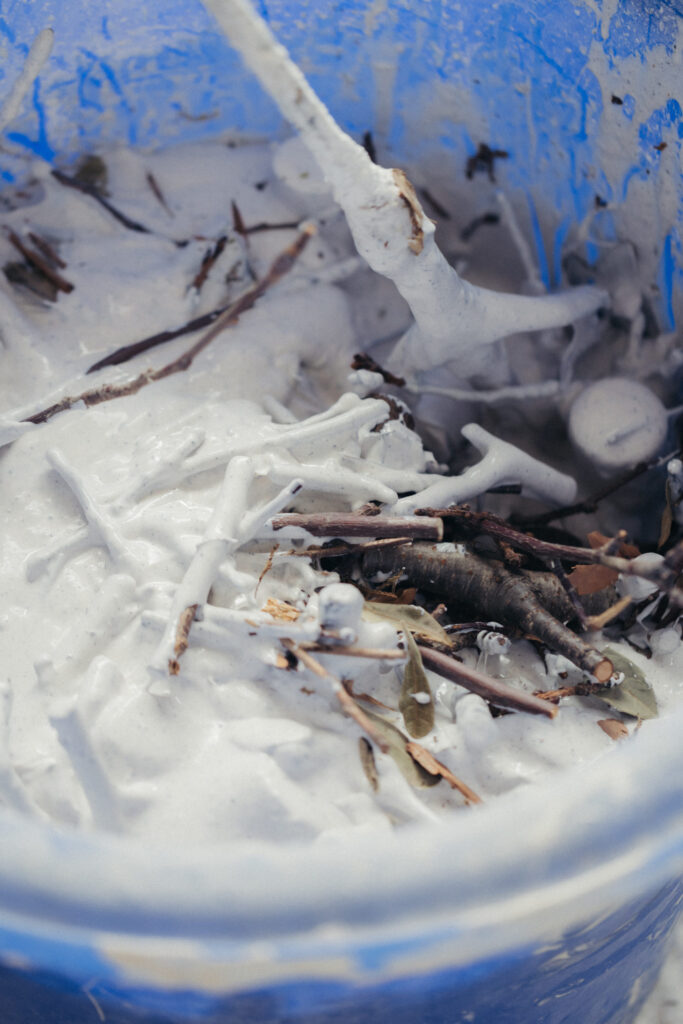
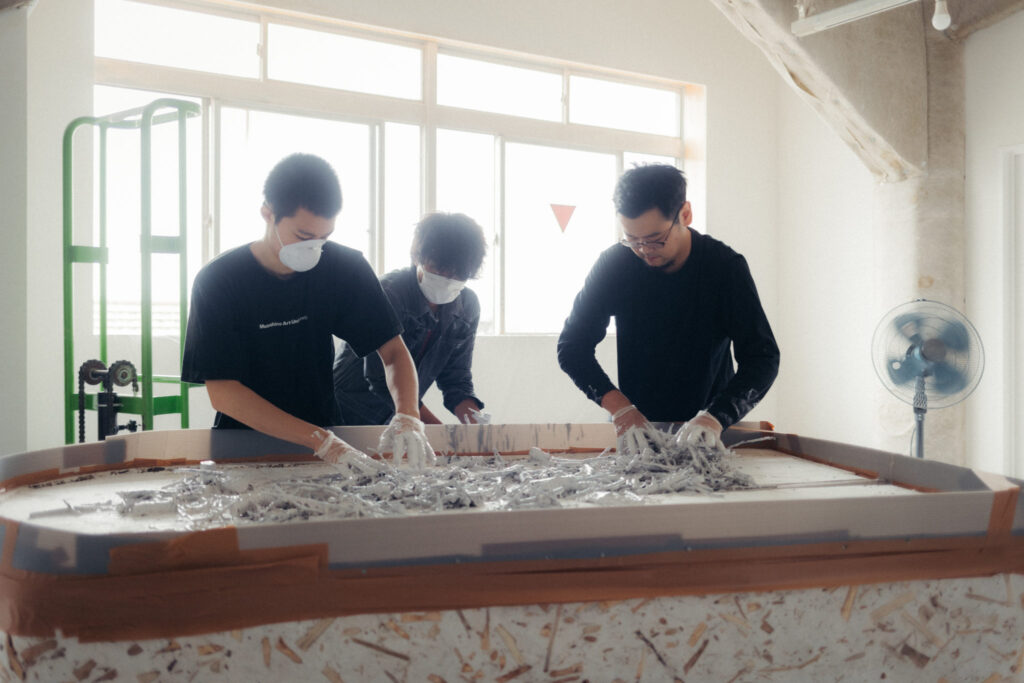
Technically, ForestBank blends wood waste and gathered forest elements with a mineral casting base and an acrylic resin binder. In practice, it is mixed, cast, cured, and then treated like a board or block. It can be cut, surfaced, and finished with standard shop methods, but it behaves more like an aggregate material than a plank. You are not revealing “grain” so much as uncovering layers of compressed forest fragments.
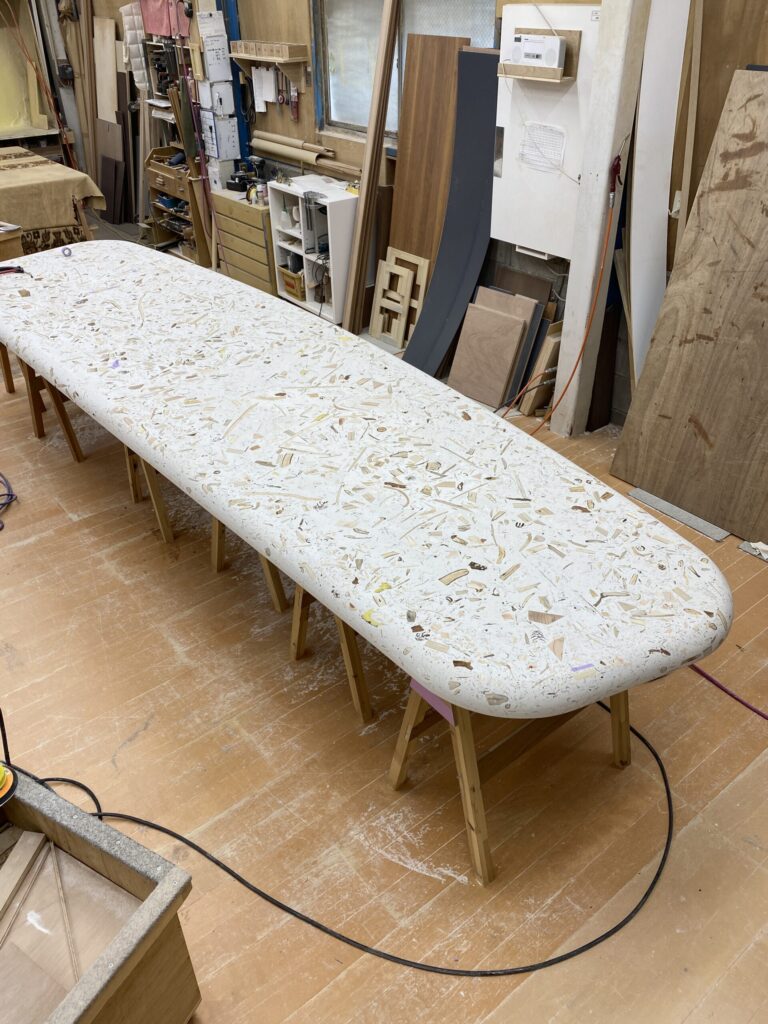
What makes ForestBank distinctive is how it changes once machined. Its patterns shift depending on the angle and depth of the cut, so the same piece can look different after planing, sanding, or trimming. Variation also comes from the inputs themselves. Color can swing with season and land, and natural tones from leaves and wood can show up as greens and yellows rather than the usual timber browns. Because real foliage is part of the material, the surface can also evolve over time, with greens gradually warming toward oranges and browns.
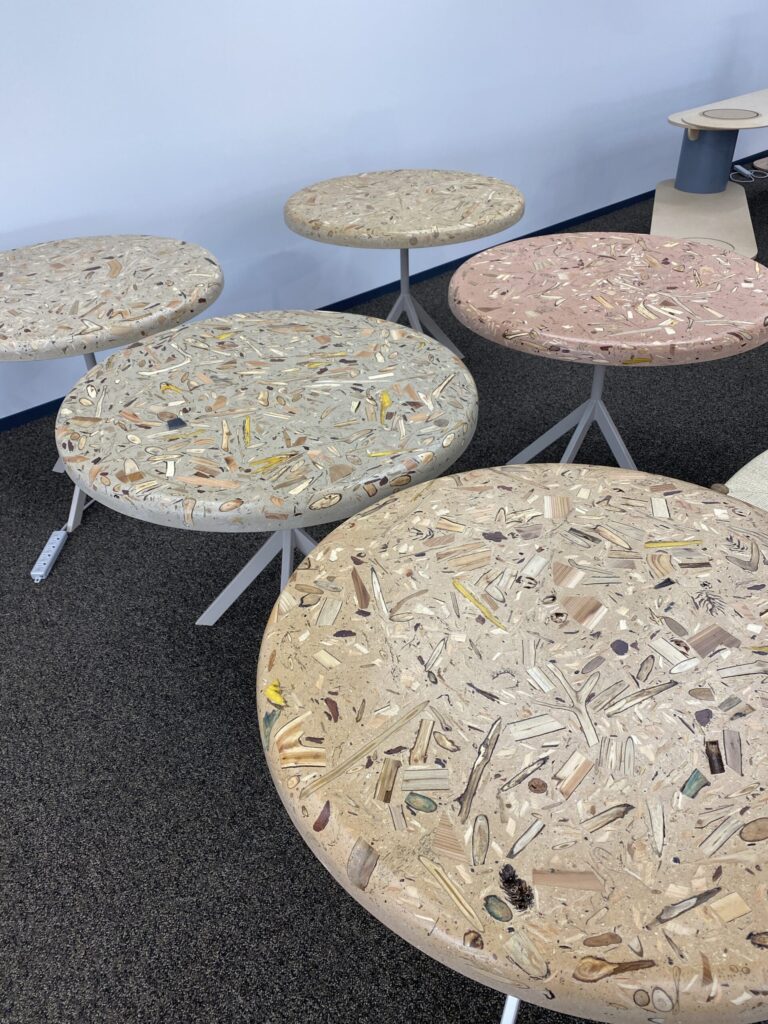
The project uses earth as a pigment and a storyteller. When soil from the forest floor enters the mix, it deepens the palette into browns and near-blacks, while exposing cross-sections of roots and seeds that are normally hidden underground. That is why ForestBank can read like geology as much as carpentry. It is less about a uniform finish and more about revealing a layered landscape, frozen into a solid that can be shaped.
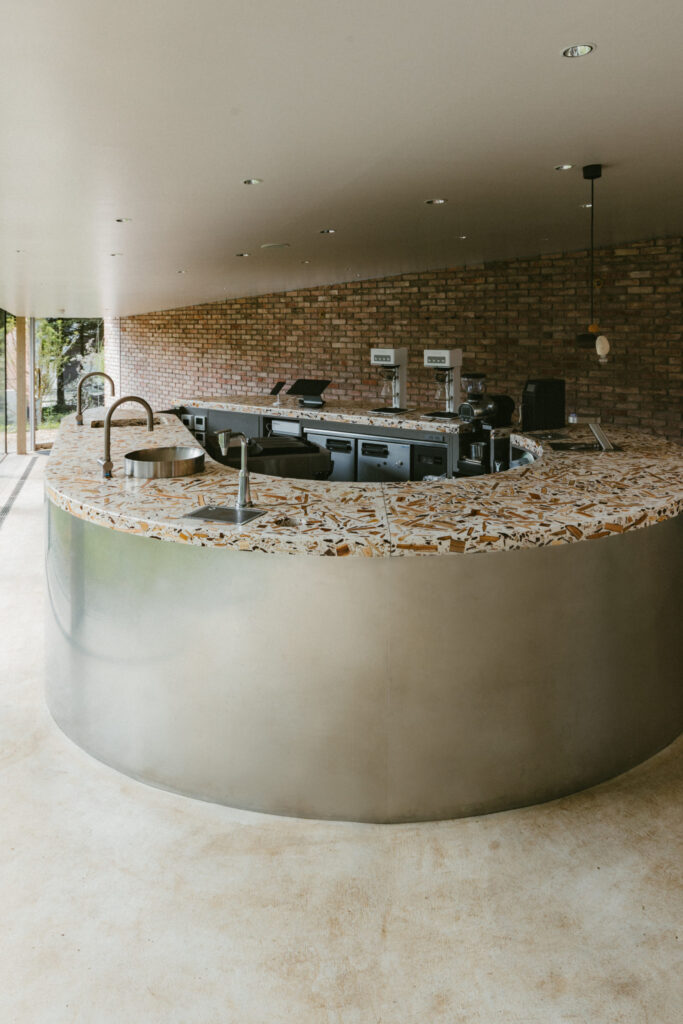
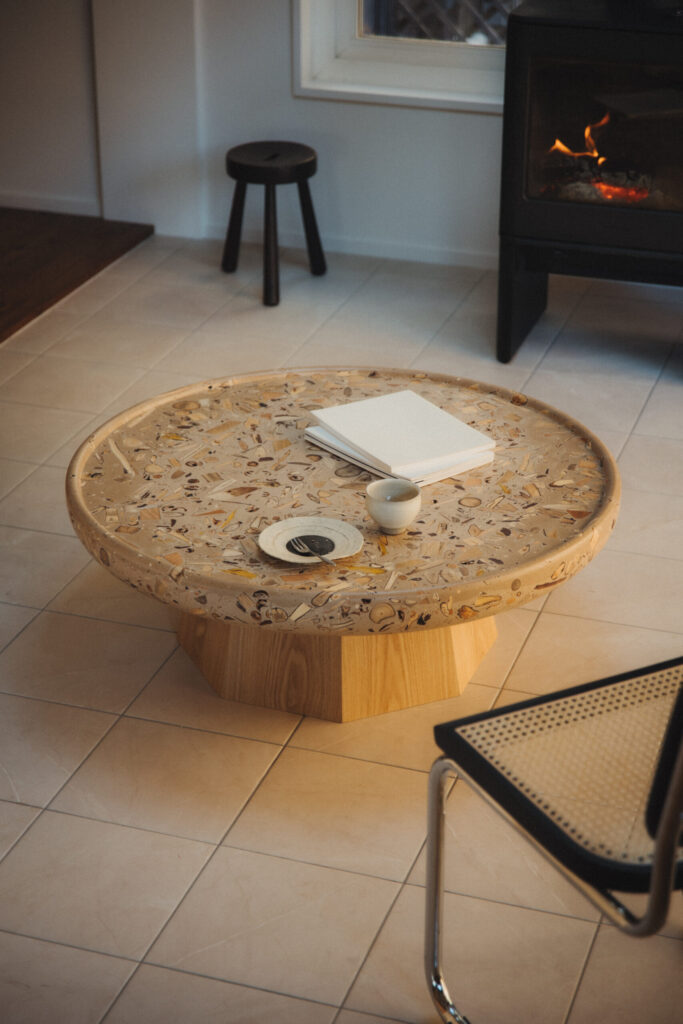
ForestBank has been shown through furniture and interior applications, but it is equally presented as a process that can be repeated with different origins. The same method can incorporate prunings from street trees, parks, gardens, or offcuts from woodworking shops, producing batches with their own “origin stories.” Instead of chasing standardization, the project standardizes a way to make meaningful variation – and to keep a traceable link between a place and the objects made from it.
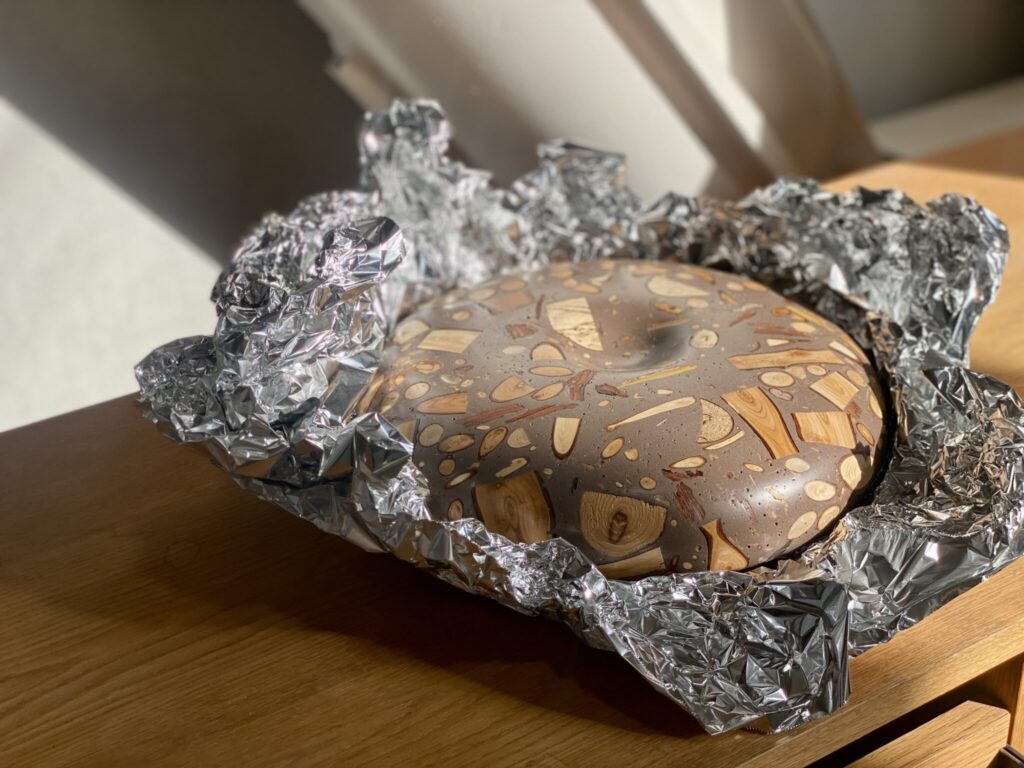
A strong example of this thinking is the use of ForestBank for a renovation project where the material was produced from multiple streams tied to the building itself. The mix drew on forestry residues, local wood industry scraps, construction-site offcuts, leftover earth from earthen wall work, and furniture production waste. The result was a one-off material intended to exist only in that building. There is also a practical twist: if the surface gets worn or scratched, maintenance can remove a thin layer and expose a new pattern underneath. Wear becomes a reveal, not just damage.
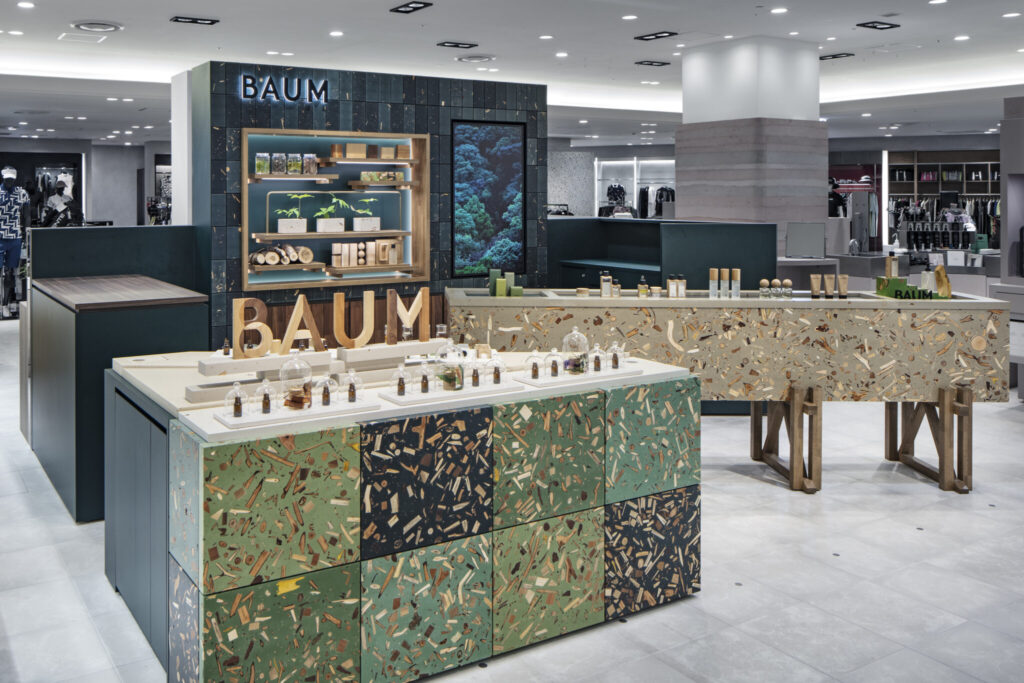
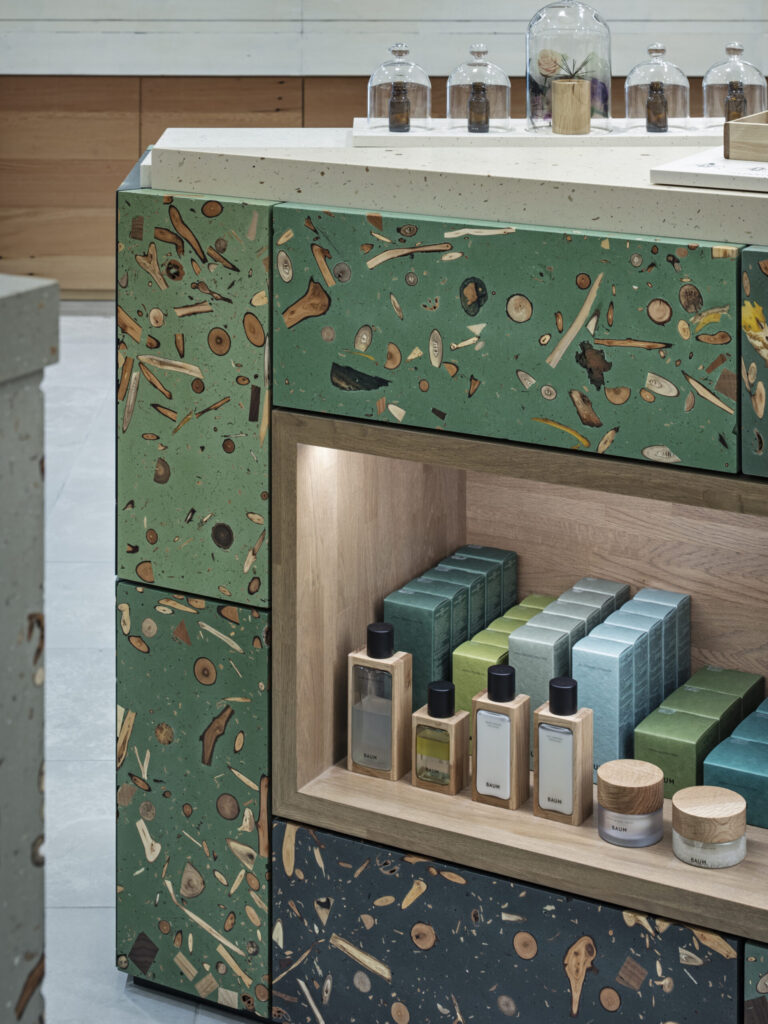
In the wider landscape of sustainable materials, ForestBank stands out because it does not try to imitate “perfect wood.” It leans into mixture, time, and locality. It is a design argument made physical: if forests are treated as living systems, then materials can carry more than structural value. They can carry context, memory, and evidence of cycles that usually stay out of view.
Reply