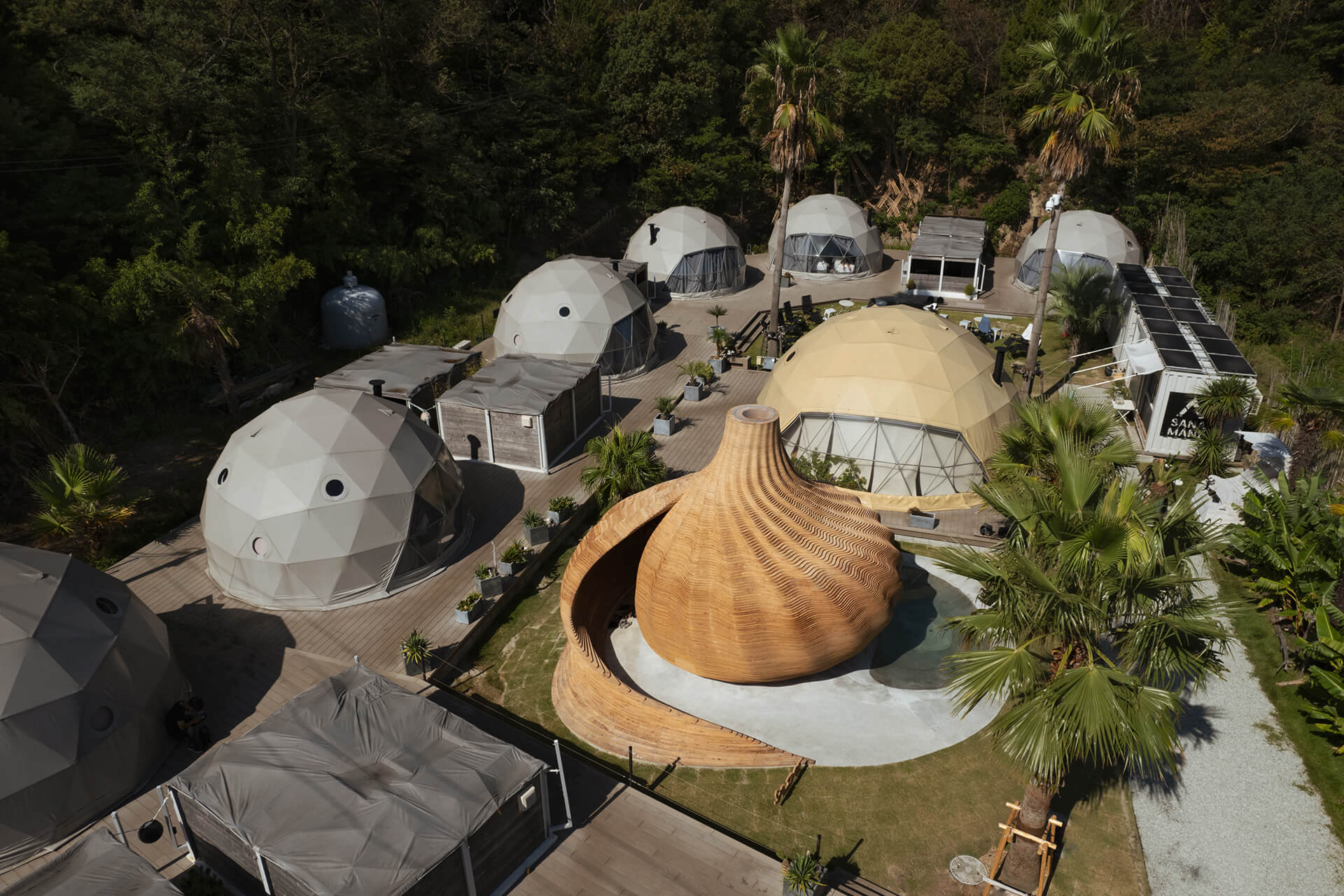
On Japan’s Naoshima Island, contemporary art is not locked inside museums. It spills into the landscape, the ports, and even holiday accommodation. SANA MANE, a resort-style glamping facility on the island, leans into that context by treating a sauna as a small piece of architecture worth traveling for.
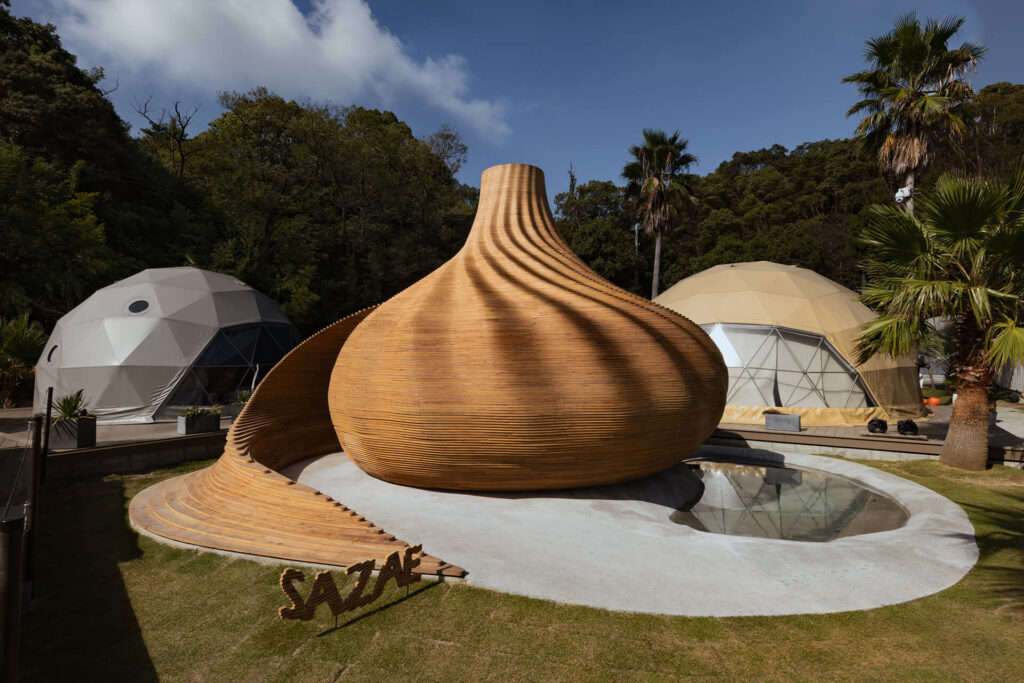
Designed by Kengo Kuma & Associates, the project is called Sana Mane Sauna Sazae (often shortened to Sauna Sazae). It sits near a small inlet on Naoshima, in Kagawa Prefecture, and was completed in 2022. Despite the global attention it gets online, it is tiny on paper: 8 m², one floor. That contrast is part of the charm.
A “monument” scaled down to sauna size
From the outside, Sazae reads like a carved object dropped onto the site, more sculpture than building. The name references a turban shell, and the form follows that idea with a rounded body and a twisting top. The surface is pleated, so sunlight turns the facade into stripes of highlight and shadow.
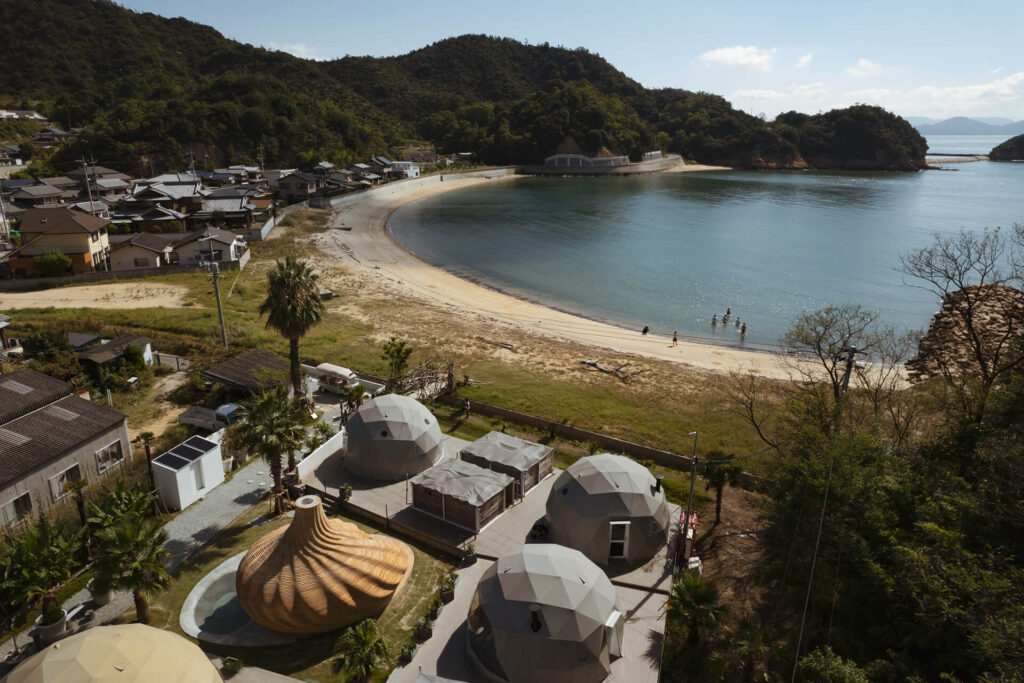
Taichi Kuma led the design team, working within the studio’s broader interest in natural forms and tactile materials. Here, the “natural” part is not just a metaphor. The structure is literally built from stacked wood, pushed into an almost geological thickness.
Wood masonry, CNC precision
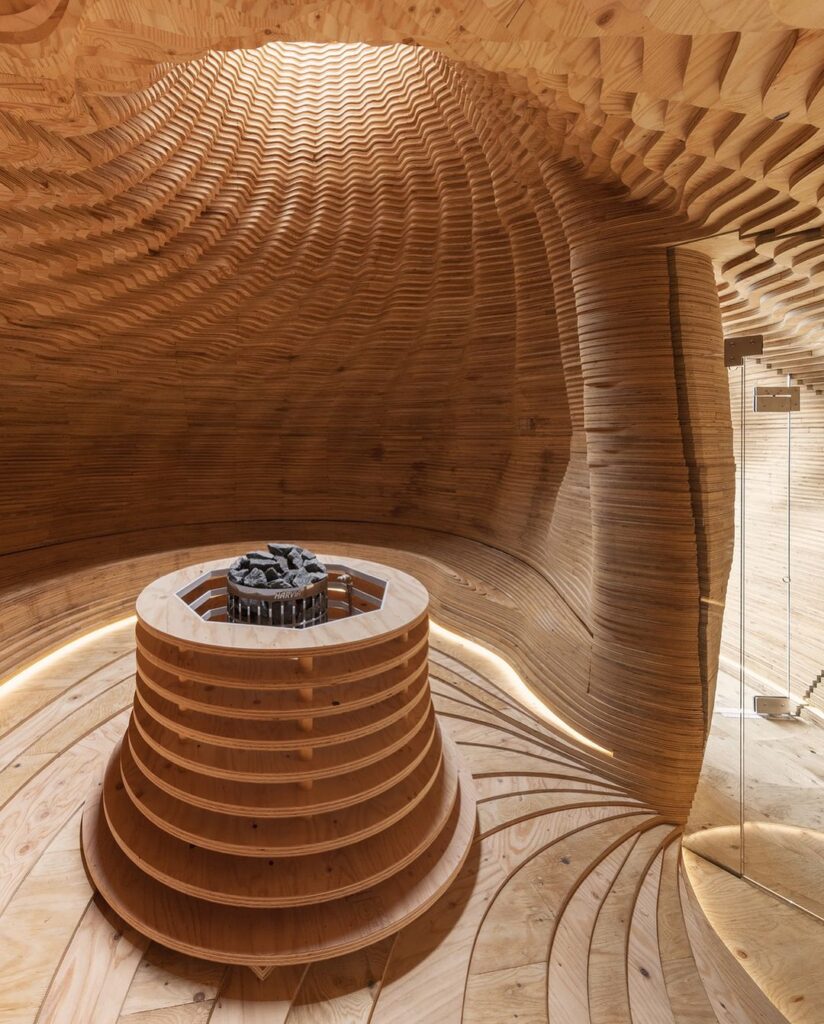
The core challenge was what the architects describe as wood masonry: CNC-processed 28 mm plywood layered up into a dense mass. The sauna is built from 150 stacked layers, and the average wall thickness reaches about 450 mm to support heat insulation and retention.
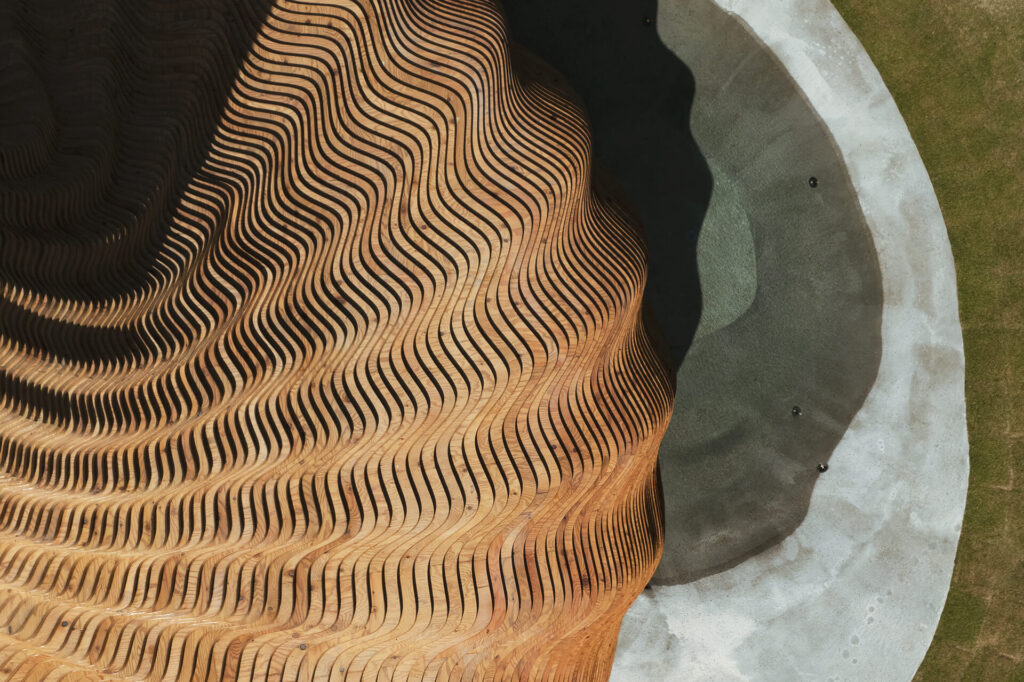
That thickness is not a decorative flex. It is performance, achieved through material volume rather than a typical light frame plus insulation approach. The geometry is complex enough that it was coordinated through 3D CAD and programming, including extensive plywood paneling (the Japanese project description cites 1,500 sheets).
Light, comfort, and controlled air
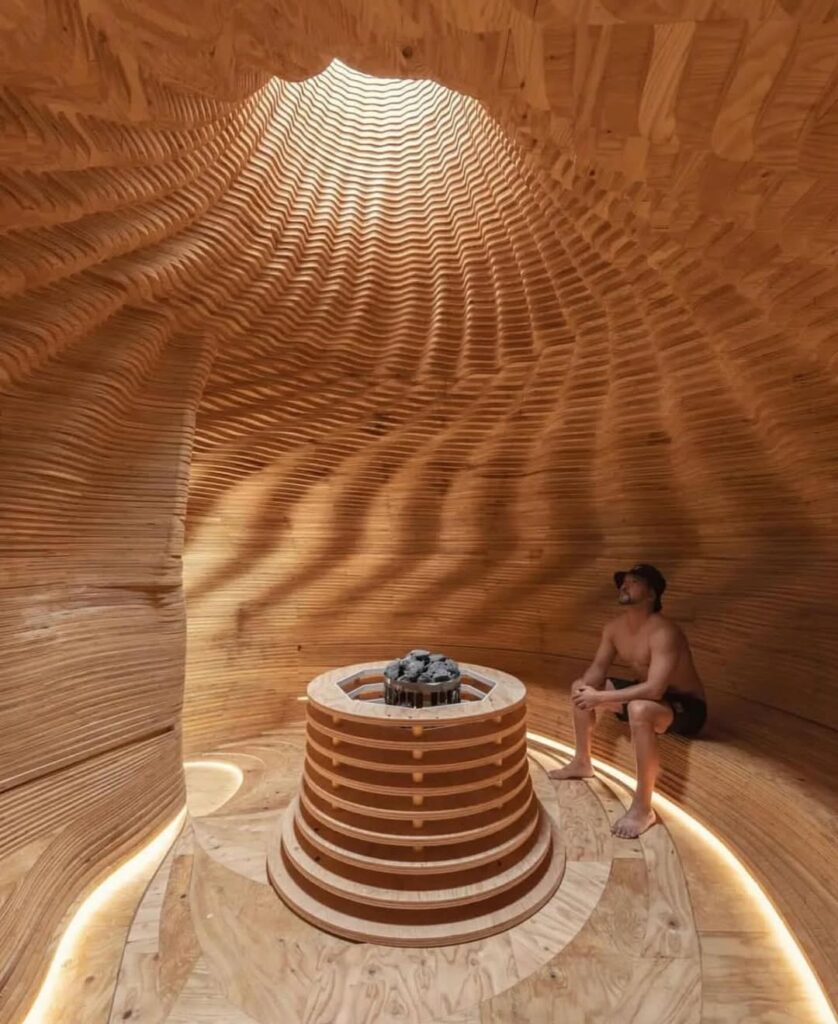
Inside, the pleats soften. The same ribbed logic that sharpens the exterior is eased to better match the body, aiming for a more relaxed sitting experience. Above, a top light becomes the key source of daylight, pushing the space toward a quiet, almost meditative atmosphere rather than a brightly lit room.
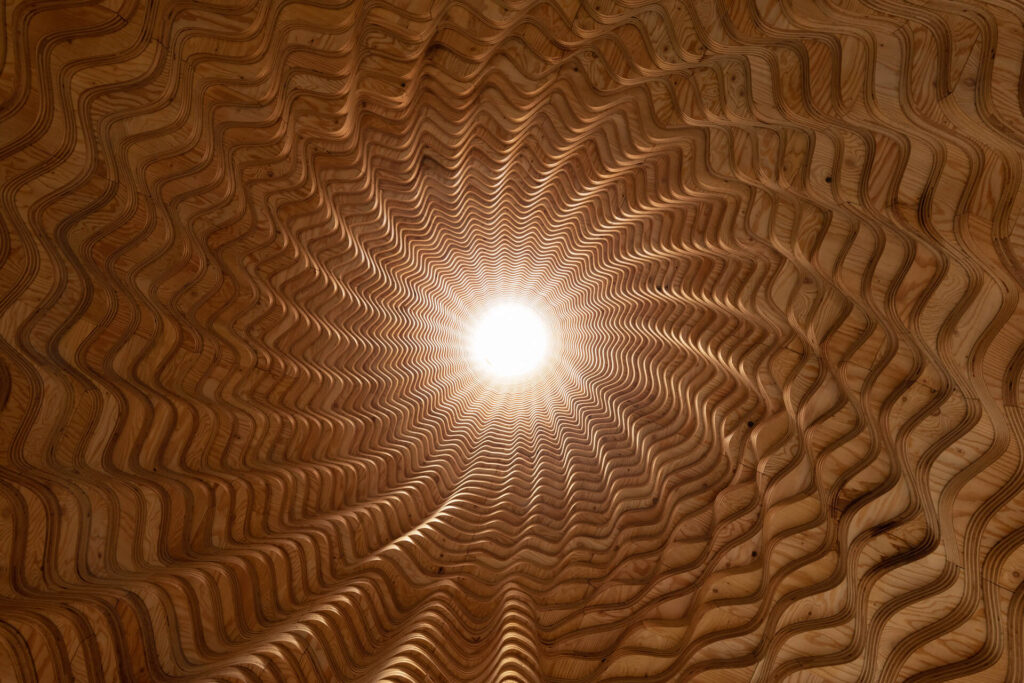
A high ceiling is usually the enemy of sauna efficiency, because heat rises and stalls overhead. Here, environmental simulations and forced ventilation were used to design airflow so temperature and humidity stay in an optimal range despite the tall volume. TTNE, a sauna specialty brand, was involved in shaping the experience around practical requirements like insulation, air convection, seat height, and stove selection, so the unusual form still works as a sauna, not just a photo prop.
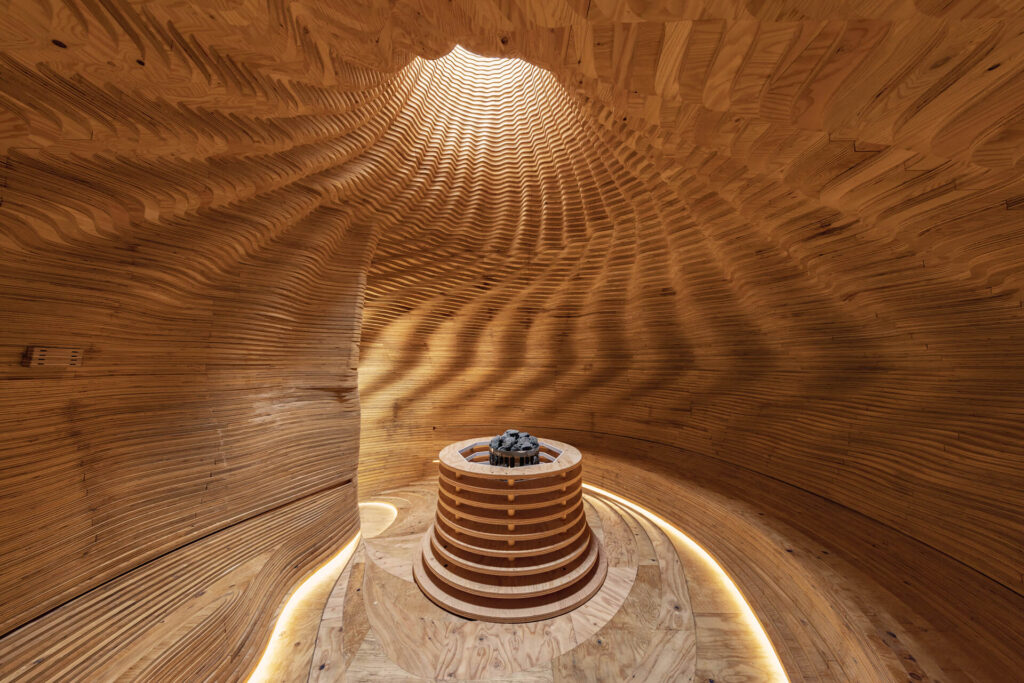
At 8 square meters, Sazae does not try to be a mega-spa. It wins by being compact, technically serious, and unapologetically strange.
location: SANA MANE, Naoshima, Kagawa, Japan
client: Yusaku Sanada
architecture: Kengo Kuma and Associates | @kkaa_official
lead architect: Taichi Kuma
supervision: TTNE | @ttne_official
lighting design: ALG LightingDesign | @algjp
photography: Keishin Horikoshi / SS
Reply