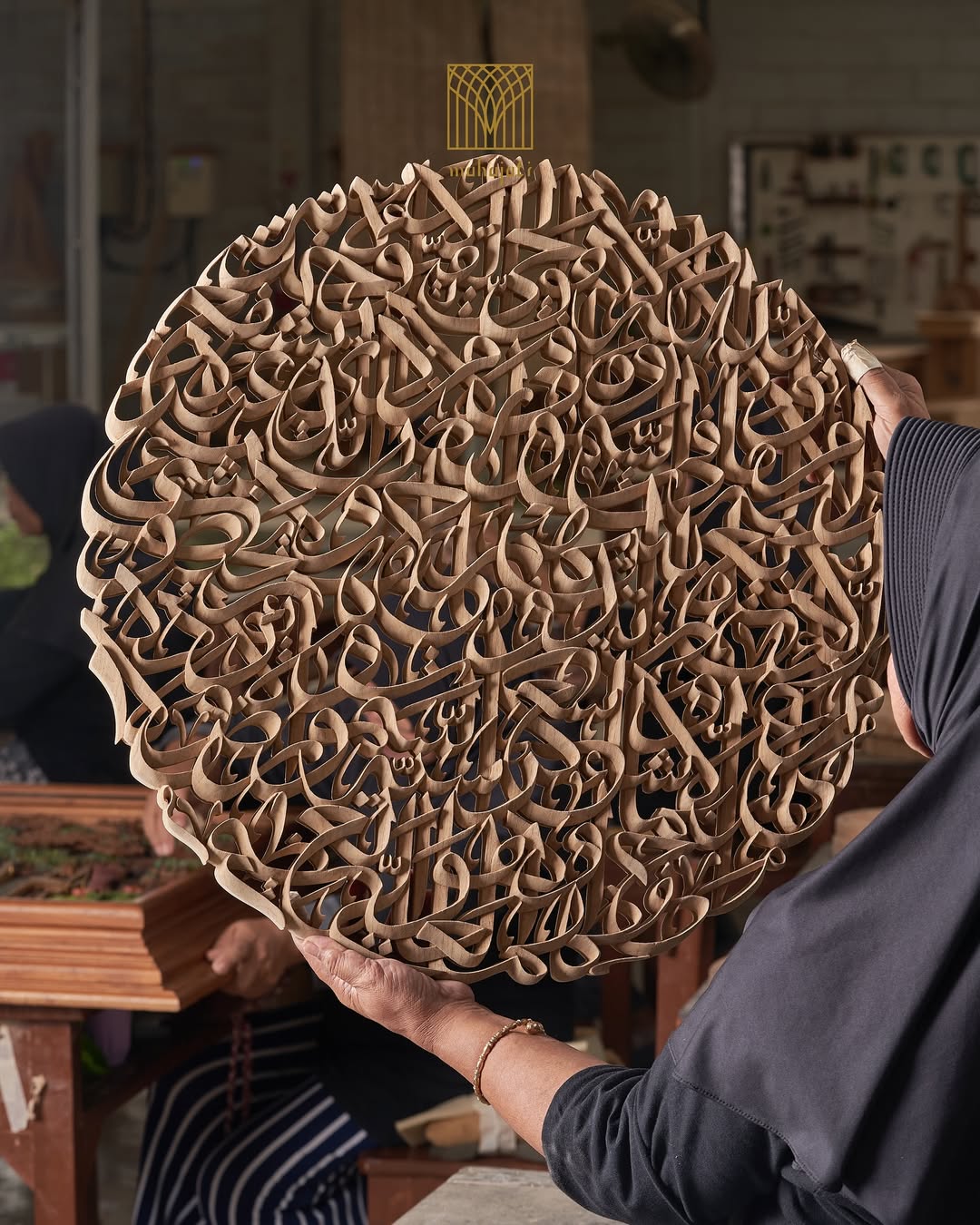
There’s something magical about discovering a craft that has survived centuries despite the pressure of modern convenience. When Mohammad Mohdar Anwar set out to find a meaningful birthday gift for his mother, he stumbled upon something far more significant than a simple present – he discovered a dying art form and ultimately became its passionate guardian.

The story of Mahajati begins with an intention rooted in personal meaning. Rather than settle for mass–produced gifts that line shopping mall shelves, Anwar wanted something with soul. His quest led him to master craftsmen who had dedicated their lives to the intricate tradition of Islamic wood carving. After collaborating with these artisans to create a hand–carved Ayatul Kursi– a sacred Islamic verse – for his mother, something unexpected happened. What started as a personal project transformed into Mahajati, a company with a mission that extends far beyond commerce.
A Tradition Worth Fighting For
Islamic wood carving represents centuries of artistic heritage. The work that Mahajati preserves is deeply rooted in tradition, with techniques and knowledge passed down directly from master craftsmen to their children across generations. This isn’t formal training conducted in classrooms. Instead, young apprentices begin their journey by watching their fathers work in the workshop, absorbing not just techniques but the philosophy behind the craft.
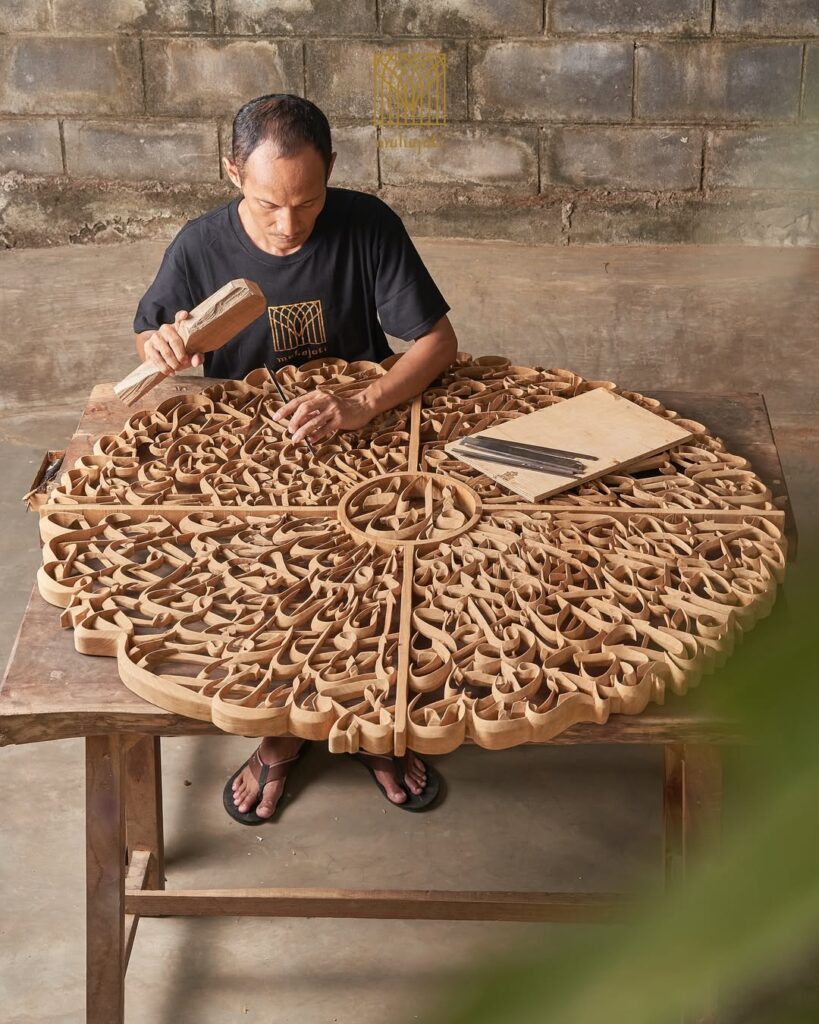
The artisans themselves are remarkable individuals. Many are in their mid–forties, carriers of knowledge from another era. Some hold the title of Hafiz Quran – individuals who have memorized the entire Quran – and serve as imams in their local mosques. These aren’t just skilled workers; they’re custodians of cultural and spiritual traditions, and their knowledge exists nowhere else.
Yet the art form faces genuine crisis. As the world shifted toward mass–produced machine–made goods, fewer young people showed interest in learning this demanding craft. The specialized knowledge, patience, and dedication required simply didn’t align with modern consumer expectations. Without intervention, this tradition risked disappearing entirely. Mahajati emerged directly from this urgent need to preserve what might otherwise be lost.
The Craft Behind the Beauty
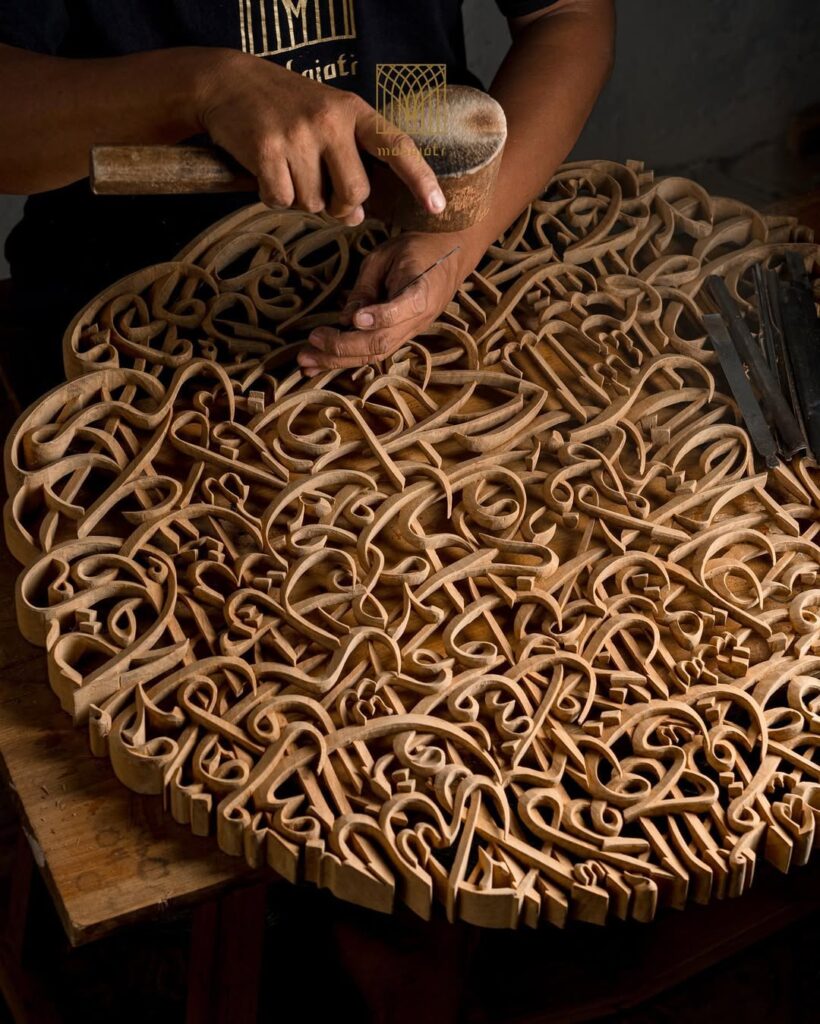
What makes Mahajati’s work so distinctive is the deliberate marriage of calligraphy and three–dimensional wood carving. Each piece begins with Islamic calligraphy – flowing verses and sacred words rendered in intricate script. But rather than remaining flat, these designs are carved deep into wood, creating layers and depths that invite the eye to travel through the composition.

The technical execution demands an almost obsessive attention to detail. Every curved line, every geometric intersection, every shadow created by depth must work in harmony. The overlapping calligraphy can only be carved in specific ways, and success depends on understanding how light will interact with the carved surfaces. It’s precision work that cannot tolerate shortcuts.

Some pieces extend this approach further, incorporating decorative elements like flowers and leaves around the calligraphy. Others take on entirely different forms – pieces that function as perspectival maps of city spaces, carved with such detail that buildings seem to peel off from a single block of wood. The versatility demonstrates that tradition, in skilled hands, doesn’t mean stagnation.
From Workshop to Global Recognition
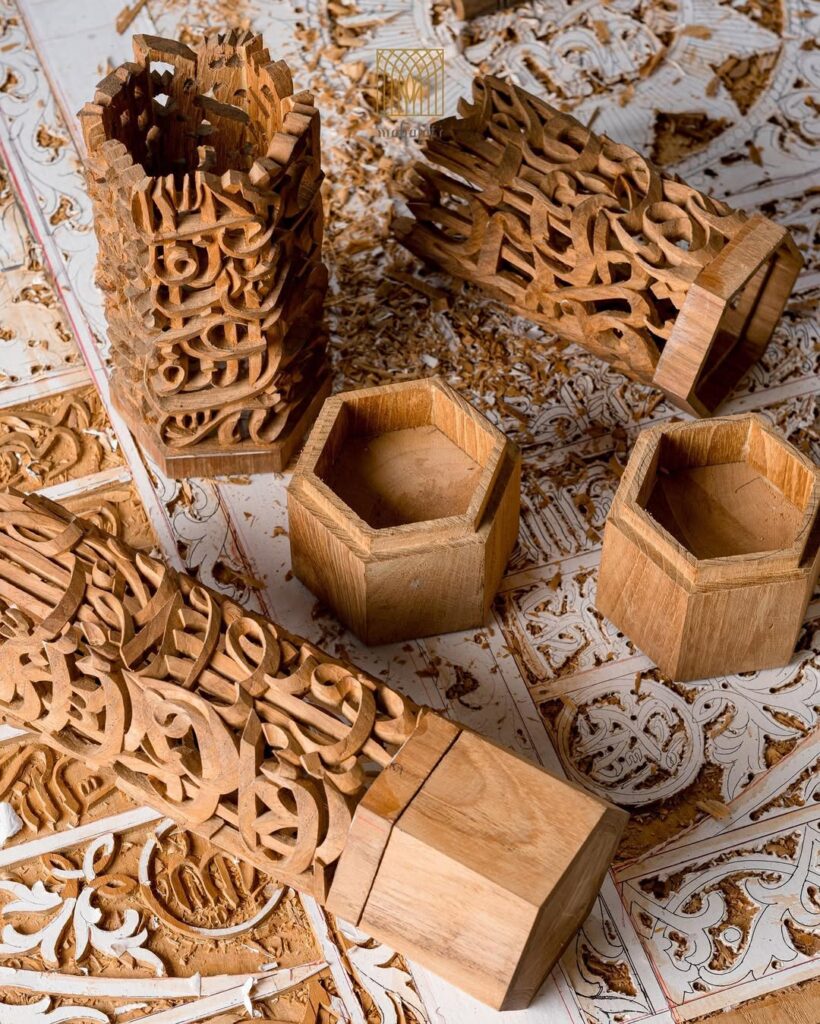
The company operates with careful quality control that would seem impractical to many manufacturers. Mahajati’s headquarters sit in Singapore, but the actual craftsmanship happens at a family–owned facility in Central Java, Indonesia. Everything – production, finishing, and assembly – happens in–house. This vertical integration ensures that every step of creation meets exacting standards. There are no compromises. Each piece takes months, sometimes over a year, to complete.
This commitment to time–intensive work has generated respect among serious collectors. Mahajati’s reputation now extends to high–net–worth clients, museums, banks, government offices, and even presidential palaces. Their most celebrated achievement might be a large–scale model of Mecca that captured global attention and demonstrated the boundless potential of the craft when pushed to ambitious scales.
Living Tradition, Not Relics
What distinguishes Mahajati from a mere nostalgia project is that the work actively evolves. The artisans don’t simply replicate old designs – they explore, learn, and innovate constantly. As founder Anwar explains it, the craftsmen “devote lots of time to learning and exploring. In the pursuit of perfection, they find their voice to express emotions and ideas through shapes, colors, and textures on wood.”

This balance between honoring tradition and embracing growth means Mahajati’s pieces aren’t museum relics. They’re living expressions of an ancient craft, created by people who remain deeply committed to its future. Customers can commission entirely bespoke works, collaborating with artisans to bring personal visions to life.
More Than Decoration
Mahajati’s perspective on their work challenges how we think about decorative art. The founder firmly states that their pieces aren’t simply wall art meant to fill empty spaces. Each creation carries identity, meaning, and purpose. When you purchase a Mahajati piece, you’re acquiring an object that holds spiritual significance, cultural heritage, and countless hours of human skill combined into something tangible.

This approach reflects an understanding that true craftsmanship involves more than technical skill. It involves respecting materials, honoring tradition, and creating work that will outlast its creator.

For anyone who appreciates the intersection of art, spirituality, and human dedication, Mahajati represents something increasingly rare in our world – a commitment to preserving excellence against the current of mass production.
Reply