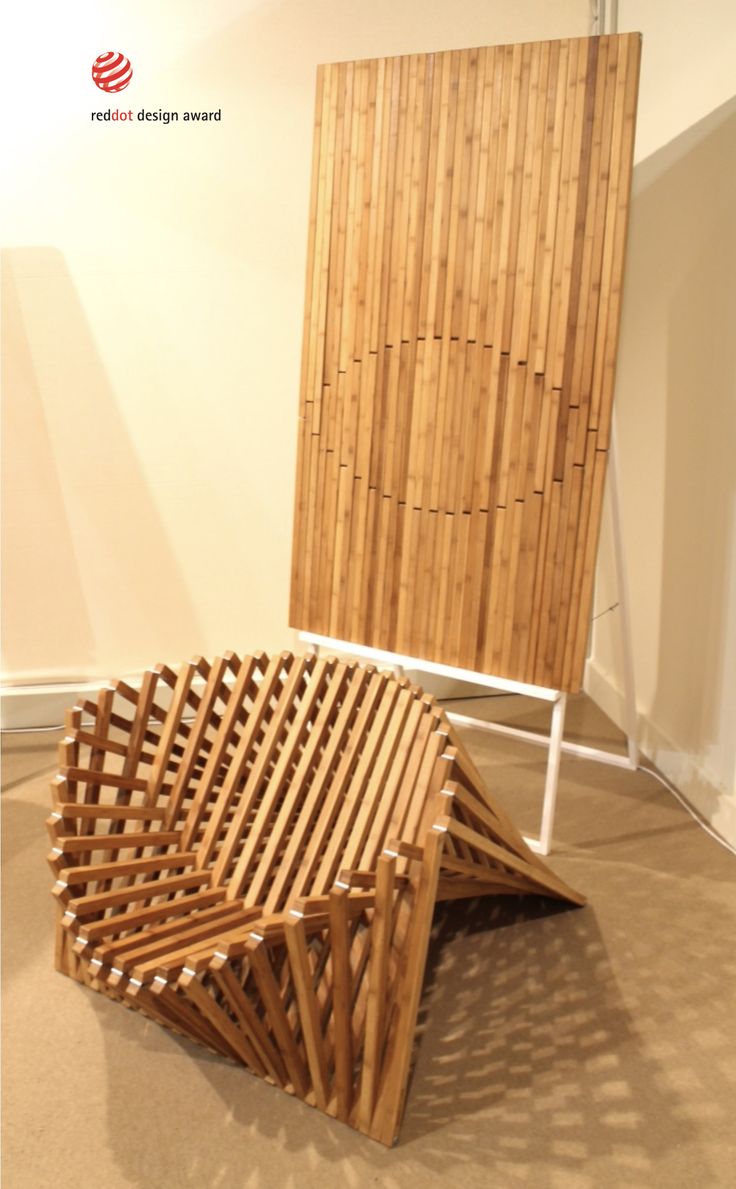
Robert van Embricqs is a Dutch designer based in Amsterdam whose work sits between product design and sculptural furniture. A recurring theme in his projects is transformation. He is interested in what happens when a piece is not designed as a fixed object, but as a controlled movement from one state to another.
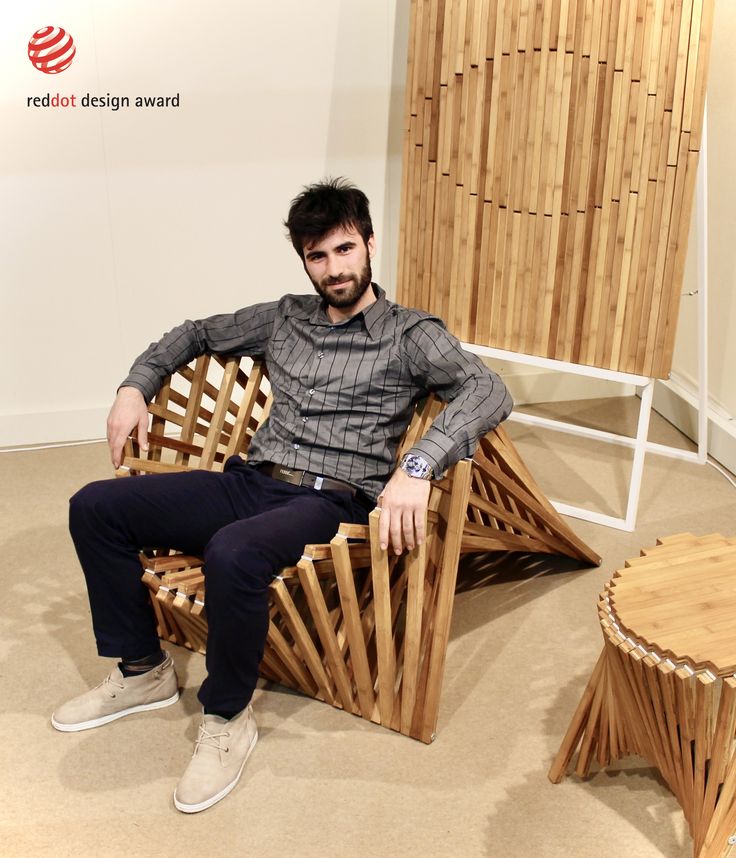
That thinking comes through clearly in his Rising furniture line. The idea is simple to describe and hard to do well: start with a flat surface, cut it with a precise pattern, and let the material unfold into a finished piece. In other words, the change is not an extra feature. The change is the structure.
The Rising principle
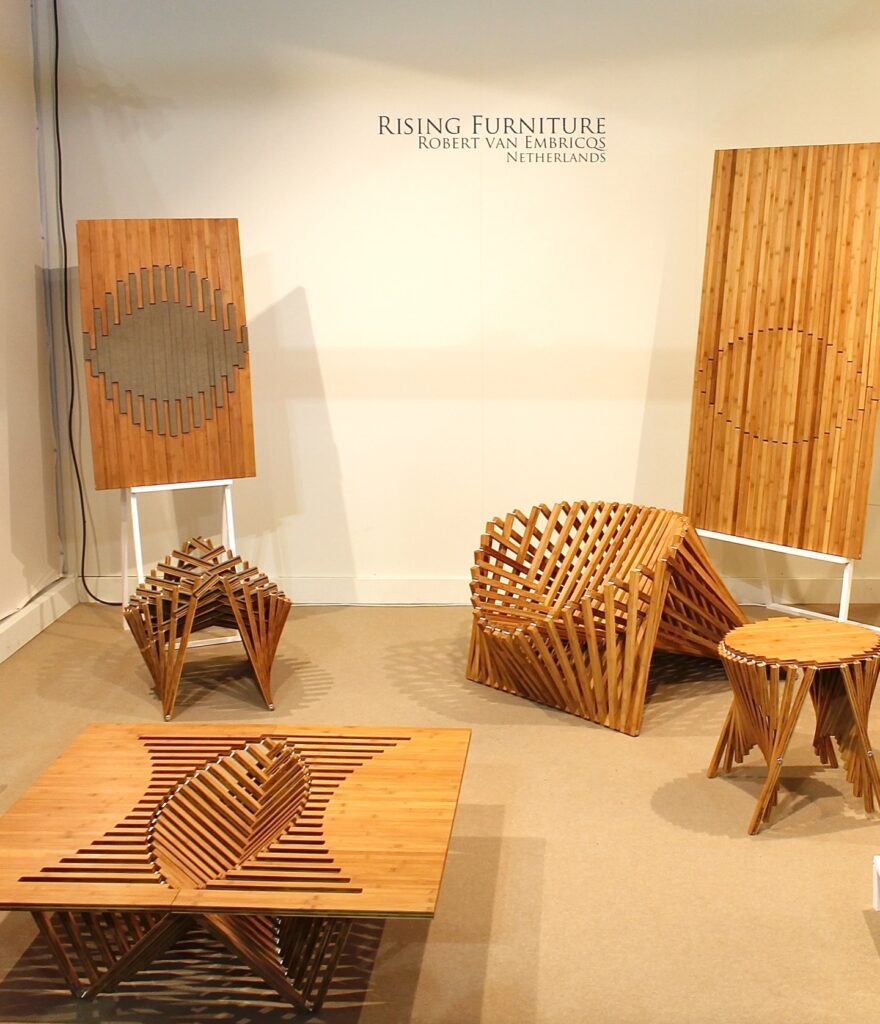
Rising pieces often look like graphic panels when folded down. The incisions read as a pattern, almost like an abstract artwork. Once opened, those same cuts become the backbone of the object: legs, arches, a seat, or a central core. The material is doing double duty, first as a surface, then as a framework.

It also creates a practical side effect. Since many Rising designs can fold down, they take up far less volume during transport and storage than conventional furniture. That flat-to-formed logic is part of why the series drew so much attention early on.
The Rising Chair
The Rising Chair is the best-known piece from the line and the one that made the concept instantly understandable. The chair begins as a flat plane. After a sequence of cuts, the beam-like strands are pulled upward until the basic chair anatomy appears: back, seat, and legs. The final silhouette is determined by the arcs the beams naturally take as they are folded into position, so the chair keeps an organic, almost botanical rhythm.
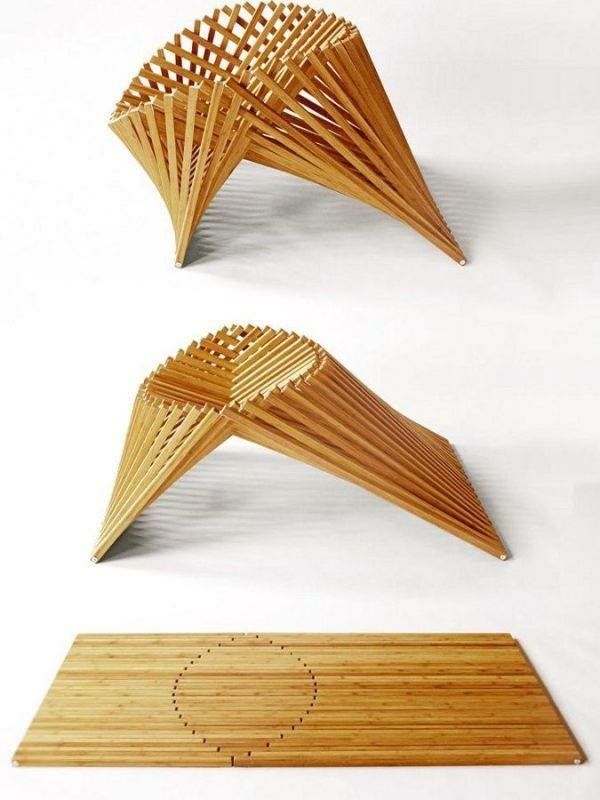
Mechanically, hinges are placed where flexibility is required, especially around the seat area. The result is a chair that feels engineered but still light in appearance, since much of its mass becomes negative space.
Material choices have varied across editions and presentations, including wood versions and bamboo-based builds. In the folded state, the cut pattern remains the visual “tell” that the object is not finished yet. In the opened state, that same pattern becomes the strength of the chair.
A small family of objects that unfold
The Rising Table takes the same flat-surface approach but shifts the visual focus to the center. Rather than relying on four separate legs, a lattice-like core becomes the heart of the construction, with beams extending outward to support the tabletop. It is a table that reads like a structure first and a surface second, which is exactly the point.

The Rising Side Table plays with perception. Its construction is designed to create an illusion of a levitating top, achieved by hiding support elements within the clustered beams. The base has a subtle twist, so the piece can look like it is caught mid-motion, similar to fabric in wind.
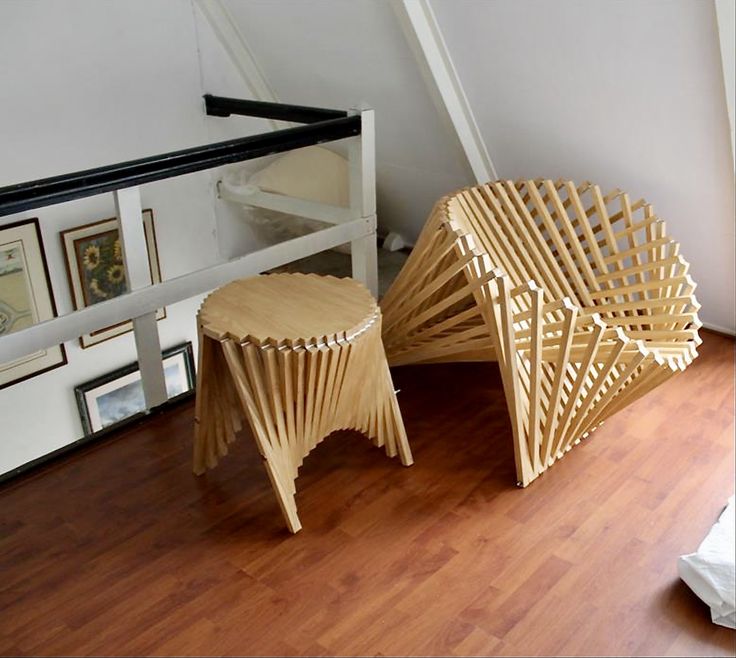
Van Embricqs also expanded the idea into smaller, more accessory-like pieces. The Rising Seat was developed to create a more horizontal sitting surface by splitting the beams halfway along their length, so they branch into a new direction like a trunk becoming limbs.

The Rising Shell pushes the line into an object that behaves like furniture but can live on a table as a sculptural bowl. Sustainability and flat-pack efficiency are part of its concept too, since it can fold down to a very thin profile when not in use.
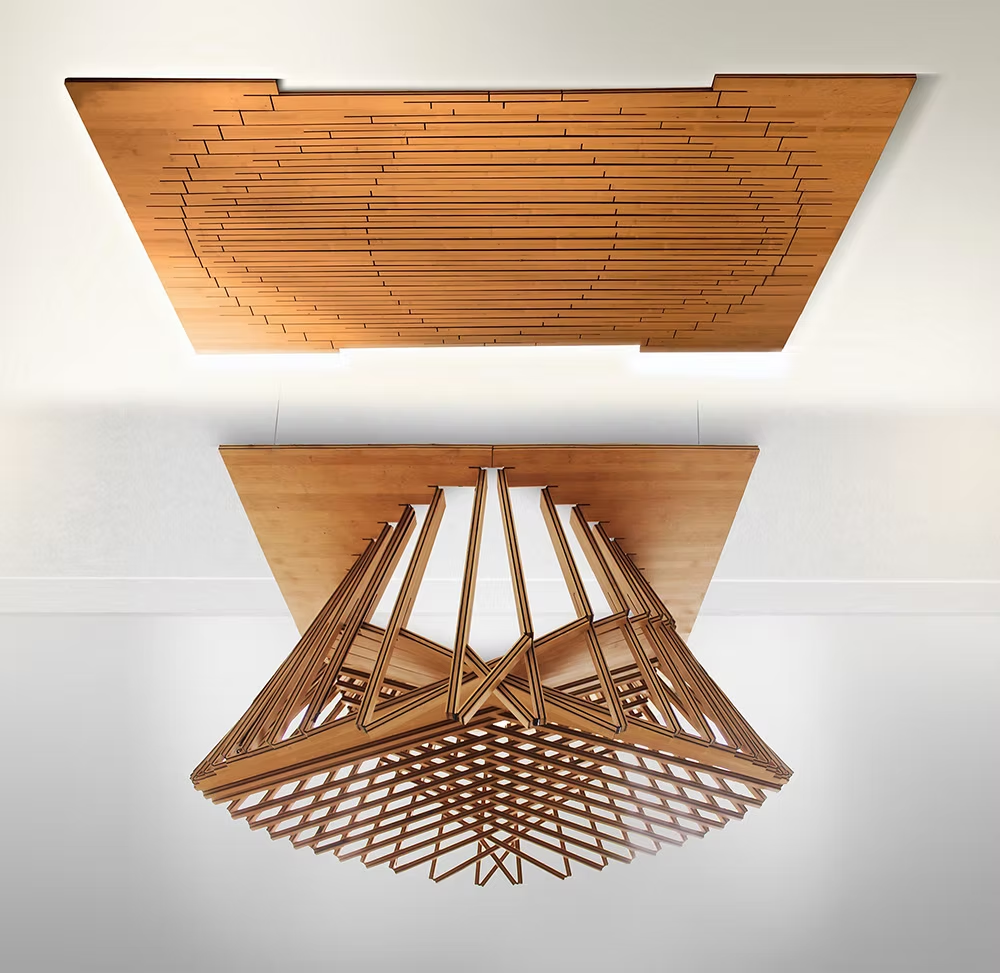
Even lighting was treated as a transformation problem. The Rising Light Fixture uses cuts and folding geometry to build a latticework overhead. It is made from laminated bamboo, with rubber used as a hinge material on the moving parts, and LED lighting integrated into the structure to emphasize shadow and depth once it is switched on.
Recognition
Rising furniture did not stay a studio curiosity for long. The Rising Chair is widely credited as a Red Dot Design Award winner, and it also won the Woodchallenge in the Netherlands (including both jury and audience recognition). It was then shown in a string of design contexts that fit its hybrid nature, including major fairs and exhibitions.
Van Embricqs’ own studio updates also list appearances at Salone del Mobile and Interieur Biennale, and note that the Rising Chair became part of CNAP France (the French national collection). The Rising Table picked up additional attention as well, including a Fubiz award (third prize). More recently, the Rising furniture line even crossed into pop culture, with the designer noting that it was featured in the Netflix film BigBug. The series has stayed relevant because the “wow” is not decoration – it is literally how the objects work.
Reply