Jack Mauch’s work sits in a rare place where obsessive hand skill, restless curiosity and digital technology actually get along.
He is best known today for furniture and surfaces covered in intricate veneer patterns. At the same time, he moves easily between ceramics, metalwork and product design. Critics and schools often describe him as a kind of contemporary renaissance maker. That range did not come from a conventional route.
Mauch grew up in New Hampshire in a large family that treated making art and alternative education as normal parts of life. No one was shocked when he left high school at 16 to study ceramics and woodworking at the Maine College of Art, where he completed a BFA in 2006.
After college he went to Cambridge, Massachusetts, and took a job that would quietly shape his sense of design. At the Harvard Graduate School of Design he worked as lead fabricator for the exhibitions department. There he translated the ideas of architects and designers into physical displays that had to be precise, inventive and ready on deadline. It was a crash course in contemporary design language and in the discipline needed to deliver ambitious work on time.
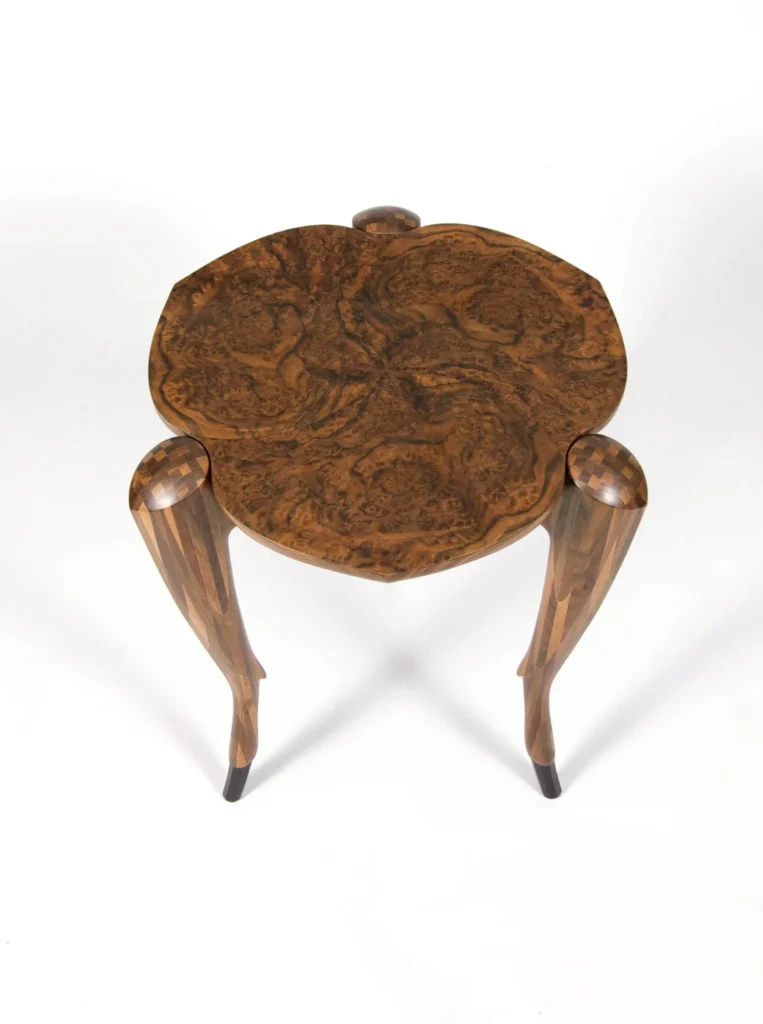
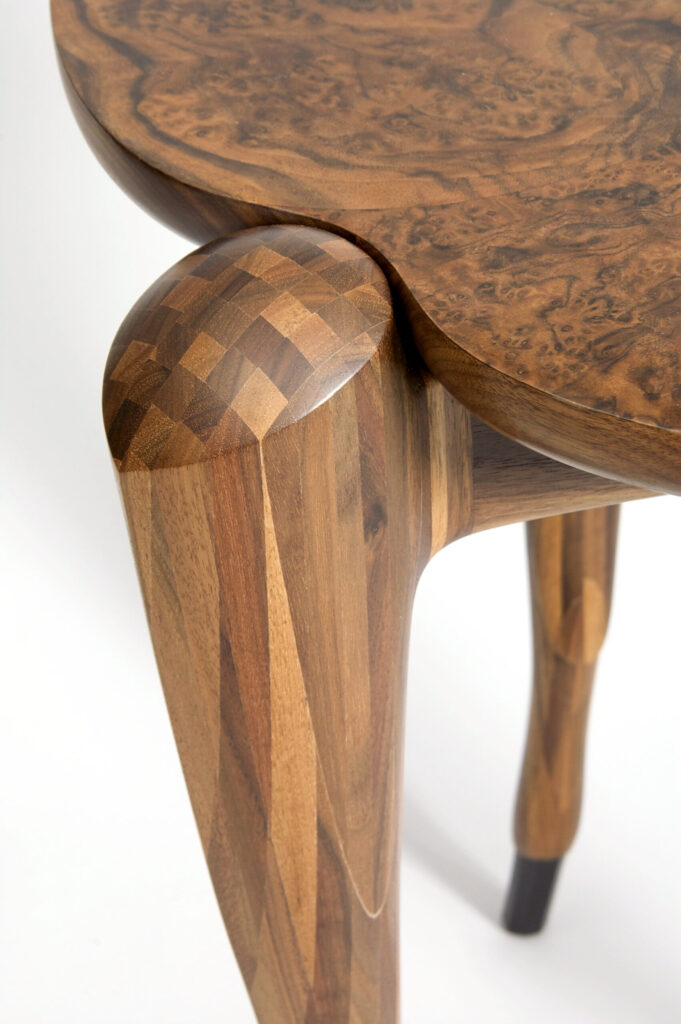
In 2011 he stepped away from that institutional world and into the Penland School of Craft as a Core Fellow. The two year program gave him intensive exposure to different craft disciplines and, just as important, time to figure out his own voice. By the time he finished, he had a broad technical base and a growing interest in how pattern, surface and structure could come together in one object.
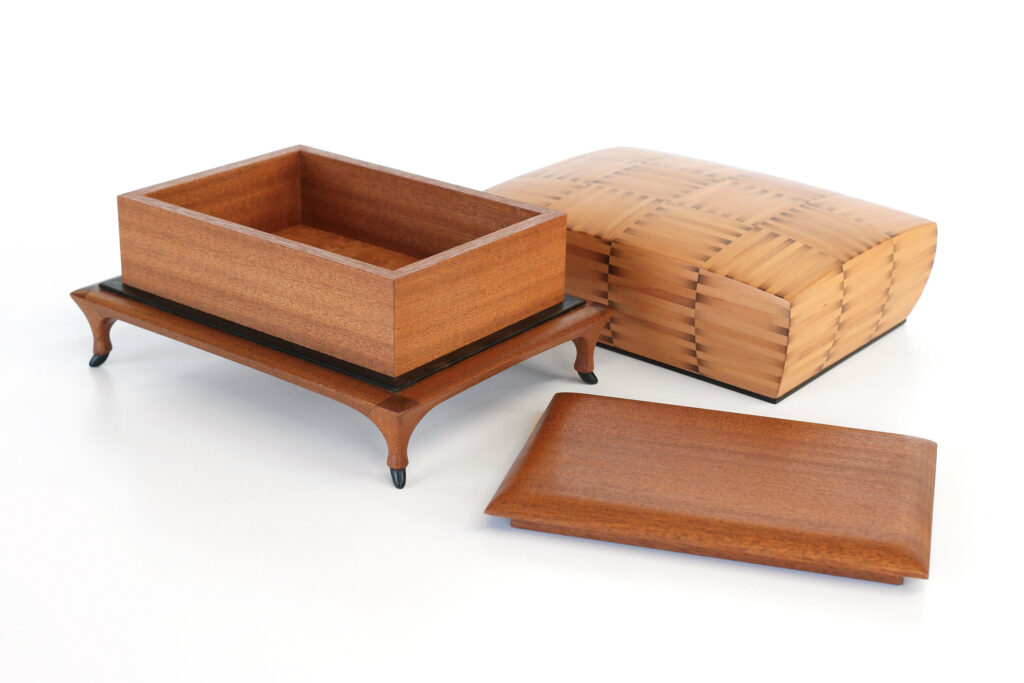
Since 2013 Mauch has worked as an independent artist and designer. Wood became his main material, but he kept his practice deliberately wide. His output now runs from one off furniture pieces and complex interior surfaces to small batch objects and design products. That variety reflects both curiosity and a practical sense that a modern craft studio survives through many streams of work, not a single product line.
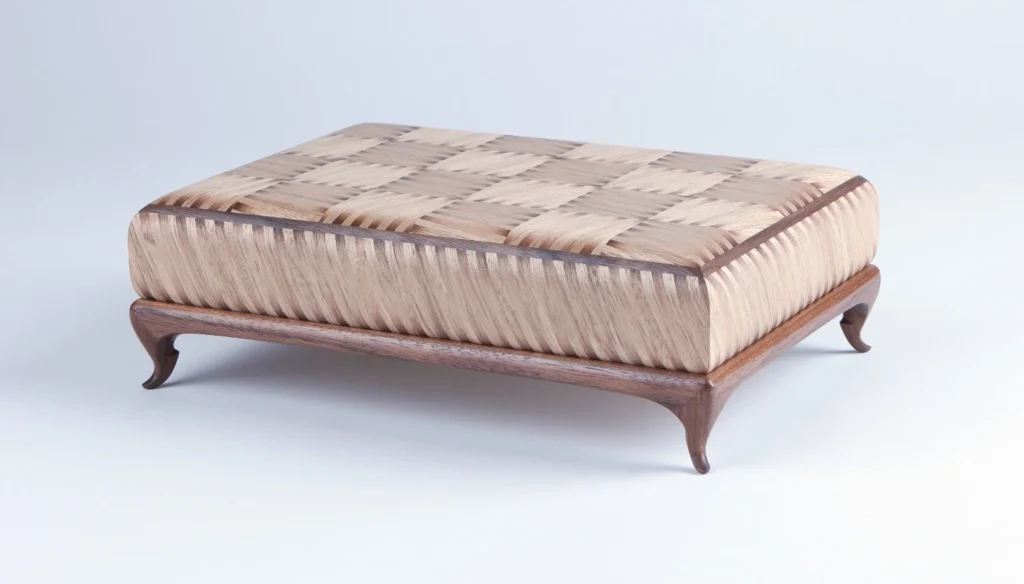
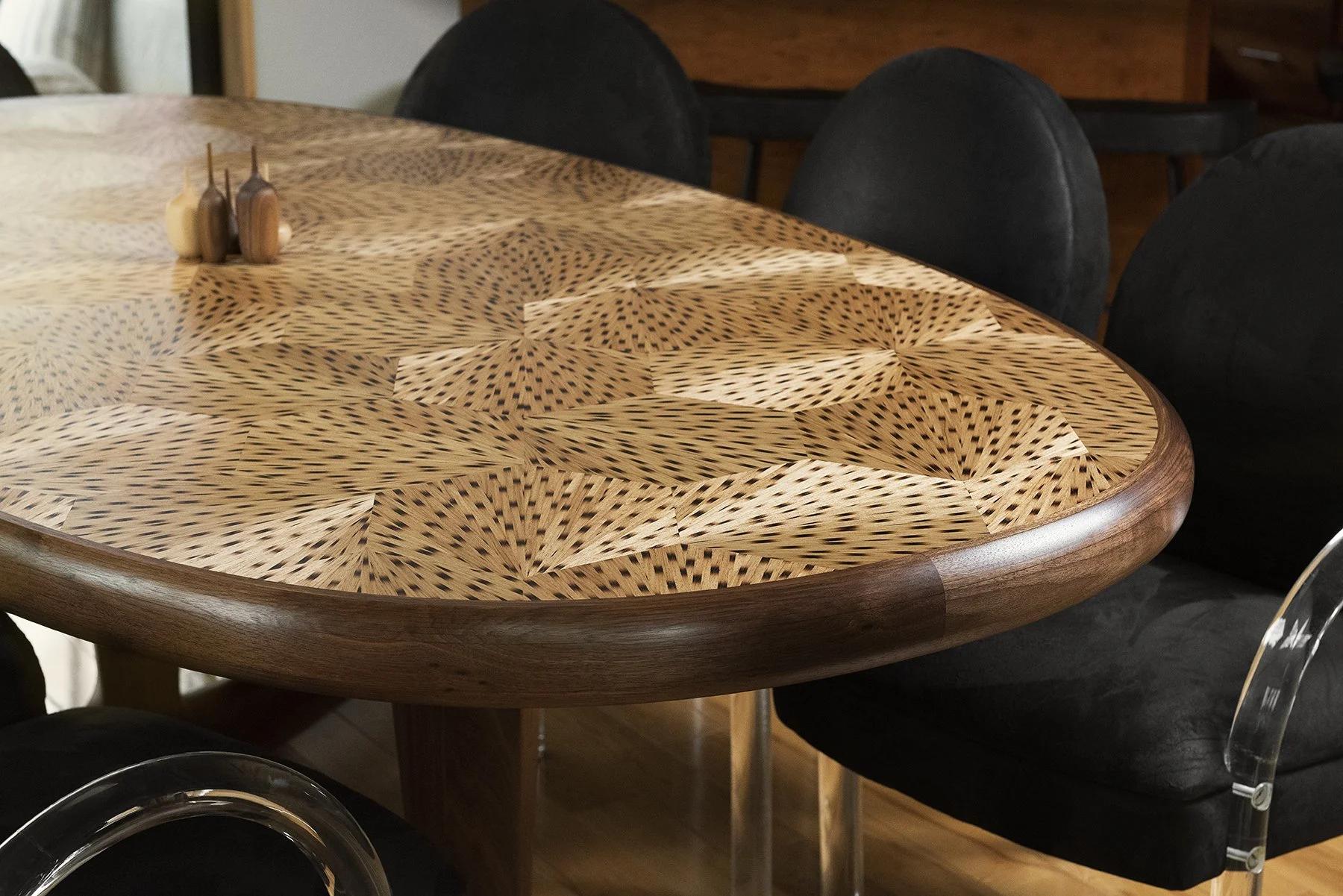
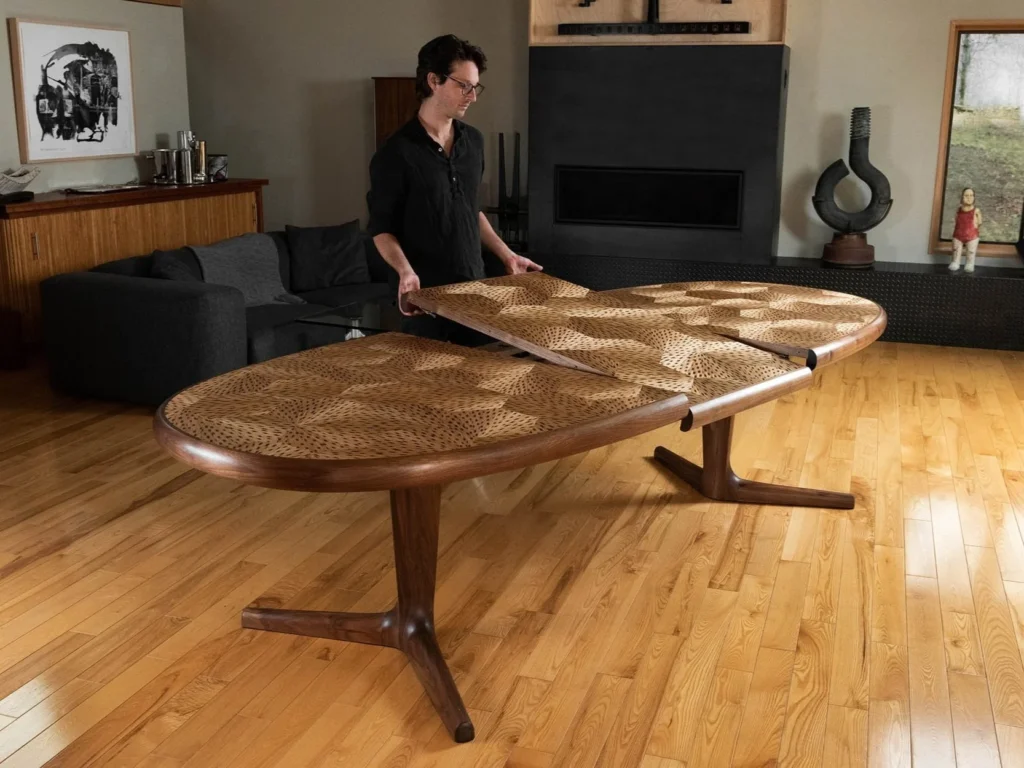
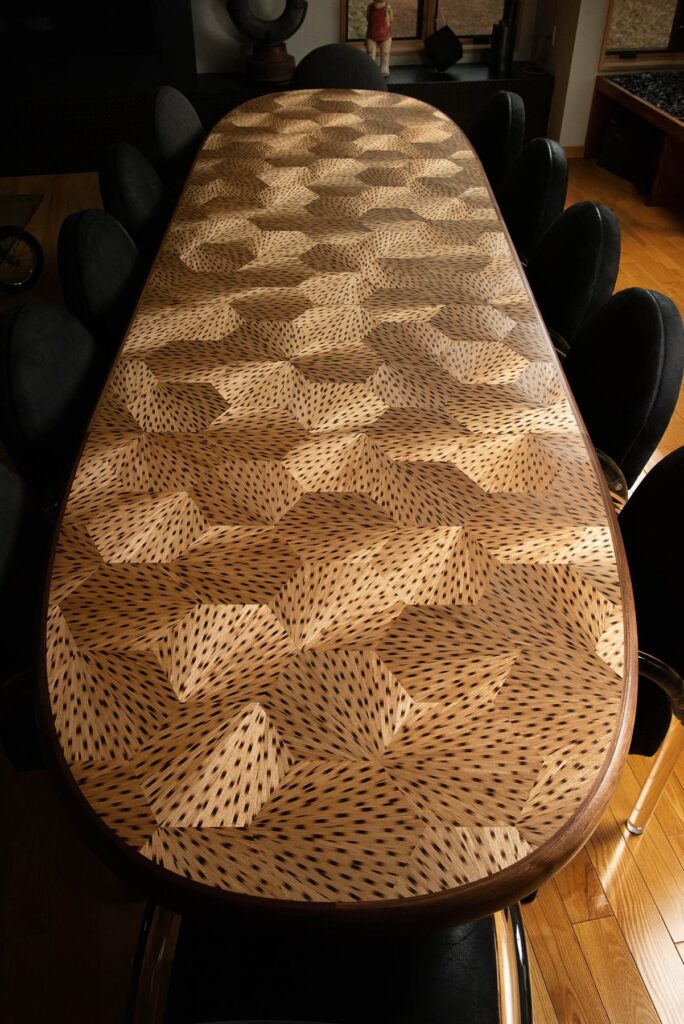
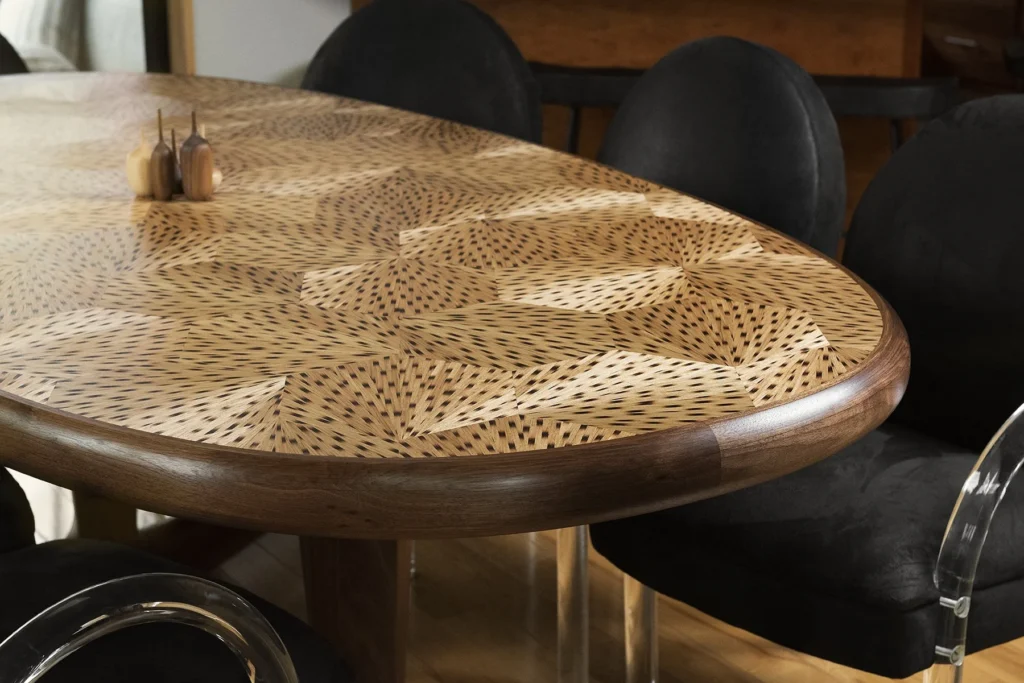
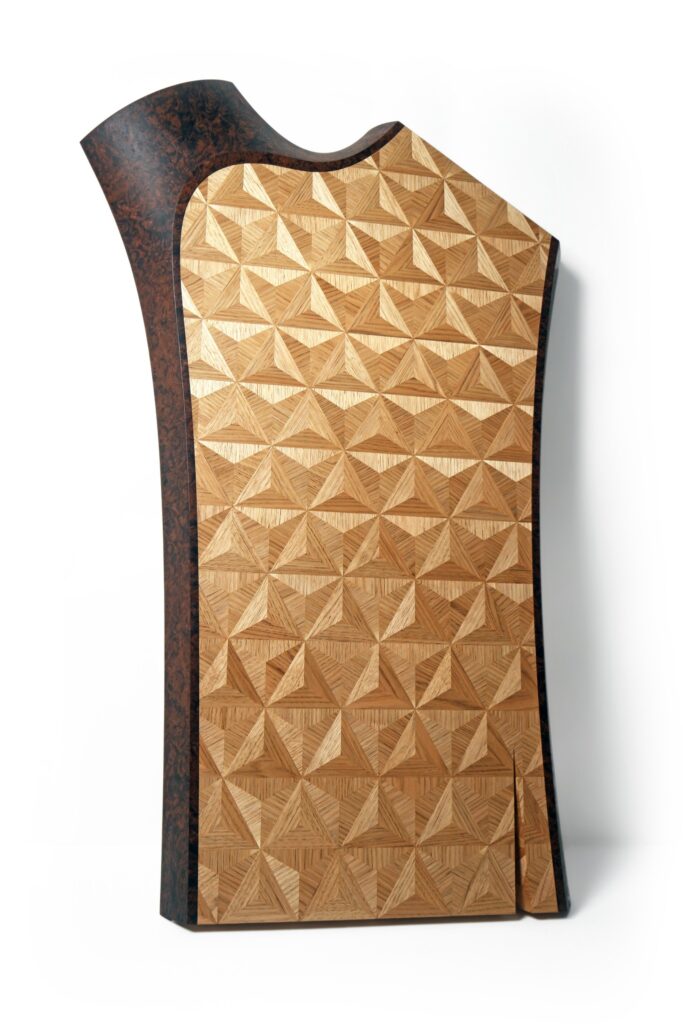
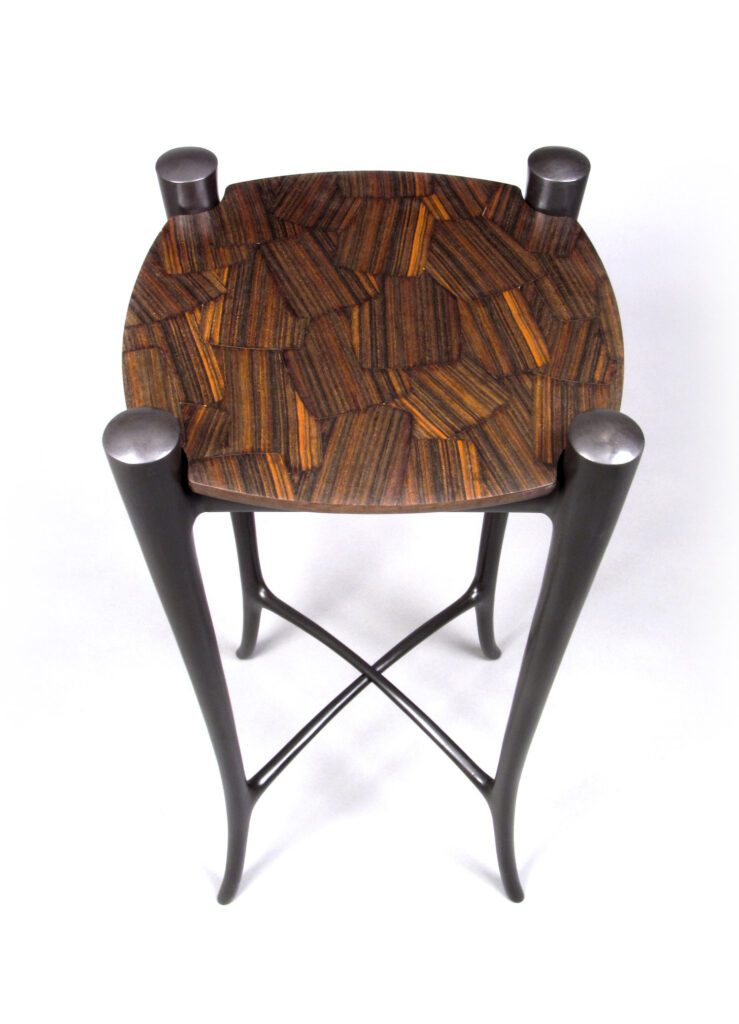
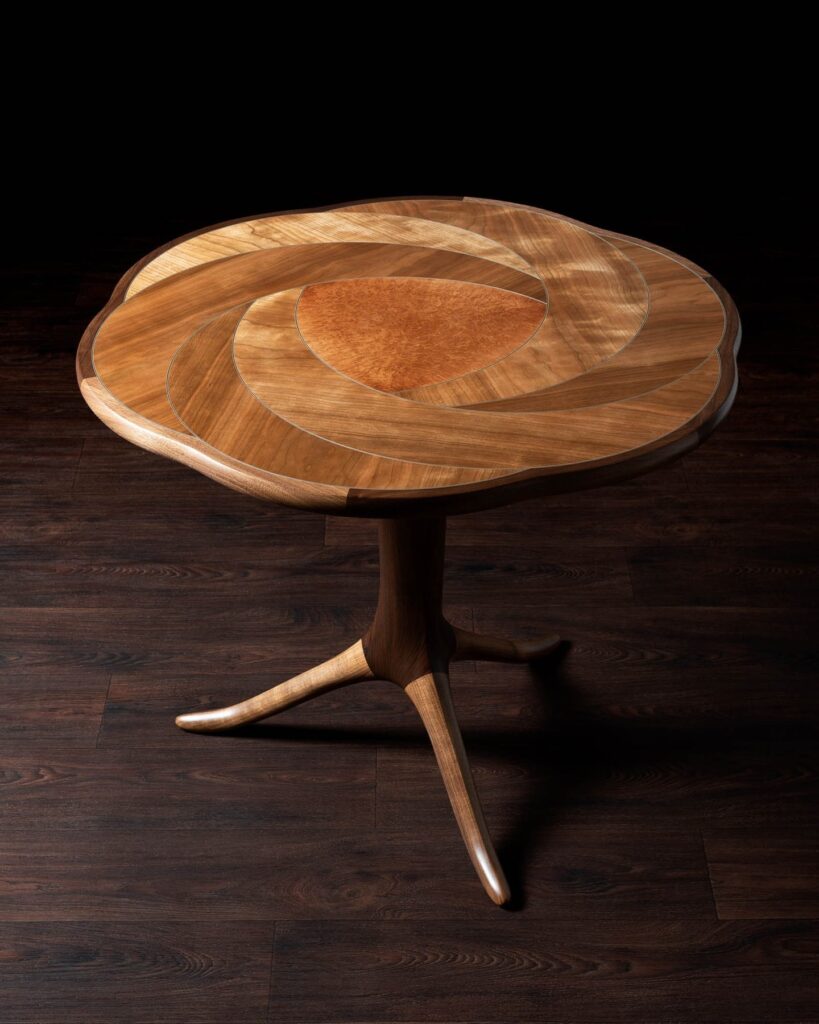
Veneer has become one of his signature tools. In many of his pieces the veneer is not just a thin skin hiding cheaper material. It is the main subject. He arranges small strips into geometric fields that feel closer to textile or optical art than to traditional furniture decoration. Exhibitions of contemporary woodwork have highlighted this approach, noting his specialization in wood veneer and his ability to use it across furniture, sculpture and decorative objects.
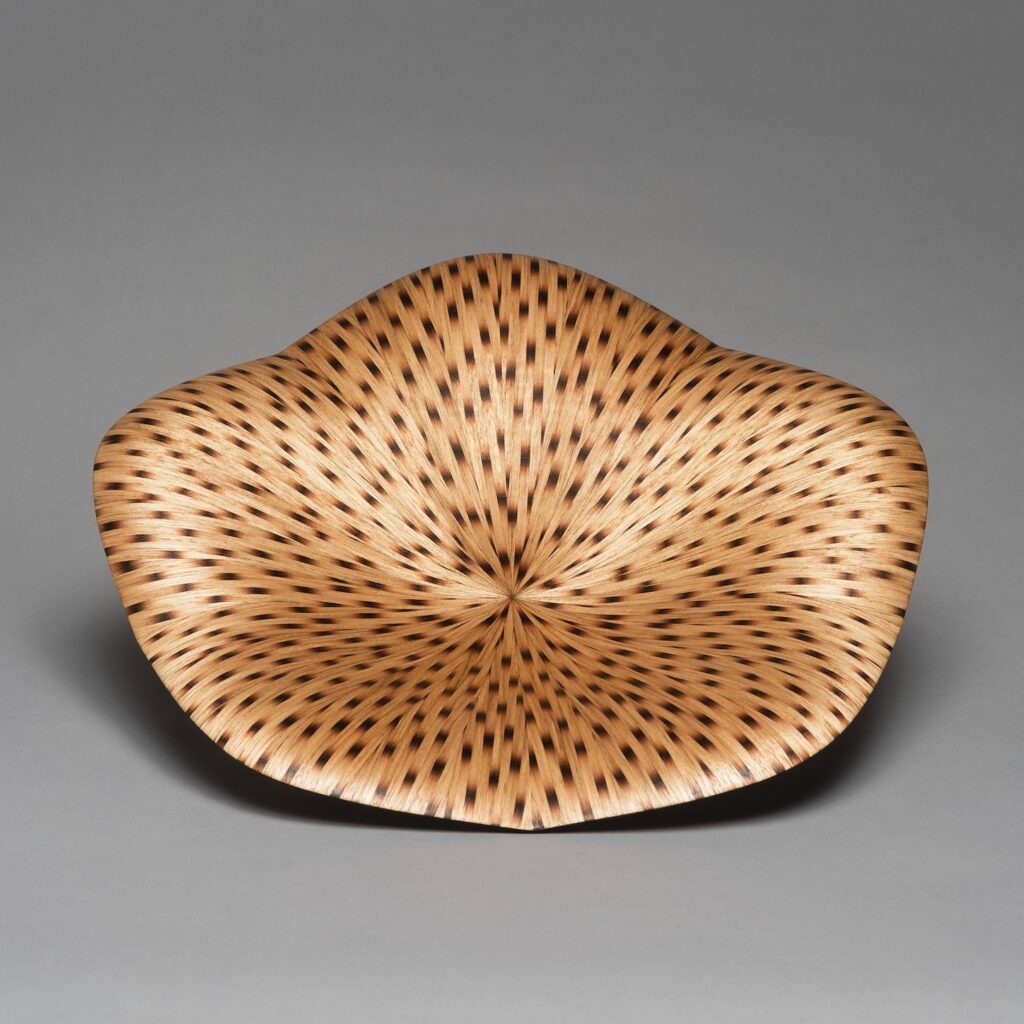
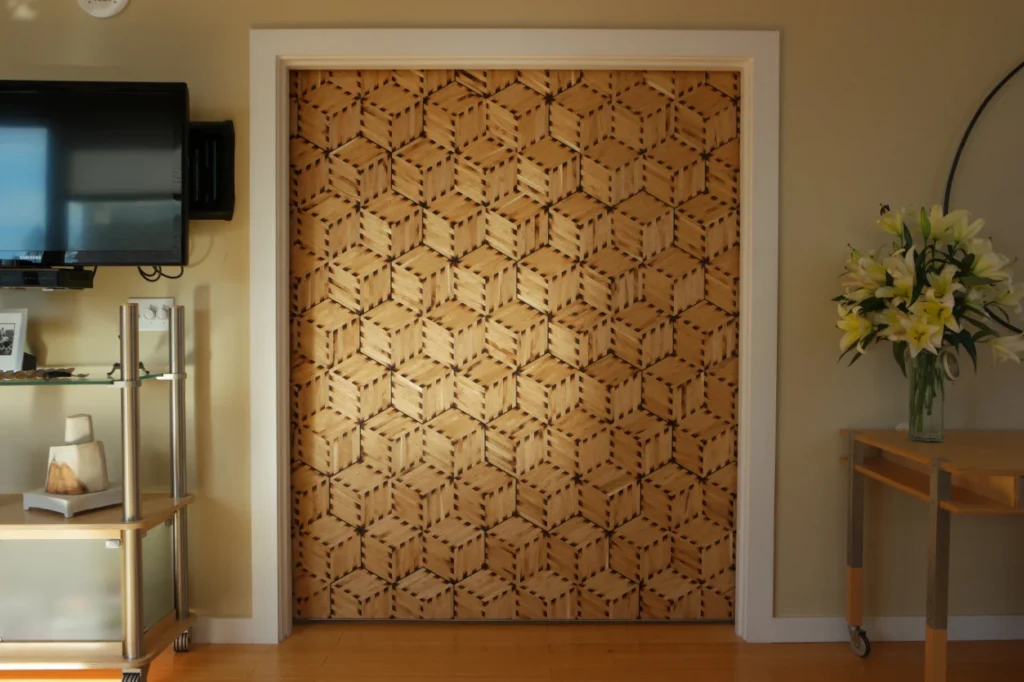
An important technical and visual breakthrough came through a surprisingly old technique: sand shading. Traditionally, veneer is darkened by burying its edge in hot sand to create a soft gradient useful for shading representational marquetry. While at the Haystack Open Studio Residency in Maine in 2015, Mauch began experimenting with sand shading as a pure graphic element. Instead of using it to mimic shadows, he applied gradients to small “sticks” of veneer, then built parquetry patterns that shimmer and pulse across a surface.
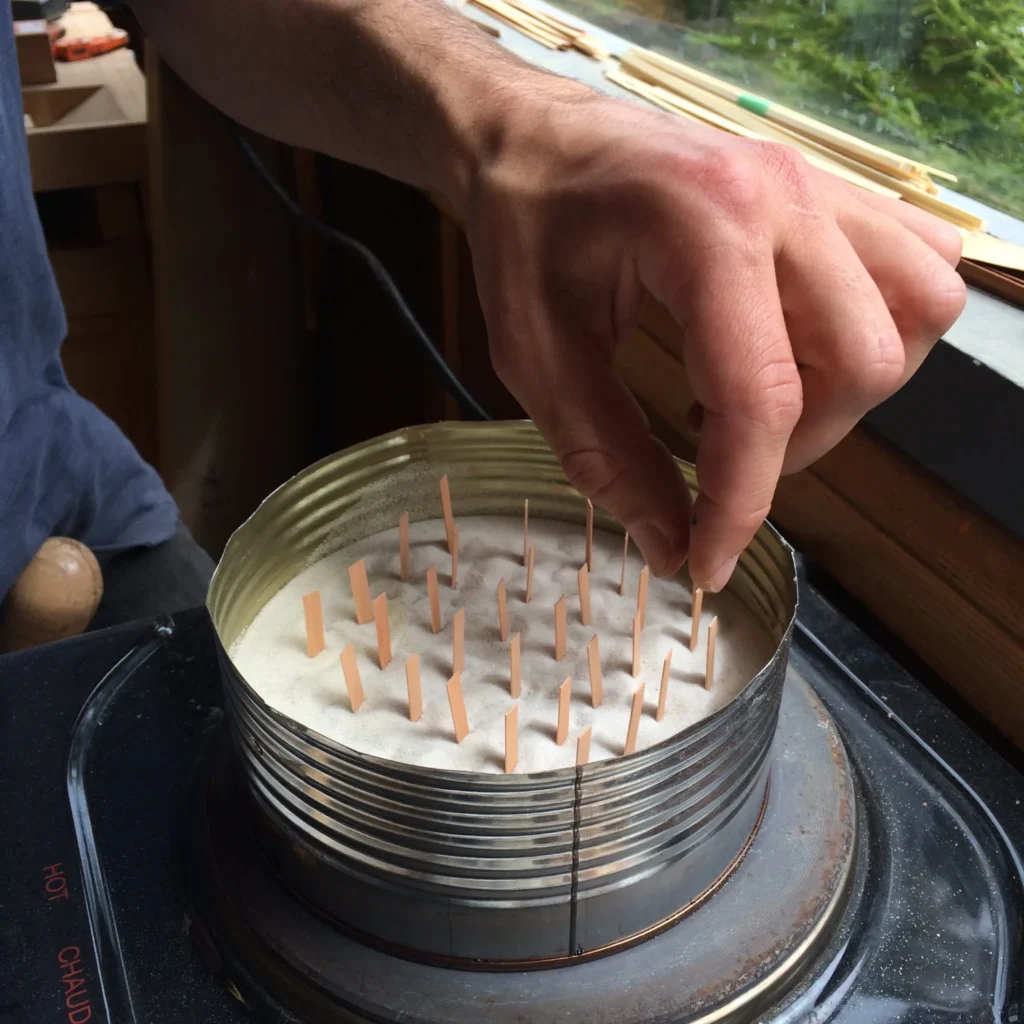
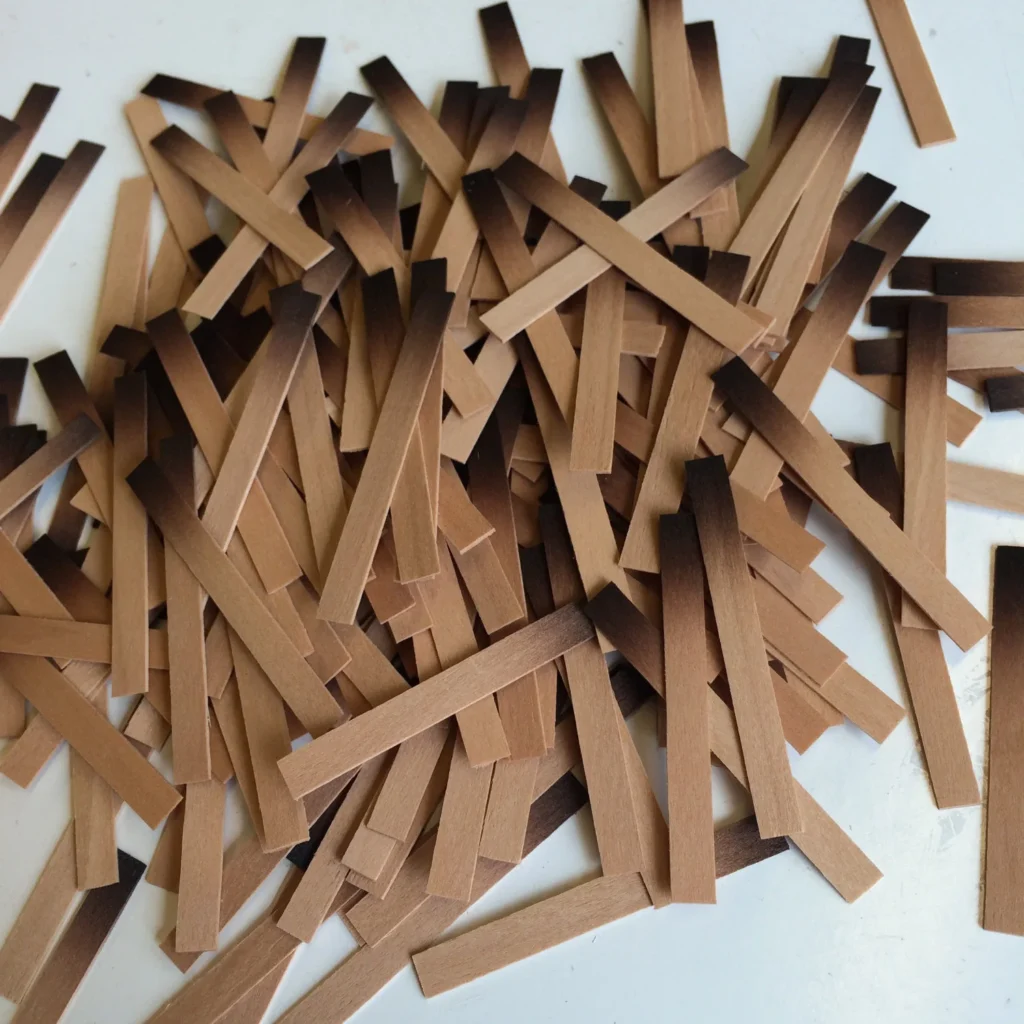
Those experiments led directly to one of his landmark projects, Six Around One. Completed in 2016, the piece is a large wall mounted sliding door measuring roughly six by seven feet. It is covered on both sides with thousands of narrow strips of butternut veneer, each hand cut, sand shaded and arranged in a hexagonal tessellation. The veneer strips were first applied to quarter inch MDF tiles, which were then glued to a torsion box core to create a stable, flat structure. The choice of butternut was intentional: its warm color and chatoyance make the surface glow as light moves across it.
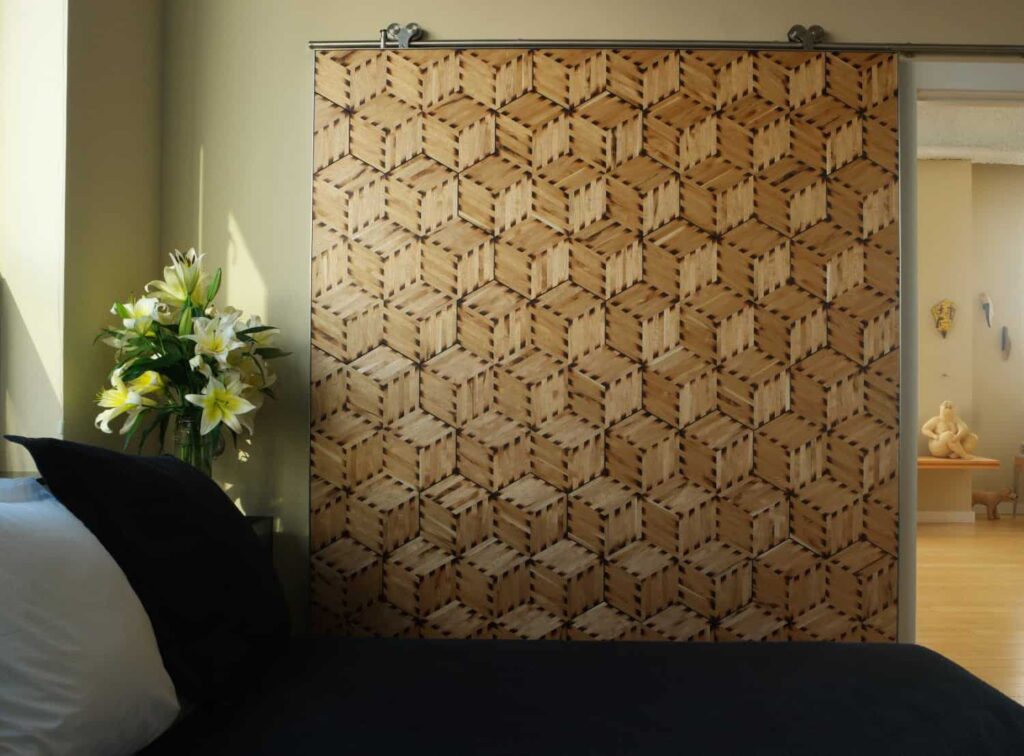
Six Around One is striking in photographs, but the making itself also became part of Mauch’s story. Filmmaker Jesse Beecher documented the process, turning the repetitive actions of slicing veneer, burning edges and taping patterns into a kind of visual and sonic performance. That film, along with later coverage in woodworking magazines of his sand shaded veneered door work, helped introduce his methods to a wider woodworking audience.
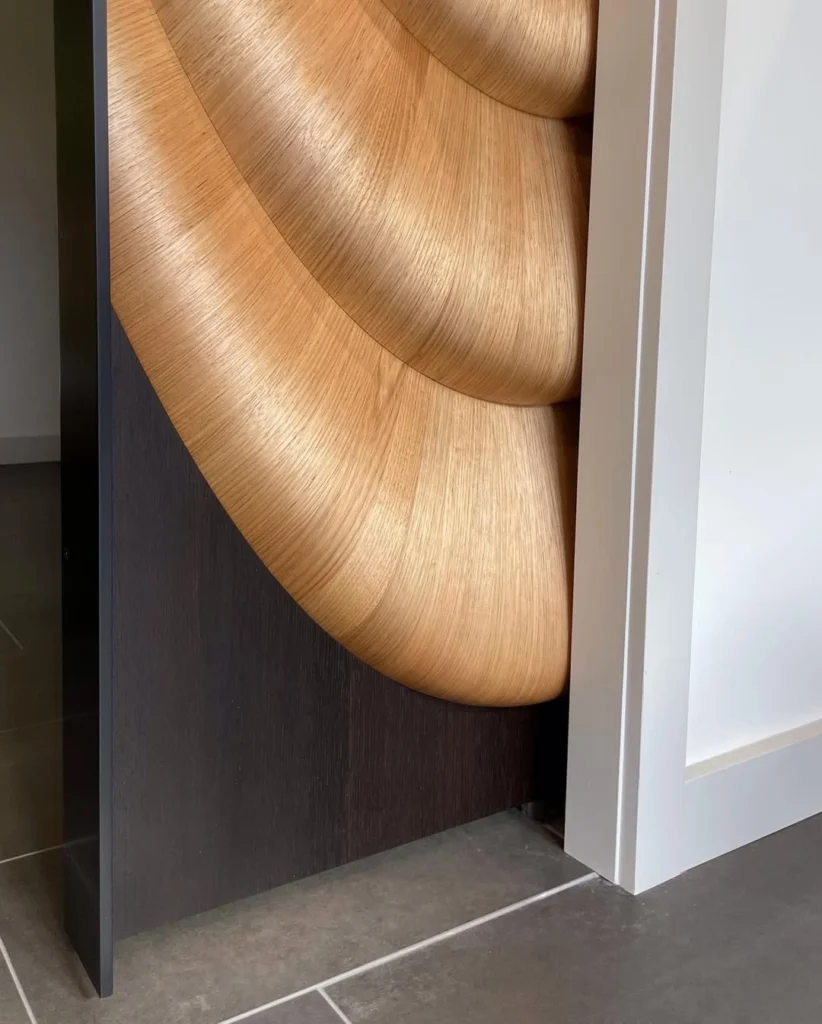
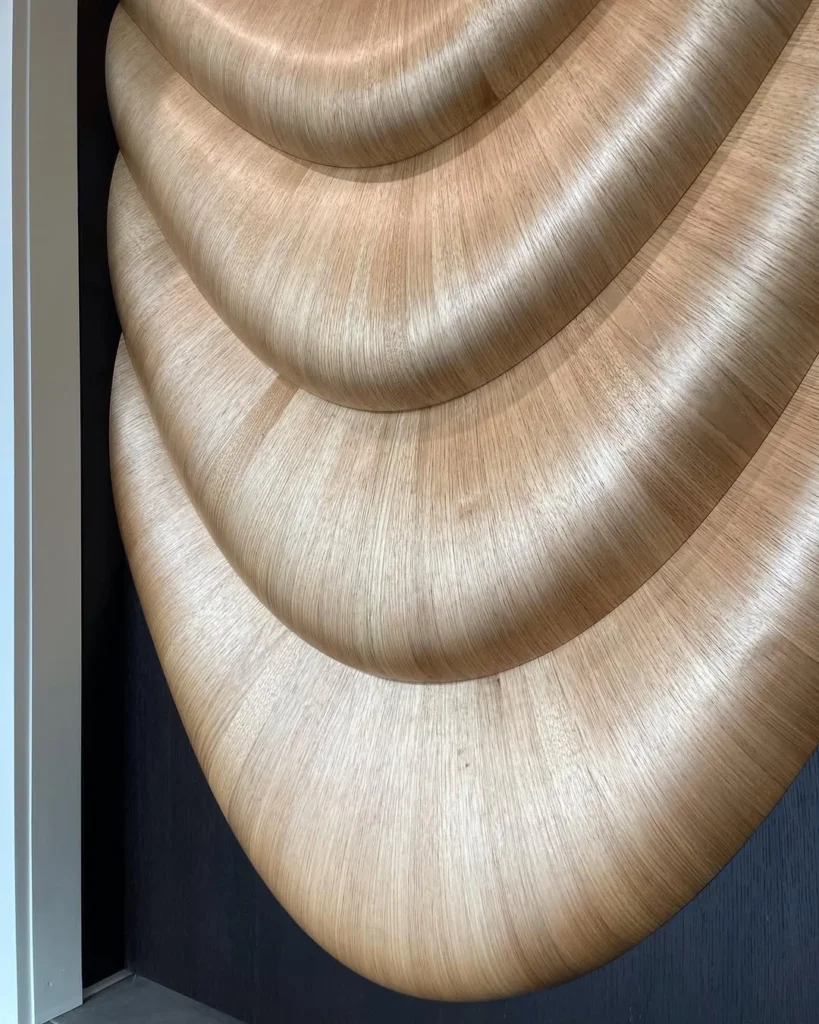
From there Mauch pushed even further into the meeting point of craft and code. In 2017 he received the John D. Mineck Furniture Fellowship from the Society of Arts and Crafts in Boston. He used the fellowship to develop a technique for applying wood veneer over extreme compound curves, using computer aided design and CNC machining to prepare the forms. The goal was not to let the machine do the craft, but to open shapes that would be almost impossible to veneer using only traditional methods.
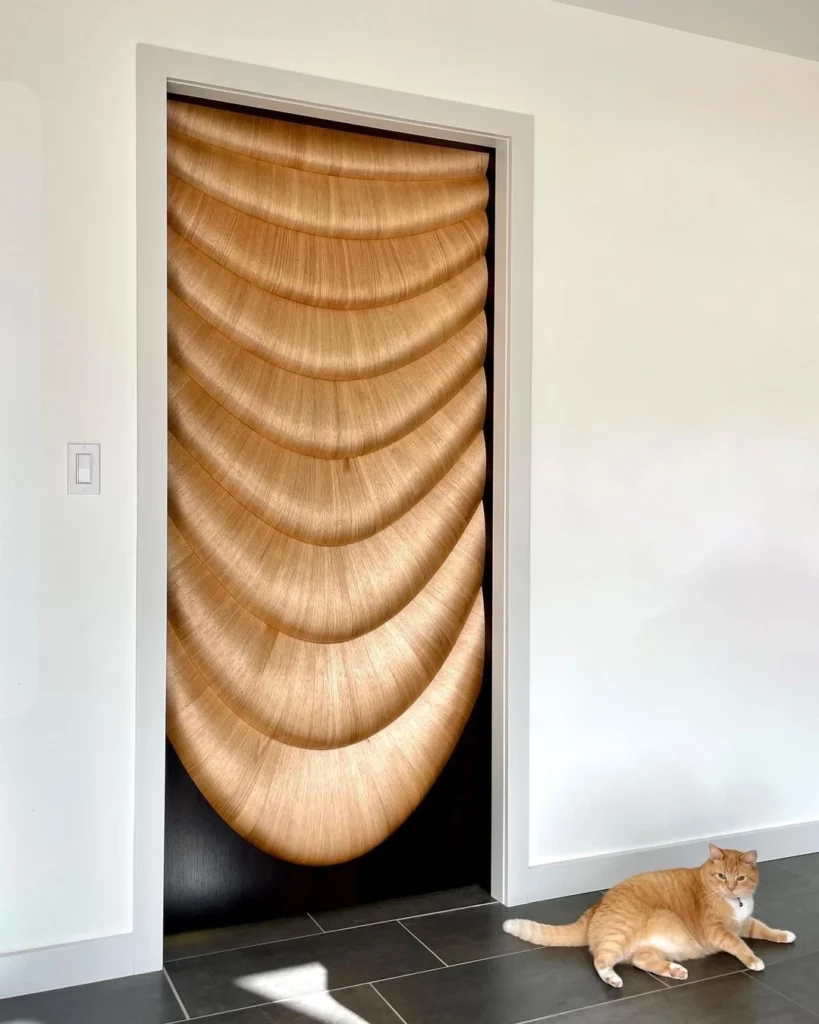
By 2018 he had refined a digital manufacturing process for forming marquetry over complex three dimensional surfaces. This work deepened his interest in how digital tools can extend rather than replace the hand. He now spends a significant part of his time helping other artists and craftspeople integrate CAD, CNC and other digital processes into their own studios. Institutions describe him as a multi disciplinary artist, designer and educator whose focus is exactly that intersection.
Recent pieces such as the Butternut Slab, which received an honorable mention from Contemporary Craft, show how far his veneer language has evolved. Instead of a simple repeating pattern, the surface becomes a field where gradients, tessellations and disruptions play against the natural figure of the wood. The result feels both highly controlled and slightly unstable, like a fabric that might start moving if you stare at it for too long.
Teaching and collaboration are now built into his practice. Mauch teaches workshops on marquetry, geometric veneer patterns and digital workflows at respected craft schools across the United States. Course descriptions often underline his emphasis on giving students practical digital skills that feed creative work, not just technical tricks.
In 2021 he co founded Treats Studios in Spruce Pine, North Carolina, an artist collective that houses his own shop and those of other makers. The shared space reflects a broader theme in his career: serious craft does not have to live in isolation. It can sit inside lively, collaborative environments where people exchange techniques, ideas and sometimes even machines.
Viewed as a whole, Jack Mauch’s work describes a clear arc. It begins with a teenager who fast tracked his way into art school, passes through institutions that demanded precision and experimentation, and settles into a studio practice where pattern, veneer and digital tools all support one another. The pieces that come out of that studio are visually dense, technically ambitious and, at their best, surprisingly playful.
They show what can happen when a maker treats both the chisel and the CNC as equal partners in the same long conversation.
Reply