
When the Swedish artist duo Bigert & Bergström unveiled the Solar Egg, it instantly stood out as one of the most striking contemporary art installations in Scandinavia. The mirrored, faceted structure first appeared in Kiruna, a mining town in northern Sweden undergoing one of the most ambitious urban relocations in modern European history. As Kiruna prepared to shift its center several kilometers east due to land deformation from mining operations, the artists responded with a piece that symbolized resilience, renewal, and the warmth that communities hold onto during times of change.
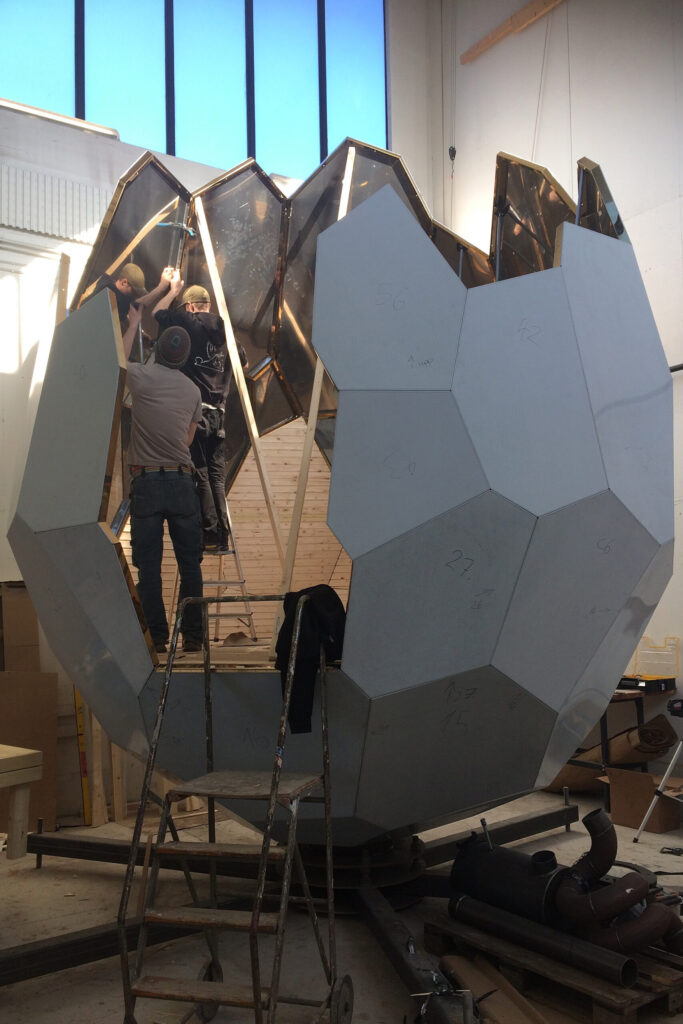
The Solar Egg looks like it arrived from a future where architecture is sculptural and poetic, yet rooted in the everyday. Rising from the cold Nordic ground, its surface reflects the surrounding mountains, the low Arctic sun, and the shifting seasons of Lapland. The entire form is shaped like an egg, a classical symbol of new beginnings, which gave the installation both its name and its emotional center.

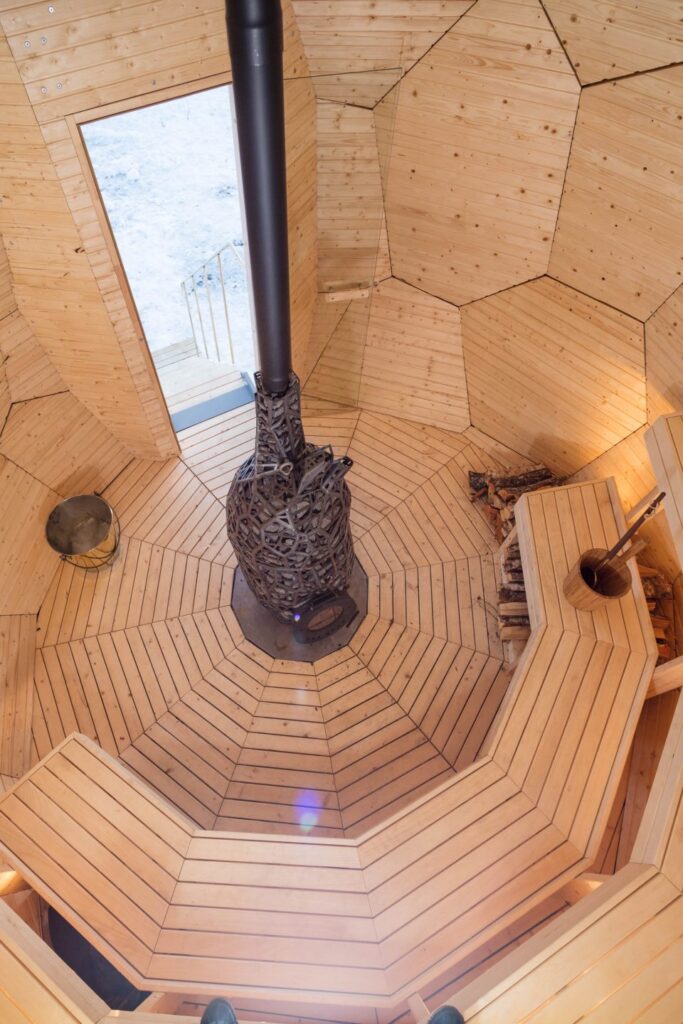
Bigert & Bergström have explored climate, environment, and community for decades, often working on the edge between art, science, and social commentary. The Solar Egg fits naturally into their practice. It is monumental enough to command attention, yet welcoming enough to draw visitors inside. Stepping through its door reveals not a cold metal interior, but a luminous room built around a fully functioning sauna stove. This transformation from reflective sculpture to warm communal space became one of the most notable aspects of the project.
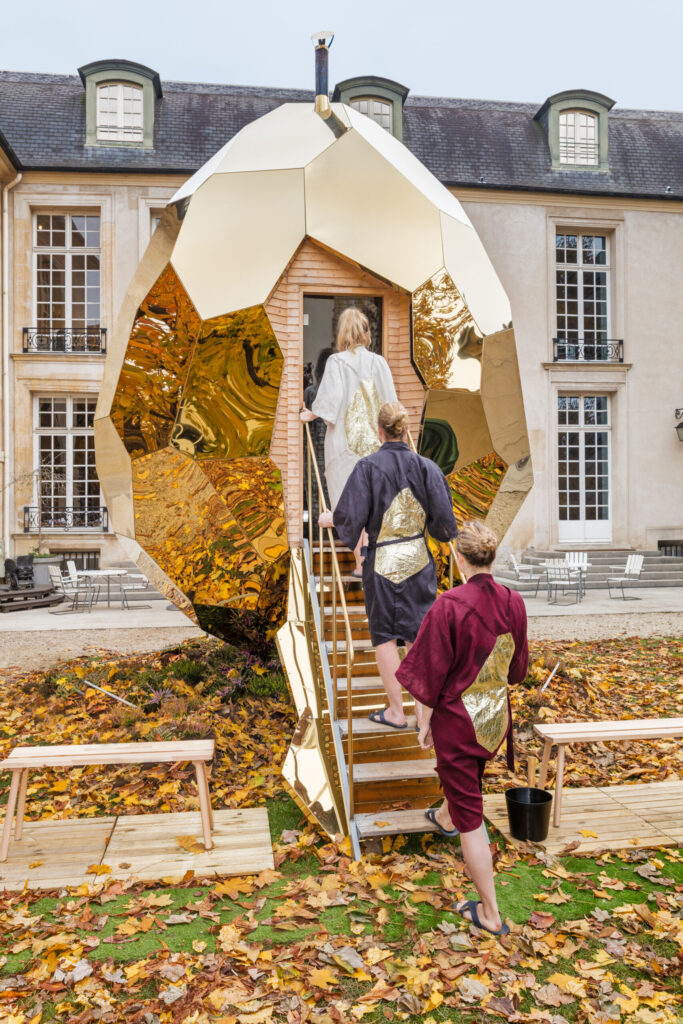
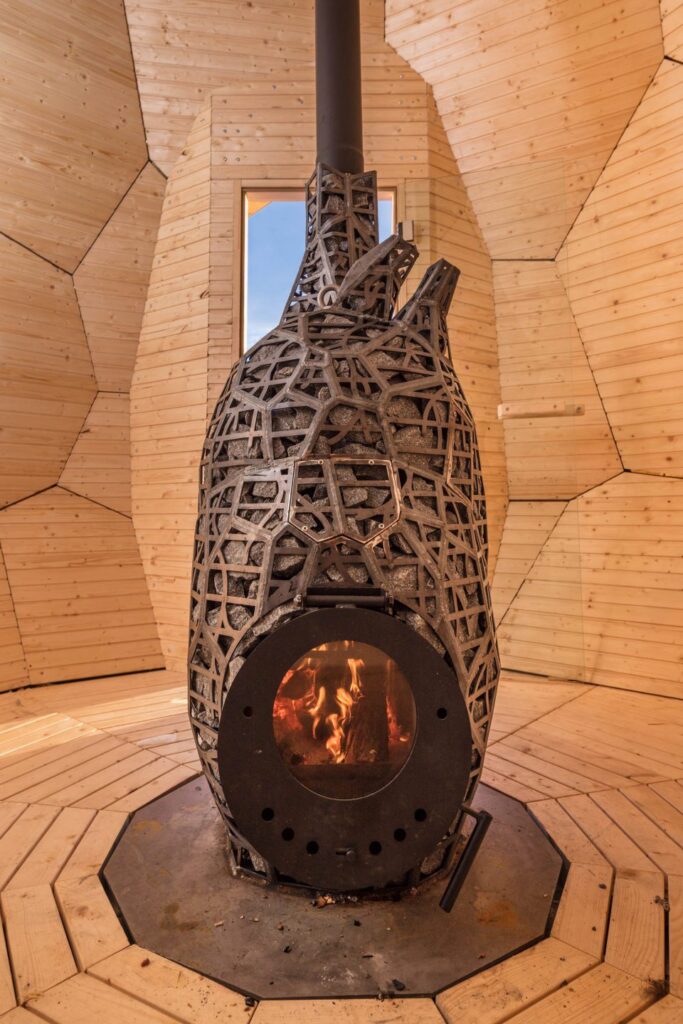
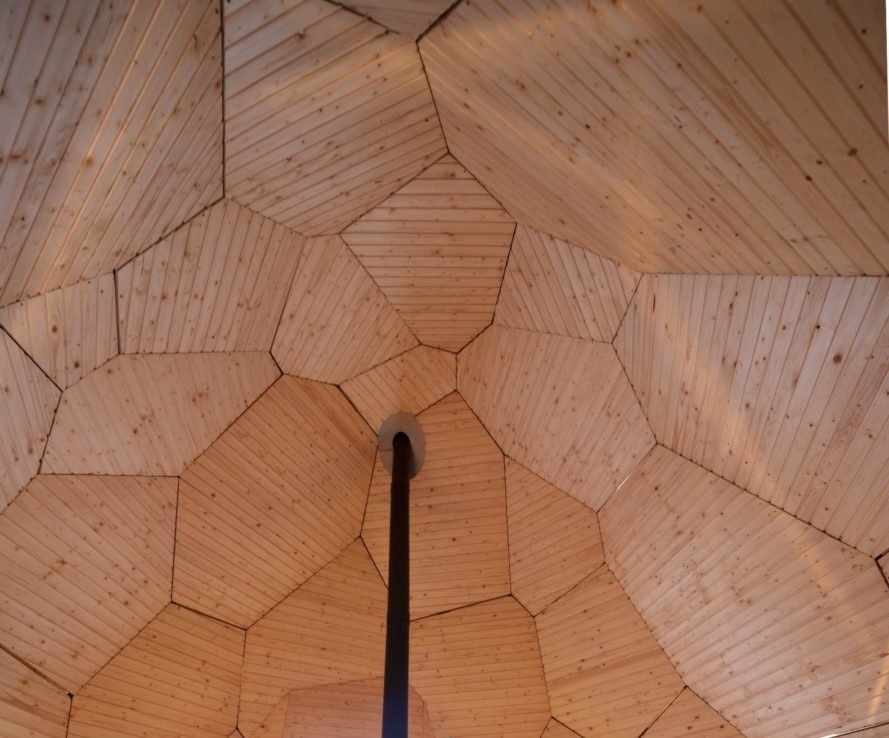
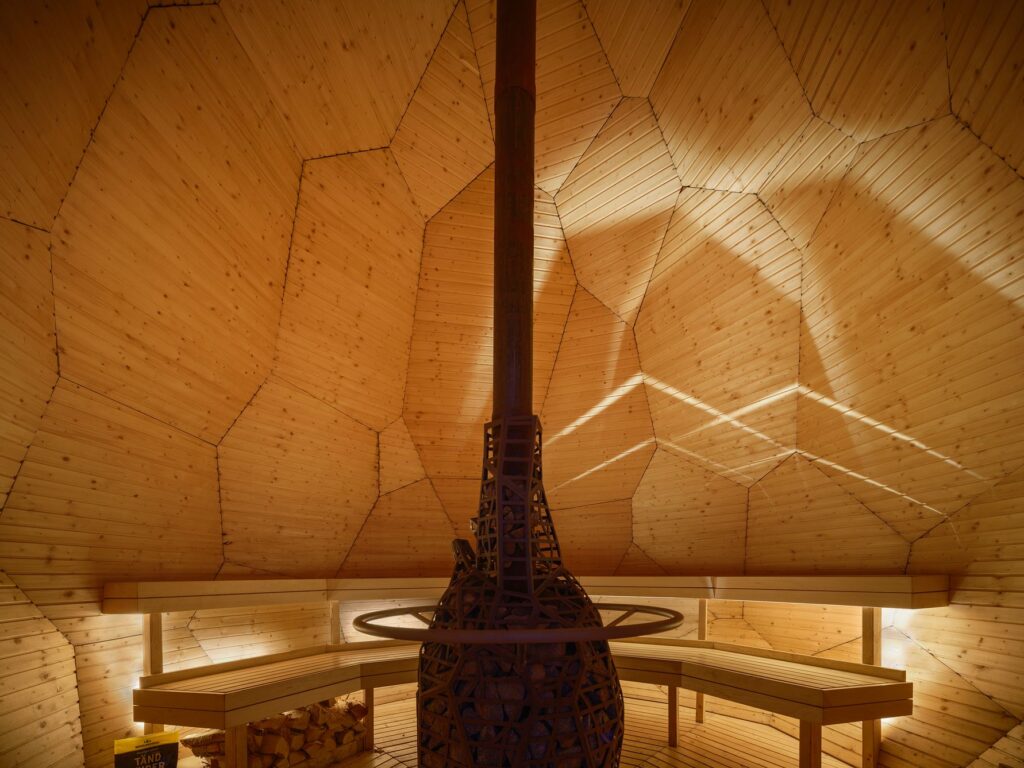
Inside, the walls are crafted from wood panels that glow when the fire is lit. The sauna itself was designed to be used, not just observed. Conversations, warmth, and shared time became part of the artwork. The artists wanted to create a social situation, a place where people could gather, exchange thoughts, and experience the contrast between the harsh northern climate and the heat radiating from the hearth. The installation invited locals and visitors to look at Kiruna not only as a mining town in transition, but also as a community with a strong relationship to its environment.
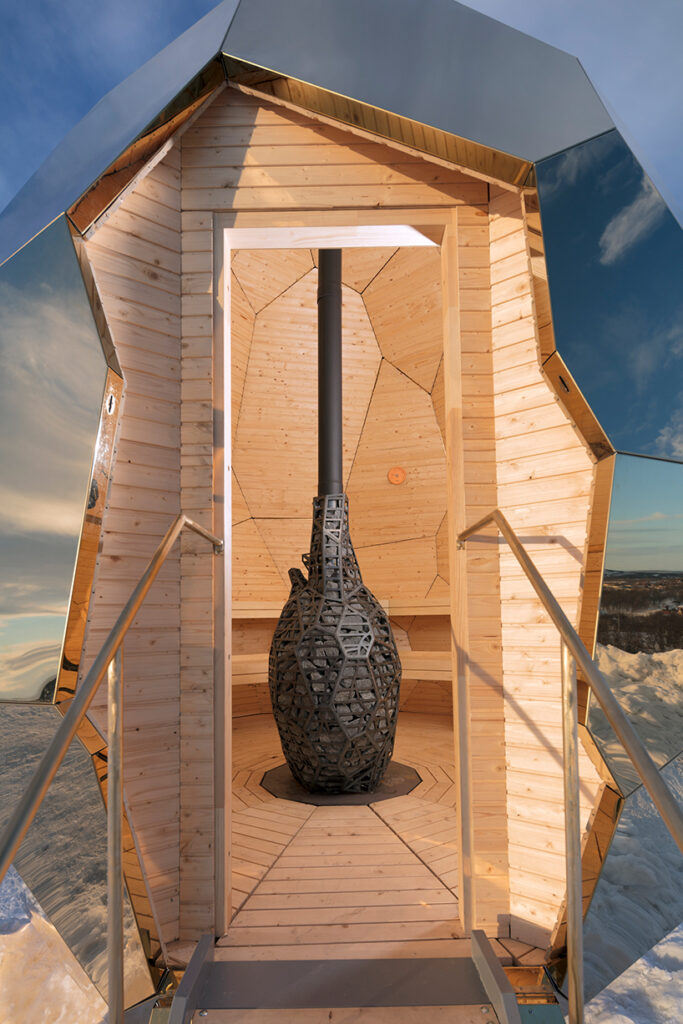
The duality of the Solar Egg turned it into a powerful symbol. From the outside, the mirrored surface shifts with the weather and surrounding nature. Clouds drift across its panels. Snow piles at its base. Sunlight breaks into soft golden reflections. It acts like a visual diary of the landscape. From the inside, the warm wooden surfaces and glowing stove remind visitors that even in the coldest regions, people create their own warmth.
The project also created a dialogue about transformation. Kiruna’s relocation was more than a technical challenge. It reshaped streets, homes, memories, and routines. Bigert & Bergström approached this reality with sensitivity. The egg suggested that new beginnings often grow from disruption. The act of gathering in a sauna echoed old traditions, while the futuristic exterior looked toward the future. This blend of old and new made the piece feel rooted in local culture and at the same time distinctly contemporary.
After its debut in Kiruna, the Solar Egg gained international attention. It traveled to other cities, where it continued to act as a meeting point, a sculpture, and a statement. Its mobility helped expand its meaning. While it started as a reflection of one town’s transformation, it eventually spoke to broader themes of environmental change, community resilience, and the way public art can hold people together in uncertain times.
Despite its strong visual impact, the Solar Egg remains simple in concept. A familiar shape, a reflective surface, a small interior space, and a fire at the center. These elements became the foundation for a work that feels both intimate and monumental. It does not overwhelm the landscape, but complements it. It blends with snow, rock, and forest, almost disappearing during certain times of day. At other moments, it shines like a beacon.
The artists often describe their work as a mix of experiment and narrative. The Solar Egg fits this description well. It is experimental in its form and approach, yet it carries a clear story about warmth, community, and the cycles of change. It also reflects the way Bigert & Bergström approach climate and human adaptation. They look for the small gestures that reveal how people cope with large scale shifts in their environment.
Today, the Solar Egg continues to be one of the most memorable public artworks from northern Europe. Its mirrored skin catches attention quickly, but the slower, more lasting impression comes from the way it combines sculpture with human experience. It encourages moments of stillness, conversation, and shared warmth. In a region known for cold winds and long winters, this golden egg offered a reminder that art can provide comfort and connection even in challenging landscapes.
The Solar Egg remains a testament to how art can respond to real events without losing its imaginative core. What began as a symbol for a moving town became a portable sanctuary that resonated far beyond Sweden. Through its blend of simplicity and ambition, it stands as a bright and enduring chapter in the work of Bigert & Bergström.
Reply