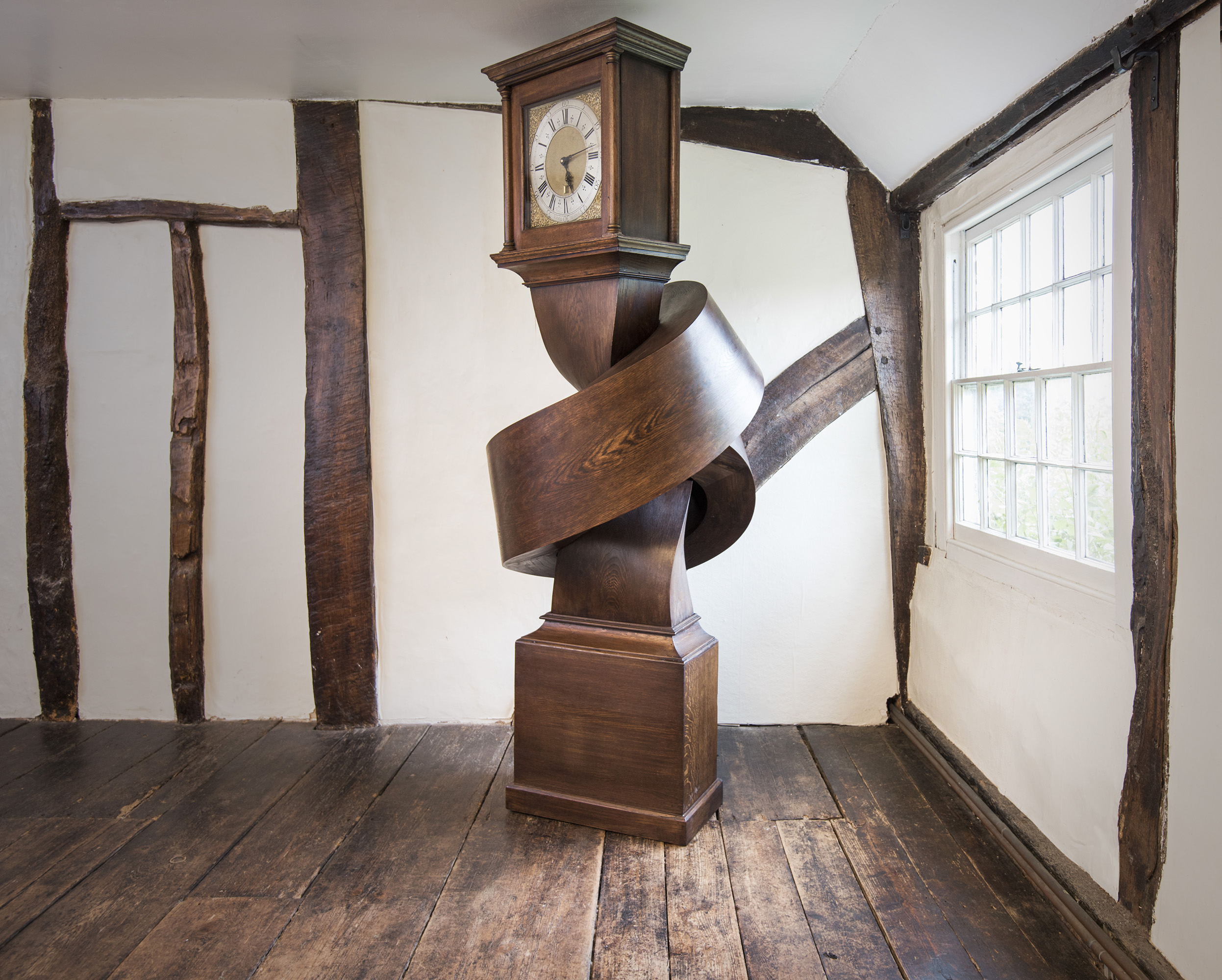
Alex Chinneck built his reputation by bending the familiar until it becomes quietly surreal. The British artist, born in 1984, has carved out a niche that few dare to approach. Rather than focusing on gallery-friendly pieces, he prefers large scale interventions that rewrite the rules of everyday architecture. Buildings appear to unzip, brick walls seem to fold like cloth, and facades slide out of alignment as if struck by an invisible force. His signature is mischief delivered with impeccable craftsmanship. Even when the illusion looks playful, the engineering behind it is anything but simple. Chinneck’s background in sculpture and his ongoing collaborations with engineers, fabricators, and craftsmen allow him to execute stunts that hover between absurdity and absolute precision.
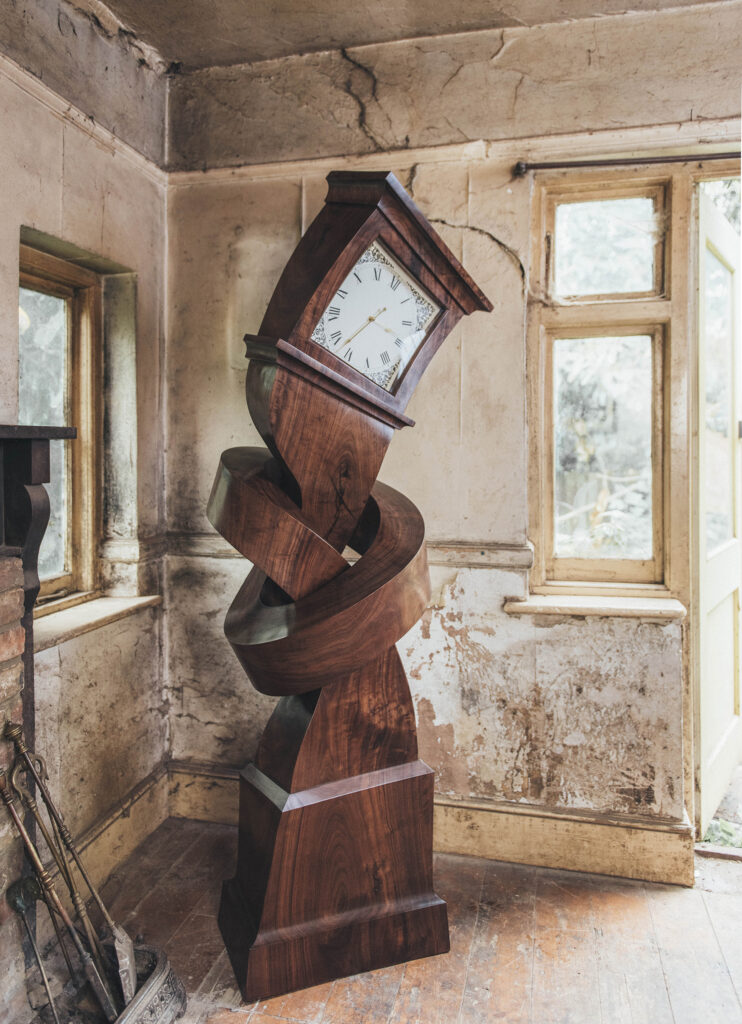
Because of this unusual skill set, Chinneck’s projects often feel like stage magic built into the urban landscape. He uses materials that are recognisable, even comforting, then flips their behaviour so that passersby do a double take. Yet beneath the humour sits a controlled discipline. Nothing collapses, nothing sags unintentionally, and every unusual angle is supported by careful structural logic. This balance between whimsy and mathematical order runs through his work, but it becomes especially striking in his take on grandfather clocks.
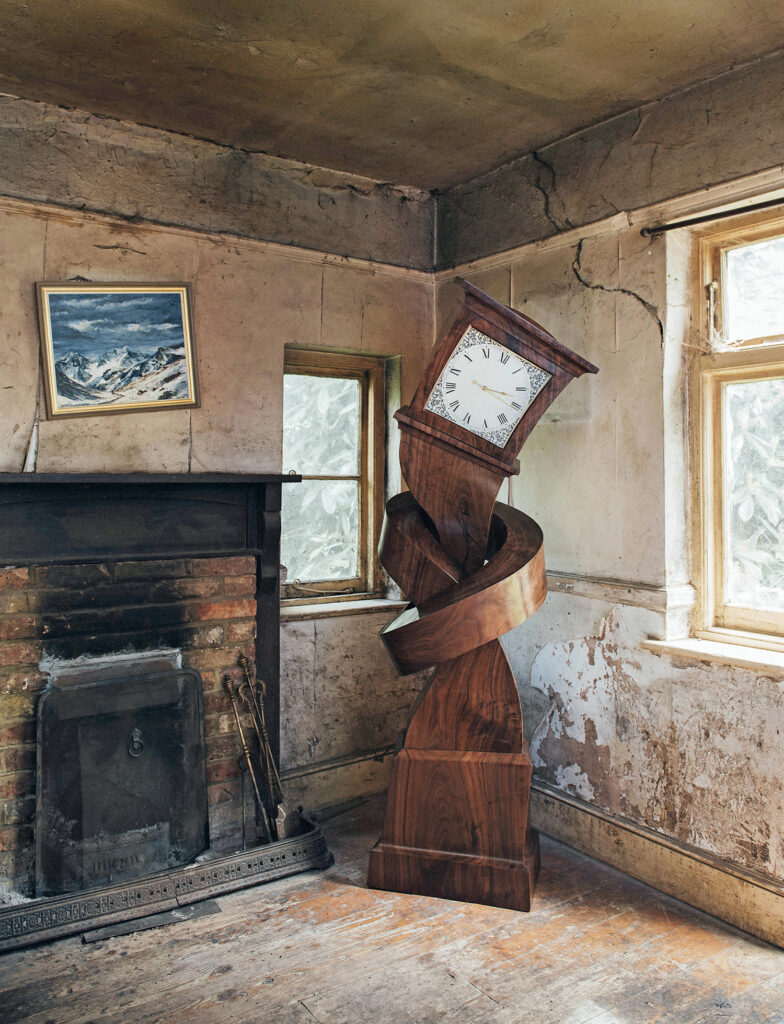
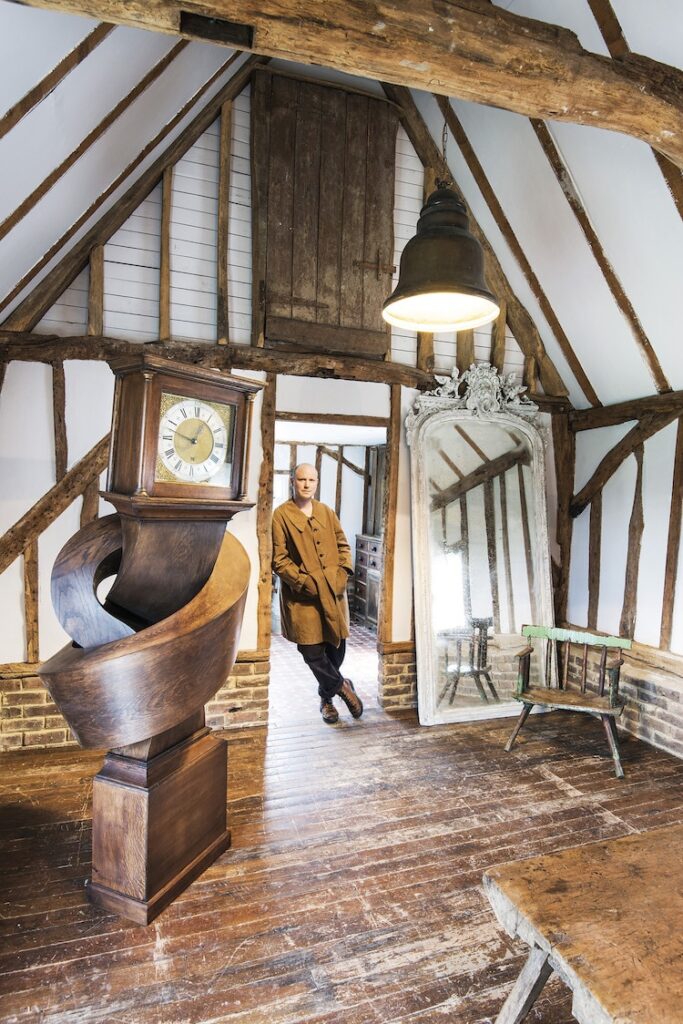
Chinneck’s clock project revolves around a series of distorted longcase clocks that stretch, twist, and sag in ways no heirloom should. Originally created for an installation exploring time, memory, and domestic tradition, these clocks play with the nostalgia that surrounds such objects. A grandfather clock is usually a symbol of reliability. It stands straight, ticks steadily, and anchors a room with its calm authority. Chinneck flips that expectation on its head. Instead of standing proud, his clocks droop as if made from soft clay. Their wooden frames ripple, their faces tilt, and their pendulums appear frozen in mid-meltdown. The result is both humorous and slightly unsettling.
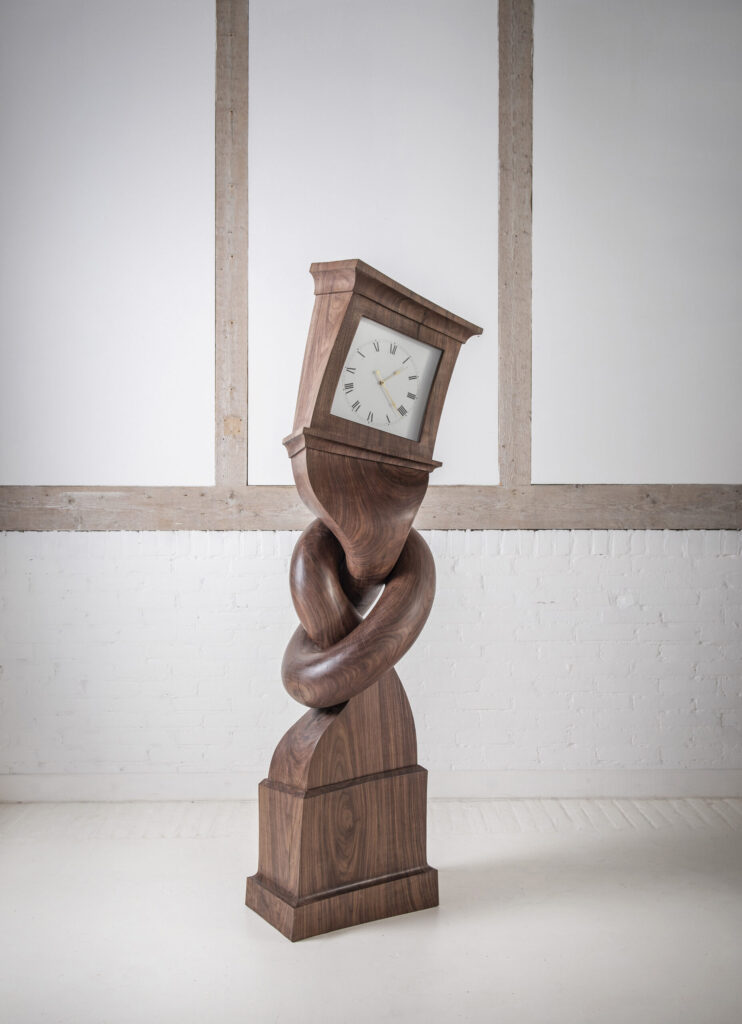
What makes the project compelling is how Chinneck manages to keep each distorted clock instantly recognisable. Even when the structure slumps toward the floor or bends like warm plastic, the essential silhouette remains intact. This tension between familiarity and deformation gives the clocks a strange elegance. They appear to be caught in an impossible moment, as if time itself has softened. Moreover, the craftsmanship elevates the illusion further. Each clock is built with the same level of care a traditional cabinetmaker would apply, yet the final form looks as though it has surrendered to gravity. That contrast between meticulous construction and carefree absurdity gives the series its charm.
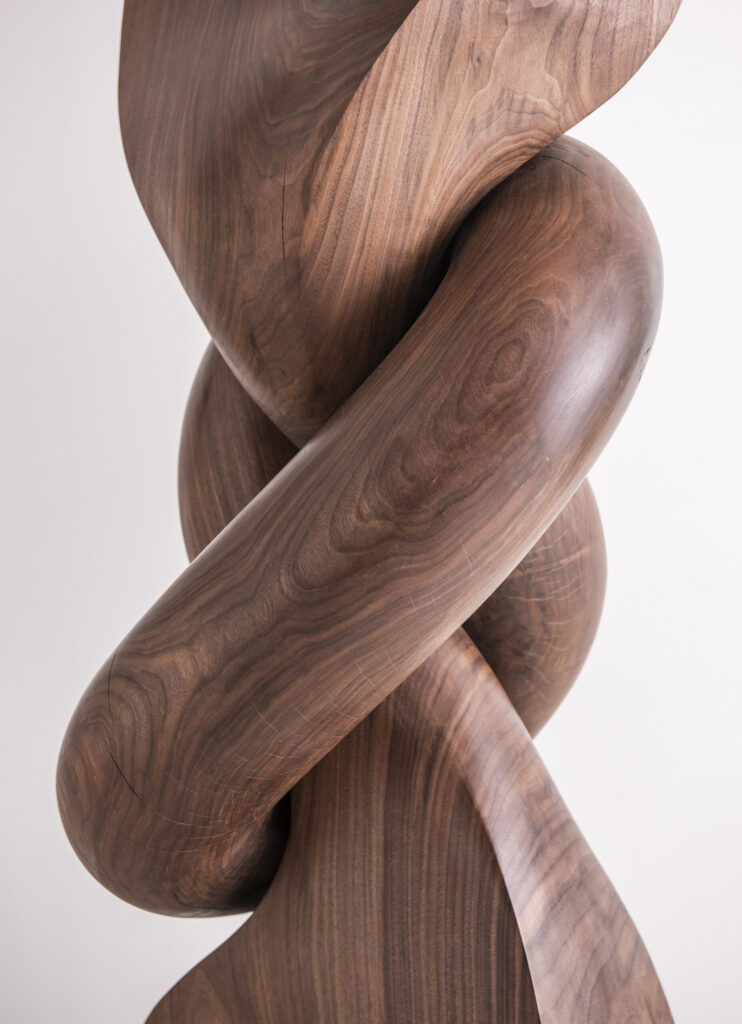
The project also hints at deeper themes, though Chinneck never forces a grand philosophical frame on it. Time is elastic, memory shifts, and the objects that once represented stability can feel less certain as years pass. These clocks embody that subtle instability. They still resemble the stately shapes found in old hallways and grandparents’ living rooms, but age seems to have softened their posture. Through that gesture, Chinneck nudges viewers to rethink the relationship between past and present. Even so, he keeps the tone light. There is no heavy symbolism, just a gentle skewing of what we assume to be fixed.
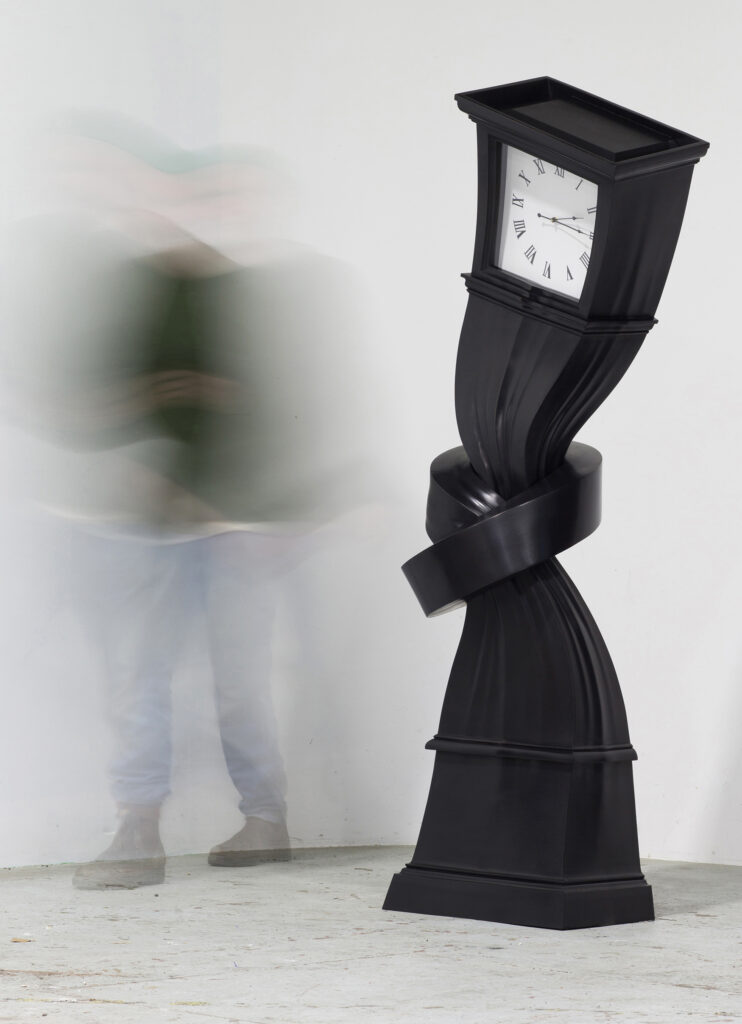
As with much of his work, the grandfather clocks also highlight his fascination with theatricality. They look like props from a dream sequence, perfectly absurd yet strangely believable. Their presence encourages a pause, a smile, and maybe a moment of reflection about the limits of what is possible with wood, form, and imagination. Chinneck has always excelled at creating those small ruptures in everyday perception, and this clock project fits squarely within that mission.
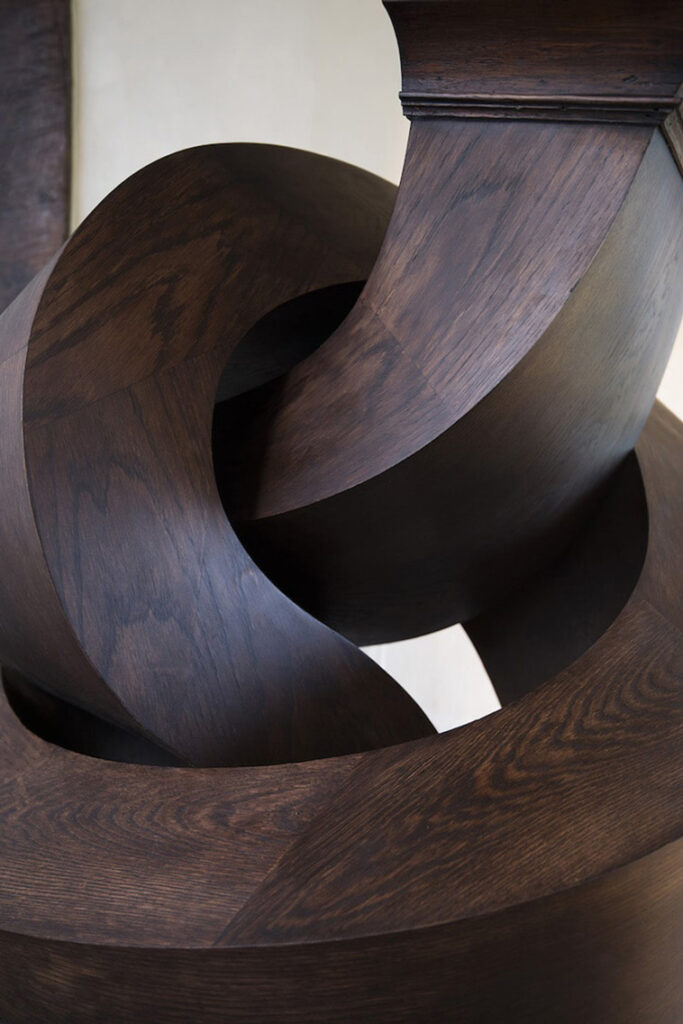
Although he is widely known for reshaping buildings, these uncanny clocks show that his playful logic translates seamlessly to smaller domestic objects. They reinforce his belief that even the most traditional designs still hold room for reinvention. By bending timekeepers into impossible shapes, he once again proves that the ordinary world is not as rigid as it seems when placed in the hands of someone willing to question its rules.
Reply