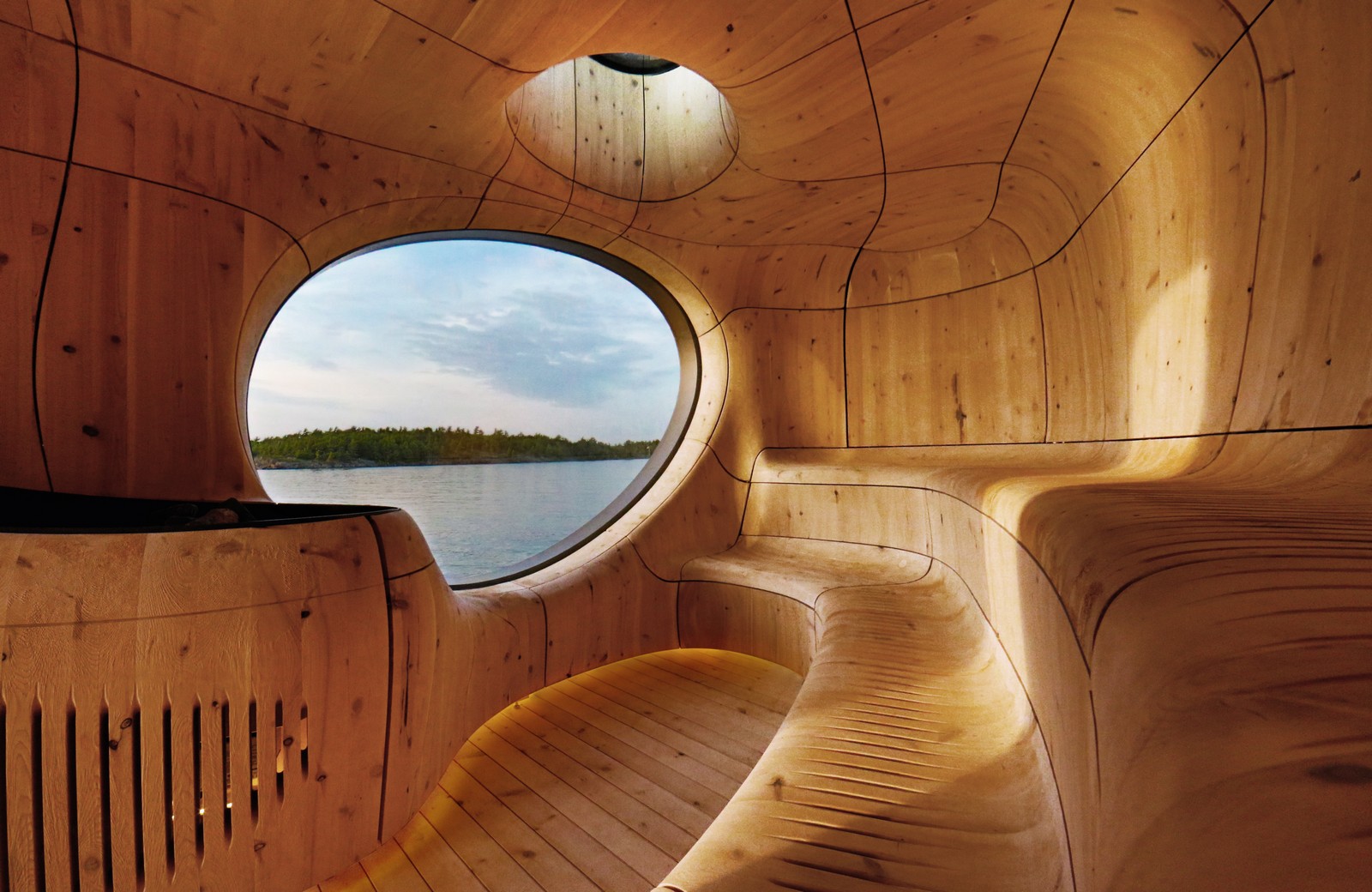
Grotto Sauna sits on the edge of a small private island in Georgian Bay, Ontario, carved into ancient Canadian Shield rock and facing straight toward open water. Designed by the Toronto studio Partisans, this compact 75 m² building has become a standout example of contemporary sauna and timber architecture. From afar it looks like a dark, quietly confident box resting on granite, but the exterior hides a remarkably fluid cedar interior that feels more like a natural cave than a traditional sauna.
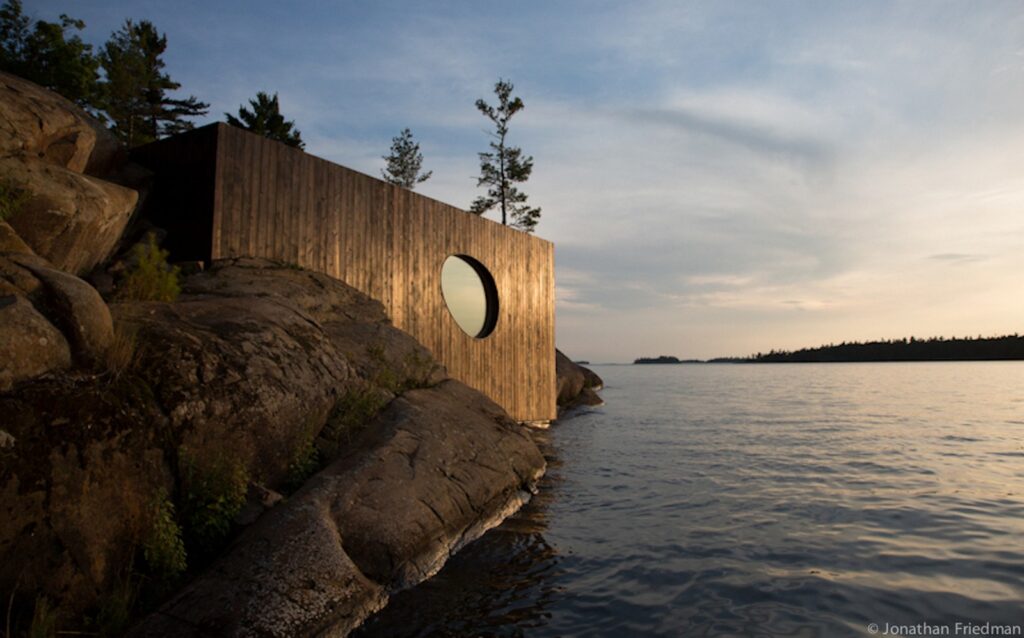
The structure’s outer shell is wrapped in locally sourced cedar that has been charred using the shou sugi ban technique. The blackened cladding lets the sauna visually merge with the exposed rock and weathered shoreline pines. It looks intentionally understated, almost like a geological outcrop, and that restrained appearance keeps the building from competing with the wild landscape around it. The entire structure was delivered to the island by barge and crane, leaving the site as untouched as possible.

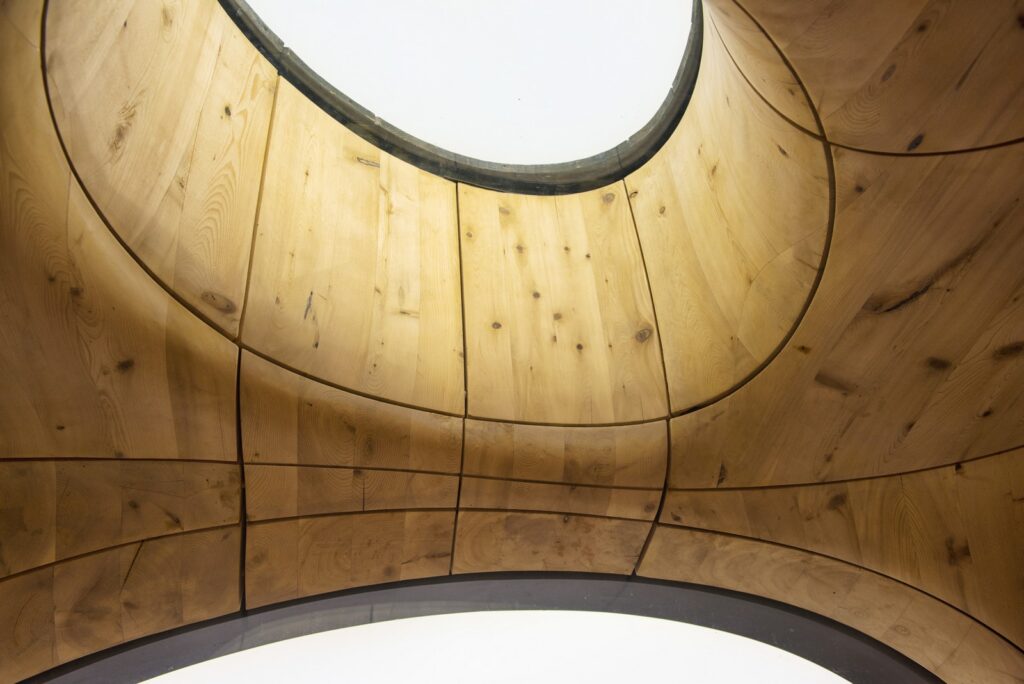
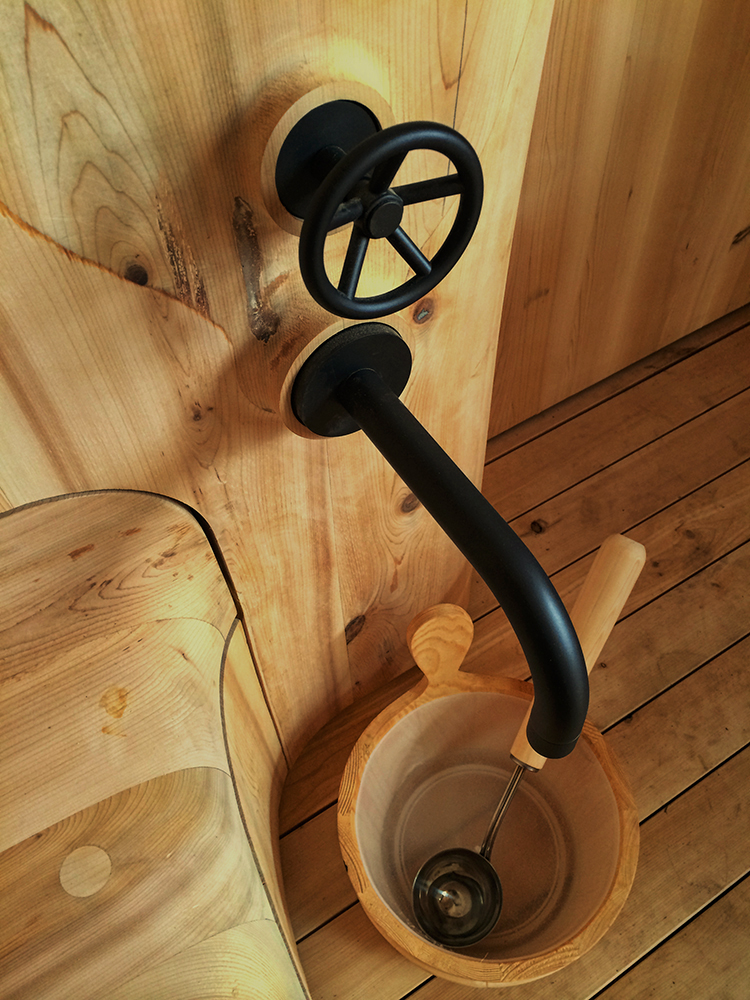
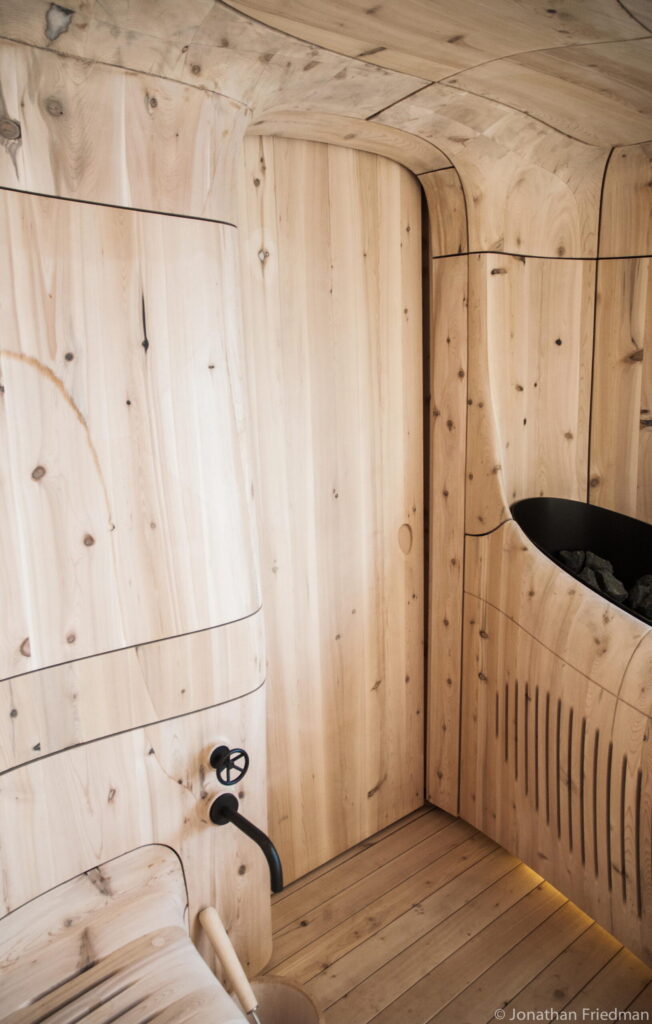
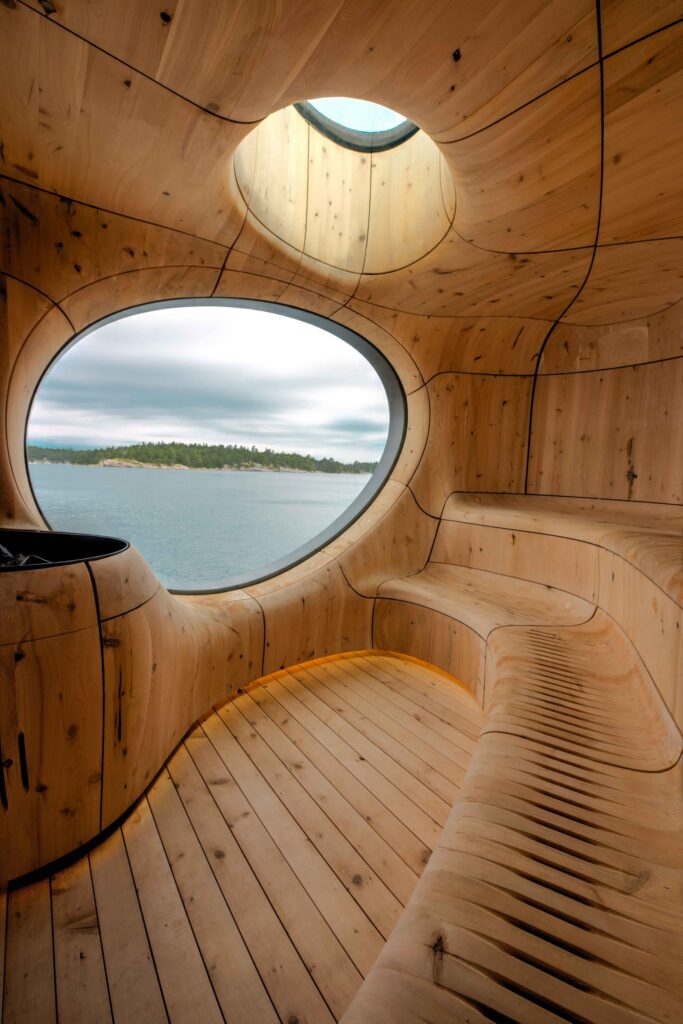
Inside, everything flips. The interior is formed by a series of precisely milled cedar panels that ripple around the room like water carved the walls. This sculpted surface encloses two benches, twin stoves, a panoramic window facing the bay and a small skylight that draws daylight deep into the warm timber shell. The space feels organic and continuous, almost like stepping into a carved grotto with the aroma of fresh cedar rising with the steam.
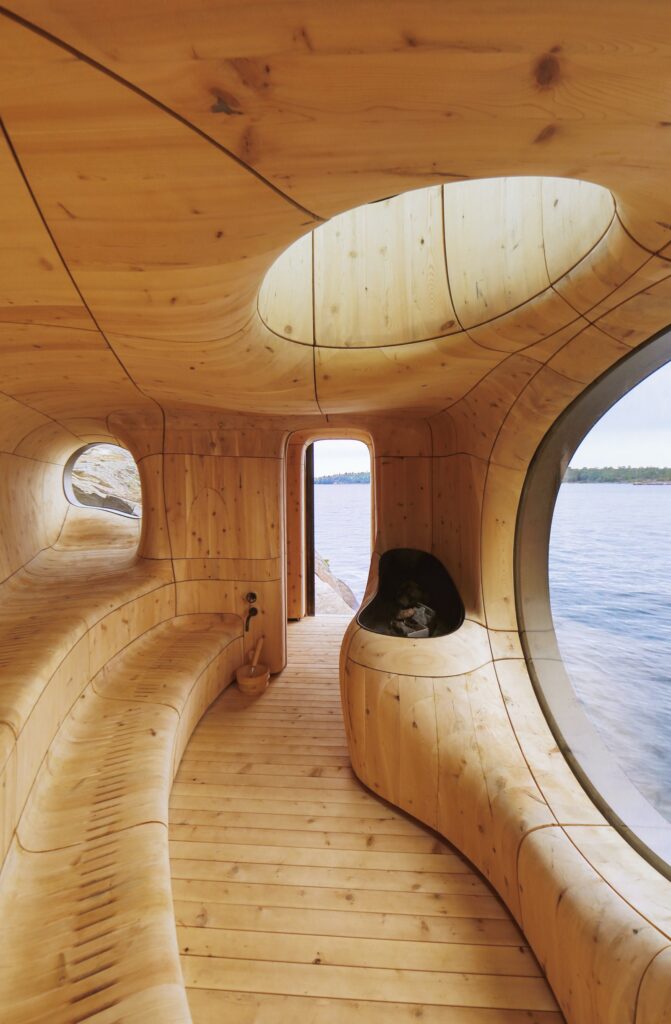
The interior’s fluid geometry began with a full 3D scan of the rocky peninsula. Designers collected millions of data points to understand every contour of the site, then used that model to guide the digital shaping of the sauna. Off site, hundreds of solid cedar blocks were CNC-milled into unique pieces that fit together with tight seams and flowing grain. When assembled, the room reads as one uninterrupted surface rather than a patchwork of components. Prefabricating the structure allowed for a quick installation on the sensitive island and reduced the amount of rock that had to be cut back for the foundation.
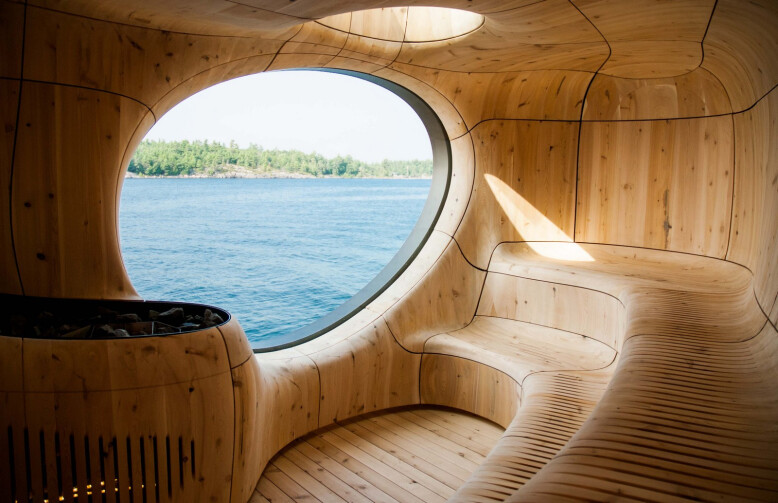
Behind the sculpted cedar shell lies a carefully engineered envelope. Layers of insulation, water-tight membranes and controlled air gaps help the structure keep stable performance while moving through extreme temperature swings. When the sauna heats up, moisture is managed through hidden vents and air circulation channels behind the cedar panels, allowing the wood to breathe and stay dry. High-quality glazing on the windows maintains heat inside even during harsh Canadian winters, while the stoves provide a strong, even steam ritual.
Since its completion, Grotto Sauna has earned praise for blending craftsmanship and digital fabrication into a building that feels both advanced and deeply human. It is often referenced as a model for small-scale architecture that uses technology without losing warmth. Even though the project is modest in size, the experience is memorable: a dark, quiet exterior giving way to a glowing cave of carved cedar and lake light. It reframes the idea of a sauna from a simple heated room into a sculptural environment that reacts to its site and elevates the daily ritual of steam and heat. For many, it stands as one of the most thoughtful and ambitious small buildings produced in Canada in recent years.

Reply