Alex Witcombe has built a distinct niche on Vancouver Island with his driftwood sculptures, working under the name Drifted Creations. His approach is simple on the surface, yet unusually demanding once you look closely. Most of his time is spent searching for material along British Columbia’s coast, where storms, tides and time shape pieces of cedar, fir and hardwood into twisted forms that already suggest movement or personality. Those shapes become the backbone of his work, and he treats each find as both a puzzle piece and a story fragment.
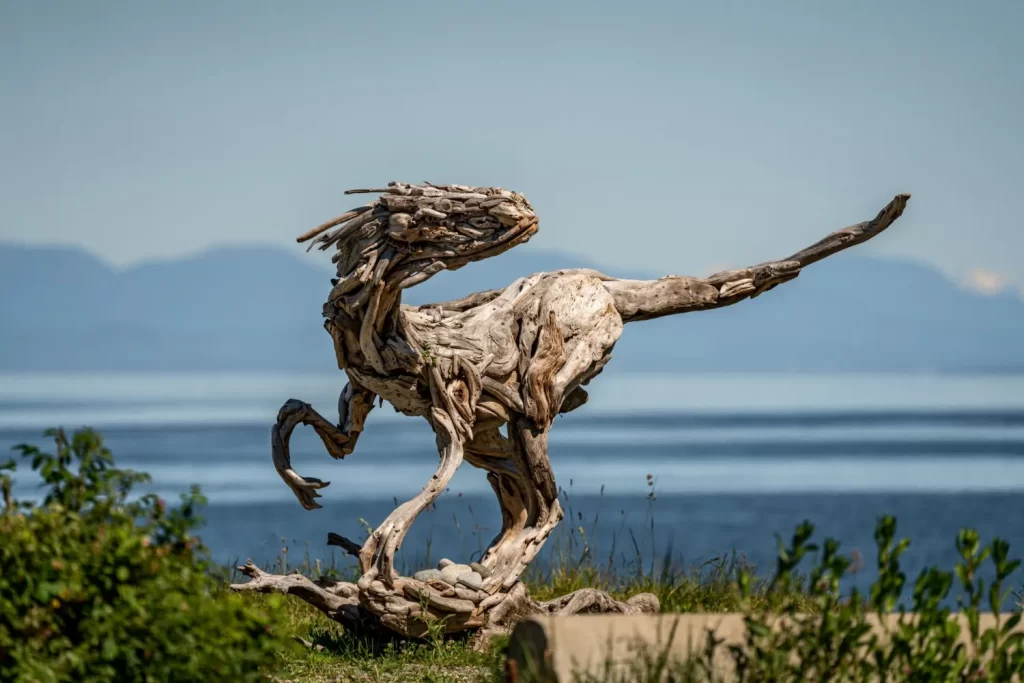
His path into driftwood began in 2016. He was already trained as an artist, having graduated from Emily Carr University, and had worked across illustration, design and mural projects. But the spark came from a single beach experiment that was never meant to turn into a career. He assembled a four-metre driftwood velociraptor on a local beach near Campbell River. The piece caught the attention of residents, then the media, and eventually the internet. People kept showing up. Photos spread. And Witcombe realised that driftwood, with all its quirks and weathered history, gave him a voice that felt more honest than anything he had done before.
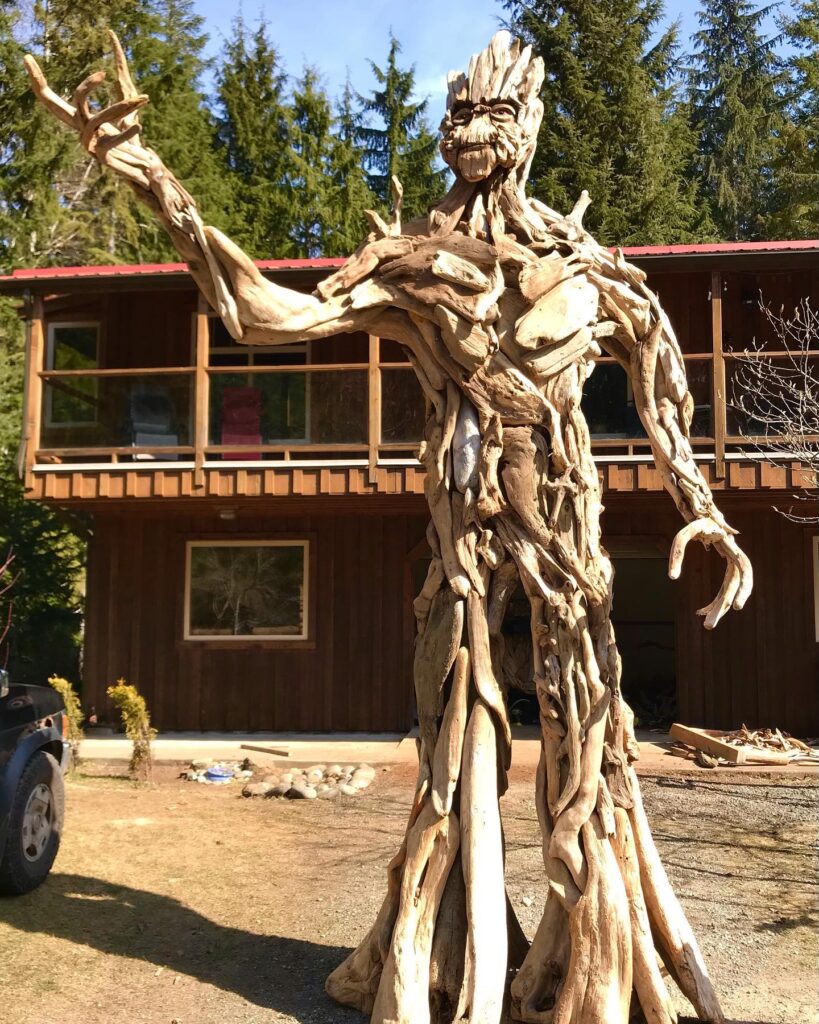
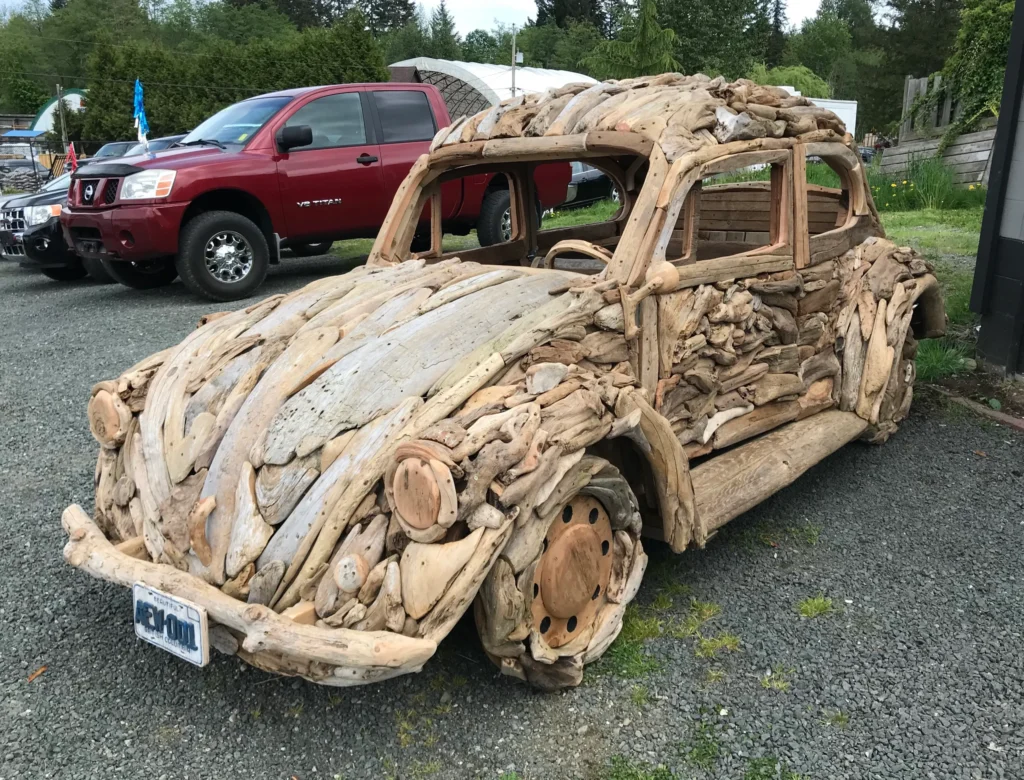
Since then, his practice has grown into a steady rhythm of collecting, sorting and sculpting. He talks about the search for materials almost like a ritual. Driftwood is unpredictable, so the challenge lies in finding a piece that already hints at the line of a tail, the curve of a ribcage or the tilt of a head. When he begins constructing a sculpture, the build tends to move quickly. A rough internal frame goes up, and from there hundreds of pieces are placed, adjusted and fixed until the surface reads as coherent, expressive and alive. Many of these works are large enough to dominate a shoreline, a park entrance or a hotel courtyard, and some weigh several tons.
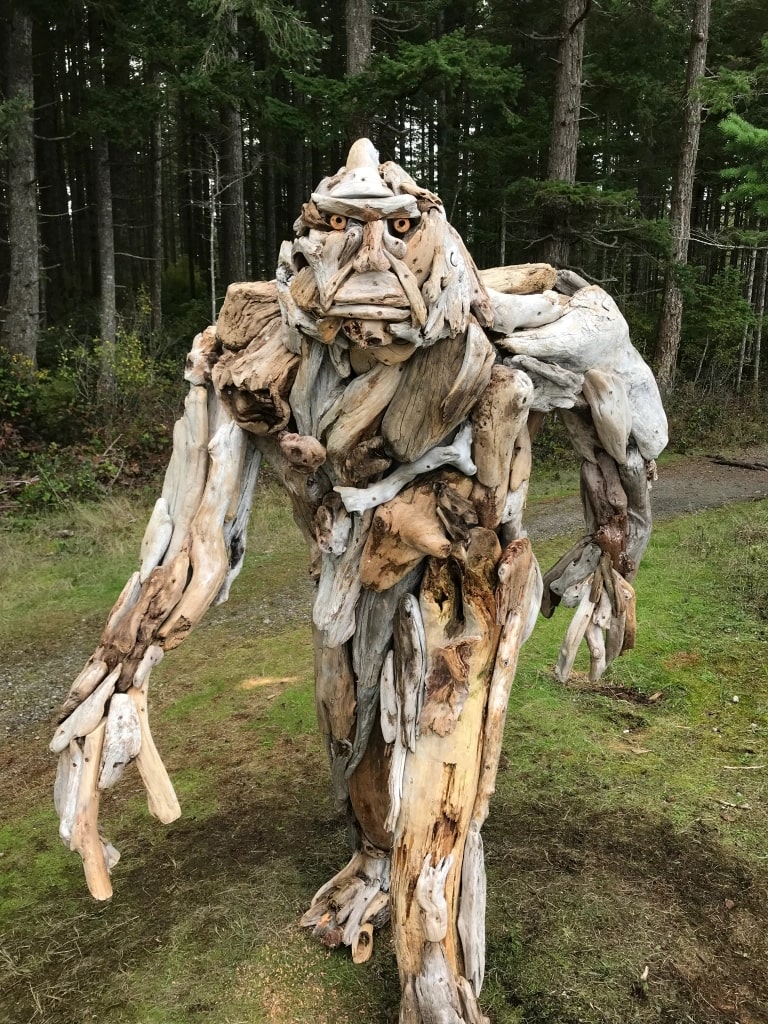
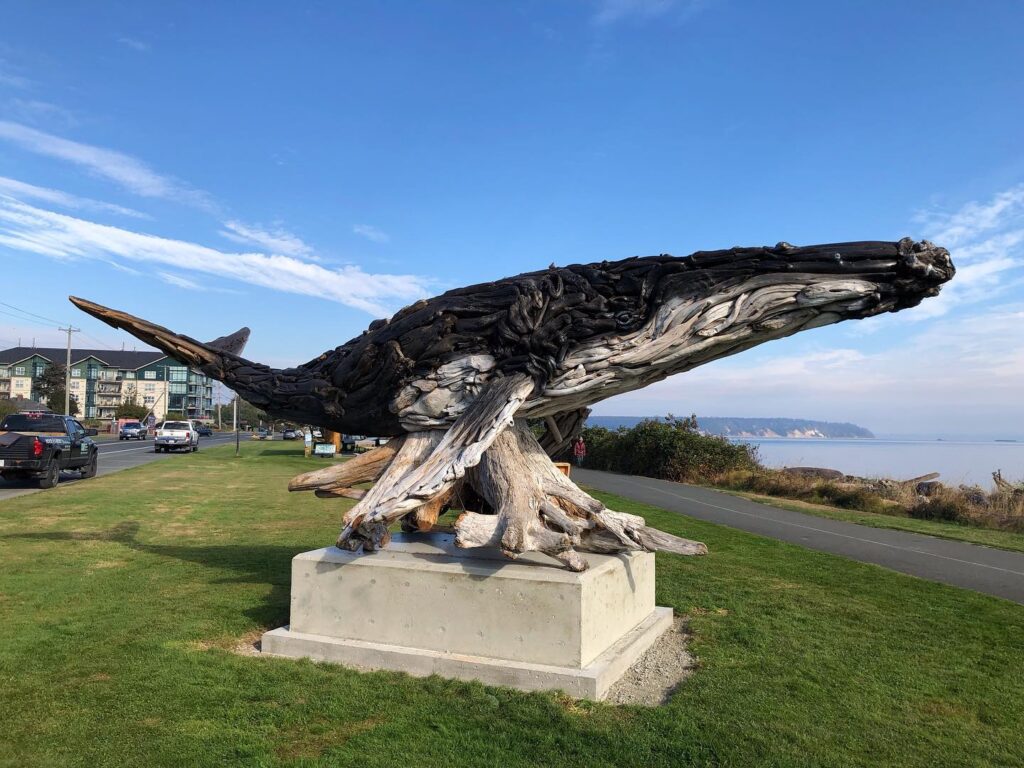
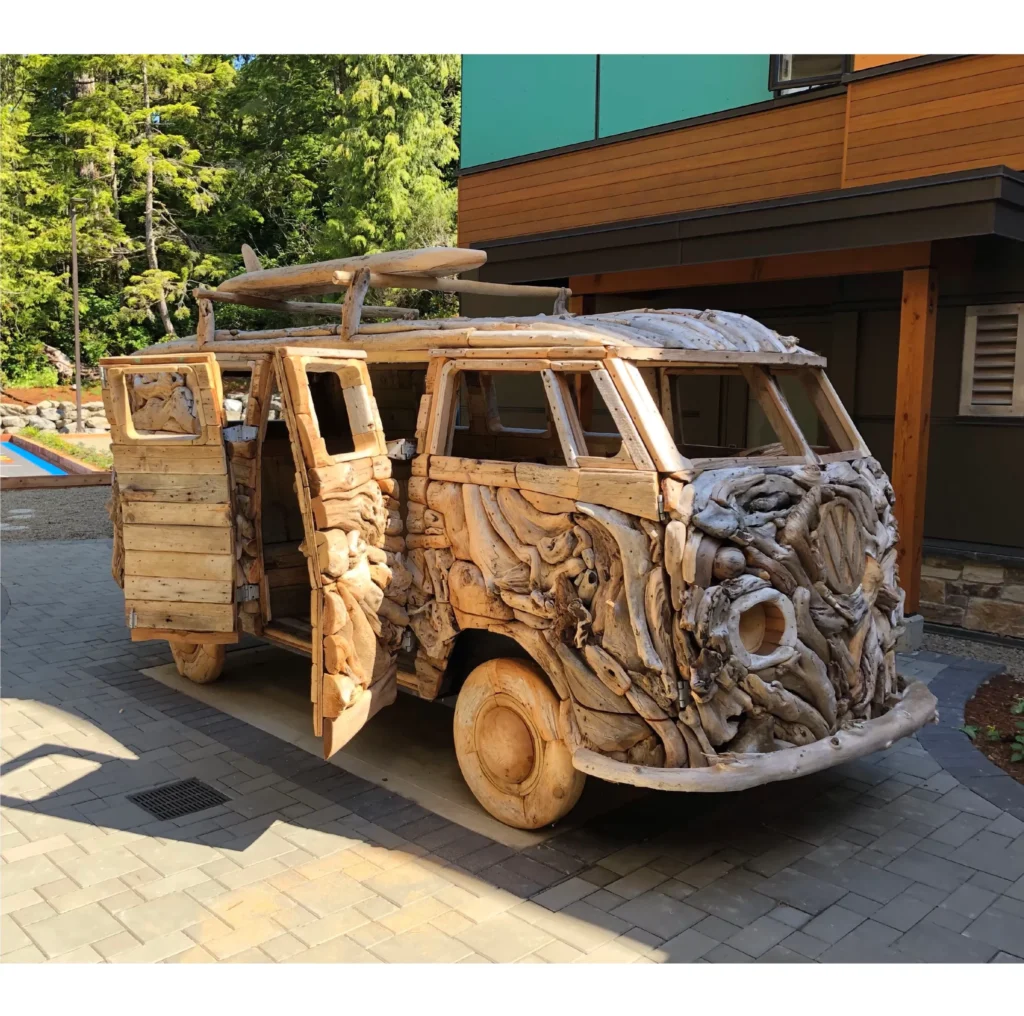
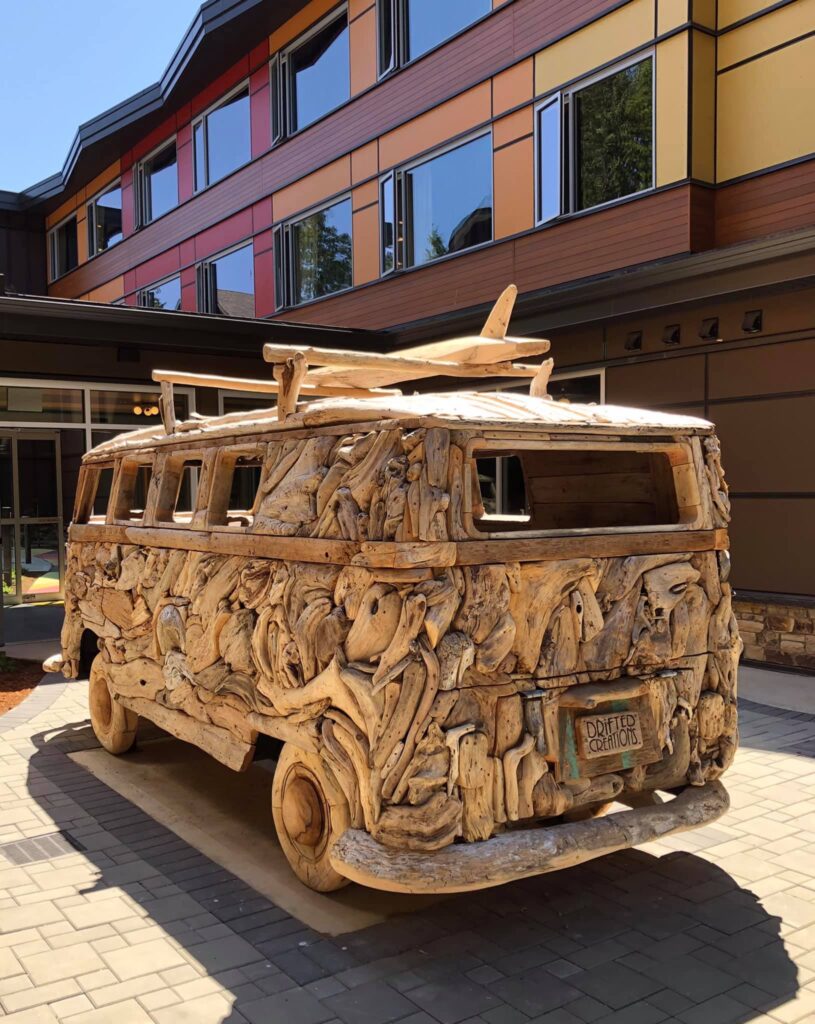
Witcombe’s work is now scattered across Vancouver Island and nearby coastal sites. Locals know his animals by name. A full-size humpback whale rests near Willow Point. A driftwood Sasquatch stands tucked near the shoreline of Quadra Island. A Volkswagen bus built from sun-bleached wood greets visitors in Tofino. Dinosaurs still appear periodically, echoing his first creation, and each one attracts the same mix of curiosity, photos and questions that launched his career in the first place. These pieces have taken on roles beyond sculpture; they have become landmarks, meeting points and small slices of local identity.
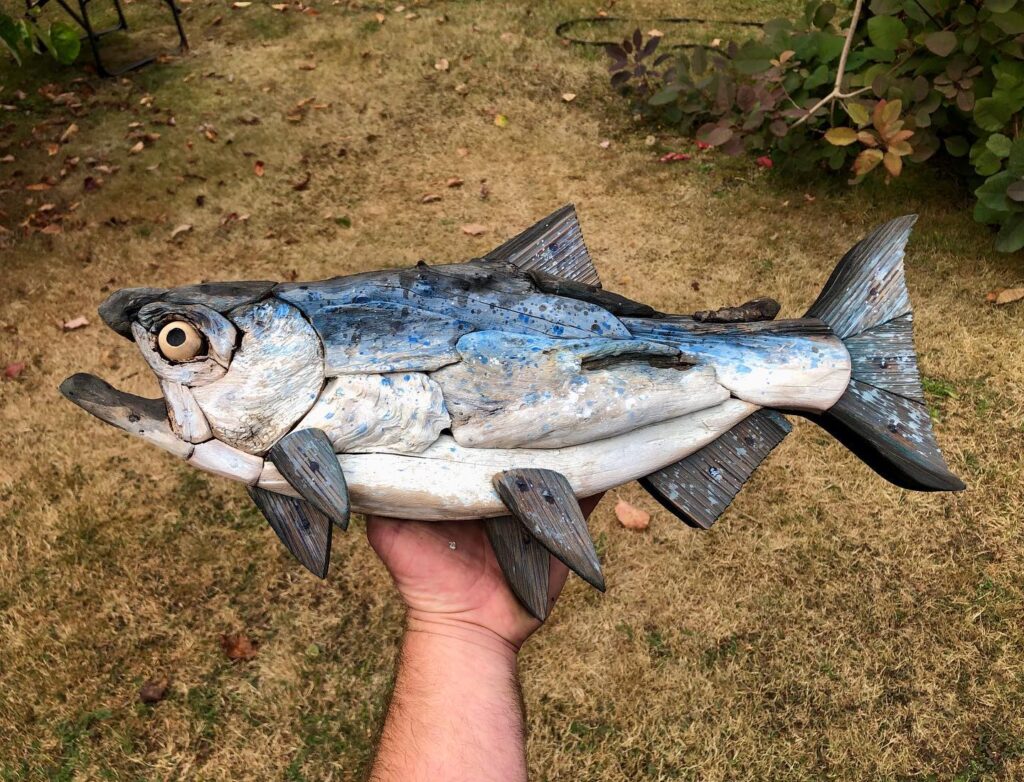
Because the material starts as debris washed ashore, his work naturally picks up an environmental dimension. He is not presenting himself as a lecturer or activist, yet the message sits there in plain view. Wood that was once broken, weathered and disregarded is rebuilt into animals that feel present and almost watchful. The transformation is part craft and part storytelling, and it subtly shifts how people see their coastline. A child might recognise a creature before understanding the medium. Adults often look closer, noticing the grain patterns and knots that reveal how long each piece may have travelled.
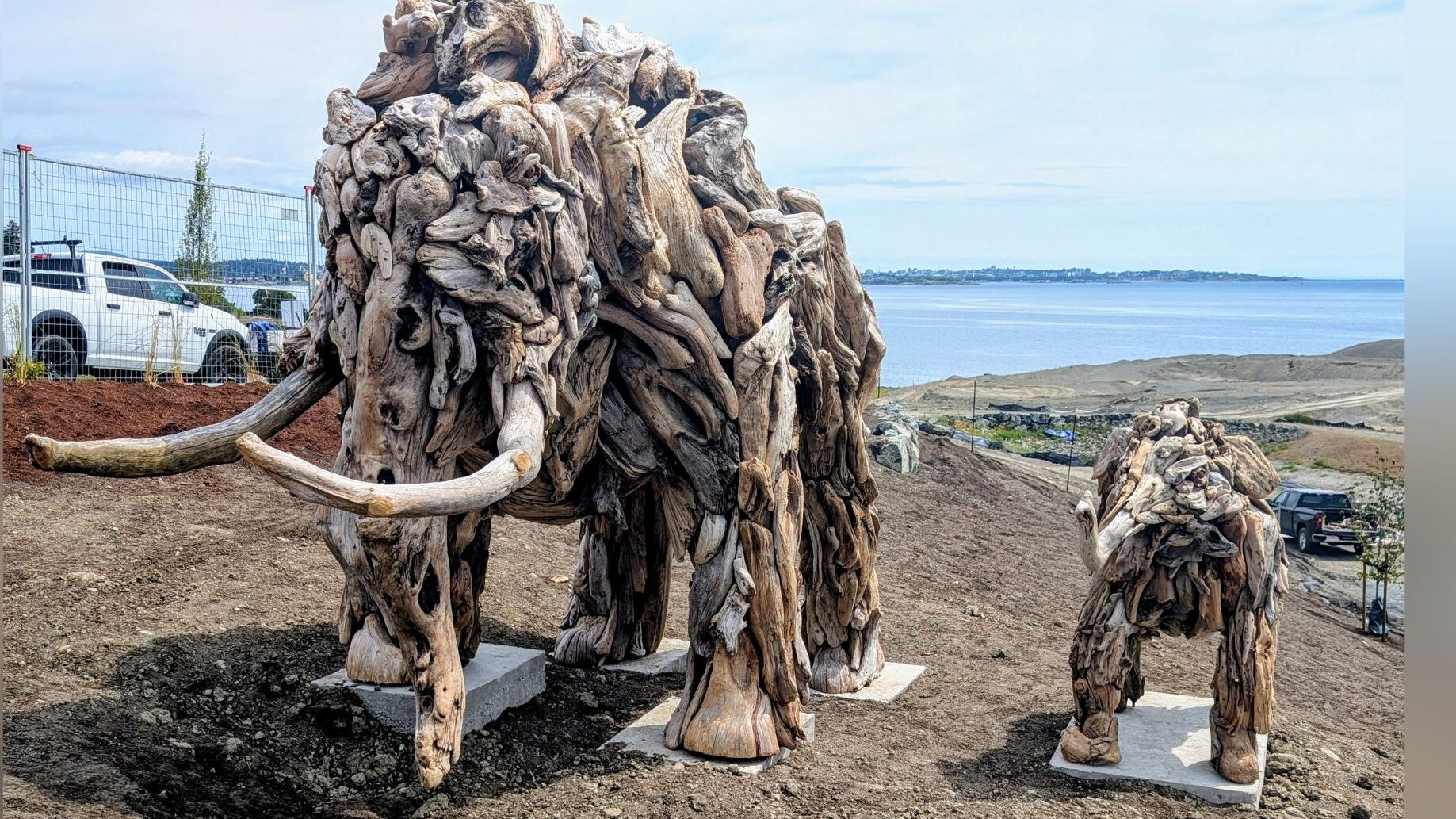
Community engagement has become an unexpected part of the story. People search for his installations, treat them almost like a regional treasure hunt, and share tips about new works on the island. When one sculpture, a fox, was stolen a few years ago, the public outcry was immediate. It eventually returned, which only reinforced how attached people had grown to these creations. Driftwood may be rough, heavy and difficult to work with, but in Witcombe’s hands it becomes a familiar presence that communities don’t want to lose.
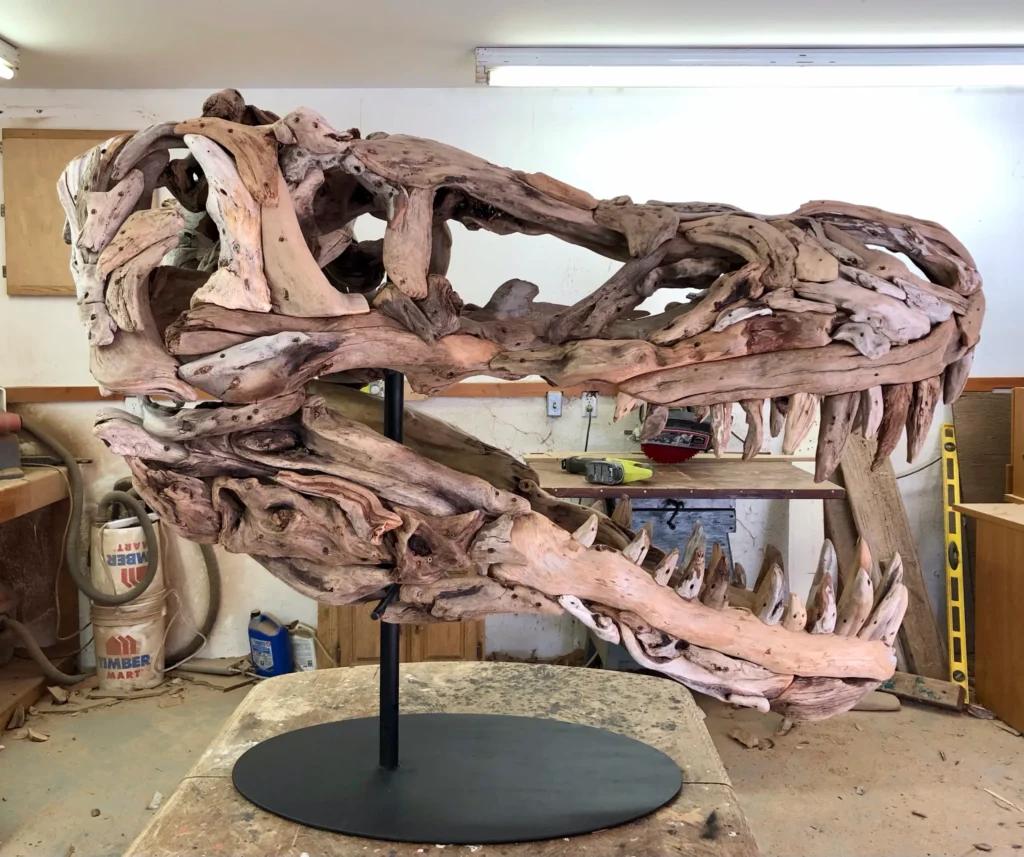
Drifted Creations operates in that space where craft meets place. Witcombe doesn’t chase spectacle for its own sake. His pieces are approachable, rooted in the coastline and built from materials anyone can recognise. Yet the scale, detail and sheer commitment behind them make the work stand out in the broader world of wood sculpture. Driftwood is an unforgiving medium, but he uses its unpredictability as an advantage, building forms that retain the tension, curves and scars of their origins.
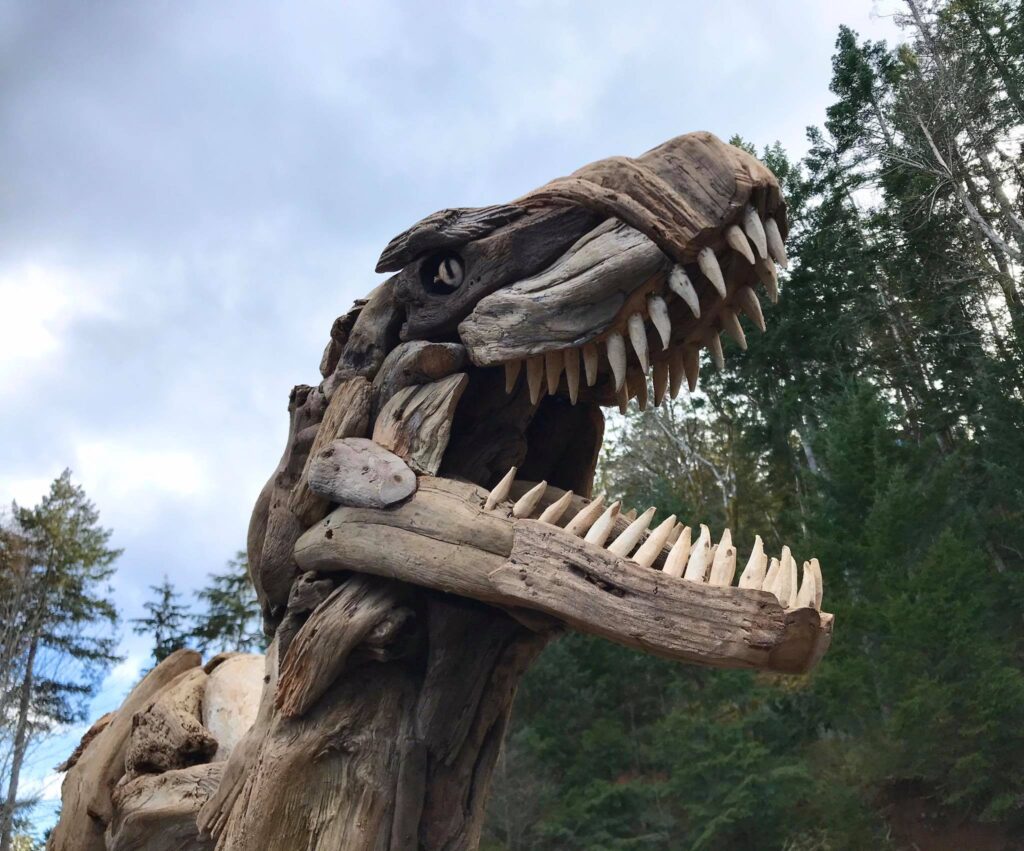
His career continues to evolve, but the core remains consistent: find the right piece of wood, listen to its shape, and give it a role in something larger. The result is a body of work that feels grounded, coastal and unmistakably his.
Reply