
Am-art is the creative studio of Belgian artist Peter Elaut, known for large and expressive sculptures built from reclaimed wood. While many people first notice his life size horses, his work stretches far beyond a single theme. Over the years he has shaped a wide collection of animals and figures, each assembled from roots, branches and other reclaimed pieces that would otherwise remain unused. This wider variety has helped Am-art stand out in a field where driftwood art often leans on repeated motifs.
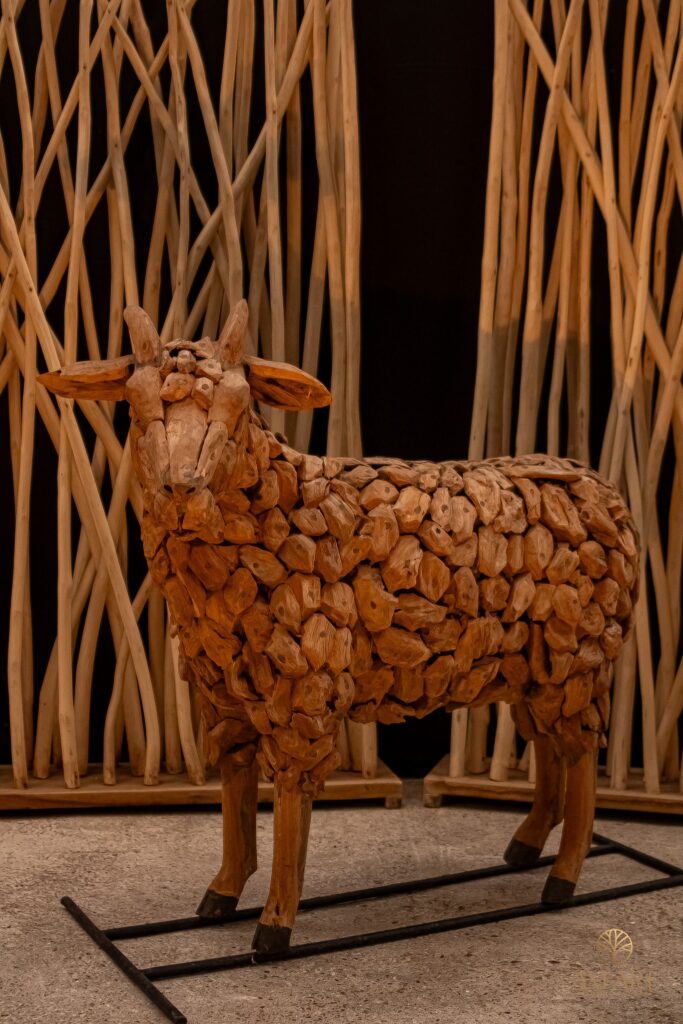
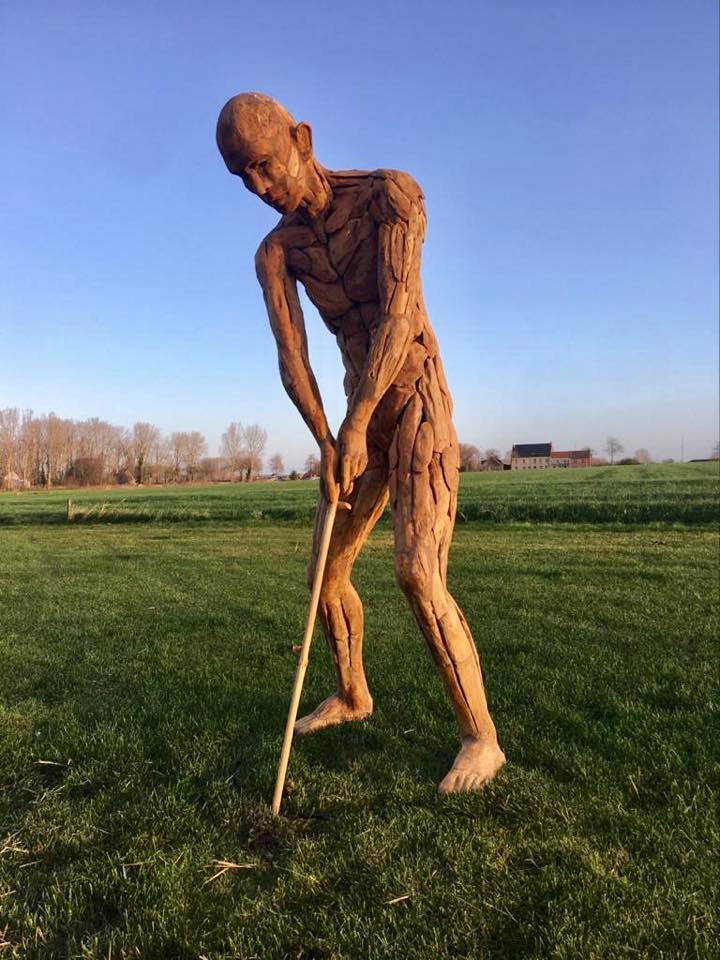
The studio began with a strong focus on equestrian culture, which remains visible in public pieces placed at major events. Yet Am-art moved steadily into broader territory. Today Elaut creates dogs, bulls, deer, owls, sea creatures and even full human figures. Because the material is flexible and irregular, each sculpture develops its own character. A twisted piece of root can become a wing, a curved section can turn into a spine and a dense knot often works as a head or joint. As a result, no two sculptures ever look alike, even when they belong to the same species.
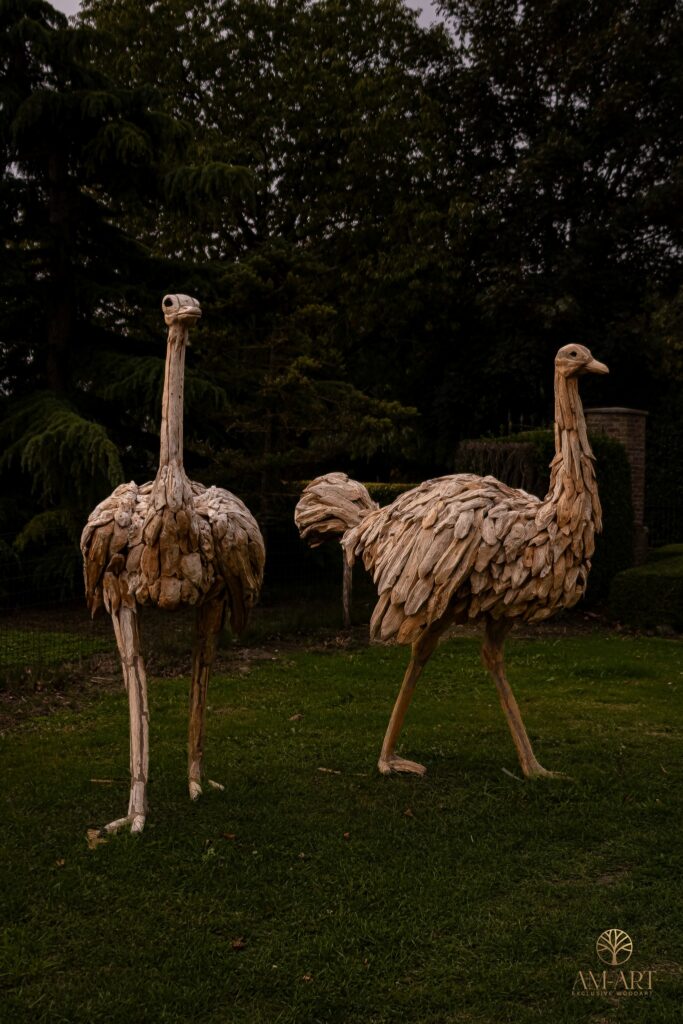
Am-art usually works with teak roots rather than true driftwood. These roots come from plantation leftovers in Indonesia, where stumps and tangled pieces remain in the ground after harvesting. Instead of discarding them, workers extract the roots and send them to workshops that specialise in root art production. The surfaces have a weathered texture that resembles sun hardened driftwood, but the density of teak gives the sculptures more strength. This combination allows the studio to build large works that can stand outdoors throughout the year.
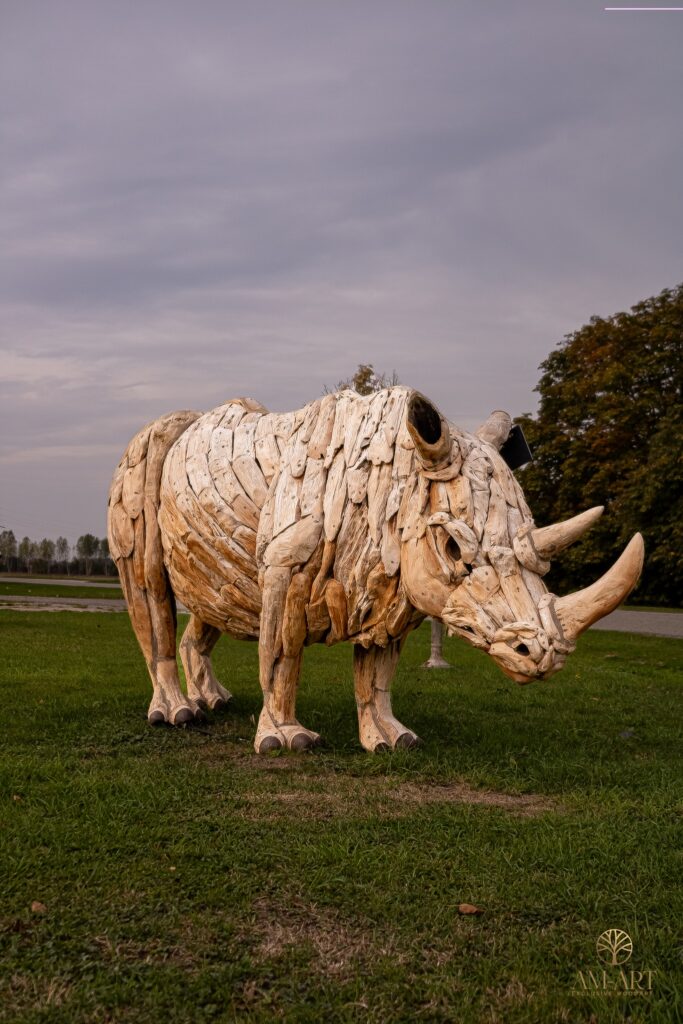
The process is slow and often feels like assembling a natural puzzle. Each sculpture begins with sorted piles of roots and branches. Elaut studies the shapes, turns them in different directions and selects the ones that offer the right flow. Long, smooth lines often become necks or tails. Angular pieces can define legs or wings. Smaller fragments fill gaps and add structure. The entire skeleton forms step by step, guided by posture and balance rather than strict measurement. Internal metal supports give stability, while the exterior remains entirely wooden and organic.
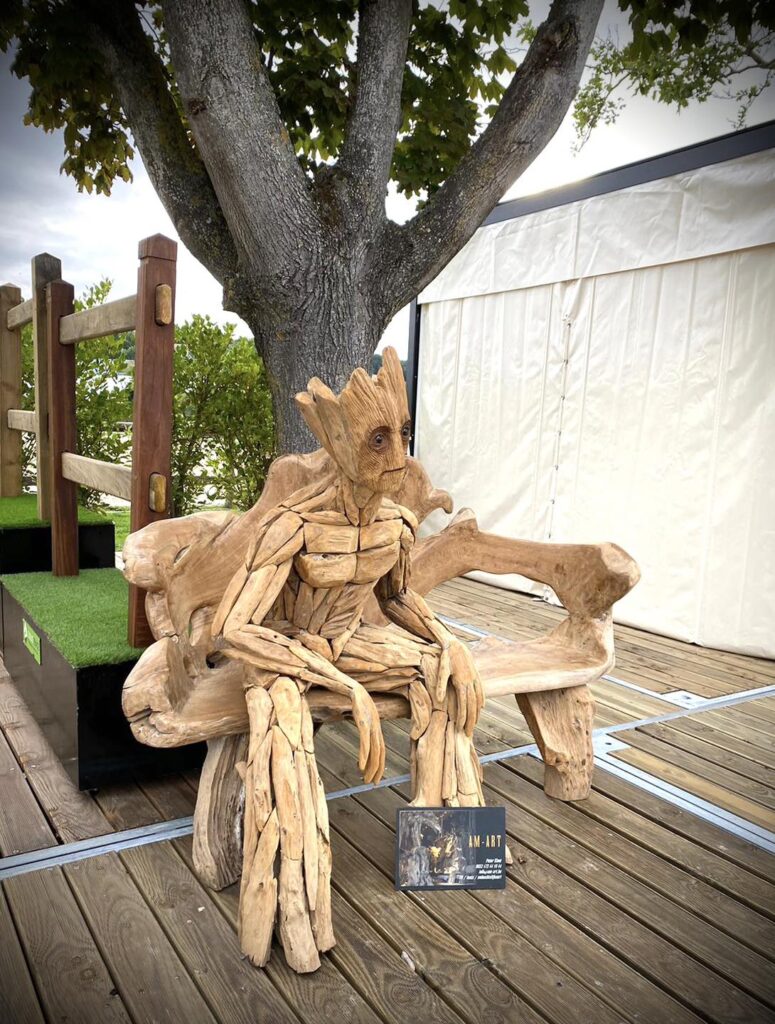
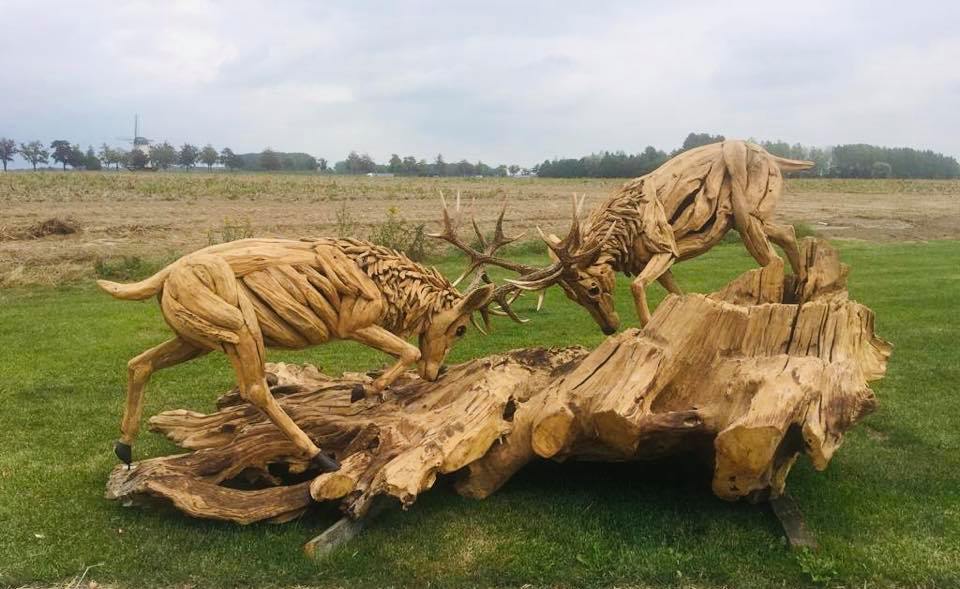
Because of this method, Am-art can shift easily between subjects. A deer may appear light and alert, with open spaces between the roots creating a sense of air. A bull may feel heavy and grounded, using thicker pieces to show mass and power. Dogs often carry relaxed poses that show movement in a softer way. When working on birds or marine life, Elaut uses twisted sections to suggest feathers, fins or flowing tails. Even human figures emerge from the same material, shaped by posture and attitude rather than fine detail.
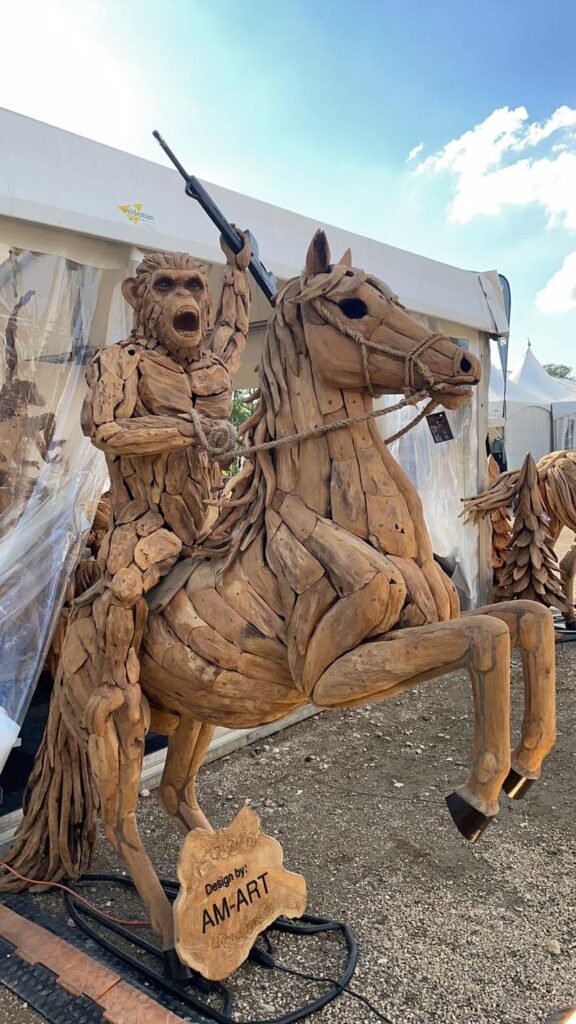
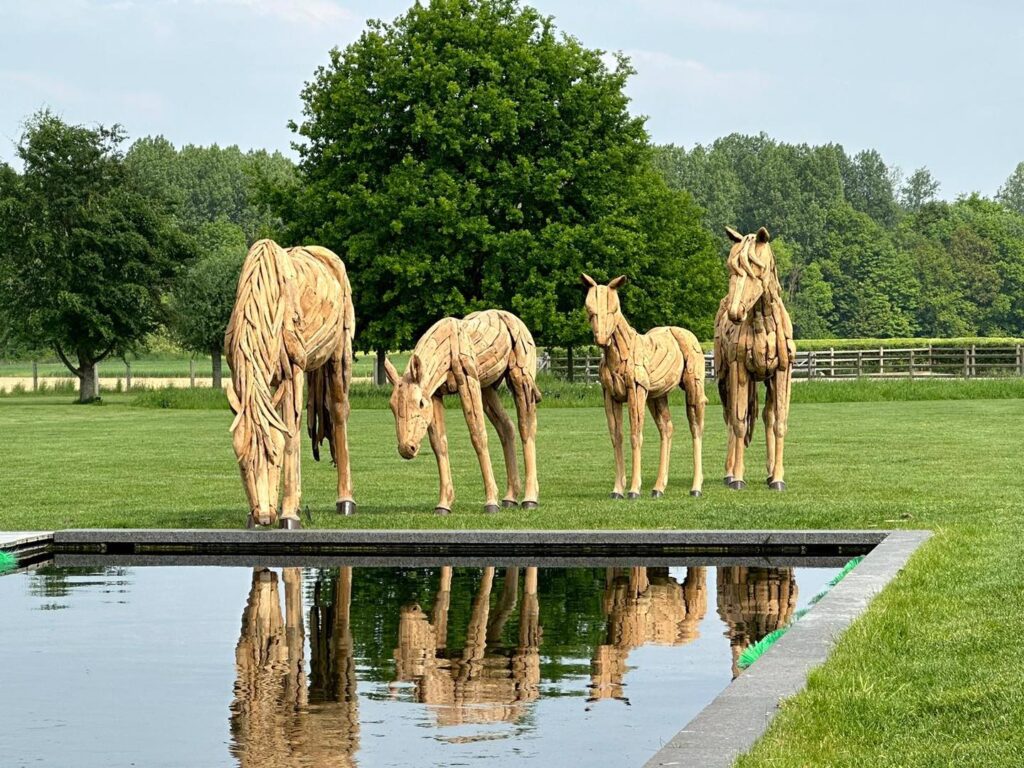
Am-art’s sculptures travel widely. They appear in private gardens, hotels, equestrian facilities, offices, parks and event grounds. Large animals work well at entrances, where they give a strong first impression. Smaller pieces fit into interiors, often becoming focal points in open rooms. The mix of natural texture and familiar form gives the work a broad appeal. It connects to people who appreciate craftsmanship, reclaimed materials and lifelike silhouettes.
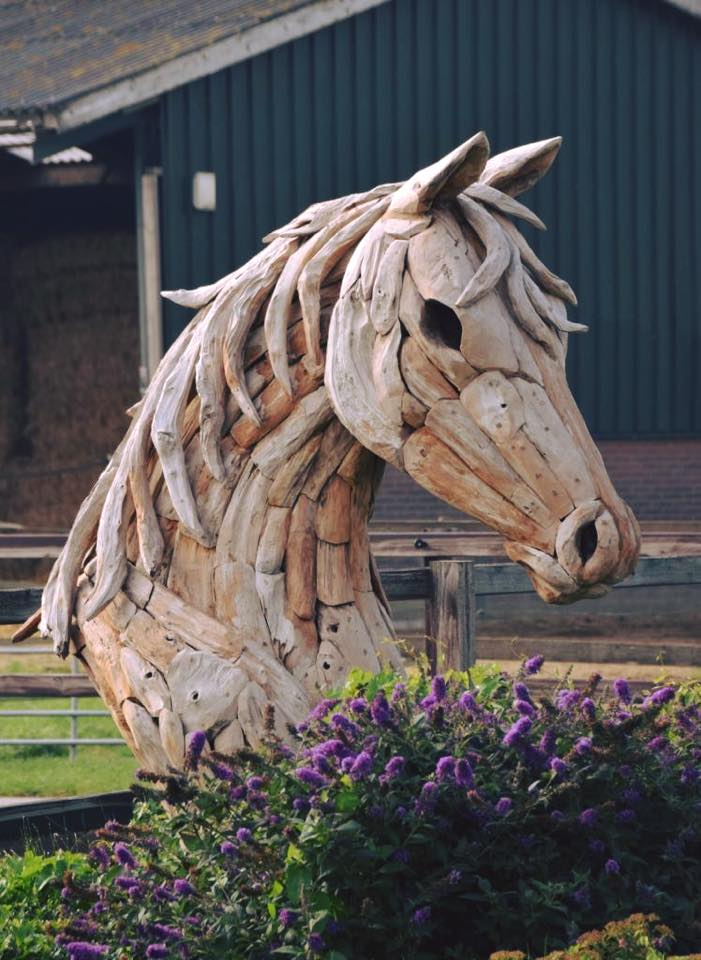
Although the studio has grown, Am-art keeps a simple direction: create expressive sculptures from wood that would otherwise be wasted. The focus stays on form, balance and presence rather than storytelling. Each piece shows what can be done when irregular roots are treated not as debris but as a material with its own voice. The result is a collection that moves far beyond horses and demonstrates how versatile driftwood style sculpture can be when an artist works closely with the shape of the wood itself.
Reply