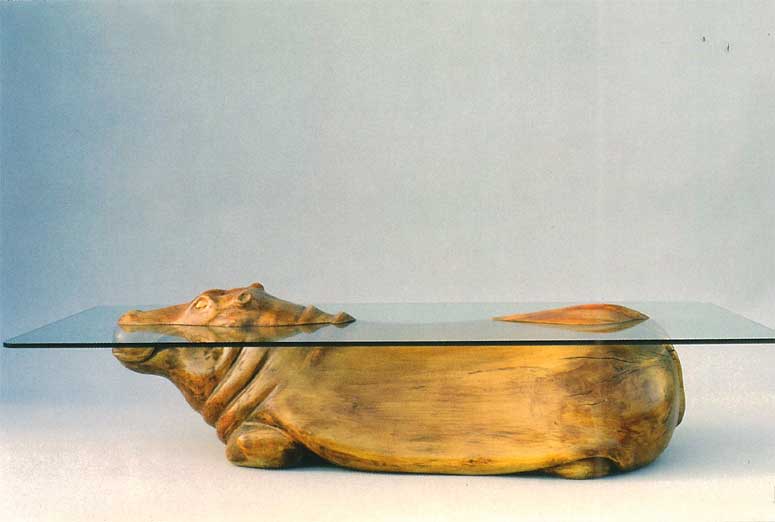
Derek Pearce is best known for creating furniture that looks as if it is floating between two worlds. His signature Water Tables, where animals appear to rise through a glass surface, made him a recognizable name in contemporary wood art. Even though most people discover his work through those playful illusions, his craft goes far deeper than a single idea. Pearce works as a sculptor, woodworker, and designer whose pieces blend humor, precision, and a strong respect for natural materials.
Pearce began his creative life as a musician and theater technician in the United Kingdom. That practical background shaped the way he approaches design. He mixes imagination with problem solving, and his work often shows how engineering and sculpture can sit in the same space. When he moved into woodworking during the 1990s, he carried that mindset with him. Instead of relying on traditional furniture forms, he allowed his ideas to guide structure, shape, and material choices. As a result, his tables are not only functional but also narrative objects.
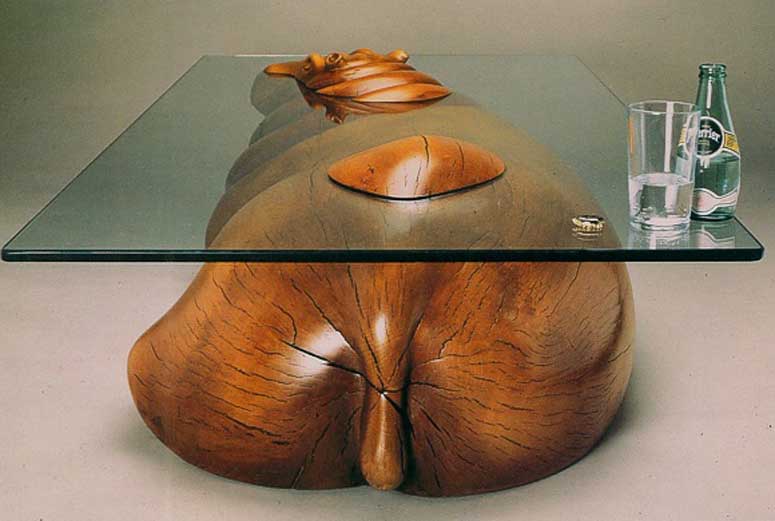
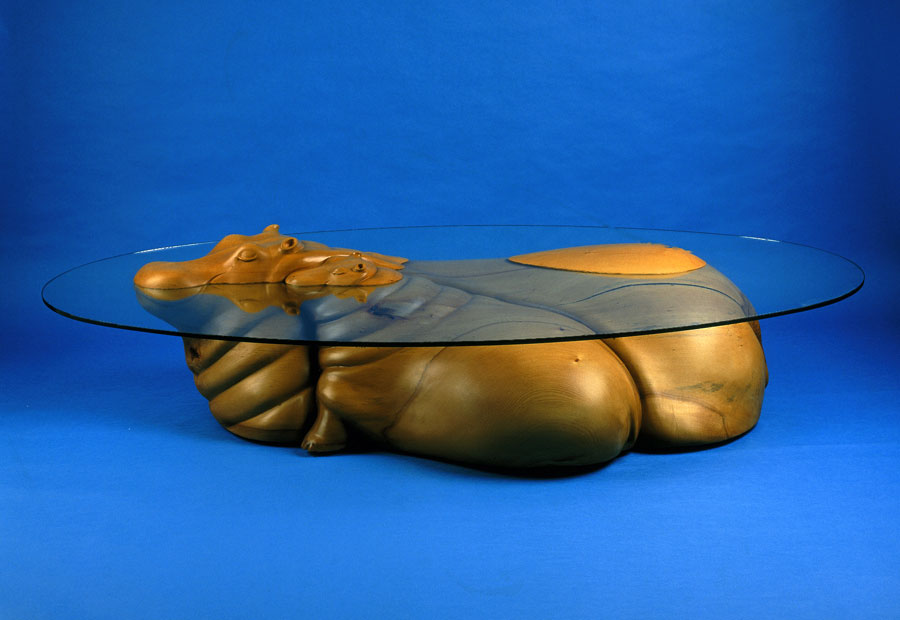
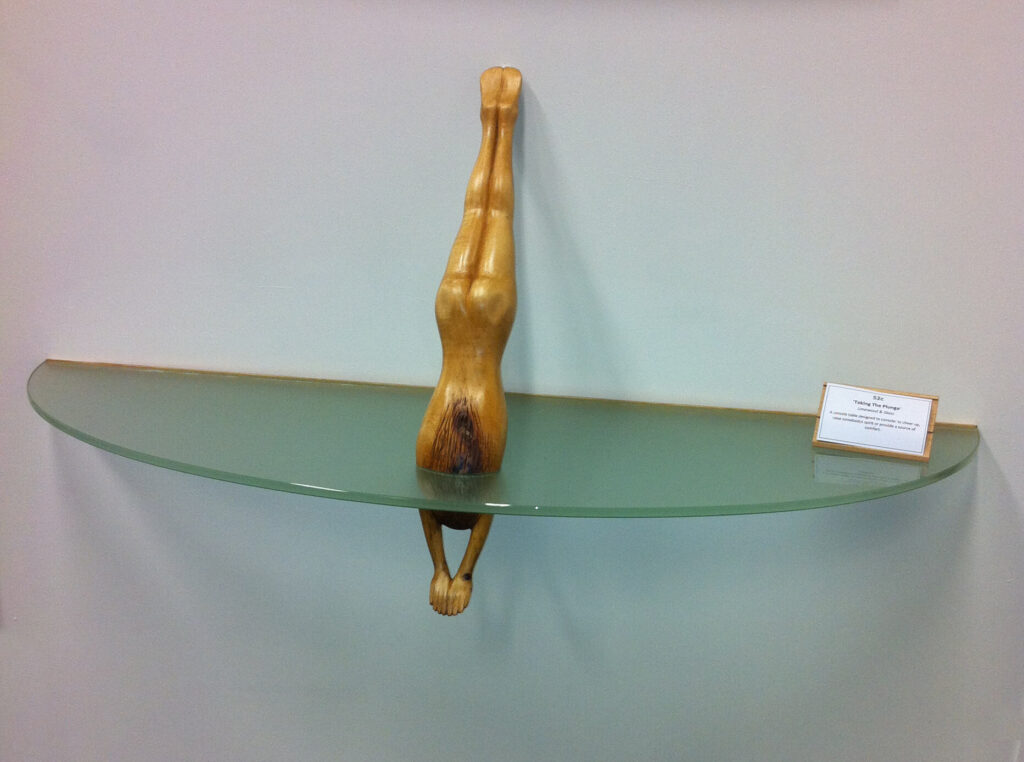
The Water Table series grew from this combination of practical craft and playful thinking. Each piece starts with a wooden animal, usually carved from durable hardwood. Pearce shapes every form by hand, focusing on natural posture, smooth lines, and a sense of gentle motion. He then integrates glass as the top surface, using it to represent a calm body of water. Only part of each animal is visible above the glass, while the rest appears to continue below the surface. This creates a clear illusion that the creature is swimming, diving, or drifting. It is a simple idea, yet it works because the execution is clean and precise.
Pearce does not rely on hyper detailed carving. Instead, he highlights essential contours. A hippo rising from the water needs only a few strong lines to feel alive. A dolphin cutting through the surface depends on balance, curve, and direction. The wood grain remains visible, adding warmth and texture to the smooth shapes. This approach keeps the focus on form and movement rather than ornament. It also respects the natural character of the material, which is a consistent thread through all of his work.
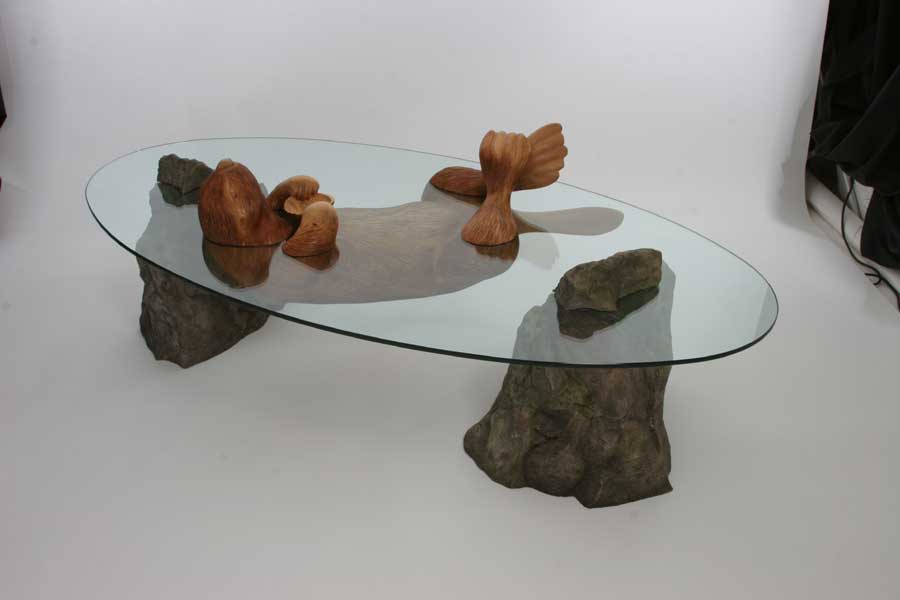
Although the animals draw attention first, the furniture design itself is carefully thought out. Pearce builds sturdy bases that support the glass without distracting from the illusion. Joints are hidden, proportions are clean, and the relationship between sculpture and function is considered from the start. The result is a table that works as a piece of furniture but also stands as an art object. Many owners treat his tables as conversation pieces because they are both practical and surprising.
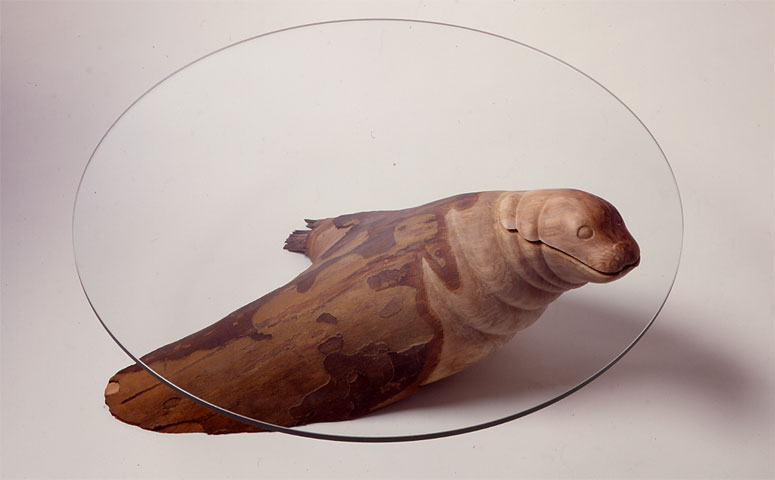
Pearce has explored other sculptural directions as well, though the Water Tables remain the most widely recognized. He has worked with abstract forms, musical themes, and free standing carvings. Across all of these projects, the same design language appears. He favors clean edges, well balanced structures, and natural materials. Wood is always allowed to stay honest, with grain, tone, and weight informing the final outcome.
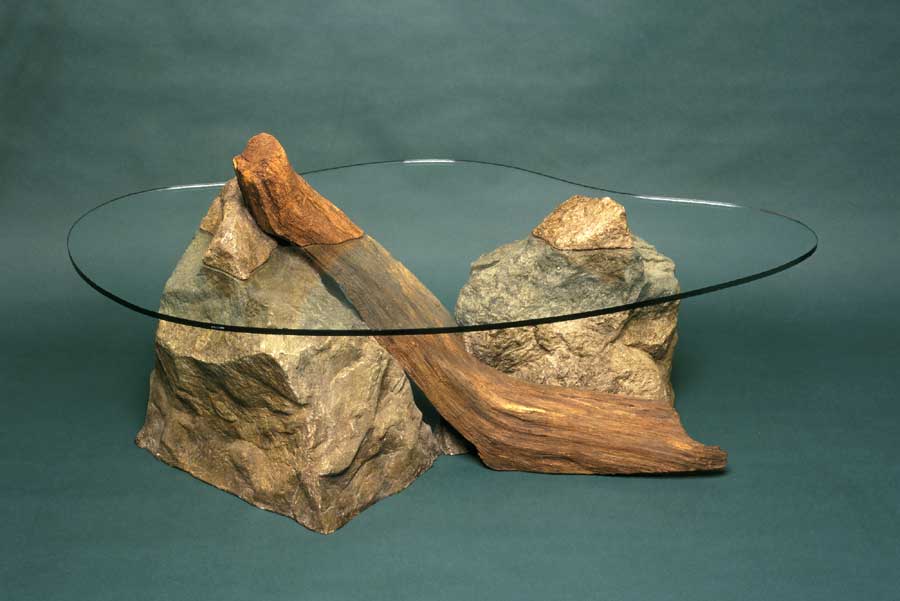
His work attracts collectors, galleries, and design fans because it sits comfortably between art and craft. It is approachable, humorous, and instantly readable. At the same time, it requires strong technical understanding. The illusion only works when the wood carving, glass placement, and visual balance are exact. Too much detail would break the effect, and too little would flatten the idea. Pearce holds that middle point with consistency.
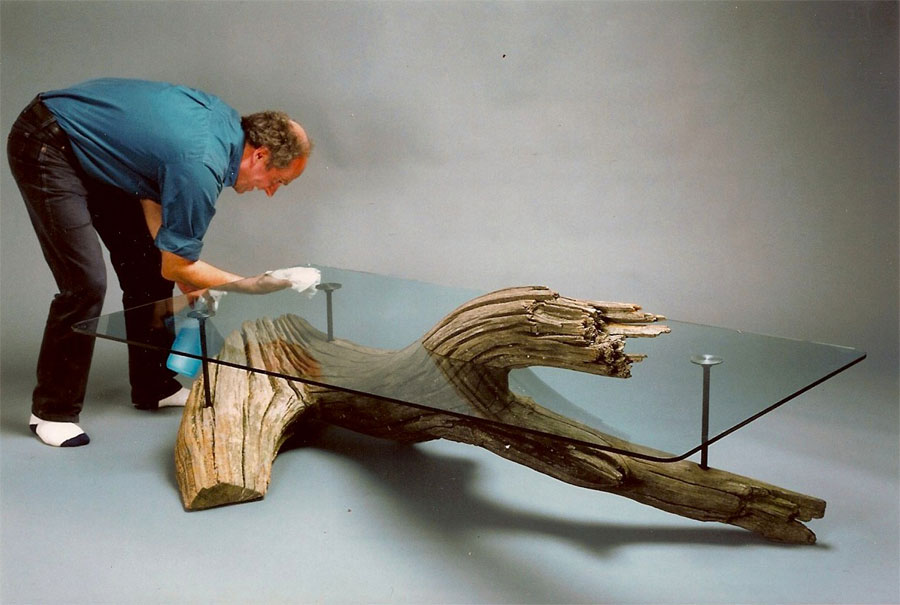
Today his tables continue to circulate internationally, often featured in design magazines and art focused websites. They stand out in modern interiors because they bring personality without overwhelming a room. More importantly, they show what can happen when woodworking is used not only to shape objects but to shape ideas. Pearce takes a simple material and turns it into a small moment of magic. That clarity keeps his work relevant and memorable, even as woodworking trends shift over time.
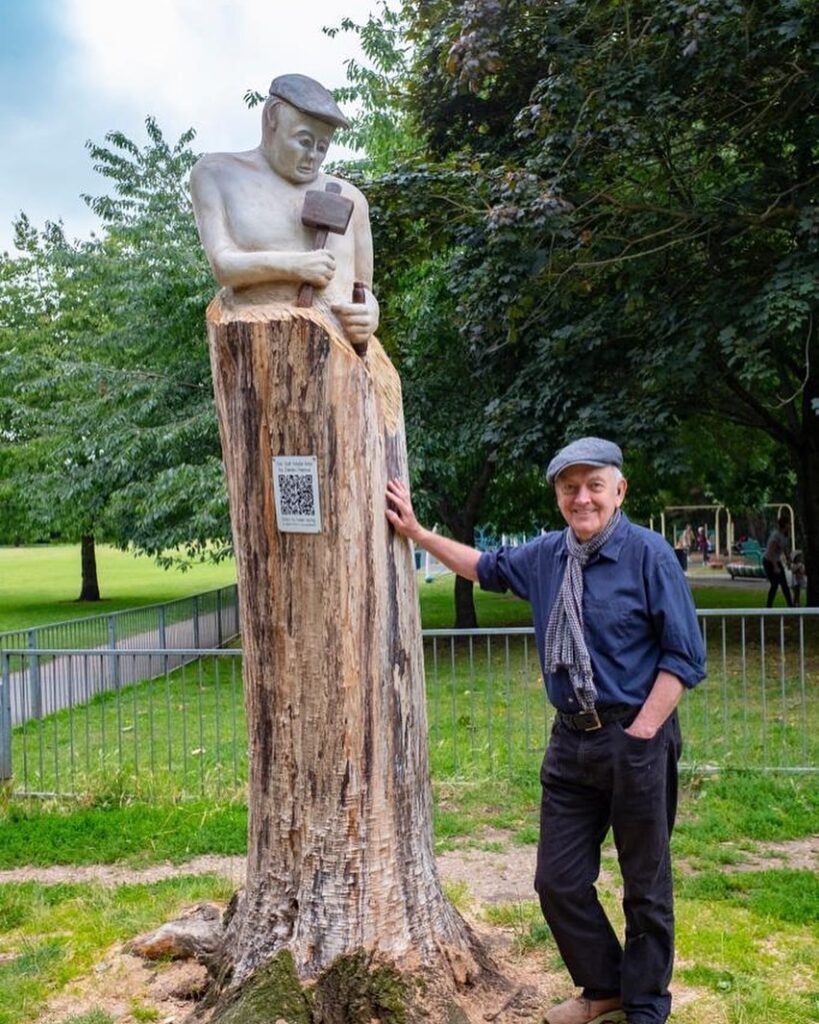
Derek Pearce’s contribution to contemporary craft is straightforward. He shows that wood can tell stories without relying on heavy symbolism or complicated techniques. With a clean line, a strong idea, and a patient hand, he creates functional sculptures that continue to draw people in. His tables may appear lighthearted on the surface, but behind that playful look sits a deep understanding of wood, form, and visual rhythm.
Reply