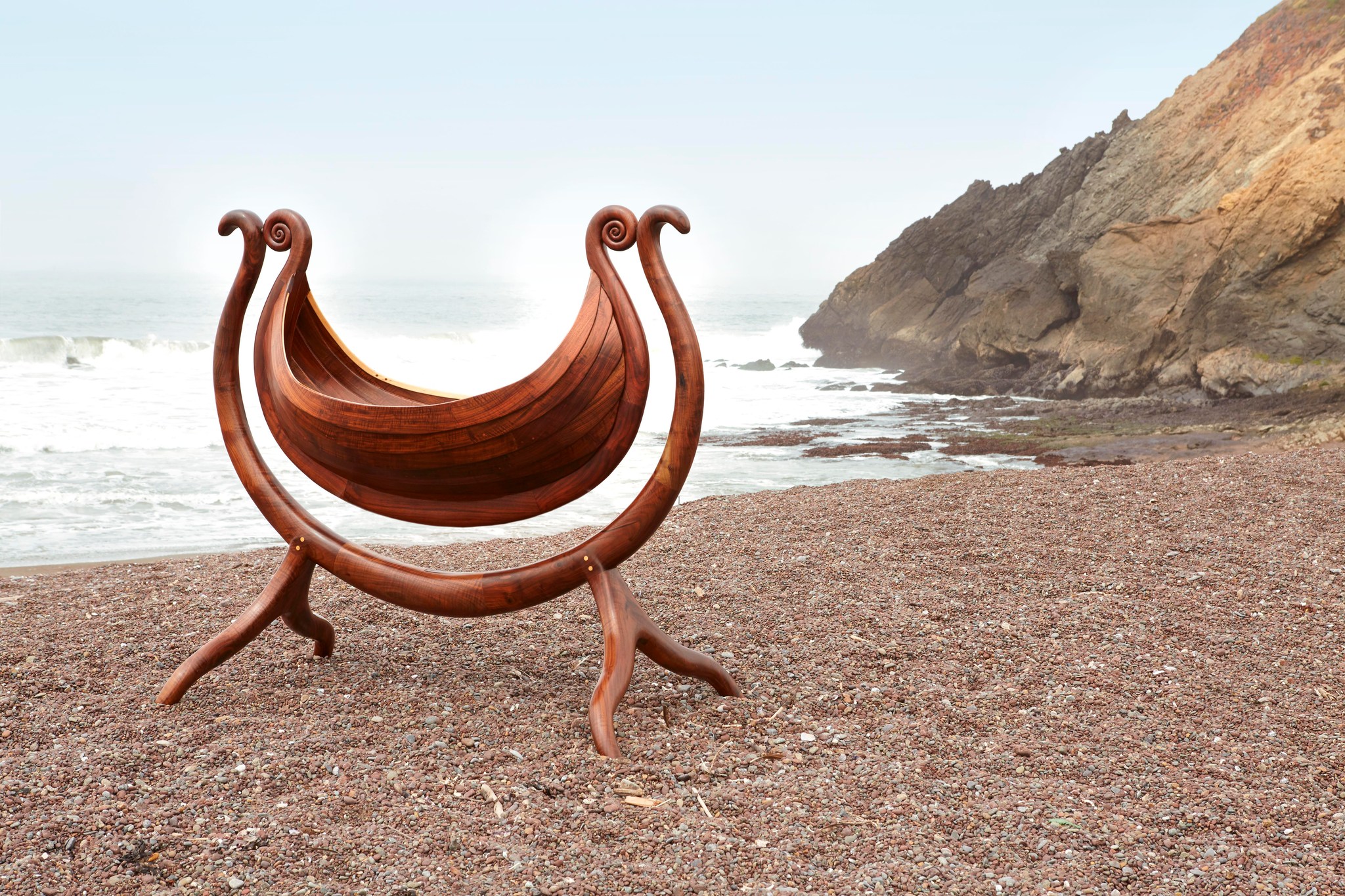
In a quiet workshop filled with the scent of oak and pine, Jim Heimbach created something that feels pulled from another century – a cradle shaped by Viking spirit and the raw honesty of handcraft. The piece isn’t just a functional bed for a child; it’s a sculpture, a relic, and a bridge between eras.
Heimbach’s cradle immediately stands out for its bold form. Instead of the soft curves typical of modern nursery furniture, he carved sweeping lines that echo the longships of the Norse seafarers. The side panels rise and taper like the hull of a boat, while the rockers curve gracefully, suggesting movement even when the cradle stands still. It looks ready to sail – as if the infant within could drift through a dream across northern seas.
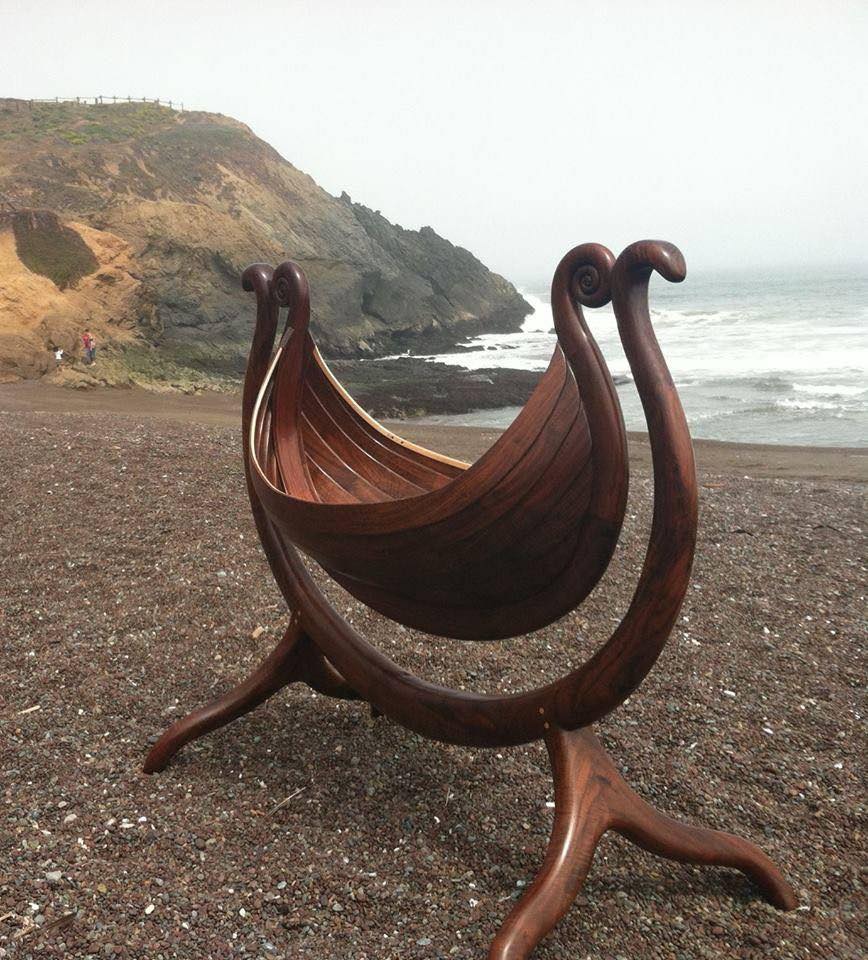
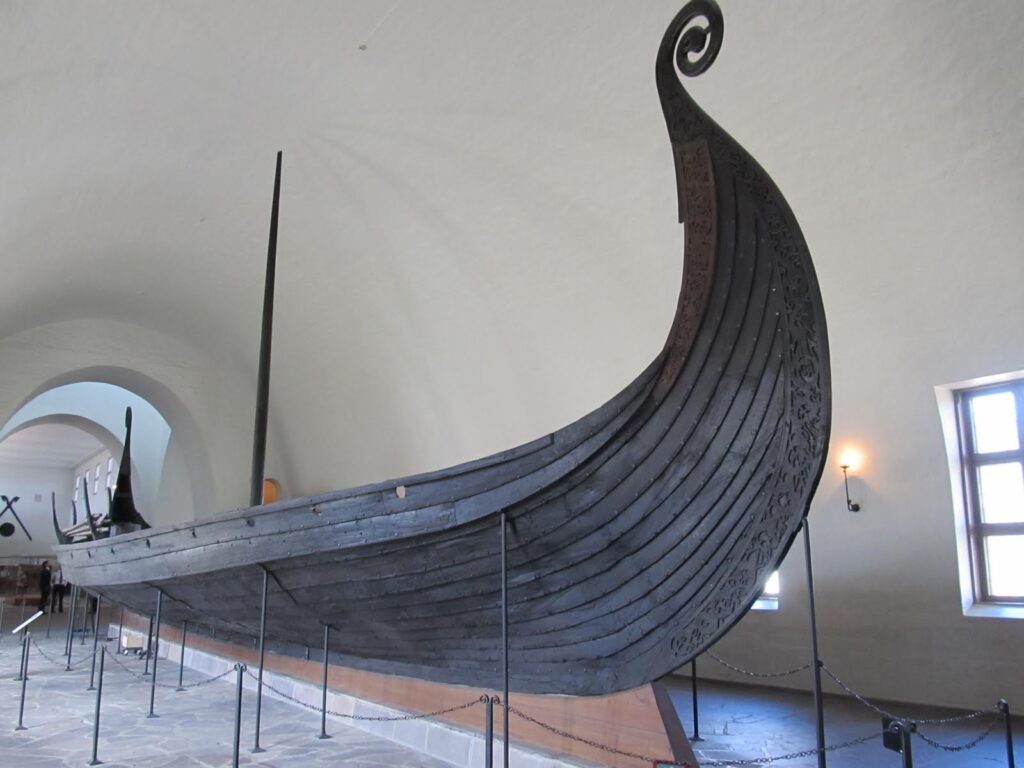
The design emerged from Heimbach’s fascination with ancient craftsmanship. He has long admired how Viking artisans blended functionality and ornamentation, making even everyday items worthy of legend. Their ships, tools, and jewelry were never merely practical; they carried stories and identity. Heimbach wanted to bring that same sense of meaning to an object tied to the beginning of life itself.
The wood choice was deliberate. He used solid ash, a tree deeply symbolic in Norse mythology. In Viking belief, Yggdrasil – the World Tree – was often described as an immense ash connecting the heavens, earth, and underworld. For Heimbach, using ash wasn’t a coincidence; it represented life’s continuity and the timeless link between generations. The cradle, he says, was “meant to hold not only a child, but everything that will come after.”
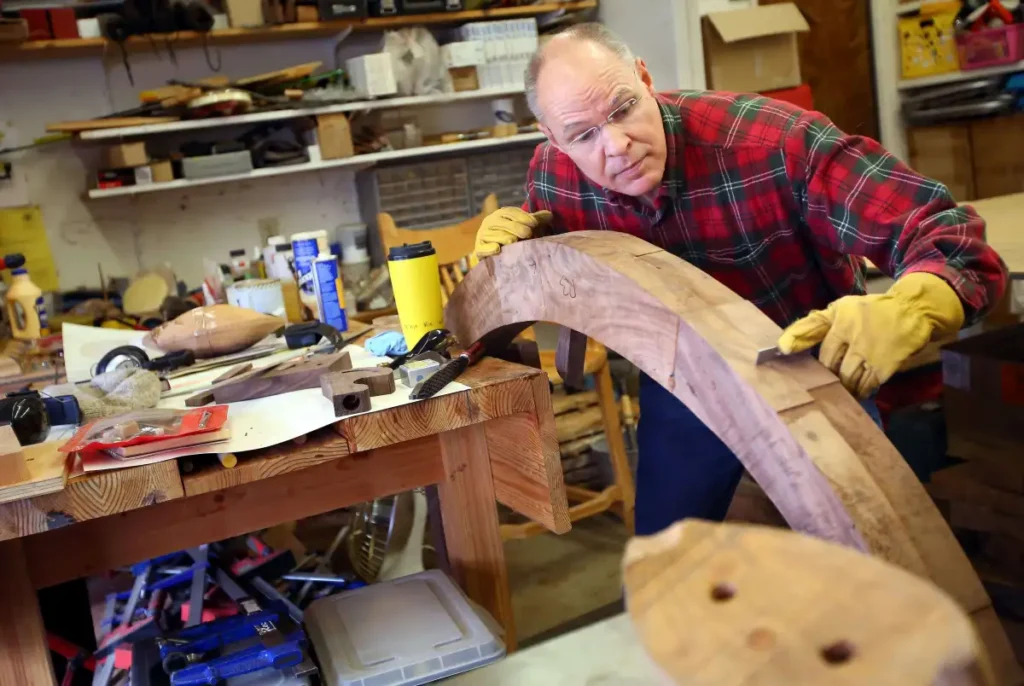
Every inch of the cradle bears evidence of careful attention. The joints are fitted without metal, relying on traditional joinery and dowels for strength. Heimbach shaped the wood with hand tools instead of power machines, letting the material’s texture guide his work. You can still feel faint tool marks under the finish – small signatures of human touch. The sides are carved with knotwork motifs, inspired by Scandinavian art found on old stave churches and longship carvings. Each knot loops endlessly, a symbol of protection and eternal connection.
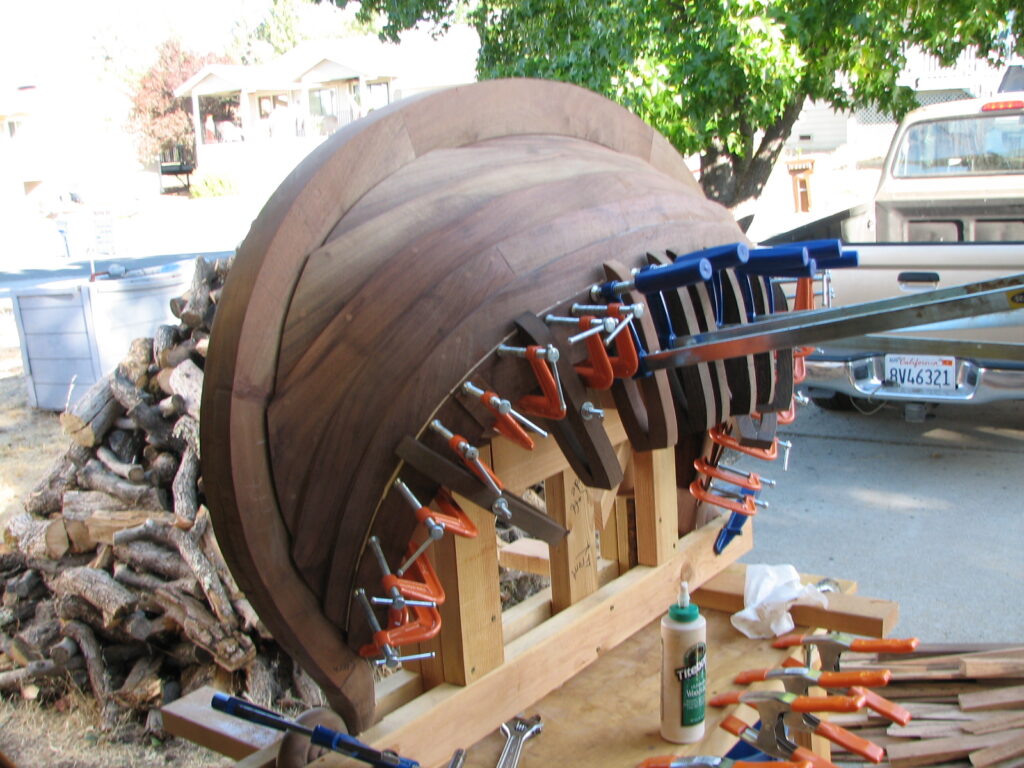
Heimbach avoided synthetic stains or glossy finishes. Instead, he treated the ash with natural oil and beeswax, bringing out the grain’s depth while keeping a warm, matte surface. The cradle glows gently, like aged timber in candlelight. Its tone will darken with time, carrying the marks of the family that uses it – scratches, soft dents, and stories that become part of the wood’s memory.
Beyond craftsmanship, the cradle reflects a philosophy. Heimbach believes that modern design often sacrifices soul for speed. In his view, true craft is slow and deliberate, meant to last beyond one generation. “People think of furniture as temporary,” he once remarked, “but it should be more like a witness – something that sees life happen.” The Viking cradle embodies that belief. It was never meant to be trendy or mass-produced; it was made to endure, to be passed on, perhaps even to rock future grandchildren.
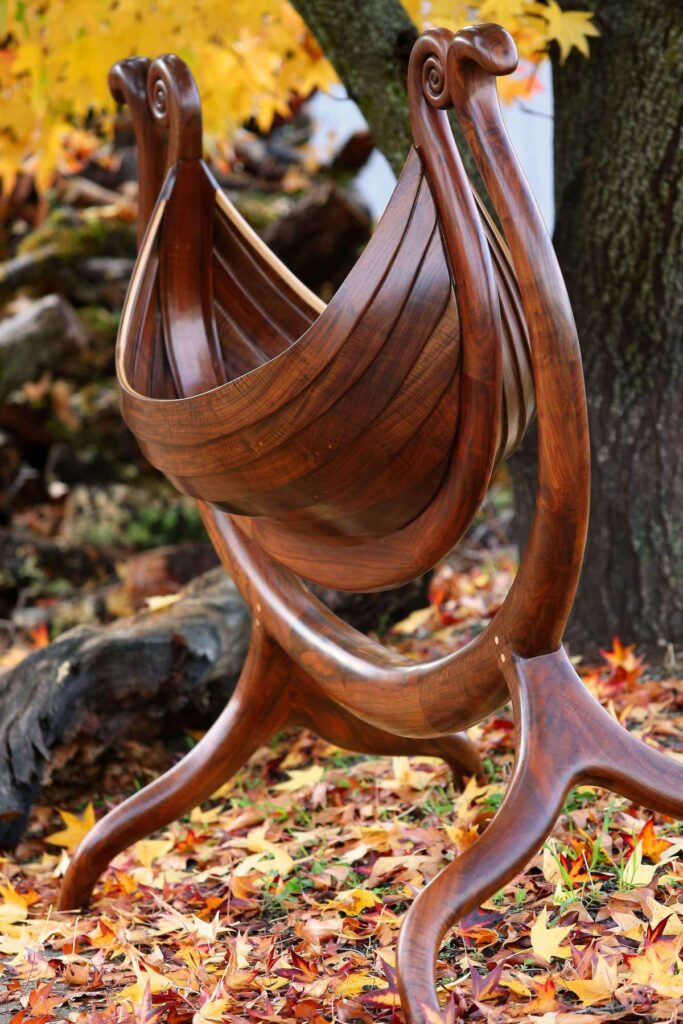
What also makes Heimbach’s work remarkable is his sense of narrative. He approaches woodworking like storytelling. The Viking cradle is both object and tale – the rebirth of old traditions in modern hands. It invites reflection on heritage and identity. Many who see it describe feeling an emotional pull, as though it connects them with a forgotten past.
Heimbach’s background plays a role here. Before turning fully to woodworking, he spent years studying history and art restoration. That training sharpened his eye for proportion and authenticity. He doesn’t copy ancient forms literally; instead, he interprets them with modern sensitivity. The result feels neither antique nor contemporary but timeless.
The cradle’s construction took several months, most of it devoted to shaping and finishing. Heimbach often worked late, guided by lamplight, fine-tuning the rocker’s balance until it moved with perfect rhythm. That movement, subtle and quiet, is what gives the cradle life. It sways with the same slow pulse as a heartbeat – steady, grounding, protective.

When finished, the cradle drew attention not only for its beauty but for its integrity. Collectors, designers, and parents alike admired its combination of strength and grace. Yet Heimbach remains humble about it. To him, the real reward is knowing that it will hold a child’s first dreams. “Everything I make,” he says, “is built for people, not for display. It has to be used, touched, and loved.”
The Viking-inspired cradle is more than an artifact. It’s proof that ancient inspiration can still speak to modern life when handled with respect and imagination. It reminds us that wood, shaped by human hands, can carry emotion, history, and hope all at once. In a world chasing shortcuts, Jim Heimbach’s cradle stands quietly as a reminder that the best things are built slowly – and meant to last.
Reply