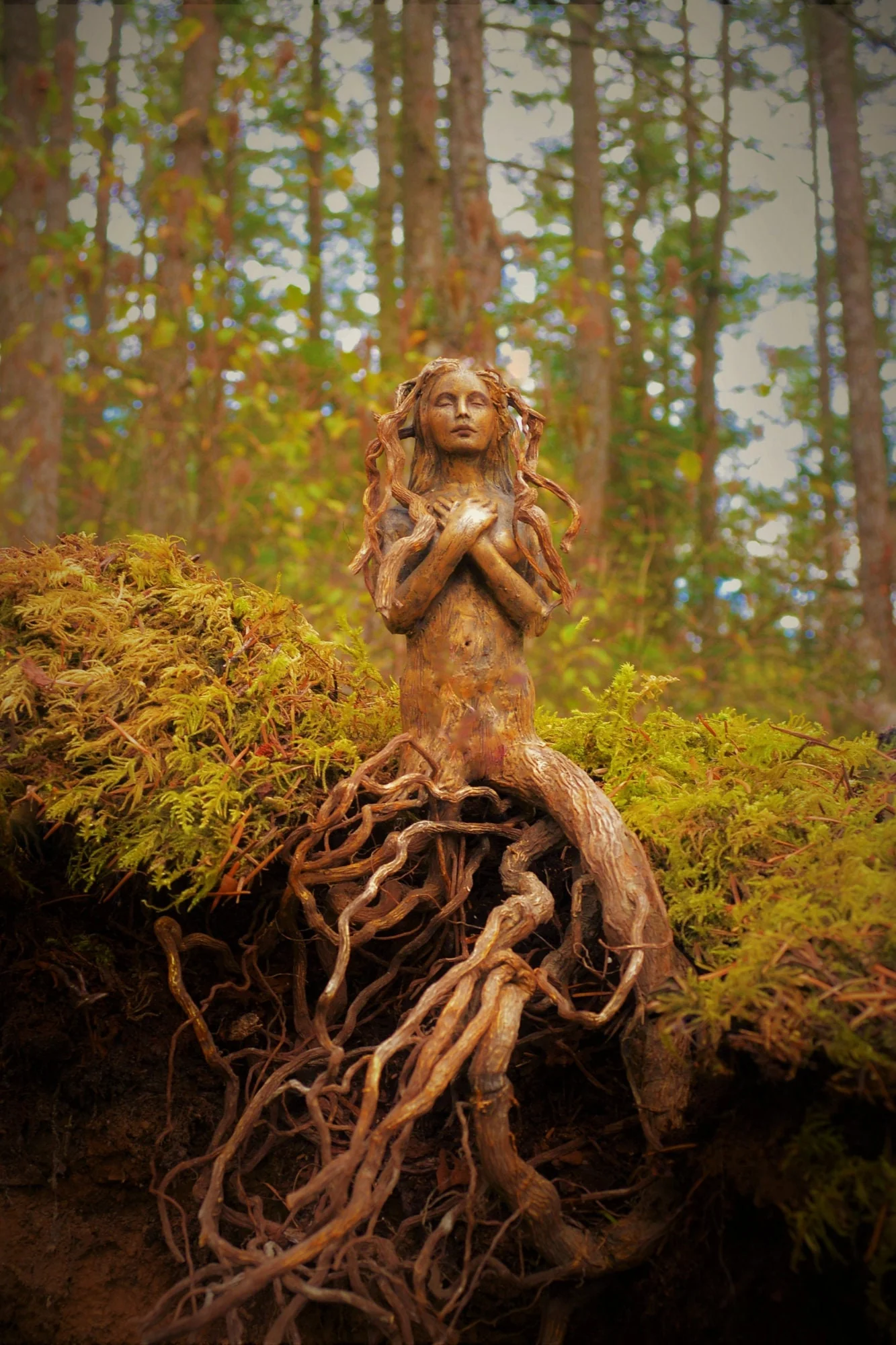
On the shores of Vancouver Island, artist Debra Bernier spends her days walking along the tideline, collecting pieces of driftwood that have been shaped by wind, salt, and time. To most people, these fragments of fallen trees are simply remnants of nature’s cycle. To her, they are unfinished stories waiting to be completed. The wood already carries its own design, and she approaches each piece with quiet respect, carving only where the form seems to ask for it.
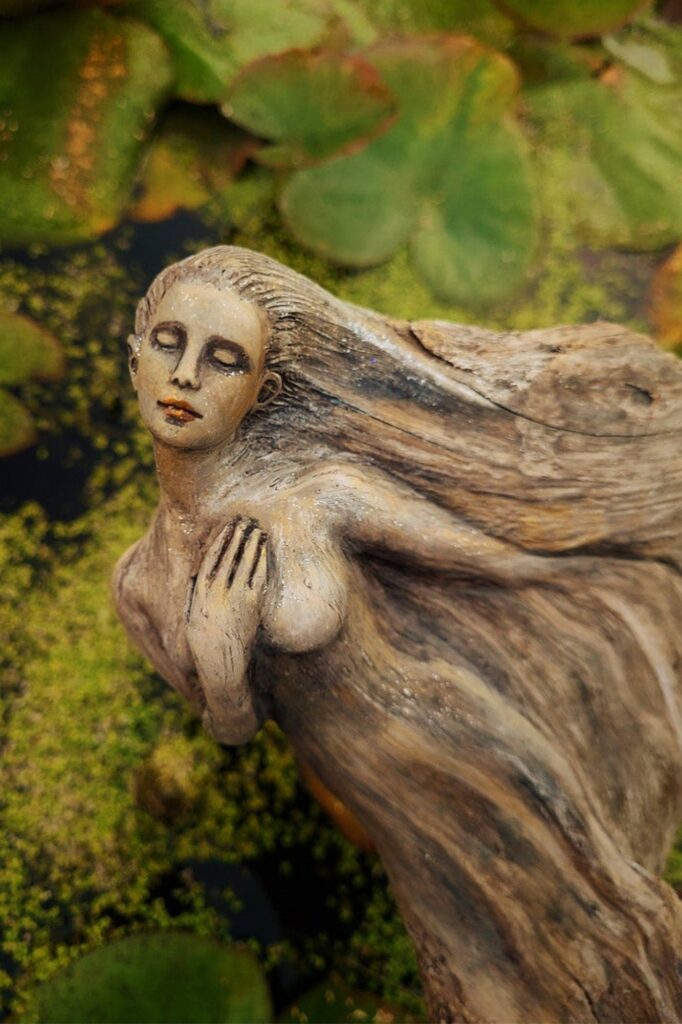
Bernier calls herself a “co-creator” rather than a maker. The ocean, sun, and wind have already done much of the work. What she adds is recognition – seeing a curve that looks like a shoulder, a hollow that could become a face. Her sculptures often emerge as gentle figures, usually women, whose expressions feel calm and timeless. Some cradle seashells, others merge with roots or bones, their shapes flowing into the natural grain of the wood. Each piece seems to reveal the spirit already living within the material.
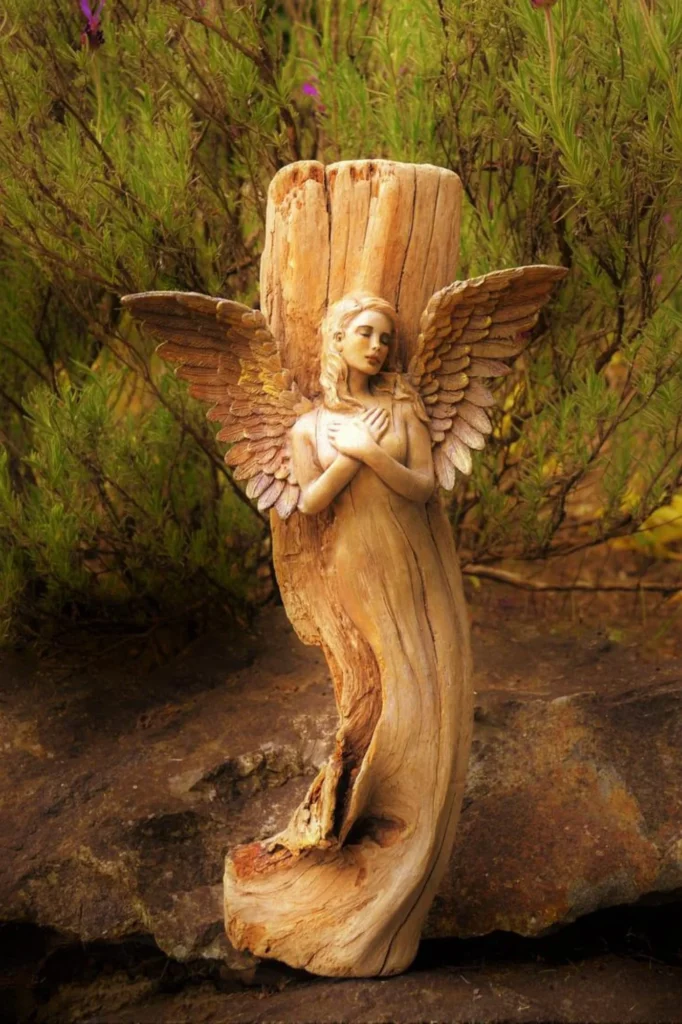
She began working with driftwood after moving with her family to Vancouver Island, surrounded by dense forests and beaches littered with organic debris. At first, she was simply fascinated by the beauty of weathered wood and the traces of its long journey through the sea. Over time, that fascination grew into a practice of carving and shaping. The process was never about control but about conversation. As she once said in an interview, she doesn’t choose what to create – the wood tells her what it wants to become.
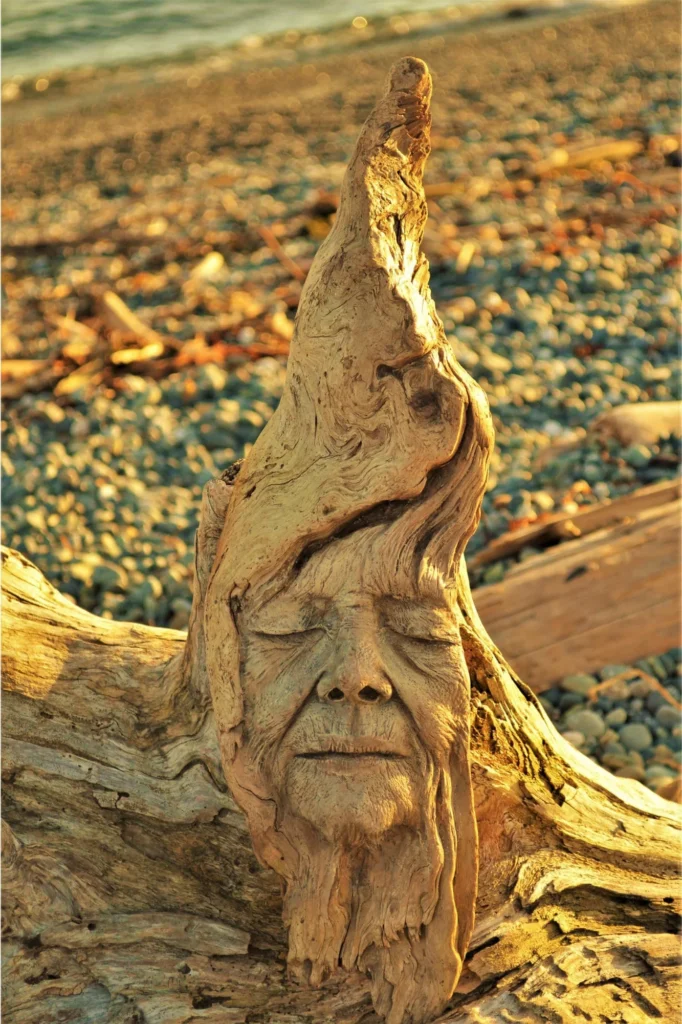
Her background includes a lifelong habit of seeing forms in nature, something many children experience but often lose with age. She remembers finding faces in rocks, clouds, and tree trunks. That instinct became the foundation of her art. The ability to recognize hidden figures and coax them to the surface is what gives her sculptures their distinctive presence.
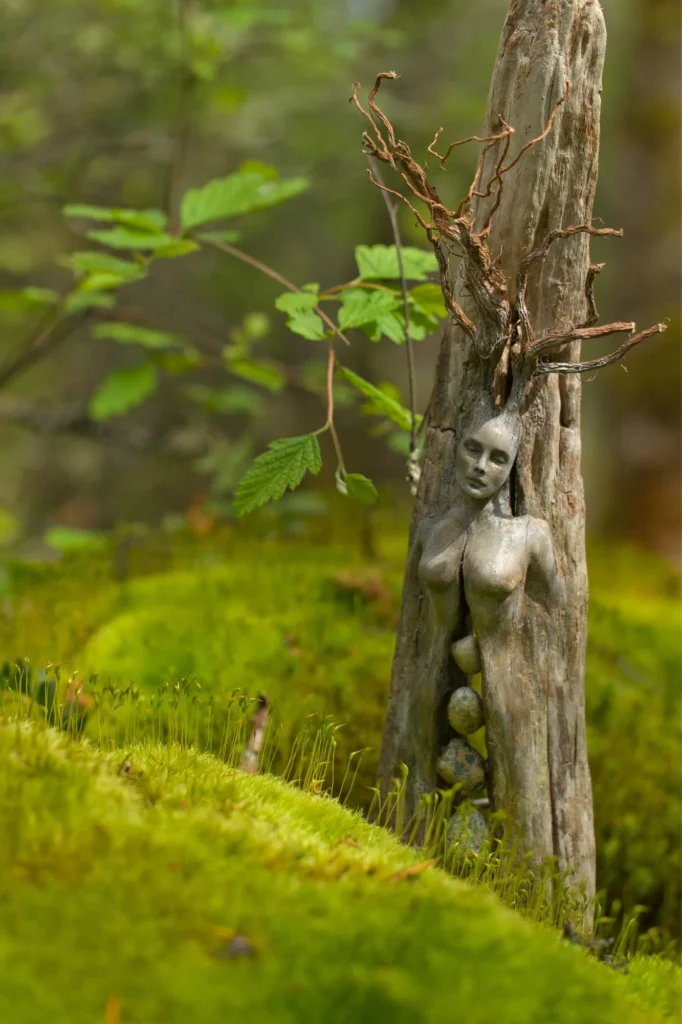
In her small studio, Bernier works with minimal tools and materials gathered from the same environment that inspires her. Driftwood, shells, pieces of bark, and smooth stones are all part of her creative vocabulary. Some sculptures incorporate animal bones or natural fibers, blending organic textures into human forms. The results are tactile and raw, as if they belong equally to the forest and the ocean. When she finishes a piece, she often photographs it outdoors, returning it to the setting that first gave it shape.
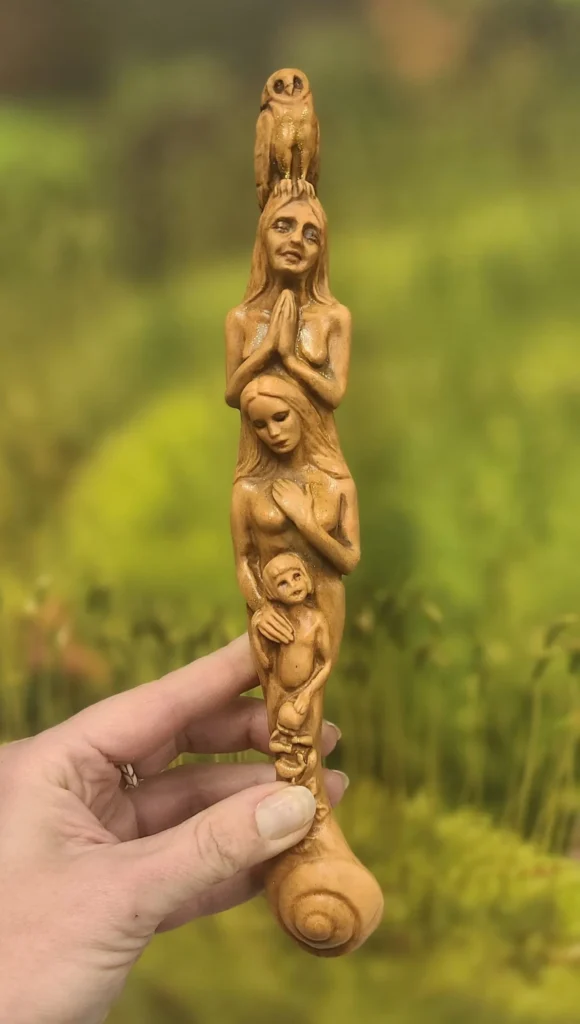
Her art reflects a simple but persistent theme – the unity between people and nature. The figures she creates don’t stand apart from their materials; they grow from them. Their eyes are often closed, suggesting rest or introspection rather than distance. Many evoke maternal qualities or the idea of protection, holding small shells or resting within the curves of the wood like unborn beings. They seem to embody the rhythm of life that moves through both humans and the natural world.
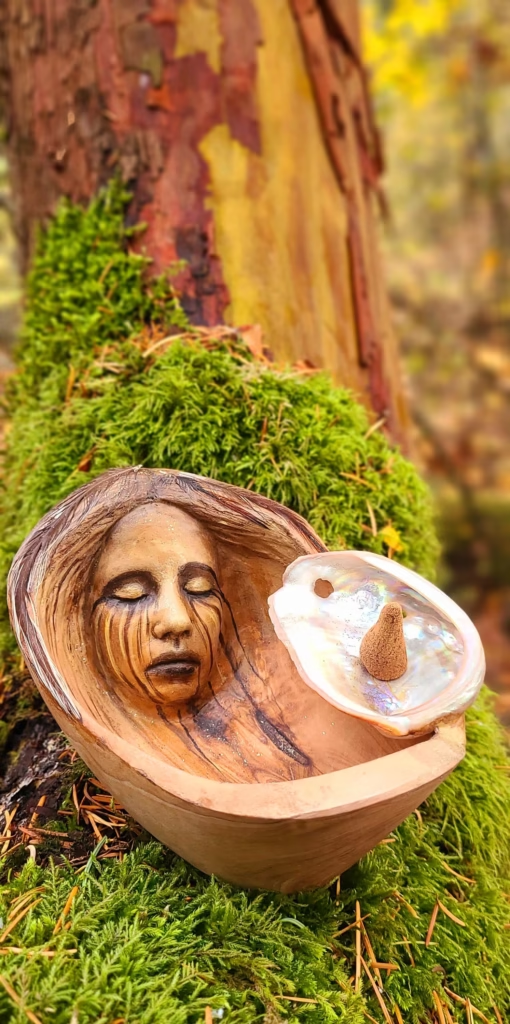
Although her work feels ancient in tone, it is also distinctly contemporary in its sensitivity to environmental awareness. Driftwood is a material that already carries history – the memory of trees, storms, rivers, and tides. By transforming it into sculpture, Bernier gives new life to something that has already lived many times. In interviews, she has said that she hopes people who see her art will feel a stronger connection to the natural world and to their own sense of belonging within it.
Her sculptures have gained wide attention online, shared across art and design platforms for their quiet emotional impact. She runs her own website and Etsy shop under the name Shaping Spirit, where collectors from around the world purchase her work. Despite the global reach, everything about her process remains grounded in local nature and personal rhythm. The pieces are not made for mass production; each one is a response to a particular shape, moment, and place.
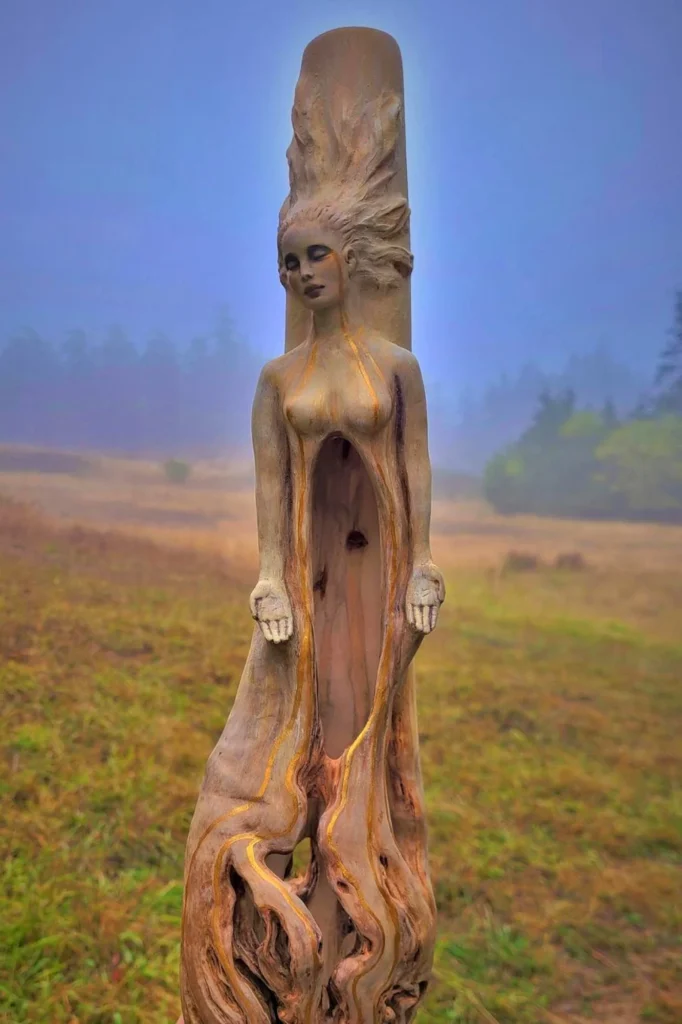
Bernier’s art has also found a home in galleries and exhibitions that focus on sustainable and nature-based practices. Critics often note that her work bridges the space between craft and fine art, between the found object and the sculpted form. There is no clear separation between where nature ends and the artist begins. The delicate balance between the untouched and the carved surfaces is what makes her sculptures so distinctive.
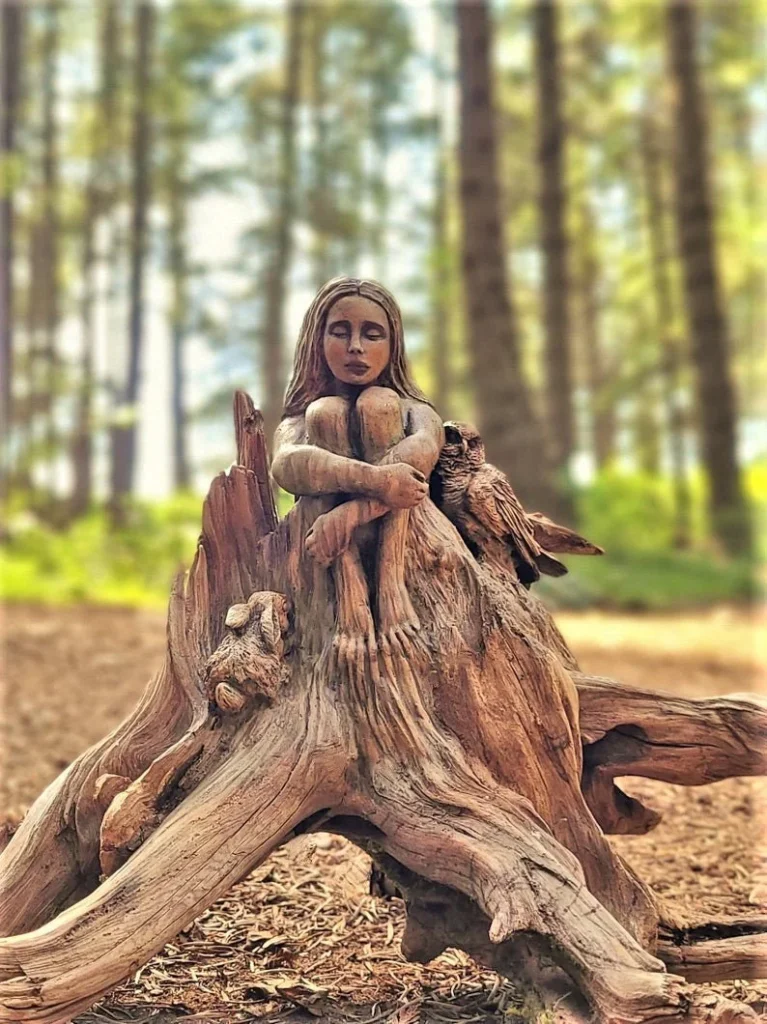
Looking at one of her finished works, it is easy to sense both the calm of the artist and the restlessness of the sea that formed the material. The polished faces contrast with the rough textures of bark and knots, creating a feeling of coexistence rather than perfection. It’s not about idealized beauty but about presence – a recognition of natural form and impermanence.
Even in photographs, her sculptures seem to carry a certain stillness. They have the texture of something deeply familiar, like a memory half-remembered. The faces and figures appear almost ancient, as if they’ve been waiting to be uncovered rather than newly created. That may be the quiet appeal of her work: it reminds viewers that beauty often already exists within what has been weathered and worn down.
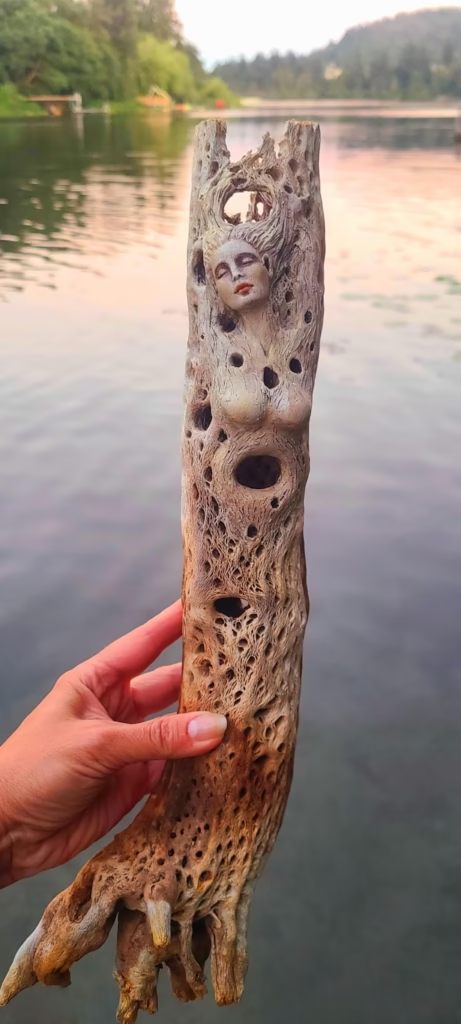
Bernier’s practice continues to evolve, but its core remains constant. Each walk along the beach brings new material, and each piece brings a new story to light. Through this patient dialogue with the natural world, she shows that art can emerge from paying attention rather than seeking control. In her hands, driftwood becomes more than discarded timber – it becomes evidence of how nature and human imagination can meet halfway, shaping each other gently, without force.
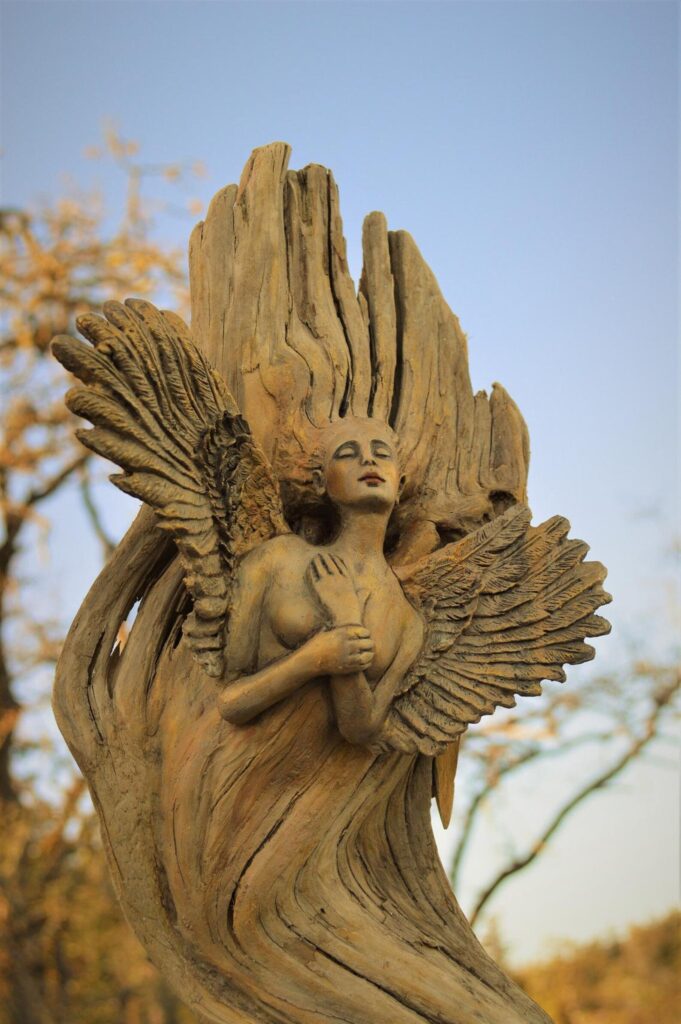
Her sculptures are not grand statements or symbols. They are small, personal gestures of appreciation for the life that continues to move through everything. That quiet respect – for wood, for time, for the sea – is what defines Debra Bernier’s art. It’s what makes her figures seem alive, even in their stillness, and what keeps viewers returning to them again and again.
Reply