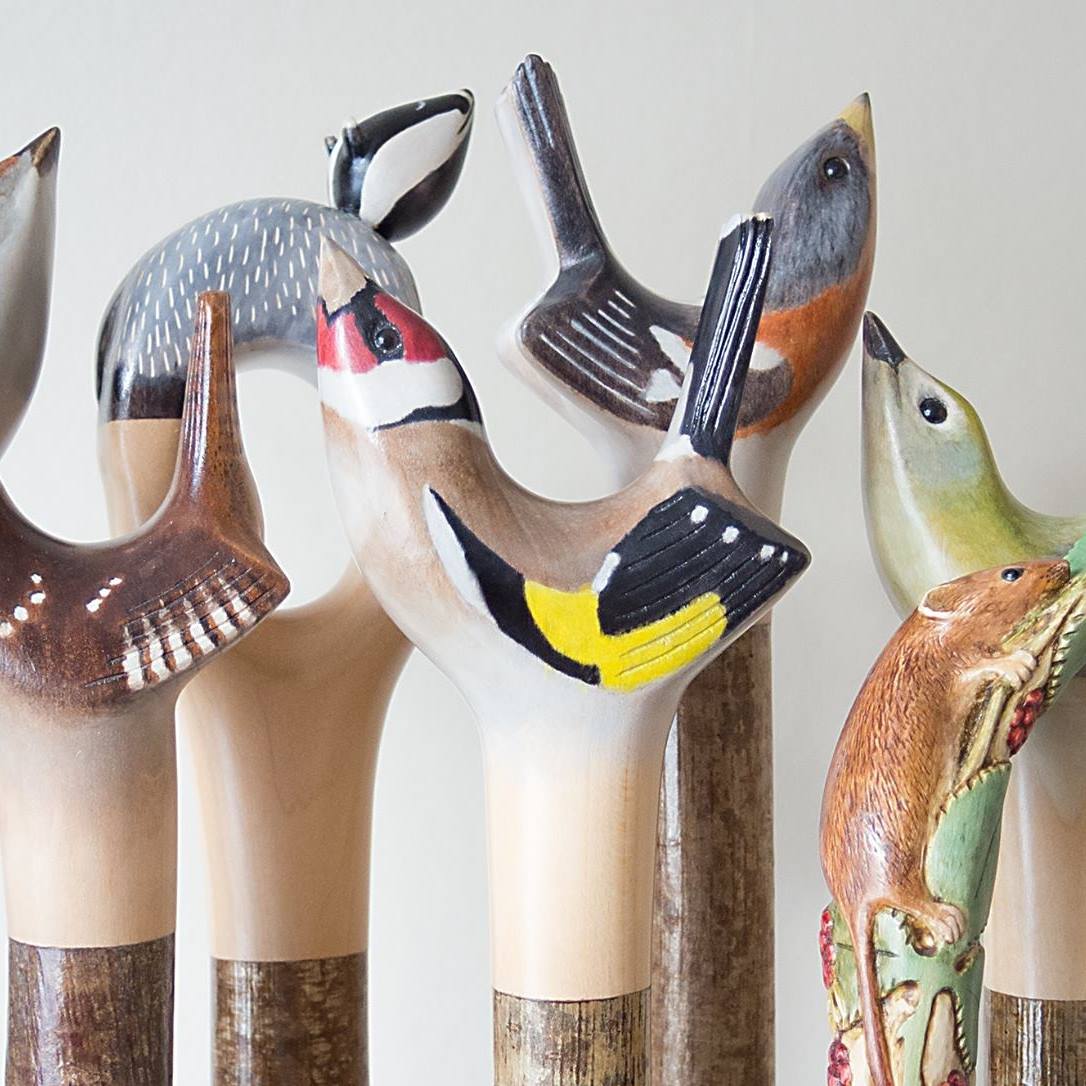
Raif Killips makes walking sticks that sit in a rare zone between tool and sculpture. They are built to be held, leaned on, and taken outdoors, yet the handles read like small, self-contained wildlife carvings. His work includes hiking sticks, crooks, and staffs that feel rooted in folk tradition, but finished with the patience and control of a dedicated woodcarver.
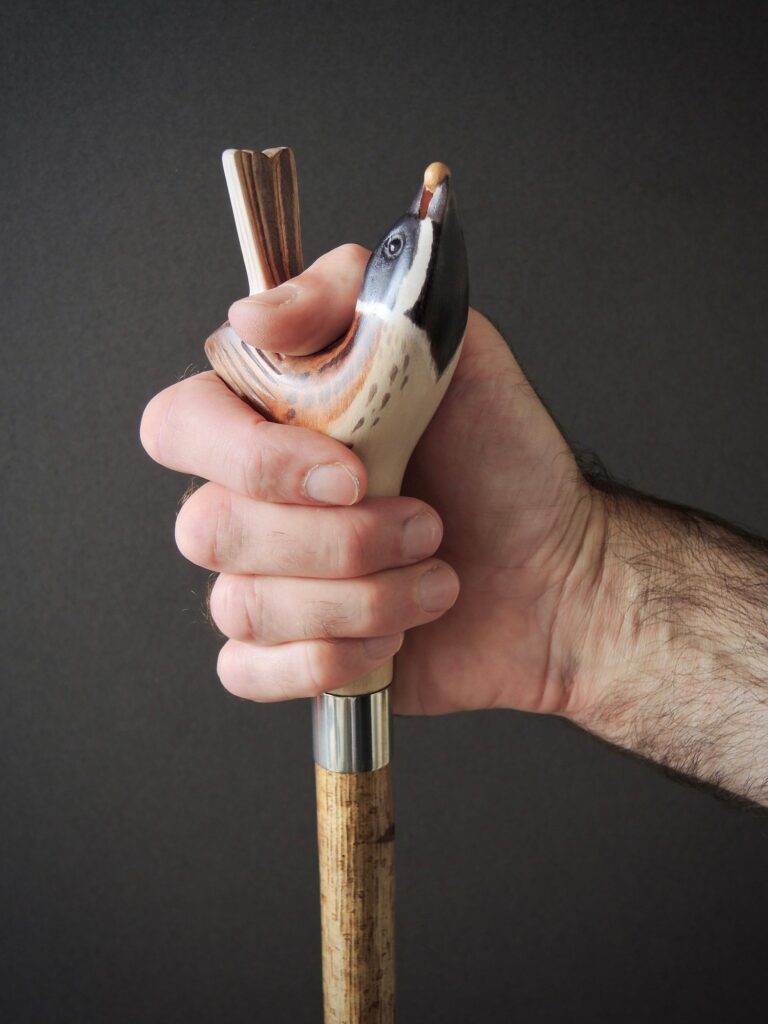
Wildlife is not a decorative afterthought in Killips’ practice – it is the whole point. Birds appear again and again: familiar garden species, coastal birds, and more unusual choices, each carved with an eye for posture and character. Even when the carving is detailed, it avoids looking fussy. The forms stay readable from a distance, then reveal feather texture, beaks, and subtle shaping as you get closer.
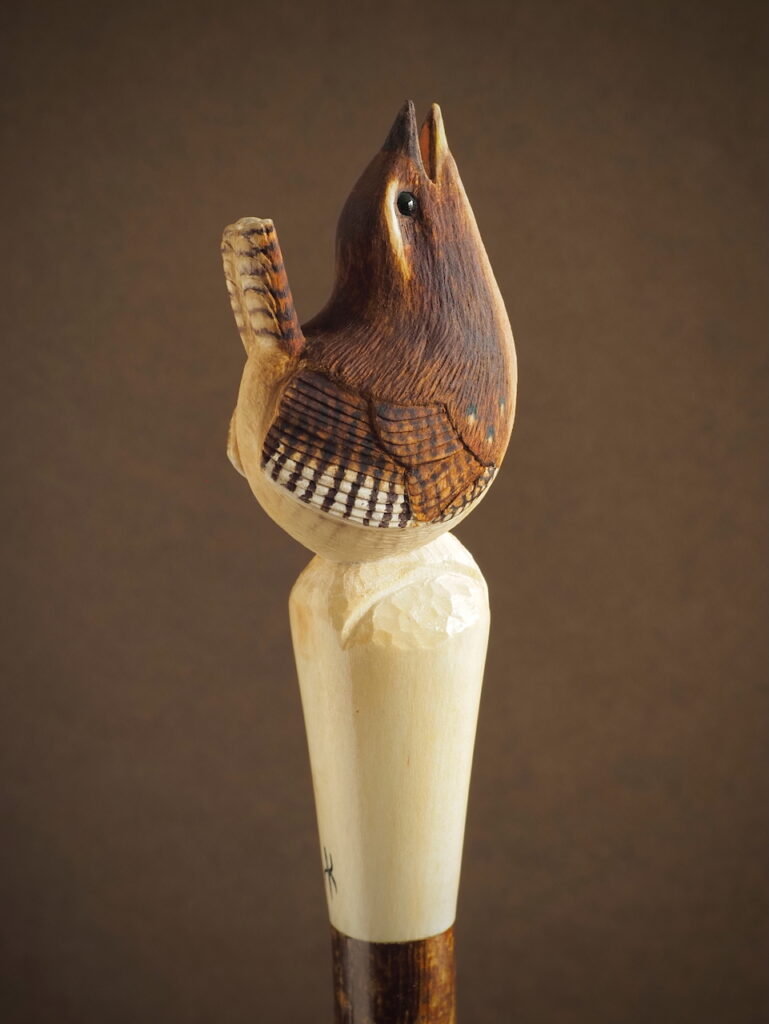
A big part of the appeal is how honest the materials feel. Many sticks pair a carved head with a natural shaft, keeping the long grain and gentle bends visible rather than forcing everything into perfect uniformity. Practical details like ferrules and durable finishes underline that these are still meant to work as walking sticks, not just sit in a corner like a trophy.
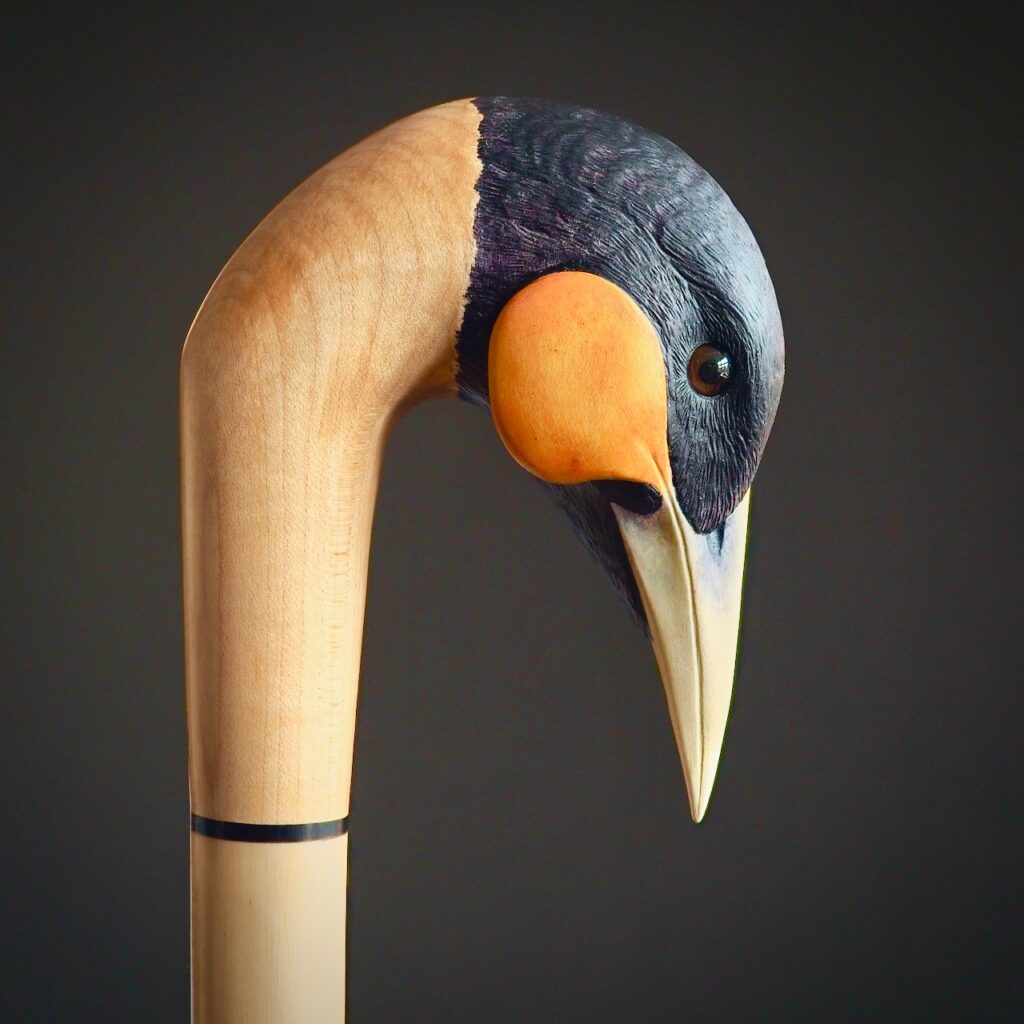
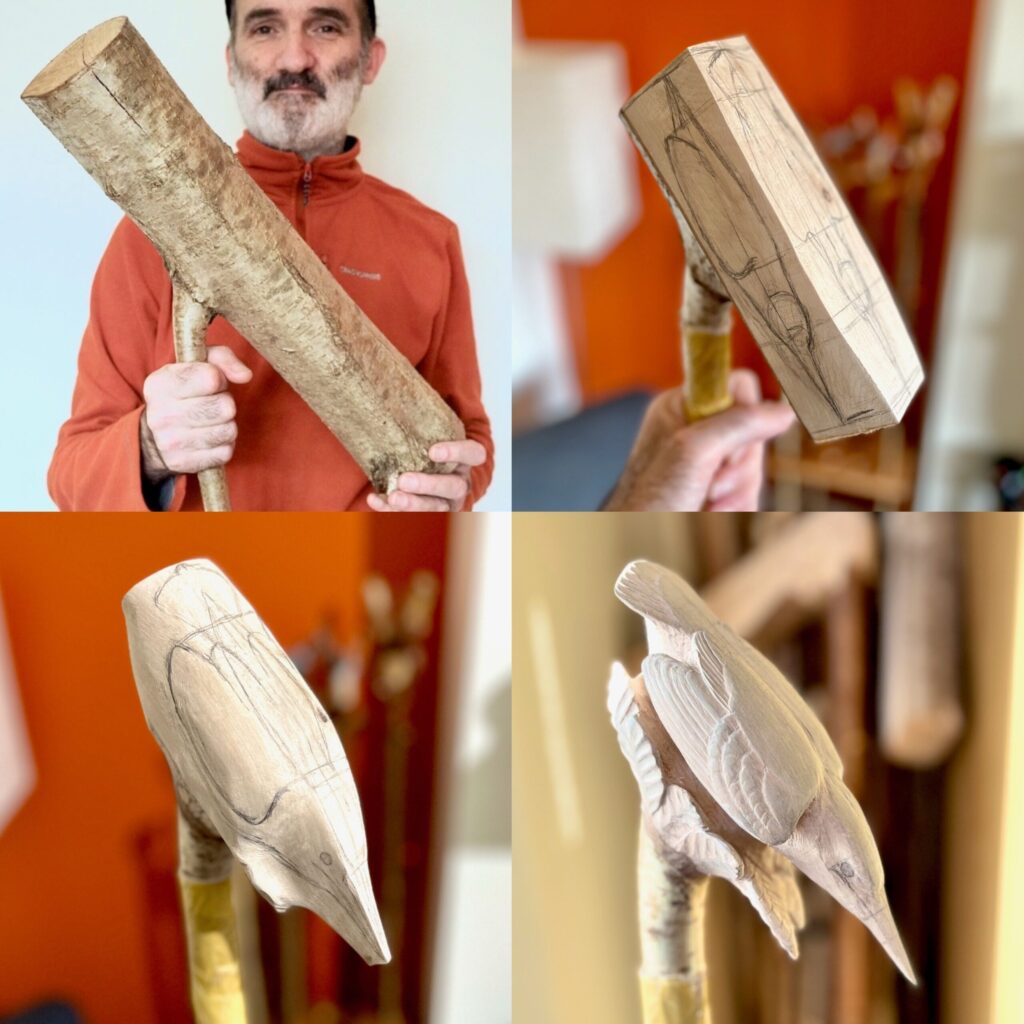
Killips is also known for a deliberately hands-on process. The work leans heavily on hand tools and a slow, controlled approach that suits carving. That method shows in the surfaces: crisp transitions around the neck and head, clean edges where they matter, and small tool marks that give the carvings life instead of making them look factory-smooth. It is the kind of craft where time is visible, and that visibility is part of the value.
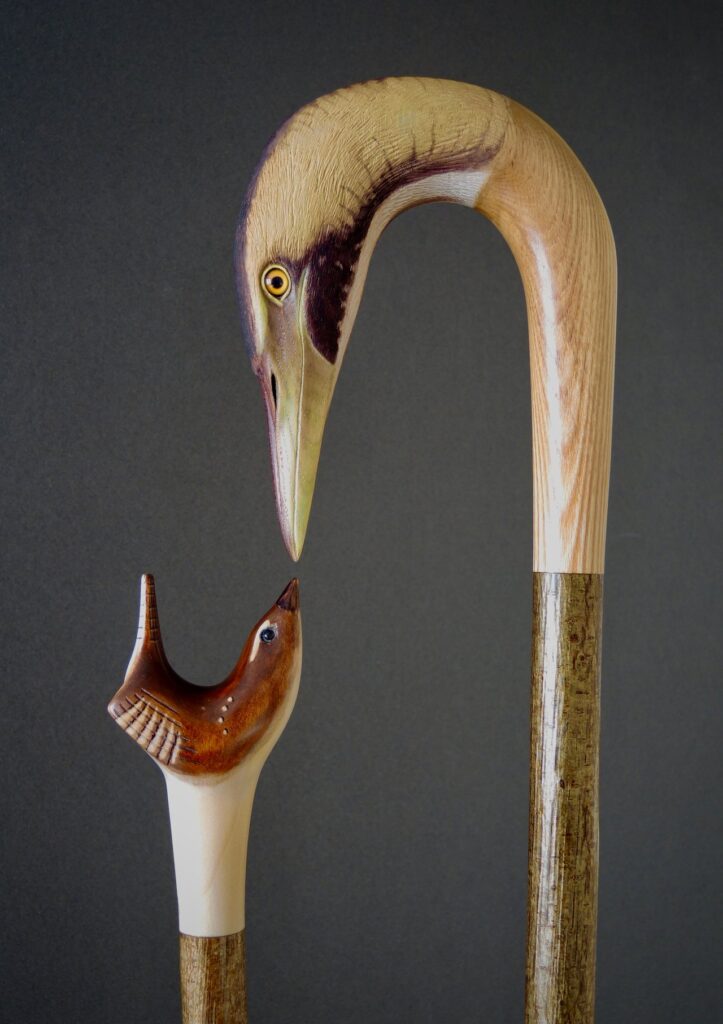
Color plays a major role too. These are not quick paint jobs to make a bird “look right.” The finishes often feel layered, carefully built up to catch the key markings without drowning the carving underneath. Some designs go for realistic plumage tones, while others lean more graphic, letting bold contrasts do the heavy lifting. Either way, the paint works with the carving rather than covering it.
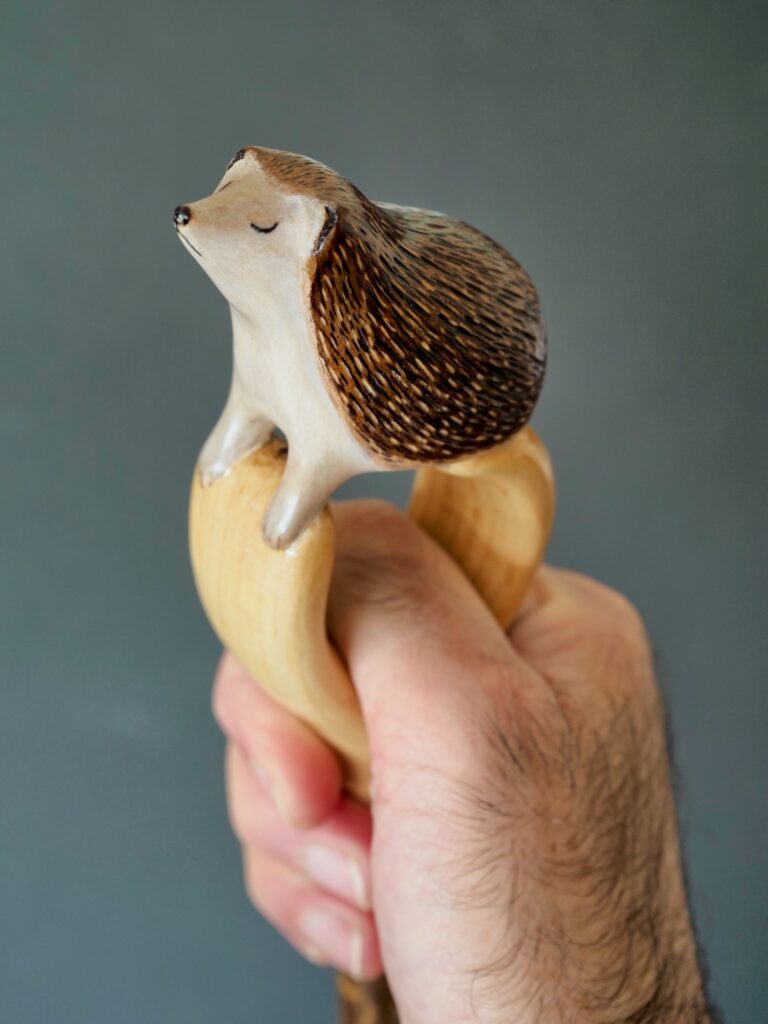
What makes these sticks memorable is the balance they strike. A carved bird perched at the top could easily become gimmicky, but Killips keeps the proportions disciplined and the silhouettes strong. The handle remains comfortable, the stick remains functional, and the carving remains the focal point without turning the whole object into a novelty.
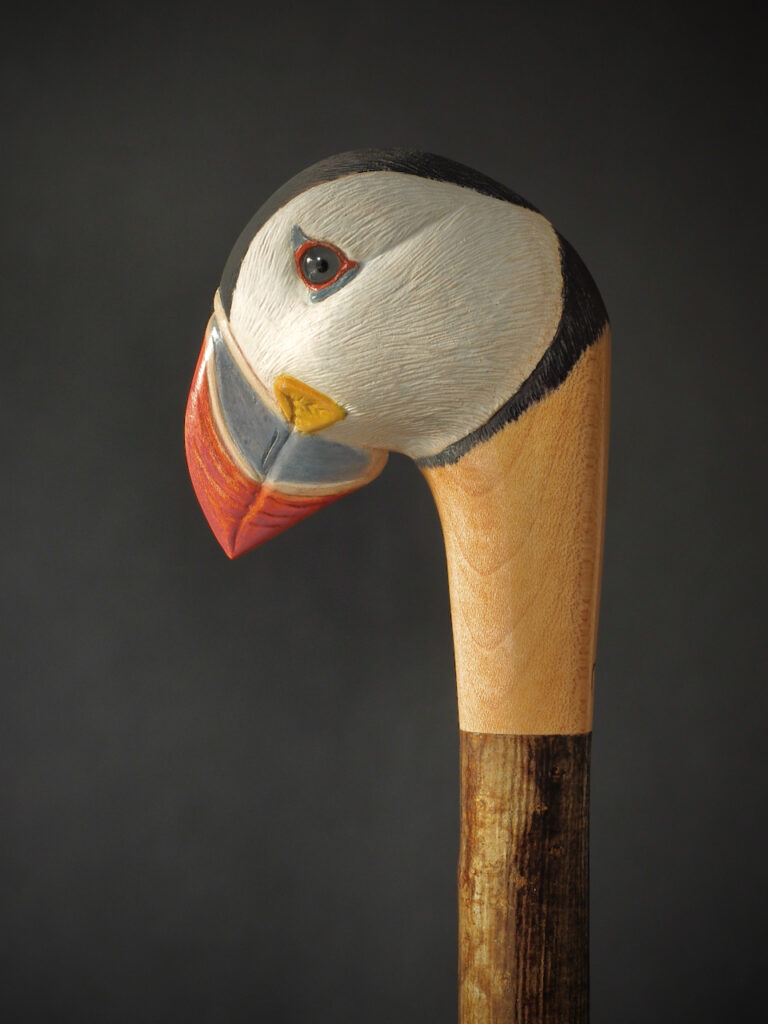
There is also a quiet emotional pull to them. A walking stick is an intimate object: you carry it, grip it, rely on it, and take it through weather and landscape. Adding a carved bird or animal turns that everyday relationship into something more personal – a small companion, a symbol, a reminder of the outdoors that inspired it in the first place.

In a world flooded with mass-produced “rustic” goods, Killips’ walking sticks feel stubbornly real. They are slow-made, tactile, and specific. You can sense the maker’s attention in every cut, and you can feel why these objects end up being kept, used, and passed on rather than replaced.
Reply