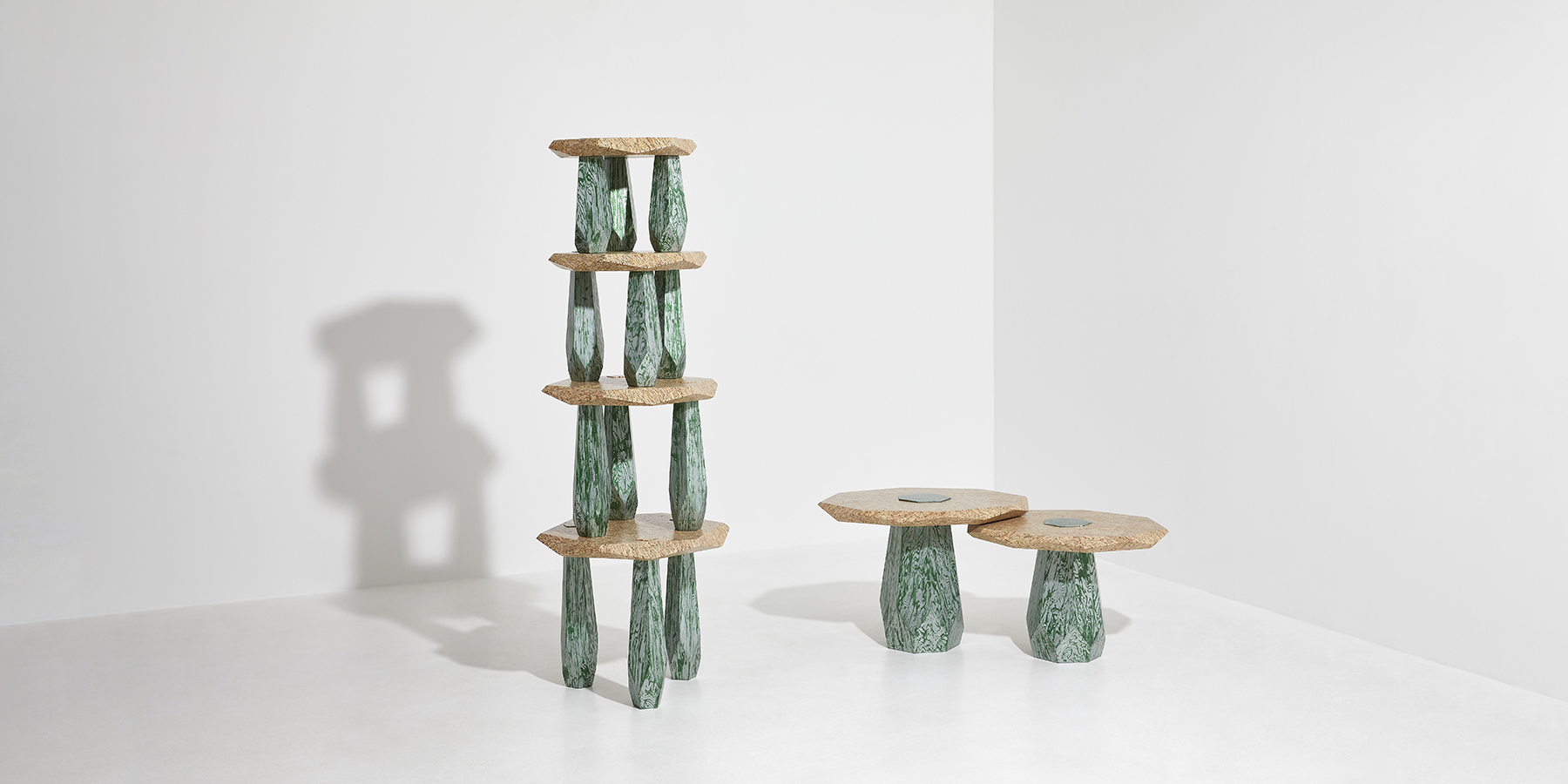
Weon Rhee is a Seoul-based artist and designer (born 1994 in Yesan, South Korea) who works in the space where furniture behaves like sculpture. His artist name, “Weon Rhee,” is a stylized version of his real name, Jongwon Lee, chosen to signal an interest in older forms and references. He describes a practice driven by direct, sensory engagement – especially sight and touch – and by material choices that can carry cultural and social context.
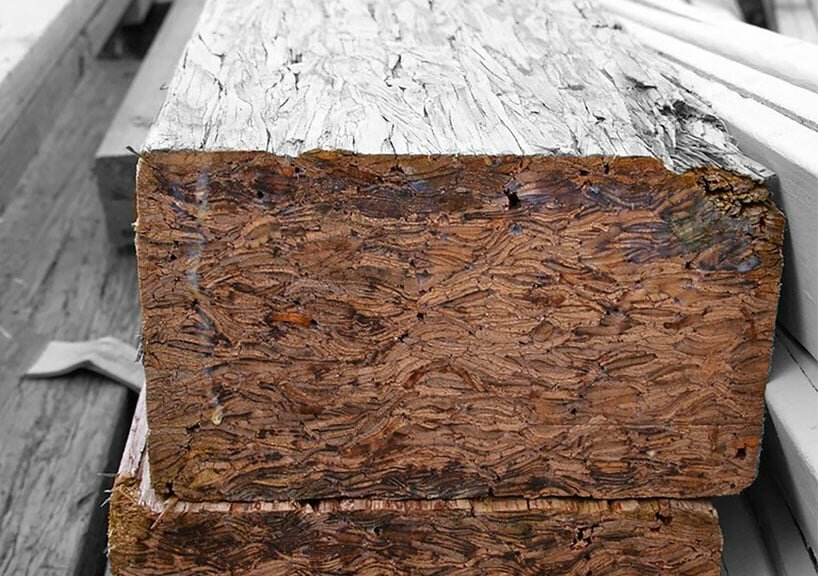
That mindset is clear in Primitive Structures, a body of work built from construction-related wood waste and engineered timber. Rhee’s starting point is PSL beam material, commonly used as a structural element in building frames and interior construction. He frames the series as a sustainability project with cultural symbolism, connecting contemporary “waste” to architectural history. He describes PSL as an engineered wood made using waste from plywood and LVL production, and he positions the work as a “re-recycle” response to discarded material in the construction and interiors cycle.
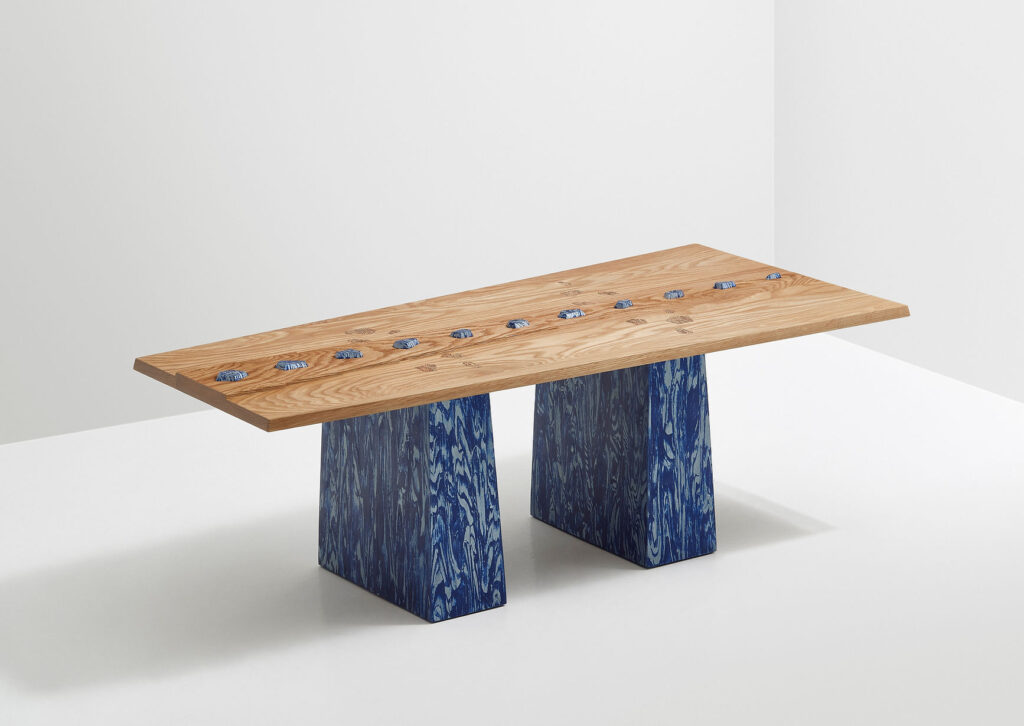
The material itself dictates the process. PSL often shows pits and holes that are part of how it is manufactured and handled. Rhee treats those imperfections as both a practical and visual problem: holes can catch, splinter, or feel unfinished on a tabletop. His solution is stubbornly physical. He repeatedly gathers loose chips produced during making and pushes them back into the voids, building up a textured skin that aims for visual completeness and safer use. It is a craft loop: damage, residue, repair, repeat.
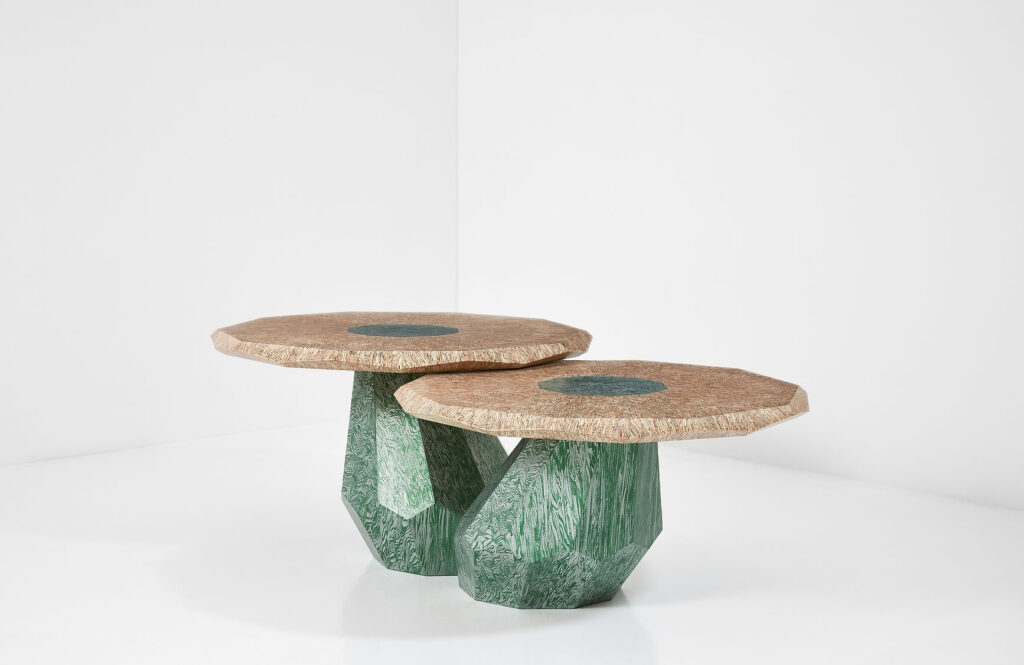
Formally, the pieces lean on ancient structure. Rhee points to Korean dolmens – megalithic stone tomb forms – as a key motif, and he references research suggesting a large share of the world’s dolmens are found in South Korea. Instead of copying stone literally, he abstracts what he sees as primitive polygons in those monuments and lets that geometry drive the facets of legs and tops. Some works are built as stacked modules, creating a pagoda-like silhouette where mass feels piled, balanced, and slightly uncanny.
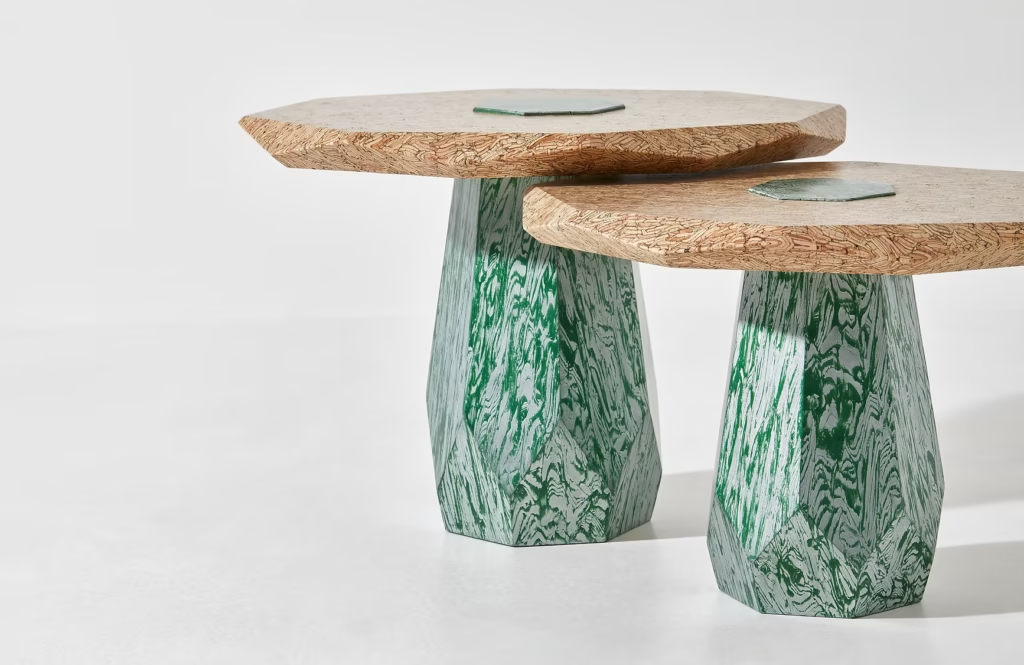
Color finishes tighten the link to landscape. Rhee notes moss on stone as a cue, and he uses a mixture of green pigment with an aluminum-pearl effect to give columns a damp, organic sheen while still exposing the PSL’s vein-like patterning. The result is furniture that reads as geological and botanical at the same time: cut wood pretending to be weathered mineral, then turning alive again through color.
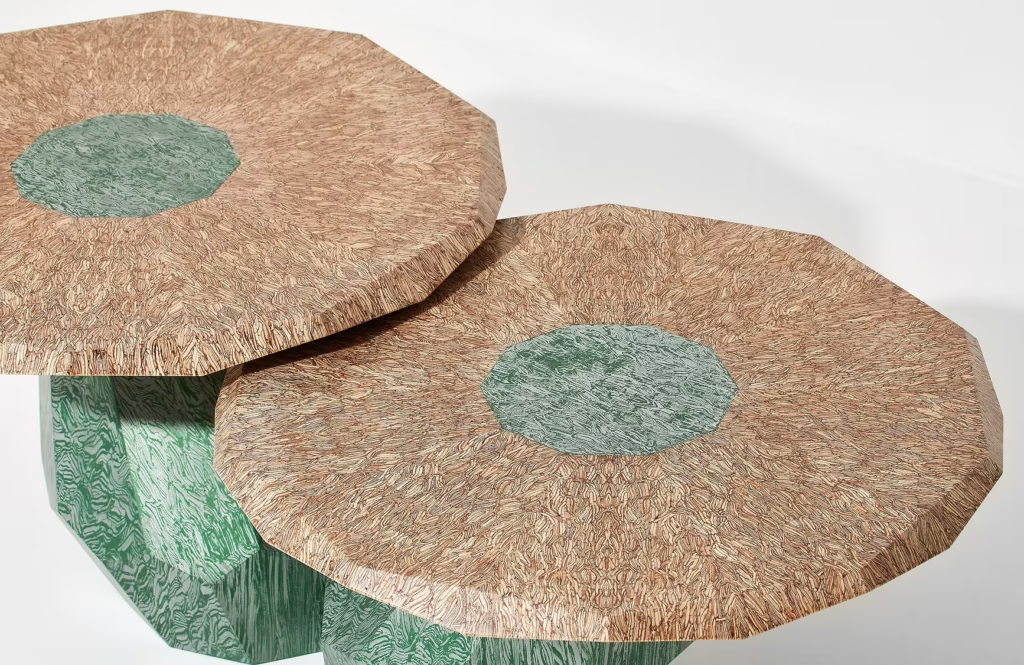
The series has also circulated beyond studio documentation. LOEWE FOUNDATION’s The Room lists Primitive Structures (Botanical) (2024) as furniture made from recycled PSL beam with pearl and green pigments, which signals how the work is being placed in contemporary craft and design contexts rather than just as eco-material experiments.
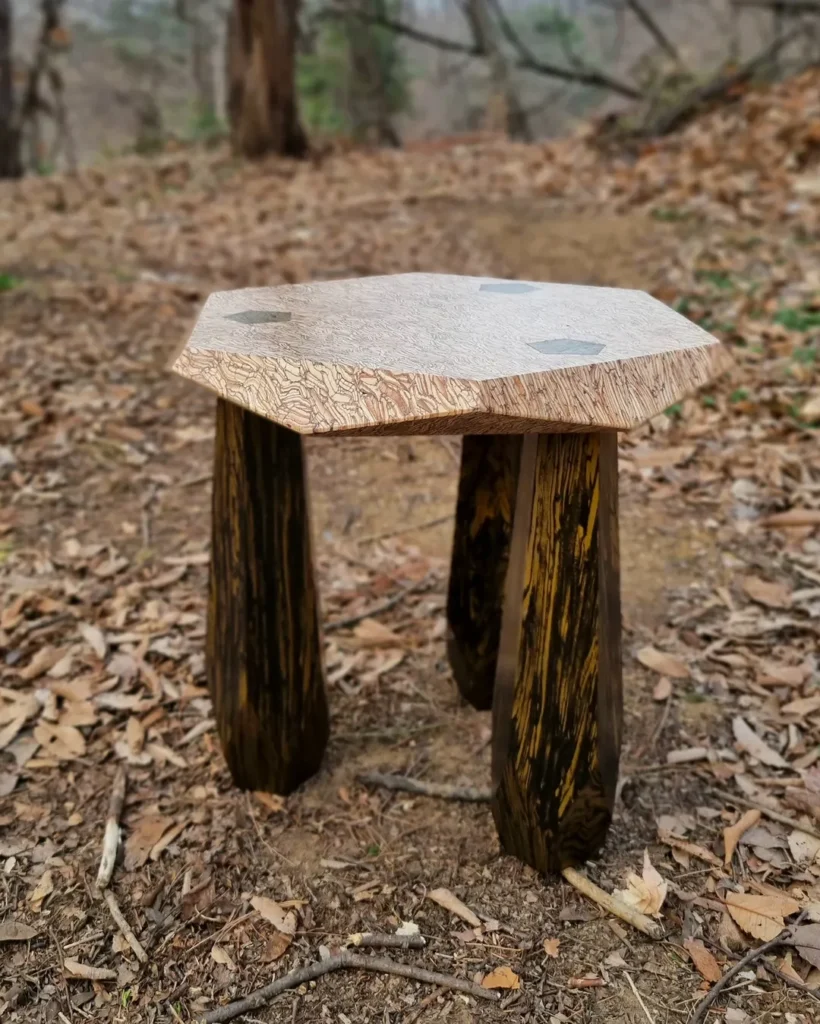
Rhee is represented by Charles Burnand in London and has noted collaborations with galleries including Siegfried Contemporary and Boon Room. It fits the hybrid identity of the objects: functional enough to be used, but staged and collected like sculptural works.
Reply